
Choosing the right sup paddle board is the key to unlocking the stunning, diverse waters of Siargao. For beginners, the ideal board must balance stability, durability, and portability to handle everything from glassy mangrove channels to breezy coastal bays. Selecting the wrong board can lead to constant tipping, physical fatigue, or even damage on the island’s sharp reef structures. To make the most of your tropical paddling experience, you need to understand how local water conditions, board dimensions, and materials interact with your skill level.
Understand Siargao's Paddling Environments
Siargao is famous for its world-class surf, but it also boasts incredibly diverse flatwater environments that are perfect for beginners. Before choosing a board, you must identify where you plan to spend most of your time on the water.
Calm Lagoons and Mangroves
Areas like Sugba Lagoon in Del Carmen offer breathtaking, glassy waters sheltered by limestone hills and dense mangrove forests. Navigating these narrow channels requires a highly maneuverable, standard all-around board that lets you steer around shallow mangrove roots and limestone outcrops. Because these areas can have hidden underwater obstacles, a board that sits slightly higher in the water and features a flexible or removable fin is highly advantageous.
Products mentioned in this guide
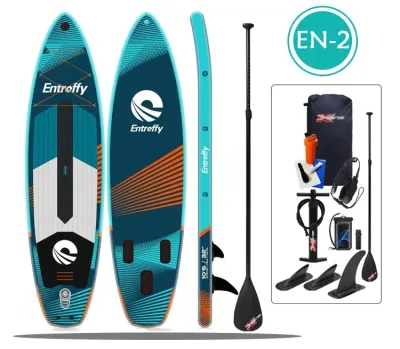
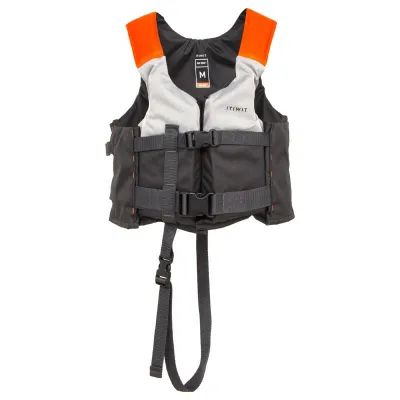
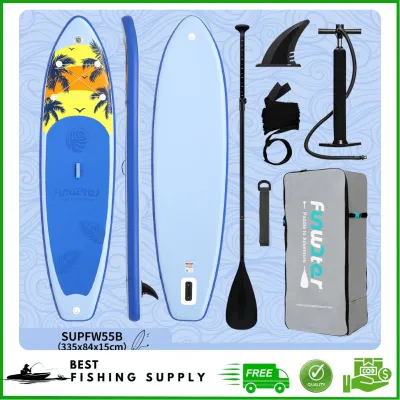
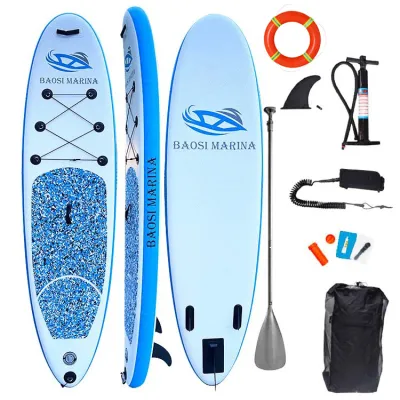
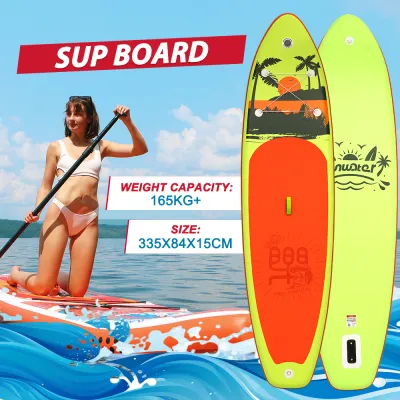
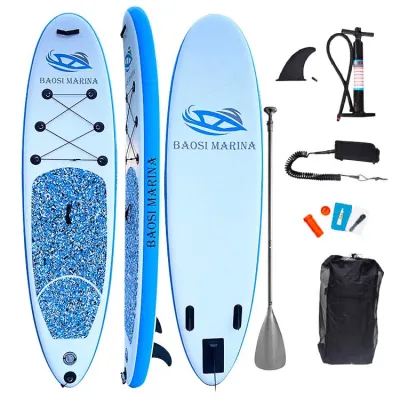
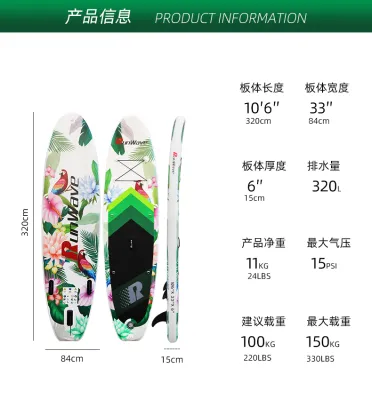
Prices are valid at publication and may change. Please refer to the product page for the latest price.
Open Bays and Coastal Waters
Paddling along the coast of General Luna or near the Dapa port exposes you to open-water elements. Here, you will encounter steady wind chop, tidal currents, and wakes from passing local outrigger boats. To stay upright and comfortable in these undulating waters, you need a wider, more stable platform that resists rolling when waves hit you from the side.
Surf Zones
While Siargao is the surfing capital of the Philippines, beginners should strictly avoid taking a sup paddle board into advanced reef breaks like Cloud 9. Reef breaks pose severe safety risks, including sharp coral, strong currents, and collision hazards with traditional surfers. Instead, restrict your early paddling to calm, sandy-bottom shores or gentle, rolling beach breaks where you can practice balancing without risking injury or equipment damage.
Core Board Dimensions and Specs for Beginners
Understanding technical specifications is crucial when shopping for a sup paddle board. These dimensions directly dictate how stable the board feels, how straight it tracks, and how much effort you must exert to move forward.

Width
For novice paddlers, board width is the single most important factor for stability. You should look for a width between 32 and 34 inches. This range provides a wide, forgiving platform that supports your balance even when the water gets choppy. Boards narrower than 32 inches require advanced core stability and are prone to tipping, while boards wider than 34 inches become sluggish and difficult to paddle efficiently.
Length
The ideal length for a beginner board in Siargao ranges from 10’0″ to 11’6″. A longer board tracks straighter in open bays, meaning you do not have to switch paddling sides as frequently to maintain a straight line. However, a shorter board within this range is much easier to turn when navigating tight bends in mangrove forests. A 10’6″ board is often considered the sweet spot for versatile, all-around use.
Thickness and Volume
Board volume, measured in liters, determines how much weight the board can support while floating at its optimal level. A beginner board should have enough volume to keep you and your gear well above the water line. If a board lacks sufficient volume for your weight, it will sink too low, creating drag and making paddling incredibly exhausting. To calculate your target volume, multiply your body weight in kilograms by two as a bare minimum, or look for boards with a thickness of 6 inches, which naturally provides excellent buoyancy and rigidity.
Hull Type
Most paddle boards feature either a planing hull or a displacement hull. Planing hulls are flat and wide, resembling a large surfboard; they ride on top of the water and offer exceptional stability and versatility for beginners. Displacement hulls have a pointed nose similar to a kayak, designed to slice through water for speed and long-distance tracking. For Siargao’s varied beginner routes, a planing hull is the superior choice because it prioritizes stability and ease of use over pure speed.
Inflatable vs. Hard Boards for Island Travel
Choosing between an inflatable SUP (iSUP) and a traditional hard board (epoxy or plastic) is a major decision that affects both performance and travel logistics in the Philippines.
Inflatable SUPs (iSUPs)
Inflatables have become the gold standard for traveling paddlers, and for good reason. When deflated, an iSUP rolls up into a backpack, making it incredibly easy to store in compact island accommodations, transport in the back of a local tricycle, or load onto island-hopping boats. Furthermore, modern drop-stitch PVC construction is highly durable, bouncing off shallow coral reefs, rocks, and mangrove roots without sustaining structural damage.
Hard Boards (Epoxy/Plastic)
Traditional hard boards offer superior glide, rigidity, and responsiveness on the water, making them highly satisfying to paddle. However, transporting a 10-foot rigid board around Siargao is highly challenging. Local transport relies heavily on tricycles and small outrigger boats, which cannot easily accommodate large hard boards. Additionally, epoxy boards are highly vulnerable to dings and cracks when scraped against shallow reefs or concrete piers, requiring immediate and costly repairs to prevent water logging.
Contextual Recommendation
For the vast majority of beginners visiting or living in Siargao, a high-quality, dual-layer inflatable sup paddle board is the most practical choice. It eliminates transport headaches, withstands the rugged tropical environment, and provides a slightly softer surface that is gentler on your knees and feet during long paddling sessions.
Step-by-Step Selection Process
To find the perfect board for your island adventures, follow this logical, step-by-step checklist before making your purchase.
Step 1: Calculate Total Load
Begin by calculating the total weight the board must carry. Combine your body weight with the weight of all essential gear you plan to bring, such as a dry bag, a heavy water bottle, sunscreen, and safety equipment. Always check the manufacturer’s maximum weight capacity rating. To ensure optimal performance and stability, choose a board where your total load does not exceed 80% of the maximum rated capacity.
Step 2: Match Shape to Primary Environment
Assess where you will do most of your paddling. If you want a versatile board that can handle Sugba Lagoon one day and the coastal waters of General Luna the next, select a classic rounded “all-around” shape. If you plan to focus solely on long-distance coastal touring or fitness paddling along the shoreline, a touring shape with a slightly tapered nose will help you glide more efficiently through the water.
Step 3: Evaluate the Fin Setup
Examine the board’s fin configuration. A single, large center fin provides excellent straight-line tracking for open-water paddling. A thruster (three-fin) setup offers better lateral stability and tracking in shallow waters or gentle waves. Crucially, ensure the center fin is fully removable. Removable fins are essential for navigating shallow mangrove channels without catching on roots, and they allow the board to roll up tightly for travel.
Step 4: Inspect Included Accessories
A complete paddle board package should include high-quality accessories to save you from secondary purchases. Look for a package that features a reliable dual-action manual pump or a compatible electric pump to make inflation quick and easy. The package must also include a sturdy coiled leash and a lightweight paddle. Avoid heavy aluminum paddles, which can cause shoulder fatigue during long tropical sessions; instead, opt for fiberglass or carbon fiber shafts that offer better flex and weight savings.
Safety and Board Care in Tropical Conditions
Siargao’s intense tropical sun, high humidity, and saltwater environment require strict maintenance routines and safety precautions to protect both you and your equipment.
Sun and Heat Management
The intense Philippine sun can quickly damage an inflatable sup paddle board. High temperatures cause the air inside an iSUP to expand, which can lead to over-inflation, seam failures, or permanent delamination. Never leave a fully inflated board sitting in direct sunlight on the beach. If you must leave it on land, place it in the shade and release a few PSI of air pressure to allow for thermal expansion, then pump it back up to the recommended pressure before launching.
Saltwater Maintenance
Saltwater is highly corrosive to metal components and can leave abrasive salt crystals that wear down fabrics and seals. After every session, thoroughly rinse your board, paddle, leash, and pump with clean fresh water. Pay close attention to the valve area, fin boxes, and any metal zippers on your storage bag. Allow all components to dry completely in a shaded, well-ventilated area before packing them away to prevent mold and mildew growth.
Safety Gear and Leash Selection
Safety should always be your top priority on the water. Always wear a properly fitted Personal Flotation Device (PFD), especially when paddling in deep coastal waters or unfamiliar areas. Use a coiled leash when paddling in flatwater, lagoons, or mangroves; the coiled design keeps the leash on the deck, preventing it from dragging and snagging on submerged roots or coral. If you transition to gentle, rolling surf zones, switch to a straight ankle leash to prevent the board from springing back toward you after a fall.
Environmental Checks
Before launching your board, check the local tide charts, wind forecasts, and boat traffic patterns. Strong offshore winds can quickly sweep a beginner far out into the open ocean, while low tides can leave you stranded in shallow, rocky reef flats. Always monitor the horizon for sudden tropical squalls, which can bring high winds and heavy rain. If you see dark clouds or feel the wind shift abruptly, stop paddling immediately and head to the nearest safe shoreline.
Frequently Asked Questions (FAQ)
Should I rent or buy a SUP for my Siargao trip?
Deciding whether to rent or buy depends entirely on your itinerary, budget, and travel style. If you only plan to paddle once or twice during a short vacation, renting a hard board or iSUP from beachfront shops in General Luna is highly convenient and cost-effective, with typical daily rates ranging from ₱500 to ₱1,000. However, if you plan to explore remote mangrove forests, engage in multi-day island-hopping, or stay on the island for several weeks, purchasing your own personal iSUP is highly beneficial. A personal board guarantees equipment quality, ensures proper hygiene, and allows you to launch from any remote beach without being tied to rental shop hours. Keep in mind that flying into Siargao with a personal SUP backpack will incur airline oversized baggage fees, so you must factor these transport costs into your overall budget.
Community discussion
Share your experience or ask a question. Comments are reviewed before publication.