
Choosing the right swim paddles for children in the Philippines requires a careful balance of physical development, swimming proficiency, and safety. Because young joints, muscles, and growth plates are still developing, selecting a paddle that is too large or rigid can lead to shoulder strain and poor stroke habits. Parents must evaluate the child’s current skill level, hand dimensions, and the specific design features of the training gear before making a purchase. Swim paddles are specialized training aids designed to improve stroke technique and build water awareness, but they are not recreational toys or flotation devices. They should only be introduced once a child has established a solid foundation of water safety and basic swimming strokes under proper adult supervision.
Why Age and Skill Level Dictate Paddle Choice
The biomechanics of a young swimmer’s shoulder joint make them highly vulnerable to repetitive stress injuries. Unlike adults, children have developing skeletal systems with open growth plates in their shoulders and wrists. Introducing excessive resistance too early through oversized or overly rigid paddles can cause microtrauma, leading to conditions like swimmer’s shoulder or tendonitis. Because of these physical limitations, equipment must be matched precisely to the child’s physical maturity rather than simply buying the largest option available to “grow into.”
Understanding the functional difference between “water feel” and “resistance” is essential when selecting gear. Beginners and intermediate swimmers primarily need to develop a feel for the water, which involves learning how to position the hand to catch and pull effectively without slipping. Technique-focused paddles often feature holes, cutouts, or contoured shapes that allow water to pass through, providing sensory feedback without adding heavy physical strain. In contrast, strength-building paddles maximize surface area to increase resistance, a training method that is only appropriate for older, competitive swimmers who have already mastered their stroke mechanics.
Products mentioned in this guide
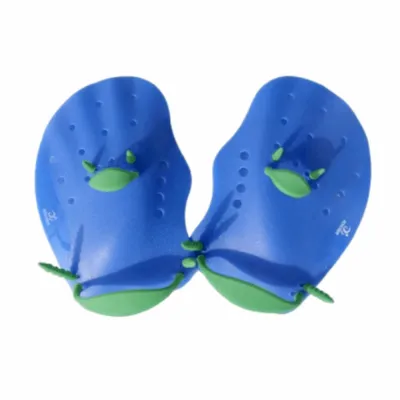
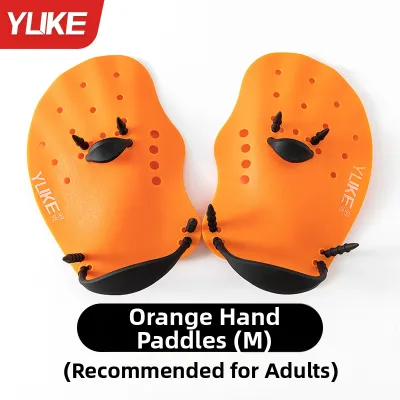
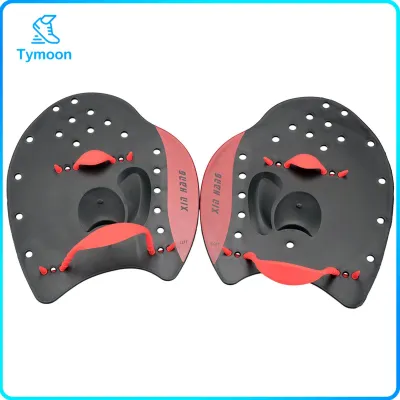
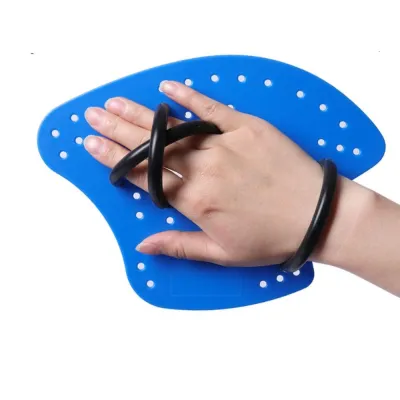
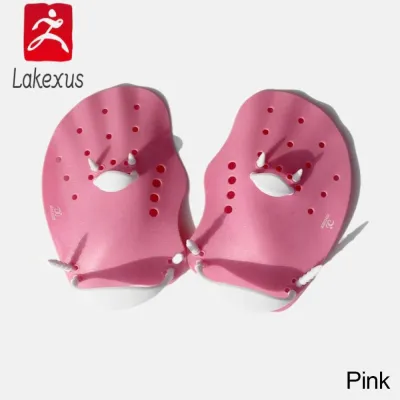
Prices are valid at publication and may change. Please refer to the product page for the latest price.
As a child progresses, their equipment needs will shift from high-flexibility, technique-oriented aids to more structured, semi-rigid training tools. A toddler starting out needs to focus on basic hand awareness and coordination, whereas an older, competitive swimmer requires gear that can help refine specific phases of their stroke. Using the wrong type of paddle at any stage can disrupt this natural progression, forcing the child to compensate with improper muscle groups and developing bad habits that are difficult to correct later.
Essential Design Features to Evaluate
When browsing local sports retailers or online marketplaces, parents should use a physical inspection checklist to evaluate the design of each paddle. The surface area and shape are the most critical factors. Fingerless paddles, which only cover the fingers or require a specific grip, are excellent for teaching children to maintain pressure against the water during the pull phase. Contoured profiles that mimic the natural curve of the palm help reduce hand fatigue and promote a more natural entry into the water, making them highly suitable for younger swimmers.

The strap system is another vital component to examine. Traditional paddles use silicone or rubber tubing that wraps around both the wrist and the middle finger. For younger children, a wrist-only strap or even a strapless design can be highly beneficial. Strapless paddles are designed to fall off if the swimmer’s hand entry is incorrect, providing immediate, non-punitive feedback that encourages proper technique. Ensure that any straps are made of high-quality, adjustable silicone that can withstand the high humidity, intense UV exposure, and chlorine common in Philippine swimming facilities.
Material flexibility and edge smoothness are essential safety features to check before finalizing a purchase. Rigid plastic paddles can put sudden, harsh loads on a child’s wrist and can easily scrape other swimmers in a crowded training lane. Look for paddles with rubberized edges or flexible thermoplastic construction. This flexibility acts as a shock absorber during the catch phase of the stroke, protecting developing joints while ensuring the gear remains durable enough for regular use.
Matching Paddles to Age Groups and Swimming Skills
While age is a helpful starting point for categorizing swim paddles, physical growth rates and swimming experience vary widely among children. A tall eight-year-old who is new to swimming has completely different equipment needs than an eight-year-old who has been training with a local swim club for several years. Parents must always verify the manufacturer’s physical measurements and skill recommendations rather than relying solely on generic age labels on the packaging.
Toddlers and Beginners (Ages 3–5)
For toddlers and young beginners, the primary goal of water activities is familiarization, safety, and basic coordination. At this stage, formal swim paddles are rarely necessary and can actually hinder the development of natural movement patterns. If paddles are introduced, they must be extremely small, highly flexible, and lightweight, serving only to increase the child’s awareness of their hands in the water.
Strap security is crucial for this age group, as young children lack the fine motor skills to keep a loose paddle in place. Look for soft, wide silicone straps that distribute pressure evenly and do not pinch the skin. The paddles should be easy to put on and take off, allowing the child to transition quickly between assisted swimming and independent water play.
Parents must strictly avoid any rigid plastic or adult-sized junior paddles for toddlers. If a paddle is too large or heavy, the child will struggle to lift their arms out of the water during the recovery phase of the stroke. This leads to dropped elbows, dragging hips, and potential shoulder discomfort, defeating the purpose of the training aid and creating a negative experience in the pool.
Young Swimmers and Intermediates (Ages 6–9)
As children transition into learning formal competitive strokes like freestyle, backstroke, and breaststroke, paddles can be introduced as technique-building tools. At this stage, the focus remains entirely on stroke correction rather than building muscle strength.
The surface area of the paddle should be only slightly larger than the child’s actual hand, providing just enough feedback to help them feel the “catch” of the water without overloading their muscles. Look for ergonomic designs that encourage a natural hand position, preventing common habits like cupping the hand or spreading the fingers too wide.
Fingerless or strapless models are highly effective for this age group because they force the swimmer to maintain a consistent, flat hand position throughout the pull phase. If the child’s hand tilts or slips, the paddle will shift or fall off, providing an immediate visual cue to correct their form. Parents should consider upgrading to a larger size only when the child’s fingers begin to extend past the top edge of the paddle, or when their swim coach confirms that their stroke technique is consistently stable.
Older Kids and Advanced Swimmers (Ages 10–14)
Older children and advanced youth swimmers who participate in competitive swim clubs or school teams can begin using standard junior paddles for targeted strength and endurance training. At this stage, their joint structure is more mature, and their stroke mechanics should be stable enough to handle moderate resistance.
Specialized shapes, such as rectangular, asymmetrical, or hydrodynamic paddles, can be introduced to refine specific phases of different strokes. These paddles help swimmers build power in their pull and improve their overall efficiency in the water. However, these advanced tools should only be used under the direct supervision of a qualified swim coach who can monitor the child’s form and prevent the development of compensatory movements.
Strict usage limits must be enforced to prevent overuse injuries in developing shoulders. Even advanced young swimmers should not use paddles for more than 10% to 15% of their total workout distance. If a swimmer experiences any shoulder discomfort, joint stiffness, or a drop in stroke quality, they must immediately remove the paddles and return to unassisted swimming.
Safety Rules and Usage Limits for Young Swimmers
Swim paddles are specialized training tools, not recreational toys, and they must be used with strict safety boundaries. Before introducing paddles into a child’s routine, parents must verify the maximum usage time with a qualified swim coach. For beginners, this may mean using the paddles for only 5 to 10 minutes per session, gradually increasing the duration as the child’s strength and technique improve.
Parents and coaches must actively monitor the child for observable signs of fatigue or form breakdown. If the child’s elbows begin to drop during the recovery phase, if their stroke rate slows down significantly, or if they complain of any discomfort in their shoulders, wrists, or elbows, the paddles must be removed immediately. Continuing to swim with paddles while fatigued forces the body to compensate using improper muscle groups, significantly increasing the risk of joint strain and injury.
A thorough warm-up is mandatory before any child uses swim paddles. Cold muscles and stiff joints are far more susceptible to strain when subjected to the added resistance of a paddle. The warm-up should consist of at least 10 to 15 minutes of easy, unassisted swimming, combined with dynamic stretches on the pool deck to prepare the shoulders, arms, and wrists for the workout.
Purchasing Checklist and Fit Verification
To ensure a safe and effective training experience, parents should follow a step-by-step process to verify the physical fit of a paddle before finalizing a purchase. First, place the child’s hand flat on the paddle surface. The paddle should cover the palm and fingers, with no more than 1 to 1.5 centimeters of clearance around the edges for older kids, and virtually zero clearance for beginners. The child’s fingers must not overhang the top or sides of the paddle.
Next, check the strap tension and adjustability. The straps should be snug enough to keep the paddle secure during the stroke but loose enough to avoid cutting off circulation or leaving deep red marks on the skin. When purchasing from online marketplaces, always check the seller’s return and exchange policies to ensure you can swap the paddles for a different size if the fit is incorrect upon arrival.
Finally, verify the manufacturer’s age, weight, and skill-level specifications on the product packaging or listing description. If a product lacks clear measurements or guidelines, look for a different model that provides transparent specifications. Investing in properly sized, high-quality gear is essential for protecting your child’s physical development and fostering a lifelong love for swimming.
Frequently Asked Questions (FAQ)
Can kids use adult swim paddles if they are tall for their age?
No, children should not use adult swim paddles simply because they are tall or have a long wingspan. Hand size, joint maturity, and stroke technique are the actual determining factors for paddle readiness, not overall height. Using adult-sized paddles exposes a child’s developing shoulder joints to excessive resistance, which can lead to severe overuse injuries and disrupt their natural stroke mechanics.
Do swim paddles help a child learn to swim faster?
Swim paddles are designed to improve stroke technique and build specific muscle groups, but they do not replace foundational swimming lessons or water safety skills. While they can help a trained swimmer refine their efficiency and speed over time, they are not flotation devices and will not teach a beginner how to swim. Children must first master basic water safety and stroke mechanics before introducing paddles to their training.
How do I clean and store kids' swim paddles?
To prolong the lifespan of the equipment, always rinse the paddles with fresh, clean water immediately after use to remove chlorine, salt, or sand. Allow them to air dry completely in a shaded area away from direct sunlight, as intense heat and UV rays can degrade the silicone straps and plastic body. Store the dry paddles in a ventilated mesh bag to prevent mold and mildew growth, which is especially common in the high humidity of the Philippines.
Community discussion
Share your experience or ask a question. Comments are reviewed before publication.