
To choose the correct size for your taekwondo dobok, you must match your height and weight to the manufacturer’s specific size chart while factoring in potential fabric shrinkage. Because sizing systems vary significantly between brands, relying on a single generic size number can lead to a uniform that is either dangerously restrictive or excessively baggy. A proper fit ensures your movements are completely unrestricted during high kicks and dynamic footwork, while presenting a disciplined, professional appearance for official grading.
Why Proper Dobok Fit Matters for Taekwondo
In taekwondo, your uniform is more than just athletic wear; it is an extension of your technique and a symbol of your dedication. An ill-fitting dobok directly impacts your performance. If the uniform is too loose, the excess fabric can catch on your opponent’s guard during sparring, or trip you up during complex footwork. Conversely, a tight uniform restricts your range of motion, preventing you from executing high kicks or sitting deeply into stances like the forward stance (ap kubi).
During promotional grading, instructors evaluate your discipline, presentation, and respect for the martial art. A neat, well-fitted dobok shows respect for the dojang and ensures your movements are judged on their technical merit, not obscured by a poorly sized uniform. Loose, flapping fabric can distract examiners, while a tight jacket can restrict the snap of your techniques during patterns (poomsae).
Products mentioned in this guide
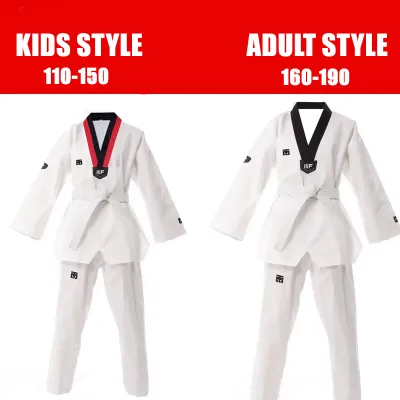
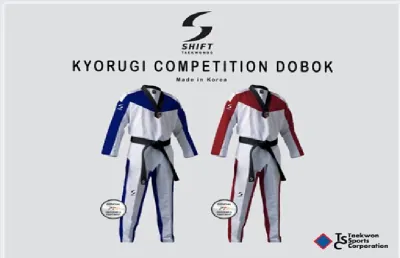
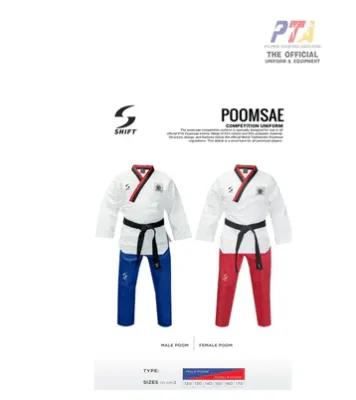
Prices are valid at publication and may change. Please refer to the product page for the latest price.
Tools Needed for Accurate Measurements
Before shopping for a new uniform, gathering the right tools is essential for obtaining precise body measurements. You will need a flexible tailor’s measuring tape, a flat wall to measure height, and a reliable digital scale.

To ensure the measurements reflect your true body dimensions, wear only lightweight undergarments or thin athletic wear while measuring. Heavy clothing adds artificial bulk, which can lead to purchasing a size that is too large and requires extensive, costly alterations.
Step-by-Step Guide to Measuring Your Body
Taking accurate physical measurements is the most reliable way to navigate the sizing variations among different martial arts brands. Relying on your standard clothing size is highly discouraged, as martial arts uniforms are cut differently than everyday apparel.
Measuring Height and Weight
Height serves as the primary baseline for almost all martial arts sizing charts. To measure your height accurately, stand barefoot with your heels, buttocks, shoulders, and head touching a flat wall. Look straight ahead and have someone mark the top of your head with a flat object, then measure from the floor to that point in centimeters.
For weight, step on a scale at a consistent time of day, preferably in the morning before eating. While height dictates the length of the sleeves and pants, your weight acts as a secondary adjuster. This helps determine if you need a wider cut to accommodate your frame comfortably without the fabric pulling tightly across your chest or hips.
Measuring Arm and Leg Length
To measure arm length, stand relaxed and measure from the outer edge of your shoulder seam down to your wrist bone. This ensures the sleeves will not cover your hands or restrict your hand guards during sparring.
For leg length, measure your inseam from the crotch down to the ankle bone. This measurement is critical because pants that are too long will drag on the training mat, causing you to slip or trip during rapid pivoting motions. Conversely, pants that are too short may not comply with formal grading regulations.
How to Read and Apply a Dobok Size Chart
Most martial arts brands use a numerical sizing system, typically ranging from Size 0000 (for toddlers) up to Size 7 or 8 (for very tall adults). For example, a Size 4 often corresponds to a height range of 170 cm to 180 cm. However, sizing is not universally standardized across the industry. A Size 4 from one manufacturer might fit like a Size 5 from another due to differences in cut and regional manufacturing standards.
Always prioritize the specific brand’s official size chart over generic charts. If your height places you in one size but your weight or shoulder width places you in another, prioritize height for the overall length, but consider sizing up if your weight is closer to the upper limit of the recommended range to ensure adequate chest and hip room. If you fall directly between two sizes, choose the larger size; it is far easier to hem sleeves and pants that are slightly too long than to alter a uniform that is too tight.
Managing Fabric Shrinkage and Size Shifts
The material of your uniform dictates how its dimensions will change over time. Traditional 100% cotton doboks are highly breathable but prone to a noticeable dobok taekwondo uniform shift in size, often shrinking by up to 5% to 10% after the first few washes. In contrast, modern poly-cotton blends (typically 65% polyester and 35% cotton) are highly resistant to shrinkage and hold their shape exceptionally well.
If you choose a 100% cotton uniform that is not labeled as pre-shrunk, it is wise to size up to accommodate this post-wash shift. For poly-cotton blends, buy your exact size, as they will not experience a significant size shift.
In warm and humid tropical climates, where training sessions lead to heavy sweating, uniforms require frequent washing. This makes understanding how fabric reacts to water and heat essential to preventing your uniform from shrinking into an unusable size. To minimize shrinkage and preserve the fabric fibers, always wash your dobok in cold water and hang it to air-dry. Avoid using hot dryer cycles, which can warp the collar and permanently shrink the fabric.
The Try-On Test: Verifying Your Dobok Fit
Once your new dobok arrives, you must perform a physical try-on test before removing any tags or wearing it to class. This ensures the uniform can handle the physical demands of training.
Checking the Jacket Fit and Mobility
When you first put on the dobok jacket, look at the shoulder seams. They should align naturally with the outer edge of your shoulders. If they droop down your upper arms, the jacket is too large; if they pull tightly toward your neck, it is too small.
Verify that the sleeves end around your wrist bone or slightly above. This allows you to wear forearm guards during sparring sessions without the fabric bunching up or restricting your circulation. To test upper body mobility, cross your arms tightly in front of your chest and execute a series of basic blocks, such as a low block (arae makki) or middle block (momtong makki). If you feel a restrictive pulling sensation across your upper back or shoulders, the jacket is too tight.
Checking the Pants Fit and Kick Clearance
The waistband of your pants should sit securely on your hips or waist. Most dobok pants feature an elastic waistband combined with a drawstring; it should feel snug and secure without requiring you to pull the drawstring to its absolute limit.
The gusset, or crotch area, must have ample room to accommodate deep stances. Test this by performing a deep front stance or side stance. Next, execute a series of high kicks, including a front kick (ap chagi), side kick (yop chagi), and roundhouse kick (dollyo chagi). If the pants pull tightly against your thighs or restrict your legs from fully extending, the pants are too tight. Additionally, ensure the cuffs do not touch or drag on the floor when you are barefoot, as this poses a serious slipping hazard on the training mats.
Special Sizing Considerations for Children and Grading
Parents of growing children often face the temptation to buy a dobok that is one or two sizes too large to “grow into.” However, an oversized uniform is a safety hazard, as loose pants can cause a child to trip during training. Instead, choose a size that fits reasonably well and perform minor, temporary hemming on the sleeves and pants that can be let down as they grow.
For grading and official promotion tests, consult your dojang’s specific guidelines or your national governing body’s handbook. Many organizations enforce strict rules regarding the uniform’s appearance, including the color of the collar trim (such as red-and-black poom collars for junior black belts under 15) and the exact allowable length of the sleeves and pants. Showing up to an official grading in an ill-fitting or non-compliant uniform can negatively impact your overall evaluation.
Frequently Asked Questions (FAQ)
Should I buy a larger dobok size to allow for shrinking?
Only size up if you are purchasing a 100% cotton uniform that is not pre-shrunk. For modern poly-cotton blends, which are designed to resist shrinking, buy your exact measured size, as a larger size will remain permanently baggier and look unprofessional.
How long should the dobok sleeves and pants be?
Ideally, your dobok sleeves should rest at or slightly above the wrist bone to accommodate hand and forearm guards. The pants should end just above the ankle bone to prevent stepping on the fabric or slipping during dynamic footwork on the mats.
Community discussion
Share your experience or ask a question. Comments are reviewed before publication.