
Choosing the right taekwondo shoes requires matching your training level, your primary discipline, and the specific floor surface of your dojang. Unlike standard athletic footwear, martial arts shoes are specialized tools designed to facilitate rapid pivoting, protect your joints from repetitive impact, and maintain a close connection to the ground. While proper footwear supports your training, it cannot replace correct kicking technique, physical conditioning, and professional instruction. By evaluating how often you train, where you practice, and how your feet move during dynamic kicks, you can select a pair that enhances your stability and minimizes the risk of slips or strains.
Assess Your Training Level and Practice Environment
Your current skill level and training frequency dictate the level of support and durability you need from your footwear. Beginners focusing on basic stances, simple kicks, and introductory forms typically require highly flexible, lightweight shoes that allow them to feel the floor. At this stage, developing correct foot placement and balance is critical, and a shoe that mimics barefoot training helps build the necessary foot strength.
As you progress to intermediate training, your footwork becomes faster and more complex. You will begin practicing light sparring drills, rapid combinations, and multi-directional movements. Intermediate practitioners need a shoe that balances flexibility with enhanced midfoot support and durable pivot zones to handle the increased friction of repetitive turns.
Products mentioned in this guide
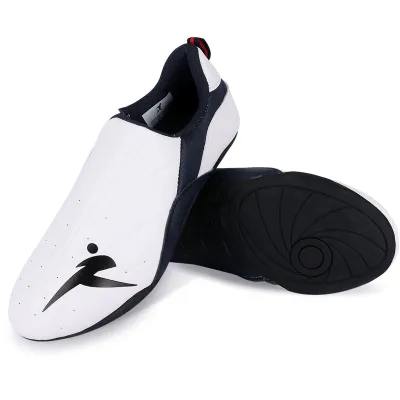

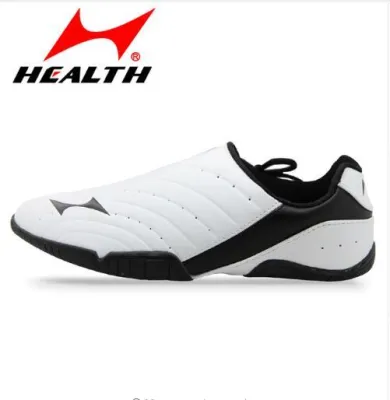
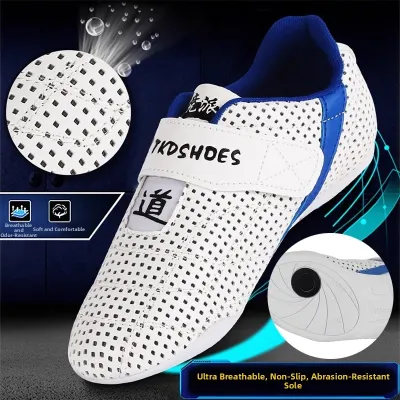
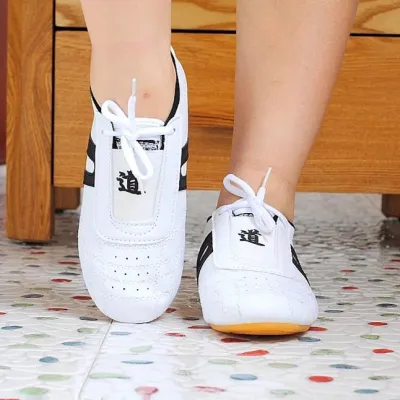
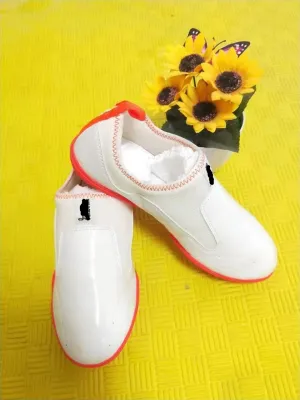
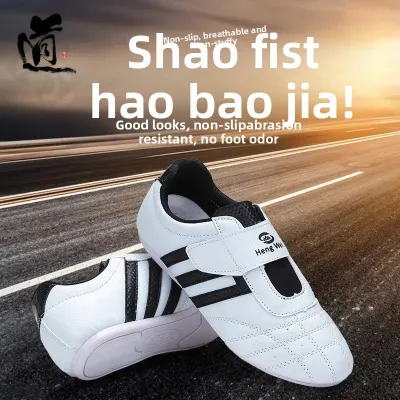
Prices are valid at publication and may change. Please refer to the product page for the latest price.
Advanced martial artists engaging in heavy sparring, competitive matches, and high-impact jumping kicks require specialized footwear. At this level, your shoes must offer robust shock absorption to protect your heels and joints upon landing, along with secure lockdown to prevent your feet from sliding during explosive movements.
The surface of your training venue, or dojang, also plays a major role in your shoe selection. Many modern training centers use high-density EVA foam puzzle mats, which provide built-in cushioning but can create significant friction against rubber soles. If you train primarily on puzzle mats, you need shoes with smooth, rounded pivot points on the sole to prevent your feet from catching and twisting your knees.
Conversely, if your dojang features sprung wood floors, the surface will be naturally bouncy but can become slippery when dusty or wet with sweat. For these environments, look for shoes with a slightly tackier rubber compound that offers reliable grip without restricting your ability to spin. If you practice at home on hard concrete or tiled floors, prioritizing shoes with thicker, cushioned midsoles is essential to safeguard your joints against the unforgiving surface.
Finally, consider whether your primary focus is poomsae (forms) or kyorugi (sparring). Poomsae practitioners require maximum ground feedback and static stability to execute crisp, balanced stances. Kyorugi practitioners, on the other hand, benefit from shoes that offer more impact protection and a secure upper that can withstand the scraping and contact of active sparring.
Evaluate Sole Thickness and Flexibility for Your Discipline
The sole of a taekwondo shoe is its most critical component, directly affecting your balance, speed, and joint safety. Thin, highly flexible soles, which often measure between 3mm and 5mm on many training models, are designed to provide maximum ground feedback. These minimalist soles allow your toes to grip the floor naturally, which is highly beneficial for executing precise poomsae patterns and maintaining your center of gravity during slow, controlled kicks.

However, thin soles offer minimal shock absorption. If your training involves heavy bag work, jumping kicks, or high-impact sparring, a thicker sole with a lightweight foam midsole is highly recommended. These cushioned soles help absorb the force of hard landings and repetitive stamping movements, reducing the cumulative stress placed on your shins, knees, and lower back.
When evaluating any taekwondo shoe, you must check its specific flex point to ensure it aligns with your foot’s natural biomechanics. Hold the shoe by the heel and the toe, then gently compress it. The sole should bend easily at the ball of the foot, which is where your foot naturally flexes when you raise your heel to kick or pivot.
Avoid shoes that bend in the middle of the arch or those that are completely rigid throughout the sole. A shoe that flexes in the wrong place can strain your plantar fascia, while a rigid shoe will restrict your footwork, making it difficult to stay on your toes and execute rapid, explosive movements.
Check Fit, Lockdown, and Upper Materials
A secure fit is paramount in martial arts footwear to prevent injuries and ensure efficient power transfer. Because taekwondo involves rapid lateral shuffles, sudden stops, and high-velocity kicks, your foot must remain firmly anchored inside the shoe. Look for a design that features a snug, contoured heel cup to prevent your heel from slipping upward during vertical movements.
Midfoot lockdown is equally important. Many taekwondo shoes utilize elastic slip-on designs, asymmetrical lacing systems, or secure hook-and-loop straps to keep the upper tight against your instep. Verify that the lockdown mechanism holds your foot securely without cutting off circulation or creating painful pressure points on the top of your foot.
While the heel and midfoot must be snug, the toe box should offer enough room for your toes to splay naturally. When you plant your foot to execute a kick, your toes spread out to provide a stable base of support. If the toe box is too narrow, your toes will be compressed, which compromises your balance and can lead to painful friction blisters or bruised toenails.
The choice of upper material affects both the durability and comfort of your shoes, especially during long training sessions. Synthetic leather is a traditional choice that offers excellent structural support, holds its shape well over time, and resists stretching. However, synthetic leather can trap heat and moisture, so look for models that incorporate perforated zones or mesh panels to facilitate airflow.
Lightweight mesh or knit uppers offer exceptional breathability, which is a significant advantage when training in hot, humid tropical climates. These materials allow sweat to evaporate quickly, keeping your feet cool and dry. The trade-off is that mesh uppers generally provide less lateral support and may wear out faster if they frequently scrape against training mats or sparring gear.
Try-On and Movement Verification Steps
To ensure your chosen taekwondo shoes perform safely and comfortably, you should conduct a thorough try-on and movement test before committing to a purchase. Always try the shoes on with the exact type and thickness of socks you plan to wear during your regular training sessions. If you prefer to train barefoot but your dojang requires footwear, use thin, moisture-wicking athletic socks to get an accurate sense of the fit.
Once the shoes are on, do not simply stand in them; you must replicate the dynamic movements of a typical training session. Start by standing on the ball of one foot and executing a slow, controlled pivot as if you were performing a roundhouse kick. The shoe should rotate smoothly on the floor without sticking or catching, which is crucial for protecting your knee joints from twisting injuries.
Next, perform a few light vertical jumps and land softly on the balls of your feet. Pay close attention to the heel area to verify that your foot does not slip out of the shoe upon landing or takeoff. Follow this with rapid lateral shuffles from side to side to check if your foot slides off the footbed or if the upper material stretches excessively under lateral force.
Be alert for immediate red flags that indicate a poor fit. If you feel any pinching at the Achilles tendon, if your toes press hard against the front of the shoe when standing normally, or if the sole resists bending when you raise your heel, the shoes are not suitable. A poorly fitting shoe will not only hinder your performance but can also lead to chronic foot pain and joint strain.
Maintenance and Replacement Signals
Proper maintenance is essential to extend the lifespan of your taekwondo shoes and maintain their safety features, particularly in warm, humid climates where moisture can rapidly degrade materials. After every training session, wipe the exterior of your shoes with a damp cloth to remove dust and sweat. If the insoles are removable, take them out to allow the interior of the shoes to dry completely.
Always air-dry your shoes in a well-ventilated, shaded indoor area. Never expose them to direct sunlight or high heat sources like hair dryers, as extreme heat can warp synthetic uppers, shrink mesh materials, and break down the adhesives holding the sole to the upper. To combat persistent odors, you can insert cedar shoe trees or specialized deodorizing pouches designed to absorb moisture and neutralize bacteria.
Regularly inspect your shoes for physical signs of wear that compromise their performance and safety. Look closely at the soles to check the condition of the tread patterns, especially around the pivot points under the ball of the foot. If these areas have worn completely smooth, the shoes will no longer provide the controlled grip needed to prevent dangerous slips on dusty wooden floors.
Additionally, check the midsoles for deep compression wrinkles or a flattened appearance, which indicate that the cushioning material has collapsed and lost its shock-absorbing properties. If you begin to experience unusual joint soreness in your knees, ankles, or lower back after standard training sessions, or if the upper material begins to separate from the sole, it is time to replace your shoes immediately to avoid injury.
Frequently Asked Questions (FAQ)
Can I use regular running shoes for taekwondo training?
Running shoes are engineered specifically for forward, linear motion and typically feature thick, cushioned heels and aggressive tread patterns designed to grip outdoor surfaces. In taekwondo, your training demands multi-directional movement, rapid pivoting, and a low center of gravity to maintain balance. The elevated heel stack of a running shoe significantly increases the risk of rolling your ankle during sudden lateral shifts or quick footwork. Furthermore, the high-traction rubber treads on running shoes can grip the training mat too firmly, preventing your foot from rotating smoothly during kicks and placing dangerous twisting stress on your knee joints.
Should I wear socks with my taekwondo shoes?
Wearing socks with your taekwondo shoes is highly recommended for hygiene, comfort, and shoe longevity. High-quality, moisture-wicking athletic socks help absorb sweat, which reduces the humid environment inside the shoe that fosters bacterial growth and unpleasant odors. Socks also act as a protective barrier, reducing direct friction between your skin and the shoe’s inner lining to prevent painful blisters during intense footwork. If you plan to wear socks, make sure to wear them during your initial shoe fitting, as even thin socks can slightly alter the required shoe size and affect the overall lockdown.
Community discussion
Share your experience or ask a question. Comments are reviewed before publication.