
Selecting the right tennis ball is just as critical as choosing the perfect racket, yet it is often overlooked by recreational players. The ideal ball for your game depends on two primary factors: the court surface you play on and your current skill level. Matching these variables correctly ensures a consistent bounce, prevents premature wear, and protects your joints from unnecessary strain. In tropical climates like the Philippines, where high humidity and intense heat accelerate equipment degradation, making an informed choice is vital for both your budget and your performance.
Quick Diagnostic Matrix: Match Your Court and Skill Level
To help you quickly identify the best option before exploring the technical details, this matrix matches common playing environments and skill levels to their corresponding tennis ball categories.
| Court Surface | Skill Level | Recommended Ball Type | Key Characteristics |
|---|---|---|---|
| Hard Court (Concrete/Asphalt) | Intermediate to Advanced | Extra Duty Pressurized | Thick, loose felt weave; highly responsive bounce; resists abrasive wear |
| Hard Court (Concrete/Asphalt) | Beginner / Junior / Casual | Extra Duty Pressureless or Stage Balls | High durability; slower pace; excellent for consistent training |
| Clay, Shell, or Grass | Intermediate to Advanced | Regular Duty Pressurized | Thin, tight felt weave; resists moisture absorption and clay clumping |
| Any Surface | High-Volume Drilling / Ball Machine | Pressureless | Solid rubber core; unlimited bounce lifespan; stiffer feel on impact |
Choosing a ball that does not align with your court surface or skill level can lead to rapid equipment failure and a frustrating playing experience. For instance, using a ball designed for soft clay on a rough concrete court will shred the felt within minutes, while using a high-velocity tournament ball as a beginner can hinder your ability to learn proper swing mechanics. The rest of this guide will help you refine this initial selection to find your ideal match.
Products mentioned in this guide
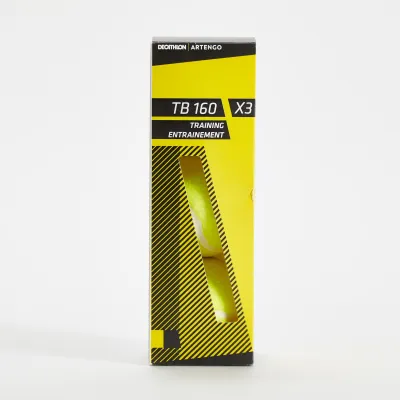
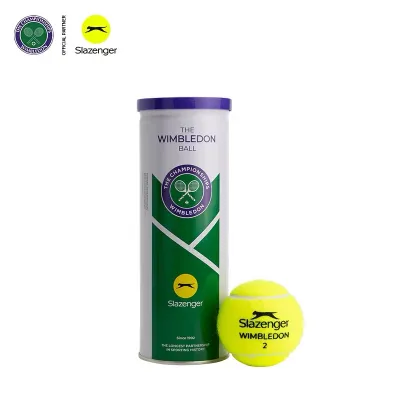
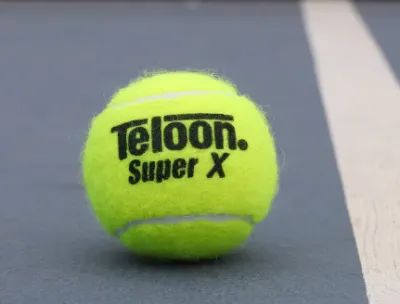
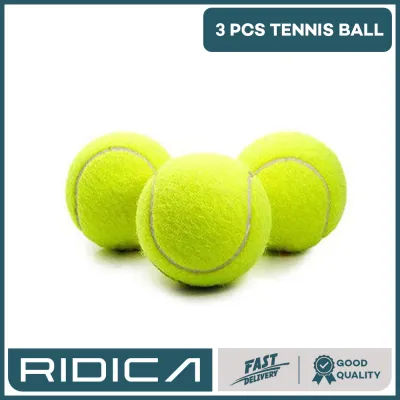
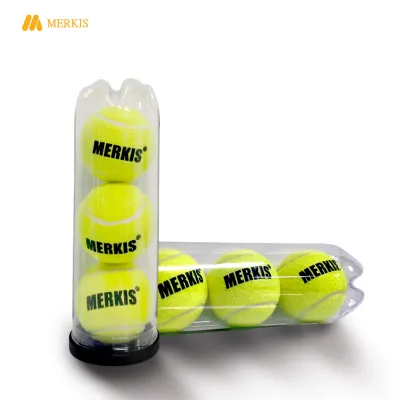
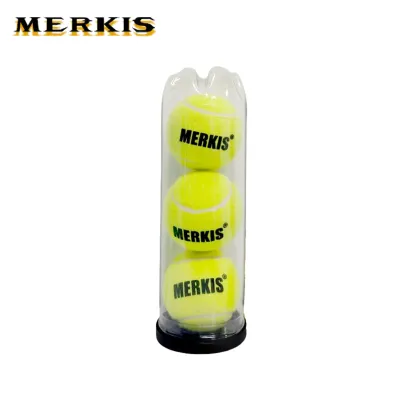
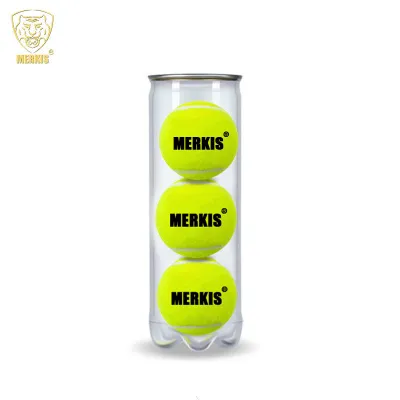
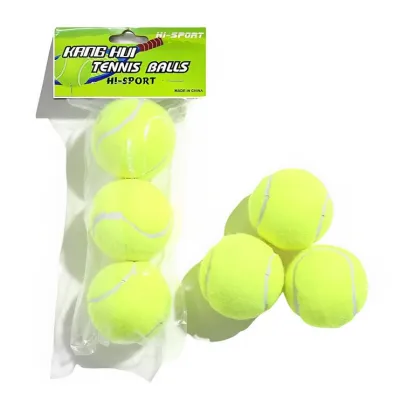
Prices are valid at publication and may change. Please refer to the product page for the latest price.
Step 1: Diagnose Your Primary Court Surface
The texture and material of the court dictate how much friction is applied to the ball during every bounce and strike. Understanding your playing environment is the first step in selecting the correct felt type.

Hard Courts (Concrete, Asphalt, or Acrylic)
In the Philippines, the vast majority of local barangay courts, subdivision facilities, and private clubs feature outdoor hard courts. These are typically constructed from concrete or asphalt, often finished with a textured acrylic paint layer to provide grip.
To identify a hard court, look for a solid, rigid surface with no loose particles. Tactilely, these courts feel rough, almost like fine sandpaper. This rough texture acts as an abrasive agent against the tennis ball. Every time the ball bounces or slides across the court during spin shots, the friction grinds down the felt fibers.
Without a highly durable, thick felt layer, a standard ball will quickly lose its fuzz, exposing the black rubber core beneath. This “balding” process drastically alters the ball’s aerodynamics, causing it to fly faster and bounce unpredictably. Therefore, hard courts demand specialized felt that can withstand intense, repetitive friction.
Clay, Grass, and Artificial Grass Courts
Softer, natural, or synthetic turf surfaces behave very differently from hard courts. In local clubs, clay courts are often constructed using crushed shell (commonly referred to as shell courts), which offers a sliding sensation similar to traditional European red clay. Natural grass and artificial grass courts are less common but can still be found in premium sports complexes.
These surfaces are characterized by loose particles, fine dust, or synthetic blades that yield slightly under impact. Because these courts are much softer, they do not shred the ball’s felt. Instead, the main challenge is debris and moisture.
If a ball has a thick, fluffy felt cover, it will act like a broom, sweeping up loose clay dust, shell grit, or morning dew. This debris gets trapped within the fibers, making the ball heavy, dark, and sluggish. On humid days, the felt absorbs moisture rapidly, turning the ball into a waterlogged weight that can strain your wrist and elbow. Consequently, these surfaces require a tightly bound, thinner felt that resists picking up external elements.
Step 2: Assess Your Skill Level and Training Needs
Your technical proficiency and how you intend to use the balls should guide your choice of core construction and compression level.
Beginners, Juniors, and Casual Players
Novice players and young juniors are still developing their hand-eye coordination, footwork, and stroke mechanics. Standard adult tennis balls bounce high and travel at speeds that leave beginners with very little time to prepare their swings, leading to rushed, improper technique.
To facilitate progressive skill development, the International Tennis Federation (ITF) established the “Play and Stay” stage ball system. These balls are color-coded and feature lower compression levels:
- Red Stage 3 Balls: Designed for children aged 5 to 8 or absolute adult beginners. They are larger than standard balls, made of foam or highly compressed felt, and travel 75% slower than standard balls.
- Orange Stage 2 Balls: Ideal for players aged 8 to 10. They are standard-sized but travel 50% slower, bouncing at a manageable waist height.
- Green Stage 1 Balls: Designed for transitioning players. They travel 25% slower and bounce slightly lower than standard balls, allowing players to practice full-court rallies with proper timing.
For casual recreational players who play infrequently, pressureless balls are an excellent alternative. They provide a consistent, slightly slower pace and do not go “dead” while sitting in a sports bag between monthly games, saving you the expense of constantly buying fresh cans.
Intermediate to Advanced and Competitive Players
Players who have mastered their stroke timing and can generate their own pace and spin require equipment that responds accurately to high-velocity impacts.
For these players, pressurized tennis balls are non-negotiable. The internal air pressure provides a crisp, lively response off the string bed, allowing for aggressive topspin, slice, and powerful serves.
Competitive players must train with balls that meet strict official tournament specifications. These standards ensure that the ball’s weight (between 56.0 and 59.4 grams), diameter, and deformation characteristics are uniform, preventing discrepancies when transitioning from practice to match play.
It is also worth noting compression ratings. While standard-pressure balls are designed for sea-level play (which applies to almost all coastal and lowland areas in the Philippines), high-altitude balls are manufactured with lower internal pressure. These are specifically designed for play in high-elevation regions, such as Baguio, to prevent the balls from flying excessively long due to the thin mountain air. If you play at sea level, always stick to standard-pressure balls.
Step 3: Select the Correct Tennis Ball Felt and Core Type
Once you have diagnosed your court surface and assessed your skill level, you can make a precise purchase by understanding the engineering differences between felt and core types.
Regular Duty vs. Extra Duty Felt
The distinction between regular and extra duty lies in the composition and weave of the felt covering.
- Extra Duty Felt: This type is engineered with a higher percentage of synthetic fibers (like nylon) blended with wool, woven into a thicker, looser pattern. The loose weave is designed to fluff up slightly during play. This fluffing acts as a protective cushion against abrasive concrete and asphalt hard courts, absorbing the impact and slowing the ball down slightly for better control.
- Regular Duty Felt: This felt features a higher wool content and a much tighter, thinner weave. It is designed to resist fluffing. Because clay, shell, and grass courts do not grind down the felt, this tight weave prevents the ball from absorbing moisture, clay dust, or grass stains, preserving its original weight and flight path.
Using the wrong felt on the wrong surface has clear consequences. If you play with regular duty balls on a concrete court, the thin felt will wear away rapidly, leaving you with a bald, uncontrollable ball within a single set. Conversely, using extra duty balls on a clay or shell court will cause the loose felt to collect dust and moisture, making the ball heavy and sluggish, which can lead to shoulder and elbow fatigue.
Pressurized vs. Pressureless Balls
The core construction determines how the ball bounces and how long it remains usable.
- Pressurized Balls: These balls feature a hollow rubber core filled with compressed air or nitrogen, creating an internal pressure of approximately 14 pounds per square inch (psi). They are sold in hermetically sealed plastic or metal cans pressurized to match the ball's internal environment. Pressurized balls offer a lightweight feel, excellent speed, and a highly responsive bounce. However, because rubber is naturally porous, the pressurized gas slowly escapes over time. Once the can is opened, the balls begin losing pressure immediately, typically going "dead" within one to three weeks of active play, regardless of how often they are hit. A can of premium pressurized balls usually costs between ₱350 and ₱500.
- Pressureless Balls: These are built with a thicker, highly elastic solid rubber core. They do not rely on internal air pressure; instead, their bounce comes entirely from the physical elasticity of the rubber compound. Because they do not lose gas, they never go dead. In fact, as the felt wears away over time, pressureless balls actually bounce higher and travel faster because they become lighter. While they feel slightly heavier and stiffer on impact—which some players find less comfortable—their extreme durability makes them the perfect choice for ball machines, coaching baskets, and high-volume solo practice. Bulk packs for training typically range from ₱1,500 to ₱2,500 depending on the quantity.
How to Tell When Your Tennis Balls Need Replacing
Playing with worn-out or dead balls can ruin your stroke mechanics, reduce the quality of your game, and increase your risk of injury. You can easily evaluate your equipment using three simple checks.
First, perform the squeeze test. Hold the ball in your palm and press your thumb firmly into the center. A fresh pressurized ball will feel rock-hard with almost zero give. If you can easily compress the ball’s shell inward by several millimeters, the internal gas has escaped, and the ball is dead.
Second, perform a visual check. Inspect the felt cover for bald patches where the black rubber core is visible, or look for extreme fluffing that makes the ball look oversized. Uneven felt wear will cause the ball to wobble or drift in the air.
Third, use auditory cues. Drop the ball from eye level onto a hard surface. A healthy ball will make a sharp, clean “ping” sound and bounce back up to about chest height. A dead ball will produce a dull, hollow “thud” and struggle to bounce past your waist.
When balls are no longer suitable for competitive match play, do not discard them. You can repurpose them for low-intensity wall-rebound practice, use them in ball machines for footwork drills, or donate them to local schools to use as protective caps on the bottom of metal chair legs.
Frequently Asked Questions (FAQ)
Can I use extra duty balls on a clay court?
Using extra duty balls on a clay or shell court is not recommended. The thick, loose weave of extra duty felt is designed to fluff up, which on a clay surface acts like a magnet for loose dust, shell grit, and moisture. This causes the ball to quickly become heavy, slow, and unbalanced. Playing with waterlogged, dust-heavy balls ruins the pacing of the game and significantly increases the physical strain on your wrist, elbow, and shoulder.
How can I tell if a pressurized tennis ball has lost its bounce?
You can verify a ball’s bounce with a quick drop test. Stand next to a flat concrete surface, hold a fresh ball and the suspect ball at eye level (about 1.8 meters), and drop them at the same time. A fresh, fully pressurized ball will bounce back up to approximately net height (around 90 to 100 centimeters). If the suspect ball bounces noticeably lower, or if it feels soft and easily squeezable between your thumb and fingers, it has lost its internal pressure and should be replaced.
Community discussion
Share your experience or ask a question. Comments are reviewed before publication.