
Selecting the right tennis balls requires matching the felt type to your court surface—extra duty for abrasive hard courts and regular duty for soft clay—while choosing a compression level that aligns with your playing experience. Using the wrong ball can ruin your game, wear out your gear prematurely, or even lead to physical strain like tennis elbow.
In tropical climates where heat and humidity are constant factors, making the correct choice is even more critical. A ball that performs beautifully on a dry indoor court might become heavy and sluggish after just a few games on a humid outdoor court. Understanding how ball construction interacts with your playing environment is the key to optimizing both performance and value.
Understand the Core Types of Tennis Balls
Before purchasing your next can of tennis balls, it helps to understand the terminology printed on the packaging. Tennis balls are broadly categorized by their internal construction, felt density, and quality control grades.
Products mentioned in this guide
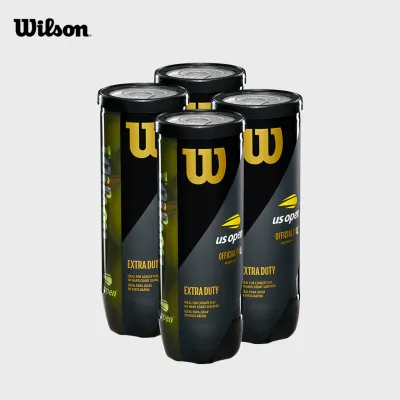
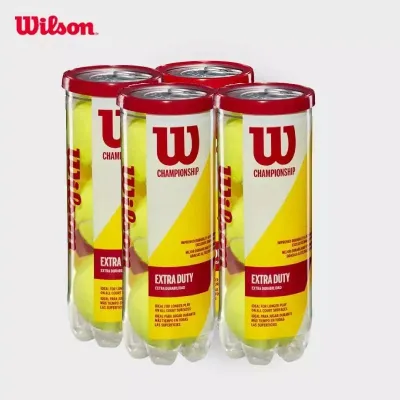
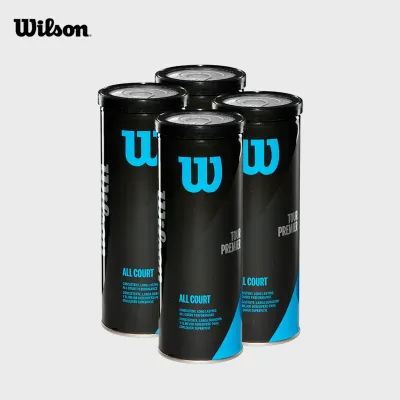
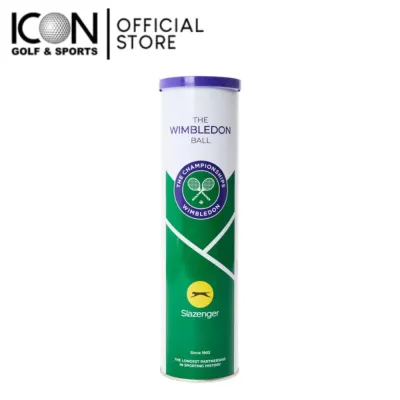
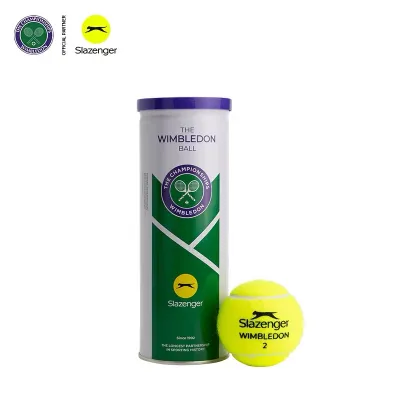
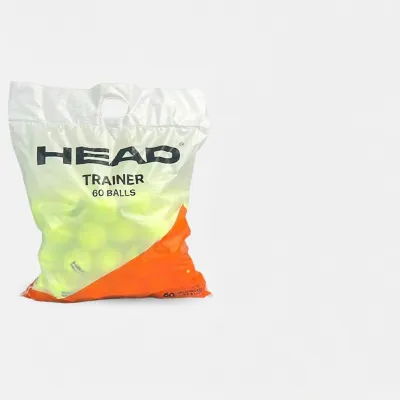
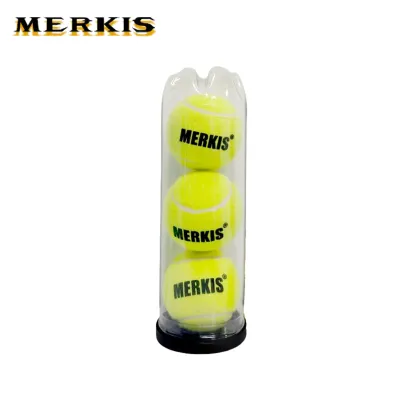
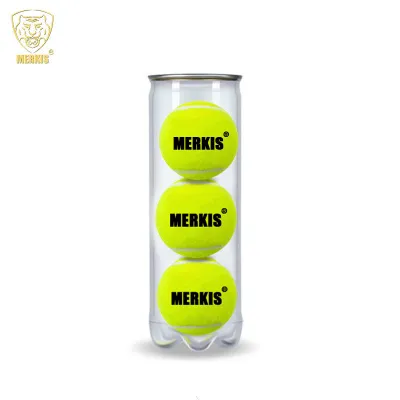
Prices are valid at publication and may change. Please refer to the product page for the latest price.
Pressurized balls are the industry standard for competitive play. These balls are filled with compressed air or nitrogen, which gives them a lively, responsive bounce and a crisp feel off the racket strings. However, because the rubber core is gas-permeable, pressurized balls slowly lose their pressure over time, even while sitting unused in an unopened can. Once you pop the seal on the pressurized metal or plastic tube, the degradation process accelerates, giving the balls a typical lifespan of only a few matches.
Pressureless balls, on the other hand, feature a much thicker, solid rubber core. They do not rely on internal gas pressure for their bounce; instead, they get their rebound from the natural elasticity of the rubber structure. While they feel slightly heavier and stiffer on impact, pressureless balls are incredibly durable. In fact, as the outer felt wears away over time, pressureless balls actually bounce higher and become livelier. This makes them a popular choice for teaching carts, ball machines, and casual practice sessions.
Felt construction is another critical variable. Manufacturers classify felt into Regular Duty and Extra Duty categories. Regular Duty felt is thinner and more tightly woven, designed to prevent the ball from absorbing too much moisture or dirt. Extra Duty felt is thicker, fluffier, and woven with a higher concentration of synthetic nylon fibers to withstand abrasive surfaces.
Finally, you will see balls graded as either championship or practice level. Championship-grade balls undergo strict quality control to ensure uniform weight, bounce, and seam construction, making them suitable for league matches and tournaments. Practice or recreational balls have more forgiving manufacturing tolerances and are built for durability and cost-effectiveness rather than absolute precision.
Select the Right Felt for Your Court Surface
Matching the felt of your tennis balls to the specific court surface is the most effective way to maximize their lifespan and maintain predictable playability.

Hard Courts
Hard courts made of concrete, asphalt, or acrylic resins are highly abrasive. They act like sandpaper on the ball’s outer layer. For these surfaces, Extra Duty balls are highly recommended. The thick, durable felt on Extra Duty balls is designed to resist tearing and balding. If you attempt to use a Regular Duty ball on a hard court, the abrasive surface will strip the felt away within a few games, leaving you with a bald, uncontrollable ball that skids wildly.
Clay Courts
Clay courts, including the crushed-shell courts common in many local sports clubs, require Regular Duty tennis balls. Because clay is a soft, loose surface, it does not wear down the felt. Instead, the challenge is dust and moisture. If you use an Extra Duty ball on clay, the thick, fluffy felt will act like a brush, trapping the fine clay particles and absorbing ground moisture. This quickly makes the ball heavy, dark, and sluggish, which dramatically slows down play and increases the physical shock transmitted to your wrist and shoulder.
Grass Courts
Grass courts are rare, but they present unique challenges. They are naturally slick and prone to moisture retention. Regular Duty balls, or specialized grass-court balls with moisture-resistant felt treatments, are ideal here. These balls resist water absorption and help prevent the ball from skidding excessively low on the turf.
All-Court and Multi-Surface Balls
All-Court or Multi-Surface balls are designed as a middle-ground compromise. They are highly practical for recreational players who frequently switch between concrete barangay courts and clay club courts. While they do not offer the specialized performance of a dedicated surface-specific ball, they provide a balanced blend of durability and playability across different venues.
Match the Ball Compression to Your Skill Level
Choosing a ball with the appropriate compression level ensures that the speed and bounce of the ball match your technical ability, swing speed, and physical comfort.
Beginners and Juniors
For those just starting out or for young players developing their coordination, standard pressurized balls can bounce too high and travel too fast. This makes it difficult to establish proper swing mechanics. Low-compression transition balls are highly recommended for this stage. These are categorized into three color-coded stages:
- Stage 3 (Red): Designed for young children and absolute beginners. These balls are larger, lighter, and travel roughly 75% slower than standard balls, allowing players to focus on contact and footwork.
- Stage 2 (Orange): These are standard-sized but travel about 50% slower than a normal ball, suitable for medium-sized courts.
- Stage 1 (Green Dot): These have a slightly lower compression than standard balls (about 25% slower) and serve as the final step before transitioning to full-pressure balls.
Using these low-compression options reduces arm strain and gives beginners the extra split second they need to set up their shots correctly.
Intermediate and Club Players
Intermediate players who play regular recreational matches generally benefit from standard pressurized tennis balls. At this stage, players have developed a consistent swing and can handle a lively, responsive bounce. Standard pressurized balls offer a satisfying “pop” and allow players to practice depth control and basic spin. For regular play, look for mid-range pressurized cans, which typically cost between ₱300 and ₱500 per can of three in local sports shops, offering a good balance of performance and budget.
Advanced and Tournament Players
Advanced players with high swing speeds and precise control require premium, International Tennis Federation (ITF) approved pressurized balls. These balls feature high-grade woven felt and premium rubber cores that offer exceptional flight consistency and predictable deformation on impact. This level of quality control is essential for generating heavy topspin and executing high-velocity shots with pinpoint accuracy.
Adjust for Climate and Special Playing Conditions
Environmental factors like humidity, temperature, and altitude can dramatically alter how a tennis ball behaves in the air and off the court surface.
Humidity and Moisture
In tropical climates with high relative humidity, moisture is a constant challenge. When the air is damp, the felt on a tennis ball absorbs moisture, making the ball heavier. A heavy ball flies slower, bounces lower, and places significantly more strain on your elbow and shoulder joints. To combat this, look for premium balls that feature moisture-resistant felt coatings. It is also wise to rotate multiple balls during a session and store them in a dry, sealed container with silica gel packs between games to help draw out residual dampness.
High-Altitude Play
If you are playing in high-altitude regions, such as Baguio or other mountainous areas, the thin air offers less aerodynamic resistance. Standard pressurized balls will fly exceptionally fast and bounce too high, often sailing past the baseline. To counter this, manufacturers produce specialized high-altitude balls. These have a lower internal pressure to normalize the bounce and flight path in thinner air.
Cold Weather
While tropical lowlands rarely experience cold weather, playing in air-conditioned indoor facilities or during cooler monsoon evenings can affect your gear. Cold temperatures cause the air inside pressurized balls to contract, making them feel hard and reducing their bounce. If you are playing in cooler conditions, keep your tennis cans at room temperature before heading to the court to maintain their optimal bounce.
How to Test and Verify Your Tennis Balls
To ensure your equipment is performing safely and effectively, you can perform a few quick, low-risk checks before and during your matches.
The Drop Test
A simple way to check if your balls have lost their bounce is the drop test. Hold a new, freshly opened ball and one of your used balls side-by-side at eye level. Drop them simultaneously onto a hard court surface. A healthy, pressurized ball should rebound to approximately chest height. If your used ball bounces significantly lower than the fresh one, it has lost its internal pressure and should be retired from active match play.
The Squeeze Test
You can easily check a ball’s structural integrity with a manual squeeze test. Hold the ball in your palm and press your thumb firmly into the center. A fresh, high-quality ball will feel firm and offer strong resistance. If the ball yields easily under moderate thumb pressure or feels squishy, the internal gas has escaped, and the ball will play “dead” on the court.
Visual and Tactile Inspection
Take a moment to inspect the cover of the ball. Look for bald patches where the felt has worn away, uneven fluffing, or visible separation along the seams. A bald ball will fly faster but will not take spin effectively, while a severely puffed-up ball will drag in the air and feel heavy on your racket.
Repurposing
When your tennis balls are no longer suitable for competitive matches, do not throw them away. Retire them to a practice basket for serving drills, use them in a ball machine, or use them for physical therapy to roll out tight muscles in your back or feet. You can also donate them to local schools or pet shelters, ensuring they get a second life before heading to the landfill.
Frequently Asked Questions (FAQ)
How long do pressurized tennis balls last once opened?
Once a pressurized can is opened, the balls immediately begin to lose pressure. For competitive match play, pressurized balls generally last for one to two sessions (about three to four hours of active play) before the loss of bounce becomes noticeable. For casual hitting or recreational play, they can remain usable for one to two weeks. Pressureless balls, by contrast, do not lose pressure and can last for months until the felt completely wears out.
Can I use extra duty tennis balls on clay courts?
It is highly discouraged to use Extra Duty balls on clay courts. The thick, fluffy felt of Extra Duty balls is designed to resist abrasion, but on clay, it acts like a brush. It will trap loose clay dust and absorb moisture from the court, quickly making the ball heavy, dark, and slow. This ruins the playability of the ball and increases the risk of arm injuries due to the added weight.
What is the difference between championship and practice tennis balls?
Championship tennis balls are built with premium materials, tighter manufacturing tolerances, and high-quality woven felt, ensuring a consistent bounce and flight path suitable for match play. Practice tennis balls are manufactured with more relaxed tolerances and often use synthetic needle-punched felt. While they are highly durable and cost-effective for drills, they do not offer the same level of bounce consistency or spin responsiveness as championship-grade balls.
Community discussion
Share your experience or ask a question. Comments are reviewed before publication.