
Finding the perfect tennis racket is one of the most critical decisions you will make as a player, directly influencing your development, performance, and physical comfort on the court. The ideal racket acts as a natural extension of your arm, complementing your physical strength, swing speed, and tactical approach. Conversely, playing with a frame that does not match your current abilities can stall your progress, lead to chronic errors, and even cause serious physical strain.
In tropical playing conditions like those in the Philippines, where high humidity and intense heat are constant factors, equipment choices become even more critical. High humidity can cause tennis balls to absorb moisture and feel heavier, while sweat can compromise your grip and control. Understanding how different racket specifications interact with your body and the environment is the first step toward making an informed investment that will elevate your game.
Quick Guide: Matching Racket Types to Player Profiles
Before diving into technical specifications, it helps to understand how racket categories align with general player profiles. Rackets are broadly categorized into power (game-improvement), control (player’s), and tweener (all-around) frames.
Products mentioned in this guide
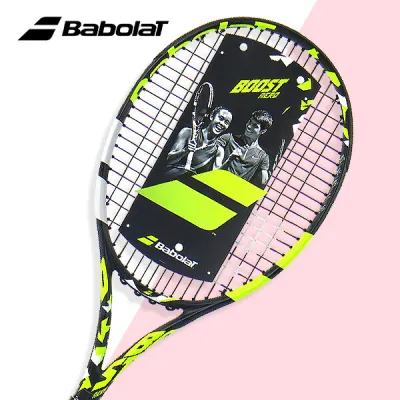
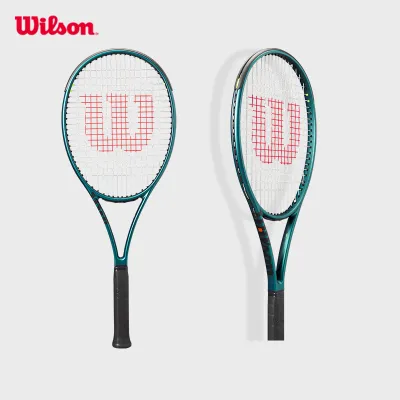
![[ONLINE EXCLUSIVE] WILSON Fusion Xl Tennis Recreational Racket](https://img.lazcdn.com/g/ff/kf/S9ee6dd6bb9284aca85cb86d0a03abb10H.jpg_400x400q80.jpg_.webp)
![[ONLINE EXCLUSIVE] WILSON Essence 2 Tennis Recreational Racket](https://img.lazcdn.com/g/ff/kf/S3fb2b7b17eae419d89f766515871136aT.jpg_400x400q80.jpg_.webp)
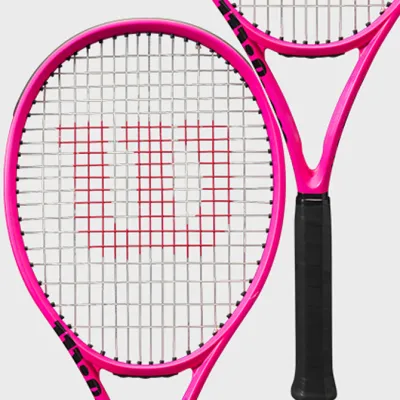
Prices are valid at publication and may change. Please refer to the product page for the latest price.
| Player Profile | Skill Level | Recommended Head Size | Unstrung Weight | Frame Balance | Primary Benefit |
|---|---|---|---|---|---|
| Recreational / Learning | Beginner | 105 sq. in. or larger | Under 280 grams | Head-Heavy | Power assistance and forgiveness |
| Developing / Versatile | Intermediate | 100 to 104 sq. in. | 280 to 299 grams | Balanced | Blend of power, control, and spin |
| Competitive / Precise | Advanced | 98 sq. in. or smaller | 300 grams or heavier | Head-Light | Maximum control and maneuverability |
Beginners benefit most from oversized, lighter frames that feature a head-heavy balance. This design provides built-in power, allowing players with shorter, developing swings to clear the net consistently without exhausting their muscles.
Intermediate players generally transition to mid-plus, balanced frames. These “tweener” rackets offer a versatile canvas, allowing you to develop a more reliable swing path while providing a balanced mix of depth control and maneuverability.
Advanced players require heavier, head-light frames with smaller head sizes. Because these players generate their own power through fast, fluid swing mechanics, they prioritize precision, feedback, and stability against heavy incoming shots.
Step 1: Identify Your Current Skill Level
An honest self-assessment of your current playing ability is essential before looking at racket specifications. Many players make the mistake of purchasing a racket used by their favorite professional, only to find that the heavy, low-powered frame hinders their growth and causes arm pain.

Beginner to Intermediate Signals
If you are new to the sport or play occasionally on weekends, you likely exhibit beginner to intermediate characteristics. These include a developing swing path that is often short or compact, inconsistent ball contact, and frequent off-center hits. At this stage, your primary challenge is keeping the ball deep in the opponent’s court while maintaining control over your shots.
On-court signals of an intermediate player include a more consistent rally pace, but with limited ability to dictate spin or depth at will. You are beginning to develop a full swing, but you still rely on the racket’s trampoline effect to help you recover depth when you are pulled out of position. A larger sweet spot is highly beneficial here, as it minimizes the loss of power on off-center strikes and keeps rallies alive.
Advanced and Tournament-Level Signals
Advanced and tournament-level players demonstrate highly consistent ball striking, structured footwork, and fully developed, fast swing mechanics. If you can reliably hit deep groundstrokes with intentional topspin or slice, dictate the pace of rallies, and transition smoothly from defense to offense, you fall into this category.
At this level, you do not need a racket to generate power for you. Instead, you require a frame that offers maximum control and predictability when you swing at high speeds. Advanced frames are designed to absorb the heavy impact of fast-paced balls and deliver precise feedback, allowing you to paint the lines and execute delicate touch shots with confidence.
Step 2: Determine Your Playing Style and Swing Mechanics
Your physical swing mechanics and tactical positioning on the court are just as important as your skill level. Different racket designs cater to specific styles of play, whether you prefer to dominate from the baseline or rush the net.
Power and Baseline Players
Baseline players prefer to stay near the back of the court, engaging in long, grinding rallies and using heavy topspin to push opponents deep. If you have a long, fast swing and like to hit aggressive groundstrokes, you are a baseline power player.
To support this style, you need a racket that offers exceptional stability against high-impact ball strikes. Stiffer frames with slightly wider beams help transfer energy efficiently back into the ball, generating the depth and pace required to dominate from the baseline. A slightly heavier frame also prevents the racket from twisting when defending against hard-hitting opponents.
Control and Net Players
Tactical players rely on variety, precise placement, and touch rather than raw power. If you frequently approach the net, play a lot of doubles, or use compact, short swings to redirect your opponent’s pace, your style is focused on control and net play.
For this approach, maneuverability and feel are paramount. You will benefit from more flexible frames and smaller head sizes that offer superior feedback, allowing you to execute precise volleys, drop shots, and angles. A head-light balance is crucial here, as it allows you to react quickly at the net during fast-paced reflex exchanges.
All-Court and Transitional Players
All-court players are the chameleons of the tennis court, comfortable trading groundstrokes from the baseline, hitting transition slices, or finishing points at the net. If you do not limit yourself to one area of the court and adapt your strategy to exploit your opponent’s weaknesses, you need an all-court setup.
This style requires a highly versatile “tweener” racket that does not favor one extreme over another. You need enough mass to keep baseline shots deep and stable, combined with a balanced or slightly head-light distribution that allows for quick handling when transitioning to the net.
Step 3: Translate Your Profile into Racket Specifications
Once you have identified your skill level and playing style, you can translate these traits into concrete physical specifications. When shopping online or visiting a pro shop, look at the spec sheet printed on the inner throat of the frame.
Head Size and Sweet Spot
The head size of a racket directly dictates its power potential and forgiveness. Head sizes are measured in square inches and generally fall into three categories:
- Oversized (105 sq. in. and larger): These frames offer a massive sweet spot, acting like a trampoline to return maximum energy to the ball. They are ideal for beginners and players with slower swings who need help getting depth.
- Mid-Plus / Super-Mid (100 to 104 sq. in.): This is the most popular range, offering a highly functional balance of power and control. It is the standard for intermediate players and many modern advanced players who utilize heavy topspin.
- Midsize (95 to 99 sq. in. and smaller): These frames offer a compact sweet spot designed for players with precise, consistent swings. They provide maximum control and directional accuracy, but offer very little forgiveness on off-center hits.
Weight and Maneuverability
Racket weight is always measured unstrung, as strings add about 15 to 20 grams to the overall weight. Choosing the right weight is a balance between stability and physical comfort:
- Lightweight (Under 280 grams): Easy to swing and highly maneuverable, making them excellent for beginners, juniors transitioning to adult frames, or players with physical limitations. However, they can feel unstable and twist when blocking back fast, heavy shots.
- Medium Weight (280 to 299 grams): The sweet spot for intermediate players, providing enough mass to handle moderate pace while remaining easy to swing over long matches.
- Heavyweight (300 grams and heavier): Preferred by advanced players. The added mass provides superior stability, absorbs heavy shock, and allows for excellent plow-through on contact.
Safety Boundary: Playing with a racket that is too heavy for your current physical strength can lead to rapid arm fatigue, poor swing mechanics, and acute shoulder or wrist strain. Always prioritize a weight that you can swing comfortably and cleanly for a full three-set match under hot, humid conditions.
Balance and Stiffness
Balance refers to how the weight is distributed along the length of the racket, measured from the butt cap upward:
- Head-Heavy (HH): More weight is concentrated in the hoop. This design helps players with slower, shorter swings generate momentum and depth.
- Head-Light (HL): More weight is concentrated in the handle. This makes the racket feel nimble and easy to maneuver, which is essential for fast net play and generating quick racket head speed on serves.
- Even Balance (EB): Distributes weight equally, offering a neutral feel suitable for all-court players.
Frame stiffness is measured by an RA rating, typically ranging from 50 (highly flexible) to 75 (extremely stiff). Stiffer frames bend less upon impact, returning more energy to the ball for increased power, but they transmit more harsh vibrations to your arm. Flexible frames absorb more energy, offering a plush, comfortable feel and better control, but they require you to supply the swing speed to generate depth. If you are prone to arm discomfort, such as tennis elbow, look for a frame with a lower RA rating (under 64) and pair it with a soft string.
How to Test and Finalize Your Racket Choice
While analyzing specifications on paper is a great starting point, nothing replaces the feel of hitting balls on court. Whenever possible, take advantage of demo programs offered by local pro shops or tennis clubs. In the Philippines, many specialized sports retailers and tennis centers allow you to rent demo rackets for a nominal fee (often ranging from ₱200 to ₱500, which is sometimes deductible from your final purchase).
When demoing a racket, pay close attention to how it is strung. The string type and tension can drastically alter how a frame performs. If possible, test the racket with a multi-filament or synthetic gut string strung at a mid-range tension (around 50 to 53 pounds), as this provides a neutral baseline to evaluate the frame’s natural characteristics.
Finding the correct grip size is another vital step to prevent injury and maintain control. A simple way to check your grip size is the finger test:
- Hold the racket handle with an Eastern forehand grip (where your palm is flat against the same bevel as the string face).
- Place the index finger of your non-hitting hand in the gap between your ring finger and the palm of your gripping hand.
- If there is not enough room for your index finger, the grip is too small, which can cause you to squeeze too tightly and strain your forearm. If there is a large gap, the grip is too large, preventing you from snapping your wrist naturally on serves.
Always evaluate a demo racket over a full playing session rather than just a few hits. Notice how your arm feels after hitting serves, volleys, and defensive groundstrokes. If you experience any sharp pain or unusual fatigue in your elbow, wrist, or shoulder, stop playing immediately. Consult a certified coach or a professional racket technician to adjust the weight, grip size, or string setup before continuing.
Frequently Asked Questions (FAQ)
How often should I upgrade my tennis racket?
Racket upgrades should be driven by your personal skill progression and physical feedback rather than a calendar schedule. If you find yourself consistently hitting the ball long despite using proper swing mechanics, your skills may have outgrown your racket’s built-in power, signaling a need for a heavier, more control-oriented frame. Conversely, if you feel the racket is too sluggish during fast net exchanges or causes arm fatigue after an hour of play, transitioning to a lighter or more aerodynamic frame is highly beneficial. For regular players, modern composite frames generally maintain their structural integrity for three to five years before the carbon fibers begin to fatigue.
Does string tension matter as much as the racket frame?
Yes, strings and tension act as the engine of your racket, directly shaping how the frame’s physical characteristics translate on the court. While the frame provides the baseline limits of weight, balance, and stiffness, you can completely alter its playability through your string setup. As a general rule, lower string tensions (e.g., 48 to 52 pounds) increase power and comfort by allowing the strings to stretch more, while higher tensions (e.g., 55 to 58 pounds) offer greater control and spin potential at the cost of arm comfort. If you play in high-humidity environments, your strings will naturally lose tension faster, making regular restringing (typically costing ₱500 to ₱1,500 depending on the string type) essential to maintaining consistent performance.
Community discussion
Share your experience or ask a question. Comments are reviewed before publication.