
Solo tennis practice has become increasingly popular in the Philippines, offering players a convenient way to refine their strokes, build muscle memory, and maintain physical conditioning without the need to coordinate schedules with a hitting partner or book court times. However, selecting the right tennis rebounder requires a careful balance of several factors, including your current skill level, the physical constraints of your practice area, and the demanding tropical climate. From high-tension adjustable nets to portable tethered ball systems, the market offers diverse designs that cater to different training goals.
In local settings, solo practice often takes place on concrete driveways, garage spaces, or multi-purpose subdivision courts. These environments demand equipment that is not only highly durable but also easy to set up, secure, and store. A well-chosen rebounder acts as a reliable training partner, returning the ball with consistent pacing and realistic trajectories, allowing you to focus entirely on your footwork, racket face alignment, and contact point. By understanding the structural differences and material specifications of available options, you can make an informed decision that elevates your game and withstands the test of time.
Comparing the Main Types of Tennis Rebounders
To narrow down your choices, you must first understand the three primary structural categories of tennis rebounders: adjustable rebound nets, bungee cord tether systems, and solid rebound boards. Each design offers a distinct ball return dynamic, affecting the rhythm of your practice and the types of strokes you can effectively train.
Products mentioned in this guide
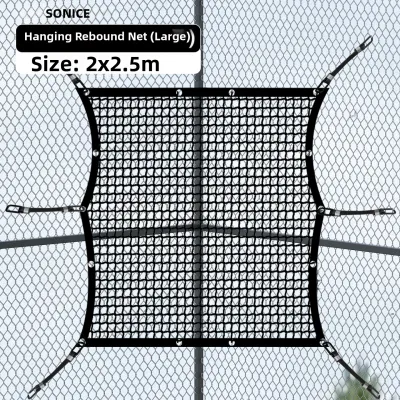
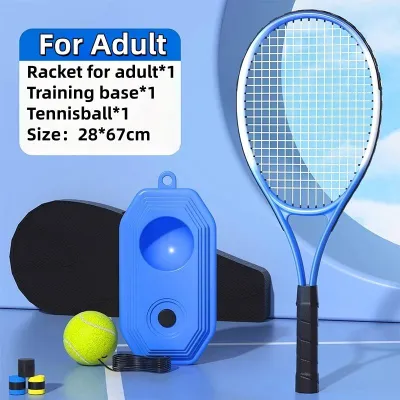
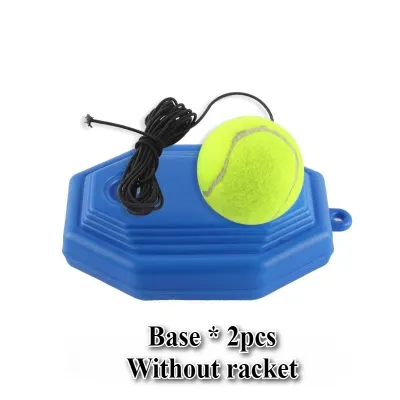
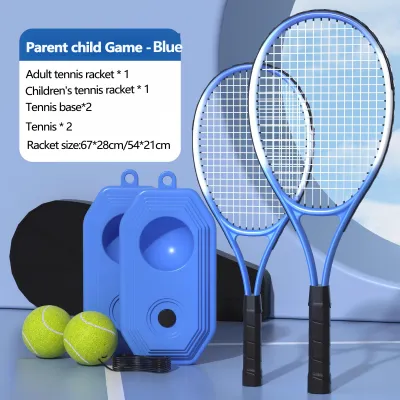
Prices are valid at publication and may change. Please refer to the product page for the latest price.
Adjustable rebound nets are among the most versatile options available for solo players. These systems consist of a large, high-tension net suspended within a metal frame, which can be tilted at various angles to alter the trajectory of the returning ball. When you strike the ball into the net, the elastic tension absorbs the impact and flings the ball back toward you. Tilting the frame backward creates a high, looping return that simulates deep baseline groundstrokes, giving you ample time to practice your preparation and footwork. Conversely, setting the net to a vertical position returns the ball at a lower, faster trajectory, which is excellent for practicing mid-court transition shots and low volleys.
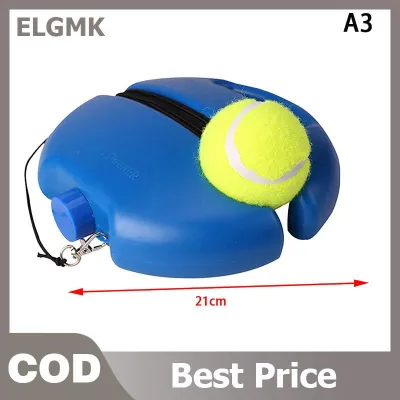
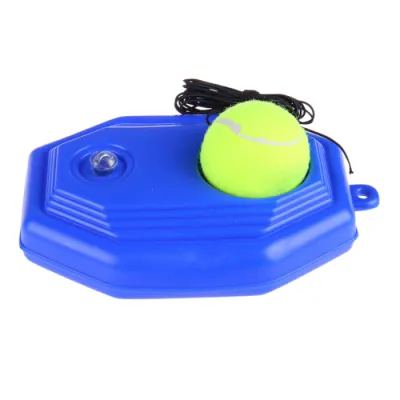
Bungee cord and ball tether systems, often referred to as base trainers, offer a highly portable and budget-friendly alternative. These systems utilize a compact, heavy base anchor connected to a tennis ball by a long, high-elasticity bungee cord. When you hit the ball, it travels outward until the cord reaches its maximum stretch, at which point the elastic tension pulls the ball back toward your position. While the return trajectory of a tethered ball is less natural than a free-flying ball bouncing off a net, this setup is incredibly efficient for practicing repetitive stroke mechanics, timing, and rapid footwork drills. Because the ball is physically anchored, you do not have to worry about chasing stray shots, making it an excellent choice for confined spaces.
Solid or padded rebound boards represent the closest approximation to hitting against a traditional concrete wall. These systems feature a rigid panel made of high-density plastic, treated wood, or composite materials, often backed by sound-dampening foam to reduce noise. When a tennis ball strikes the solid surface, it rebounds instantly with minimal energy loss, returning to the player at high speed. This rapid return makes solid boards highly effective for fast-paced volley practice, half-volleys, and reflex training. However, because the ball returns so quickly, these systems require precise racket control and fast reaction times, making them less forgiving for beginners but highly rewarding for advanced players.
Matching the Rebounder to Your Skill Level and Goals
Selecting a tennis rebounder that aligns with your current proficiency level ensures that your practice sessions remain productive, engaging, and free from frustration. Different structural designs cater to specific technical needs, helping you progress systematically from basic ball-striking to advanced tactical drills.

For beginners, the primary objective is to develop consistent hand-eye coordination, establish a clean swing path, and learn to hit the racket’s sweet spot consistently. At this stage, a tethered ball system or a large, loosely tensioned rebound net is highly beneficial. Tethered systems eliminate the frustration of constantly retrieving missed balls, allowing you to focus entirely on your stance and contact point. If you opt for a rebound net, look for a model with a generous target area—ideally at least two meters wide—and a slightly looser net tension. A looser net dampens the ball’s speed upon impact, returning it at a slower, more manageable pace that gives you sufficient time to reset your preparation between strokes.
Intermediate players who have mastered basic stroke mechanics should focus on developing spin control, depth, and footwork transitions. For these goals, an adjustable rebound net is the most effective tool. By adjusting the angle of the net, you can practice handling different types of incoming balls, such as high-bouncing topspin shots or low, skidding slices. Intermediate training should also incorporate movement; hitting a ball into an angled net forces you to adjust your positioning constantly, simulating realistic baseline rallies where you must step forward for short balls or retreat to handle deep returns. This dynamic feedback helps bridge the gap between static solo drills and active match play.
Advanced players require a training setup that challenges their reaction times, physical endurance, and precision. To simulate the pace of competitive match play, advanced training demands high-tension rebound nets or solid rebound boards that return the ball with maximum velocity. High-tension nets constructed with heavy-duty elastic bands or spring-loaded systems ensure that the ball bounces back with realistic speed and spin retention. Training with a fast-return solid board forces you to shorten your backswing, prepare your racket early, and maintain a low, active athletic stance. These high-intensity drills are excellent for sharpening net play, perfecting reflex volleys, and building the specific cardiovascular endurance required for long, grueling rallies.
Evaluating Court Space, Setup, and Weather Durability
Before purchasing a tennis rebounder, you must carefully assess your physical practice environment and the material specifications required to withstand the local climate. In the Philippines, outdoor sports equipment is subjected to intense tropical heat, high humidity, and heavy seasonal rainfall, all of which can rapidly degrade substandard materials.
Base stability is a critical safety and performance consideration, especially when practicing on hard concrete surfaces like driveways or local basketball courts. Lightweight frames and tethered systems must feature a hollow base design that can be filled with water or dry sand to provide adequate ballast. A fully weighted base prevents the rebounder from sliding, shifting, or tipping over when struck by powerful, high-velocity groundstrokes. For permanent or semi-permanent outdoor setups, filling the base with dry sand is often preferred, as sand is denser than water and does not evaporate over time under the intense tropical sun.
Weather durability is paramount for any equipment stored or used outdoors in tropical conditions. Standard nylon netting can quickly become brittle and tear when exposed to prolonged ultraviolet (UV) radiation. To prevent this, ensure the rebounder features UV-treated polyethylene (PE) or heavy-duty polyester netting, which retains its elasticity and tensile strength despite constant sun exposure. Furthermore, the frame must be constructed from rust-resistant materials, such as powder-coated steel or high-grade aluminum. These coatings protect the underlying metal from moisture and humidity, preventing rust from forming at the joints and structural connections during the rainy season.
Footprint and portability are equally important, particularly for players who live in subdivisions with shared spaces or condominiums with limited storage. If you plan to transport your rebounder to a local park or public court, prioritize lightweight, foldable designs that can be disassembled quickly without specialized tools. Many modern rebounders feature push-button locking mechanisms that allow the frame to fold flat in minutes, fitting easily into the trunk of a car or a compact storage closet. For home driveways, measure the physical dimensions of the fully assembled unit to ensure it leaves enough clearance for safe movement and does not obstruct pedestrian paths or vehicular traffic.
Key Specifications to Check Before Buying
To ensure you invest in a high-quality tennis rebounder that offers long-term durability and excellent performance, you should verify several key technical specifications and product details before making a purchase on local online marketplaces.
First, examine the frame material thickness and joint construction. High-quality rebounders typically feature steel or aluminum tubing with a wall thickness of at least 1.2mm and an outer diameter of 25mm or greater. Thicker tubing provides the structural rigidity necessary to prevent the frame from flexing or warping under the repeated impact of hard-hit tennis balls. Additionally, inspect the joint connections; reinforced steel brackets, heavy-duty screw clamps, or spring-loaded locking pins are far more durable than simple plastic connectors, which can crack under stress or degrade when exposed to outdoor heat.
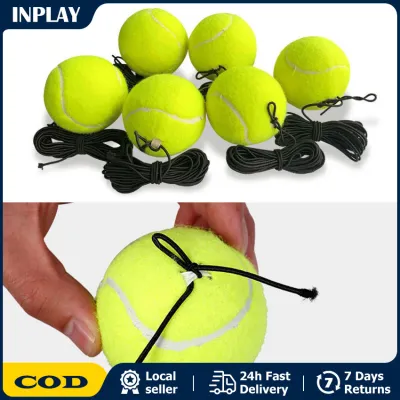
Second, consider the included accessories and the availability of replacement parts. Because components like elastic bungee cords, net tensioning straps, and tethered tennis balls are subjected to constant friction and high-velocity impacts, they will naturally wear out over time. Choosing a product package that includes spare bungee cords, extra tether balls, or a dedicated net tensioning tool ensures that your training is not interrupted when a component needs replacement. A heavy-duty, weather-resistant carrying bag made of high-denier polyester is also a highly valuable accessory for protecting the disassembled frame during transport and storage.
Finally, review the seller’s warranty terms, return policies, and verified customer feedback. A reputable manufacturer or authorized distributor should offer a clear warranty covering structural defects in the frame and netting for a specified period. When browsing customer reviews on ecommerce platforms, look for specific feedback regarding the ease of assembly, the clarity of the instruction manual, and how well the materials hold up under local weather conditions. Paying attention to these real-world user experiences can help you avoid low-quality products that suffer from sagging nets, unstable frames, or rapid rusting.
Frequently Asked Questions (FAQ)
Can I use a tennis rebounder on grass or uneven surfaces?
For optimal performance and safety, tennis rebounders should always be set up on flat, level, and hard surfaces such as concrete driveways, asphalt courts, or tiled outdoor areas. Setting up a rebounder on grass or uneven ground is highly discouraged because the soft, irregular terrain dampens the bounce of the ball, resulting in unpredictable return angles that disrupt your training rhythm. Furthermore, uneven surfaces compromise the stability of the frame, significantly increasing the risk of the unit tipping over or sliding out of position when struck by powerful shots.
How much space do I need behind the rebounder for safe practice?
To practice safely and execute full, unrestricted strokes, you should maintain a clear distance of at least 4 to 6 meters behind the rebounder. This clearance provides ample space to back up, prepare your racket, and execute a complete follow-through without the risk of hitting walls, fences, parked vehicles, or bystanders. For close-range volley and reflex drills, a smaller safety buffer of 2 to 3 meters may be sufficient, but you must always remain vigilant of your surroundings to prevent accidental damage or injury from mishits.
Do I need special tennis balls for a bungee cord rebounder?
Yes, bungee cord rebounders require specialized tether balls designed specifically for elastic training systems. These balls feature a secure, built-in attachment loop or a pre-drilled channel that connects directly to the elastic cord. While you can attempt to attach a standard pressurized tennis ball, the constant high-velocity tension and repeated impact will quickly tear the felt or damage the rubber core. Using heavy-duty, pressureless tennis balls designed for tethered practice ensures a consistent bounce height, reliable return speed, and a significantly longer lifespan.
Community discussion
Share your experience or ask a question. Comments are reviewed before publication.