
Choosing the right tennis trainer rebound ball depends on matching your current swing speed, timing, and footwork to the physical limits of the trainer’s base, cord elasticity, and ball type. Beginners need a highly forgiving, longer cord that allows ample time to prepare for the next stroke, while advanced players require high-tension cords and heavy bases that can withstand intense hitting power without sliding across the concrete. By aligning these equipment specifications with your specific training goals, you can build a reliable solo practice routine right in your driveway, garage, or local outdoor court.
Assess Your Current Skill Level and Practice Goals
Before purchasing a tennis trainer rebound ball, you must honestly evaluate your current playing ability. Beginners typically focus on making clean contact, establishing a basic rhythm, and developing consistent hand-eye coordination. At this stage, swing power is usually low to moderate, and footwork is still developing. A beginner’s primary goal is to sustain a slow, controlled rally with the rebounder to build muscle memory.
Intermediate players have established basic stroke mechanics and are working on directional control, moderate topspin, and active footwork. They hit with more force and require a system that returns the ball at a moderate pace, allowing them to practice moving side-to-side or transitioning from baseline to mid-court. Their practice goals often center on footwork drills and building cardiovascular endurance through longer rally sequences.
Products mentioned in this guide
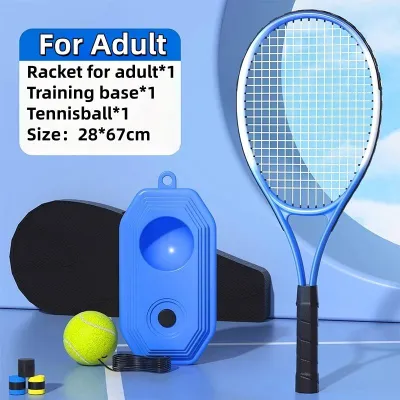
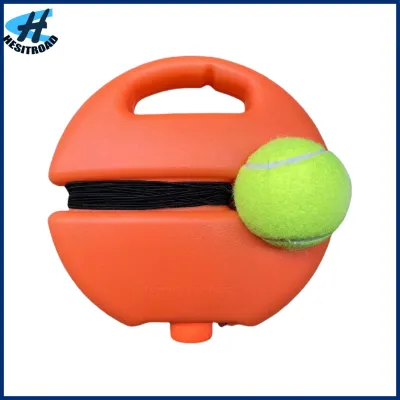
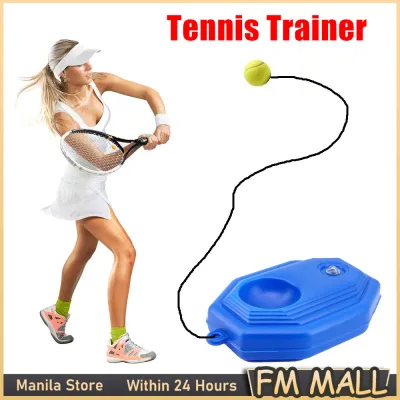
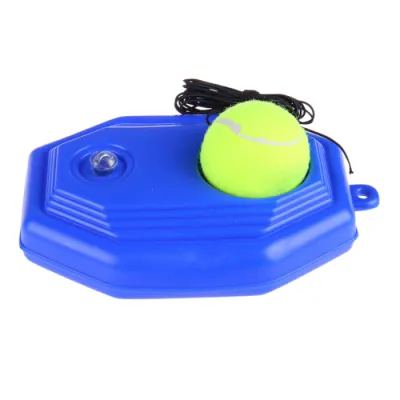
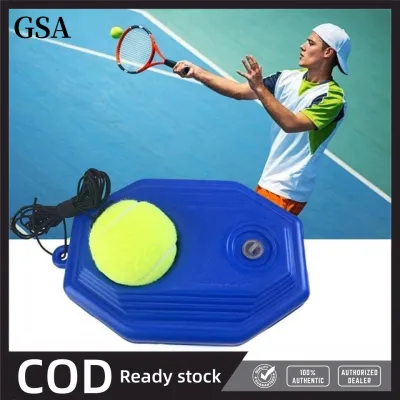
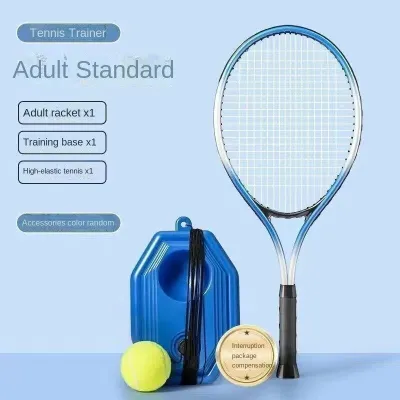
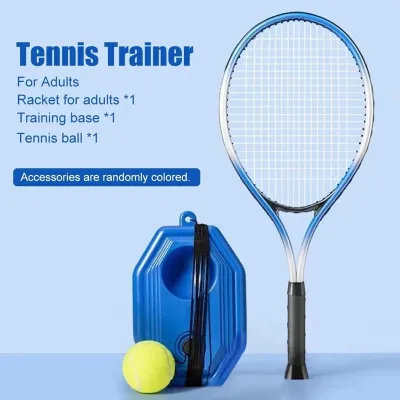
Prices are valid at publication and may change. Please refer to the product page for the latest price.
Advanced players hit with high velocity, heavy topspin, or slice, and require rapid ball returns to train quick volley reflexes and intense footwork drills. If you fall into this category, a standard lightweight trainer will not suffice, as your hitting force will easily displace the base or snap a low-tension cord.
Your available practice space also sets hard limits on the gear you can safely use. In the Philippines, outdoor spaces like driveways, barangay basketball courts, or subdivision roads are common practice areas. High humidity and heat can affect how materials behave, so evaluating your available space is crucial. If you have a tight space, a shorter cord or a lighter swing is necessary to prevent the ball from hitting walls or cars. If you hit with maximum force, a standard lightweight trainer will slide or tip over, meaning your physical space and hitting power set hard limits on the gear you can safely use.
Key Features to Match With Your Playing Ability
To find a system that supports your development, you must look past generic marketing claims and examine the physical specifications of the base, cord, and ball. The return trajectory and speed are directly governed by base capacity, cord tension, and ball construction. Always review the manufacturer’s product labels and specifications to verify these details before purchasing.

Base Weight and Stability
The base keeps the entire system anchored while you strike the ball. Most trainers feature a hollow plastic base that you must fill with either water or sand. Water is highly convenient and easy to drain, making it excellent for players who travel to local parks or outdoor courts. However, sand provides greater density and weight, offering superior stability for hard-hitting intermediate and advanced players. Check the manufacturer’s recommended fill capacity on the packaging. If you are practicing on rough concrete or outdoor asphalt common in local neighborhoods, ensure the base has non-slip rubber pads on the bottom to prevent it from sliding during intense drills.
Cord Elasticity and Length
The bungee cord acts as the engine of your tennis trainer rebound ball. High-tension, shorter cords return the ball rapidly, making them ideal for advanced players who generate heavy topspin and fast swing speeds. Conversely, longer, highly elastic cords are more forgiving, giving beginners the extra split-second needed to reset their stance and practice basic stroke mechanics. When shopping, verify if the system features adjustable cord lengths or includes replaceable elastic bands. This adjustability allows you to shorten the cord as your reaction time improves, providing a clear path for future skill progression.
Ball Type and Durability
The ball itself must withstand repetitive high-velocity impacts while providing realistic feedback through your racket. Standard pressurized tennis balls offer the most realistic bounce but lose their bounce quickly under constant use. Pressureless training balls are highly durable and maintain their bounce indefinitely, though they can feel slightly heavier on impact. For indoor practice or very tight spaces, lightweight foam balls are an option, though they do not simulate real court play. Pay close attention to the attachment mechanism where the cord meets the ball; look for reinforced plastic grommets or heavy-duty knots that can handle repetitive stress without tearing.
Setting Up and Adjusting Your Rebound Ball for Effective Practice
Proper setup is essential to ensure safe, productive practice sessions and to prevent premature wear on your equipment. Always follow the manufacturer’s assembly instructions strictly. When filling the base, ensure it is completely filled to the maximum line with water or sand to prevent tipping; a half-empty base will slide and can cause the cord to snap unpredictably. Securely knot or clip the cord to the base anchor according to the manual’s guidelines.
Once assembled, find your rhythm by adjusting your physical distance from the base. Do not immediately hit the ball with full force. Start with gentle, upward strokes to observe how the cord stretches and returns. If the ball returns too fast, step back; if it dies before reaching you, step closer or adjust your swing tempo.
In tropical climates, high heat and humidity can accelerate the degradation of elastic cords and rubber components. Inspect your equipment before every session. Stop using the trainer immediately if you notice any fraying along the bungee cord, cracking in the plastic base, or water leaks, as a snapping cord can cause injury.
Signs It Is Time to Upgrade Your Tennis Trainer
As your tennis skills progress, your training equipment must evolve with you. You will know you have outgrown your current setup when you hit a performance plateau. If the return speed feels consistently too slow, or if the ball’s trajectory is too short to let you practice full baseline strokes, the trainer is no longer challenging your reflexes.
Physical wear is another clear indicator that it is time for a replacement. Look for signs of degradation such as a permanently stretched bungee cord that has lost its elasticity, a ball that has gone completely flat, or cracks in the base from sun exposure. When you can consistently control the ball with heavy pace and require realistic match play, it may be time to transition to a mechanical ball machine or seek out live hitting partners at your local tennis club to continue your development.
Frequently Asked Questions (FAQ)
Can I use a tennis trainer rebound ball on any court surface?
While tennis rebound balls are highly versatile, their performance varies across different surfaces. Smooth hard courts and concrete driveways offer the best grip for the base and a predictable ball bounce. Clay and grass surfaces can cause the base to slide more easily due to loose particles or moisture, and they significantly dampen the ball’s bounce. Always check the manufacturer’s guidelines for surface compatibility. If you must practice on a slippery or uneven surface, placing a non-slip rubber mat under the base can help keep it securely in place.
How do I prevent the bungee cord from tangling during practice?
Tangling is a common issue that can disrupt your practice rhythm and damage the cord. To prevent this, maintain consistent footwork and avoid crossing the central axis of the cord during your drills. Always hit the ball slightly to the side of the base rather than directly over it, which keeps the return path clear. When you are finished training, avoid wrapping the cord tightly around the base. Instead, coil the cord loosely and store it in a cool, dry place away from direct sunlight to prevent permanent kinks and preserve its elasticity.
Community discussion
Share your experience or ask a question. Comments are reviewed before publication.