
Choosing the right tension rope resistance level requires balancing your current physical strength with your specific training targets. Selecting a level that is too light leads to plateaued progress, while choosing one that is too heavy risks joint strain and compromised form. By understanding how elastic tension behaves and matching it to your personal baseline, you can build an effective, safe home workout routine.
Quick Guide: Identifying Your Baseline Resistance Level
Finding your starting point prevents early fatigue and protects your joints from unexpected strain. Beginners should generally start with light resistance, which allows the nervous system and connective tissues to adapt to new movement patterns. Intermediate fitness enthusiasts who already perform bodyweight or light dumbbell exercises typically find their baseline in the medium resistance category. Advanced lifters can safely transition to heavy resistance, provided they have mastered the foundational mechanics of each movement.
To verify if a specific tension rope matches your current strength, apply the “two-rep rule” during your initial workout. Select a resistance level and perform a standard set of twelve repetitions for a target exercise, such as a bicep curl or chest press. If you cannot complete the final two repetitions with controlled, steady form, the resistance is too heavy. Conversely, if you can easily complete fifteen or more repetitions without feeling muscular fatigue, the rope is too light to stimulate adaptation.
Products mentioned in this guide
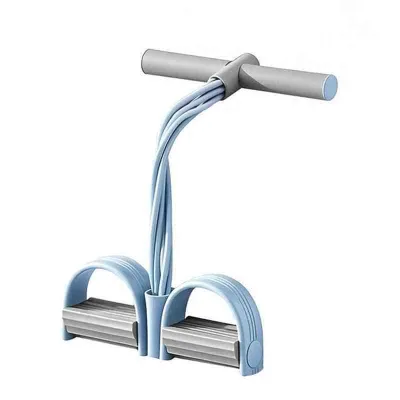
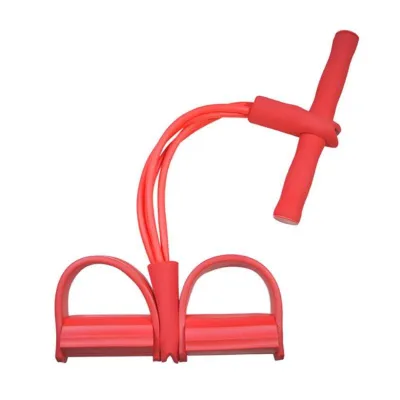
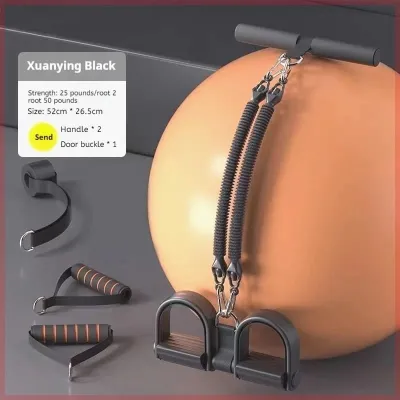
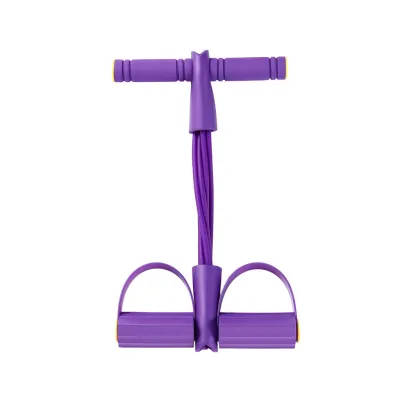
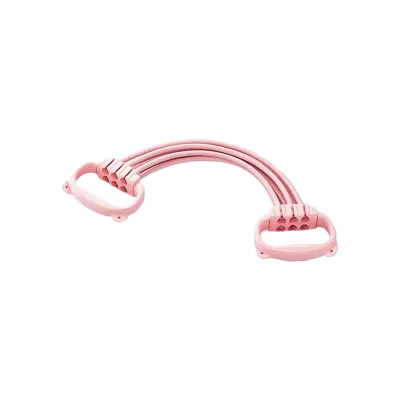
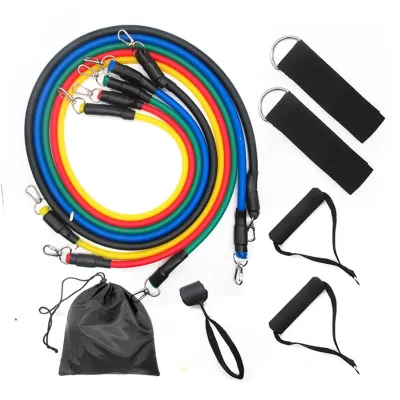
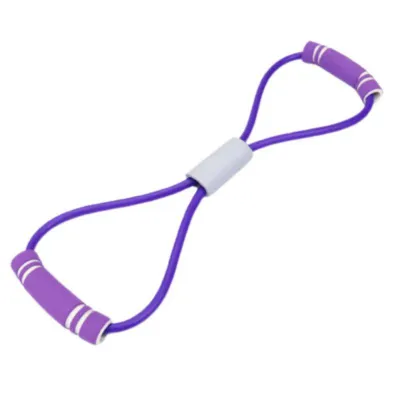
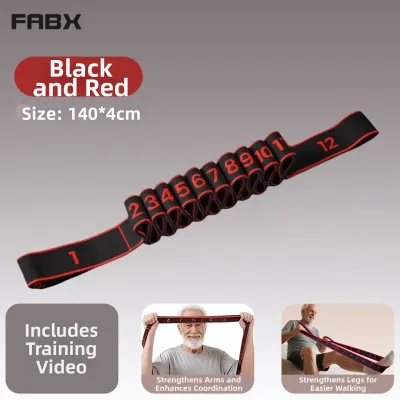
Prices are valid at publication and may change. Please refer to the product page for the latest price.
Prioritizing joint adaptation over maximum load is essential when starting any new resistance program. Connective tissues, such as tendons and ligaments, adapt to resistance training at a slower rate than skeletal muscle tissue. Beginning with a lighter rope than you think you need allows these structures to strengthen gradually. This cautious approach minimizes the risk of overuse injuries, especially when executing high-velocity or multi-joint movements.
Decoding Tension Rope Resistance Levels
Tension ropes are generally categorized into light, medium, and heavy resistance bands, each serving distinct training functions. Light resistance ropes are highly flexible and offer minimal initial tension, making them suitable for mobility drills, physical therapy, and high-repetition muscular endurance. They allow for a full range of motion without overloading delicate joints, such as the rotator cuff or ankles.

Medium resistance ropes serve as the workhorse for general fitness, muscle toning, and hypertrophy. They provide sufficient tension to challenge larger muscle groups, such as the shoulders, arms, and back, while remaining manageable for full-body compound movements. This level is highly versatile, making it a common starting point for individuals looking to maintain overall physical conditioning at home.
Heavy resistance ropes are designed for strength building, power development, and experienced athletes. These ropes require significant force to stretch, making them suitable for lower-body exercises like squats, deadlifts, and lunges where larger muscle groups are engaged. Because of the high tension, maintaining strict control during both the stretching and releasing phases of the exercise is critical to prevent sudden recoil.
Manufacturers typically label these resistance levels using color-coded systems or estimated weight equivalents, but these systems lack universal standardization. A “medium” blue rope from one brand may feel significantly stiffer than a “medium” green rope from another. Furthermore, weight equivalents only represent the tension generated at maximum stretch. Because elastic resistance increases progressively as the rope is pulled, the actual tension at the start of the movement is much lower than the label suggests.
Aligning Resistance Levels With Your Fitness Goals
To achieve effective results, your choice of tension rope must align directly with your primary training objectives. If your goal is injury recovery or joint stabilization, your priority should be control and slow eccentric movements rather than maximum resistance. Using a light rope allows you to focus on the path of motion and maintain constant tension without triggering protective muscle guarding or joint pain.
For muscle endurance and cardiovascular conditioning, select a light to medium rope that permits high-repetition sets. Training for endurance typically involves performing fifteen to twenty-five repetitions per set with minimal rest intervals. The resistance must be light enough to sustain continuous movement throughout the entire set, keeping your heart rate elevated while challenging the aerobic capacity of your muscles.
If your focus is strength and muscle growth, you will need medium to heavy ropes that facilitate progressive overload. This training style requires lower repetition ranges, typically between six and twelve repetitions, where the muscle is brought close to failure. To stimulate muscle fiber growth, the tension must be high enough to create significant mechanical tension throughout the movement.
You can also utilize variable resistance by combining multiple ropes on a single set of handles to match the natural strength curve of your body. For example, during a chest press, your muscles are weakest at the beginning of the movement and strongest near full extension. Stacking a light and a medium rope together allows you to experience lighter tension at the start of the press and maximum resistance at the peak contraction, optimizing muscle engagement.
How to Test and Adjust Tension During Workouts
One of the primary benefits of a tension rope is the ability to modify effective resistance dynamically without changing equipment. You can easily increase tension by shortening the active length of the rope, which is achieved by widening your stance or choking up on the grip. For instance, stepping on the rope with both feet rather than one immediately increases the pre-stretch tension, making the exercise feel heavier.
For exercises anchored to a door or post, moving further away from the anchor point increases the baseline stretch of the rope. This adjustment ensures that the muscle experiences resistance even at the very beginning of the movement. Conversely, taking a step closer to the anchor point reduces the initial tension, providing an immediate way to decrease difficulty if your muscles begin to fatigue mid-set.
You can also fold the rope in half or wrap it securely around an anchor point to create shorter, heavier pulls. This technique is particularly useful for lower-body movements where the legs require more resistance than the upper body. When wrapping the rope, ensure it is secured around a smooth, non-abrasive surface to prevent friction damage to the protective outer casing or latex core.
Pay close attention to physical signs that indicate your current resistance level needs adjustment. If you do not feel a deep muscular burn or fatigue by the end of your targeted repetition range, the resistance is too light to drive physical adaptation. On the other hand, if you experience joint pain, uncontrollable shaking, or find yourself using momentum to complete the movement, the resistance is too heavy and should be reduced immediately to protect your musculoskeletal system.
Pre-Purchase Checklist: Safety and Durability Checks
Before purchasing a tension rope, conducting a thorough safety and durability check is essential to prevent sudden snaps and injuries. Look for ropes constructed with layered latex or those featuring an inner safety cord. An inner cord acts as a protective barrier, keeping the tube contained if the outer latex snaps during a high-tension stretch.
Handle ergonomics and grip security are critical, especially when working out in warm, humid tropical environments where sweat can compromise your grip. Opt for handles covered in high-density, non-slip foam or textured rubber that repels moisture. Ensure the webbing connecting the handle to the metal rings is double-stitched and reinforced to withstand repeated pulling forces.
Evaluate all included accessories, such as door anchors, ankle straps, and carabiners, for structural integrity. Door anchors should feature a thick, dense foam stopper that will not slip through door frames, and the strap should be made of heavy-duty nylon. Metal carabiners should be rated for high tension, featuring secure snap gates that prevent the rope from detaching mid-exercise.
Finally, verify the manufacturer’s care instructions and storage recommendations to prevent premature degradation of the materials. Latex is highly sensitive to ultraviolet light and extreme heat, both of which can dry out the rubber and cause micro-cracks. Storing your tension ropes in a cool, dry place away from direct sunlight is vital for maintaining their elasticity and ensuring long-term safety.
Frequently Asked Questions (FAQ)
Can I use a tension rope every day?
You can use a tension rope daily if you vary the intensity and focus of your workouts. Light mobility work, gentle stretching, and joint stabilization exercises can be performed daily as they promote blood flow and active recovery without tearing muscle fibers. However, heavy strength training sessions require dedicated recovery time. Muscles need rest to repair and grow, so avoid targeting the same muscle groups with heavy resistance on consecutive days to prevent overtraining and chronic fatigue.
How do I know when it is time to replace my tension rope?
Inspect your tension rope before every workout for visual and tactile signs of wear. Look closely for micro-tears, small cracks, discoloration, or areas where the rubber appears frayed or thin. In humid climates, latex can undergo sticky degradation, where the surface becomes tacky or brittle; if you notice this texture change, discard the rope immediately. Additionally, if the rope exhibits permanent stretching or fails to snap back to its original length when relaxed, its structural integrity is compromised, and it must be replaced to avoid snapping.
Are tension ropes with handles better than loop bands?
Tension ropes with handles and continuous loop bands serve different training purposes, so the better option depends on your specific exercises. Handled ropes are highly effective for upper-body pulling motions, rotational exercises, and isolation work because they provide a comfortable, secure grip that mimics traditional gym cable machines. Continuous loop bands, on the other hand, are ideal for lower-body movements like lateral walks, squats, and glute activation, as well as physical therapy exercises where the band must be looped securely around the limbs or anchored without hardware.
Community discussion
Share your experience or ask a question. Comments are reviewed before publication.