
Selecting the right treadmill for a compact condominium in the Philippines requires balancing your fitness goals with the realities of limited square footage. High-rise living in urban centers often means maximizing every square meter while keeping peace with your neighbors. To make an investment that fits your lifestyle, you must evaluate physical dimensions, noise dampening, and storage mechanisms before making a purchase.
By focusing on space-saving designs and verifying your building’s structural and community guidelines, you can build a highly functional home gym without compromising your living space.
Measure Your Space and Clearance Requirements
Before browsing treadmill models, you must accurately measure your designated workout area. Many buyers look only at the product’s static footprint, but you must distinguish between stored dimensions and operational dimensions. A treadmill in use requires significantly more space than one folded against a wall.
Products mentioned in this guide
![[COD] Foldable Manual Home Treadmill with Adjustable Slope LED Display Anti-Slip Running Belt Free Twist Disc & Resistance Rope Space Saving Walking Machine for Home Fitness Exercise](https://img.lazcdn.com/g/p/1446617c7dcf63717d1a1640b68a647e.jpg_400x400q80.jpg_.webp)
Prices are valid at publication and may change. Please refer to the product page for the latest price.
Safety clearances are critical to prevent severe injuries if you stumble or fall. Leave a clear, unobstructed zone of at least two meters behind the belt and about half a meter on both sides. In a tight condo layout, placing a treadmill directly against a wall or next to glass sliding doors poses a major safety hazard.
Ceiling height is another easily overlooked constraint. To calculate your clearance, add the height of the treadmill deck at its maximum incline to the height of the tallest user in your household, then add a few inches for head movement during running. If your condo has low concrete ceilings, a high-incline workout might not be physically feasible.
Finally, map out the delivery path from the building’s entrance to your unit. Measure the height and width of the freight elevator doors, narrow hallway corners, and your main entryway. A boxed treadmill is incredibly bulky and heavy; verifying these dimensions beforehand prevents the frustration of a delivery that cannot physically reach your living room.
Compare Treadmill Types for Limited Floor Plans
Choosing the right form factor depends on how you plan to use the machine and how much floor space you can permanently dedicate to it.

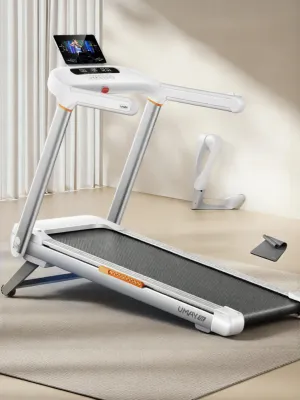
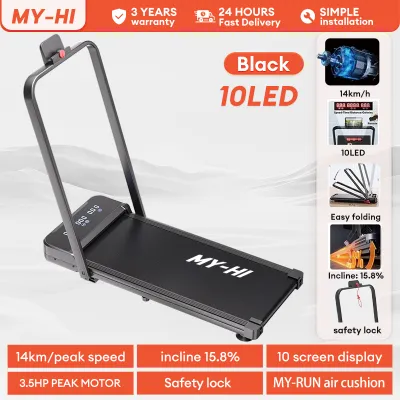
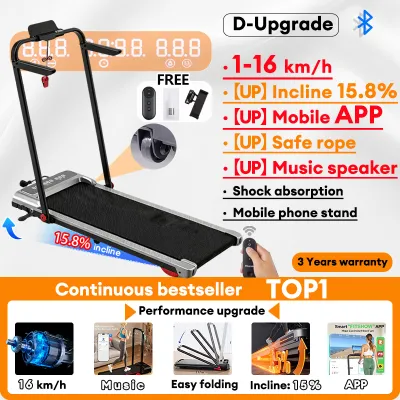
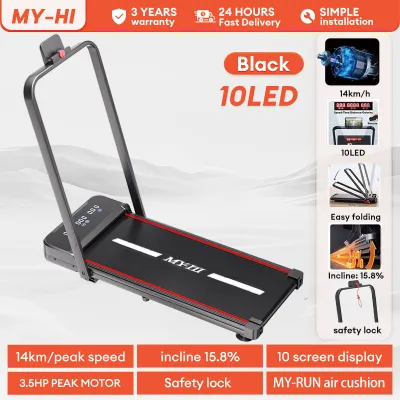
Folding treadmills offer a practical middle ground for active runners who need a stable deck but want to reclaim floor space when the workout is over. When evaluating these models, check the ease of the folding mechanism and whether it features hydraulic assists or soft-drop systems. These assists prevent the heavy deck from slamming onto your floor, which is crucial for protecting delicate tiles or laminate flooring. Compare the folded footprint to the active footprint to see exactly how much space you save.
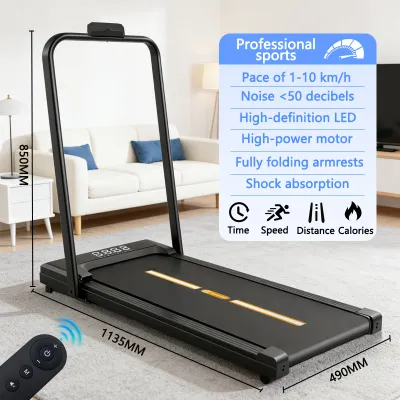
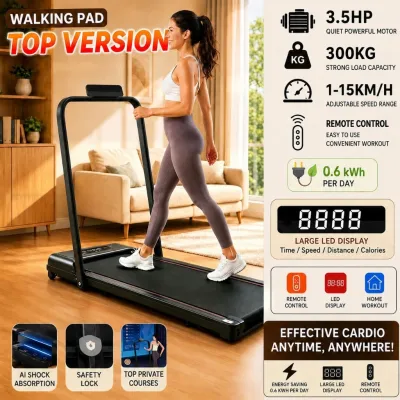
Under-desk treadmills, often called walking pads, prioritize extreme portability and low profiles. These units are highly compact, often sliding completely under a sofa or bed when not in use. However, this portability comes with significant trade-offs. Walking pads typically lack handrails, have lower speed limits, and do not offer incline options, making them unsuitable for high-intensity running or athletic training. They are best reserved for steady-state walking during remote work or light cardio.
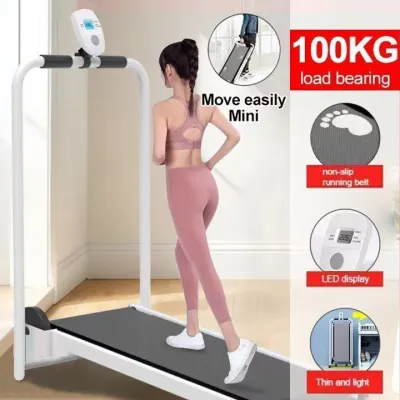
Compact non-folding models are designed for users who want a traditional running experience without the bulk of a commercial machine. These units feature narrower belt widths and shorter deck lengths, which naturally reduces their overall footprint. While they lack the folding hinges that can wear out over time, they must remain permanently in place, so you must be certain you can spare that floor space indefinitely.
Evaluate Essential Features for Condo Living
Operating fitness equipment in a shared residential building requires careful consideration of noise, vibration, and power.
The motor is the heart of the treadmill, and its continuous horsepower (CHP) rating determines its capability. For walking, a lower CHP is sufficient, while running requires a more robust motor to maintain consistent speeds. However, larger motors can generate more noise. Look for brushless motors or models specifically marketed for quiet operation, and verify the manufacturer’s noise specifications. Keeping noise levels low is essential for maintaining good relations with neighbors sharing your walls.
Vibration transfer is often a bigger issue than airborne noise in multi-story concrete buildings. Every footstrike sends impact energy through the treadmill frame and directly into the floor. Prioritize models with advanced shock absorption systems or cushioned decks. These systems not only protect your joints but also dampen the thudding sound that travels easily through concrete slabs to the unit below.
Console design also impacts the physical and visual clutter in your condo. High-end models often feature large, built-in touchscreen displays, but these add bulk and can quickly become outdated. A “bring-your-own-device” setup, featuring a simple tablet holder and Bluetooth connectivity, allows you to use your own tablet or phone. This keeps the treadmill console slim, reduces the overall weight of the machine, and often lowers the initial purchase price.
Plan for Delivery, Assembly, and Floor Protection
Bringing a heavy piece of fitness equipment into a condominium complex requires coordination and preparation.
First, consult your building’s Property Management Office regarding their guidelines for heavy deliveries. Many developments require a formal work permit, a tenant clearance form, and a reservation for the freight elevator. You may also be restricted to specific delivery hours, typically on weekdays, to avoid disturbing other residents.
Floor protection is non-negotiable. Even if your treadmill has rubber feet, the constant vibration and weight can scratch hardwood, crack ceramic tiles, or leave permanent indentations on vinyl flooring. Invest in a high-density, heavy-duty rubber equipment mat. This mat serves a triple purpose: it protects your flooring, prevents the treadmill from shifting or walking across the room during high-speed runs, and provides an extra layer of sound insulation.
Additionally, verify the structural weight capacity of your floor if you live in an older building or a unit with raised flooring systems. While modern concrete condos can easily support standard home treadmills, heavy commercial-grade units combined with the dynamic impact of a runner can put significant stress on localized areas.
Frequently Asked Questions (FAQ)
Can I use a treadmill in a condo without disturbing my downstairs neighbors?
Yes, but it requires proactive noise mitigation. Always place a high-density rubber mat underneath the machine to absorb vibrations. Position the treadmill close to a load-bearing wall or structural column rather than the center of the room, as the floor is stiffer and less prone to flexing there. Additionally, opt for walking or light jogging during daytime hours when ambient noise levels in the building are higher.
Is a walking pad sufficient for a full cardio workout?
A walking pad is highly effective for low-impact, steady-state cardio and increasing your daily step count, but it has limitations. Because they lack incline features and high-speed motors, they cannot support high-intensity interval training or vigorous running. If your fitness goals require athletic conditioning or uphill training, a traditional compact treadmill is a better choice.
How do I maintain a folding treadmill to ensure the hinge lasts?
Regular maintenance is key to preserving the folding mechanism. Periodically inspect the locking pins, latching systems, and hydraulic shocks for wear or loose bolts. Keep the hinge area completely free of dust, pet hair, and sweat, which can accumulate and grind down the moving parts. Wipe down the frame after humid workouts to prevent moisture from causing rust around the joints.
Community discussion
Share your experience or ask a question. Comments are reviewed before publication.