
To choose the best trademill size and features for a condo unit in the Philippines, you need a machine with an active footprint under 150 cm long and 70 cm wide, a folding frame, a quiet brushless motor under 2.5 HP, and high-density rubber dampening. Living in a high-rise development requires balancing your fitness goals with limited square footage, structural load limits, and the acoustic comfort of your neighbors. By focusing on compact dimensions, low-vibration engineering, and easy mobility, you can maintain an active lifestyle without compromising your living space or violating building association rules.
Assessing Your Condo Space and Layout Constraints
Before browsing online listings or visiting a fitness showroom, you must accurately measure your designated workout area. Begin by measuring the floor’s length and width, but do not stop there; ceiling height is a critical and frequently overlooked dimension. Standard residential ceilings in Philippine condos often range from 2.4 to 2.7 meters. To calculate your required vertical clearance, add your own height to the treadmill deck’s step-up height (typically 15 to 20 cm), and then add an extra 10 to 15 cm to account for your body’s vertical oscillation while running or the maximum incline angle of the machine. If this total is too close to your ceiling height, you risk head injuries or hitting overhead light fixtures and sprinkler heads.
Safety clearance behind the running belt is a non-negotiable requirement for home setups. You must maintain an absolute minimum of 1.5 to 2 meters of completely unobstructed, open space directly behind the rear roller. If you slip, lose your balance, or experience a sudden muscle cramp while the belt is moving, this safety zone ensures you are safely ejected onto the floor. Without this clearance, you risk being pinned and wedged between a rapidly spinning rubber belt and a hard wall, furniture piece, or glass balcony door, which can result in severe friction burns or impact injuries.
Products mentioned in this guide
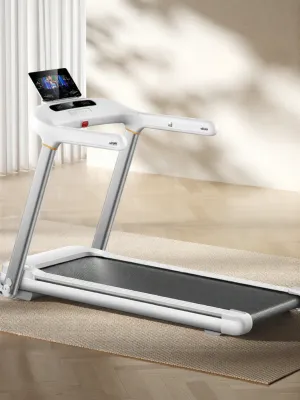
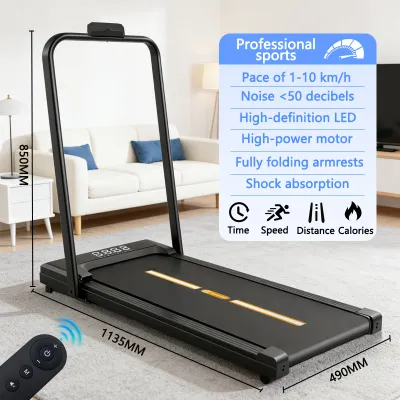
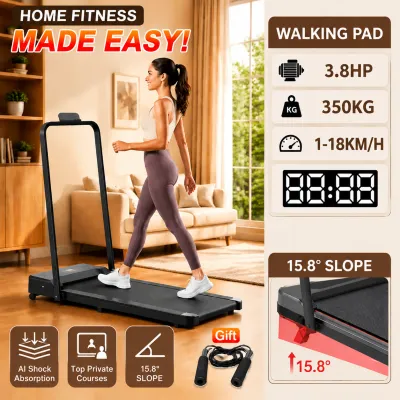
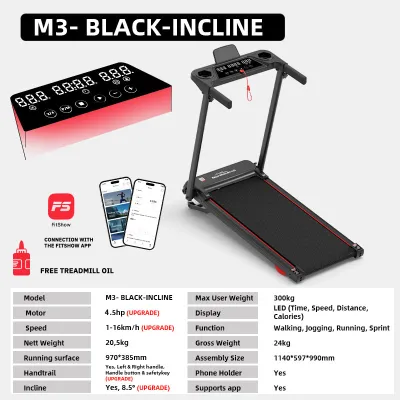
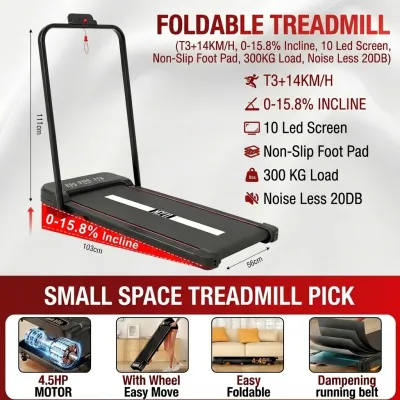
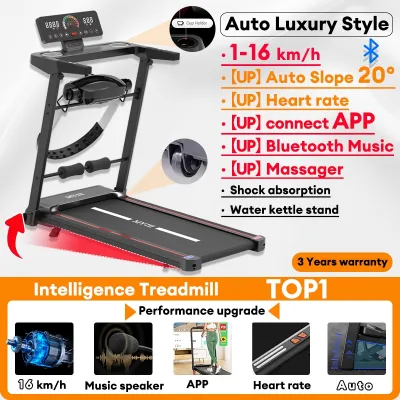
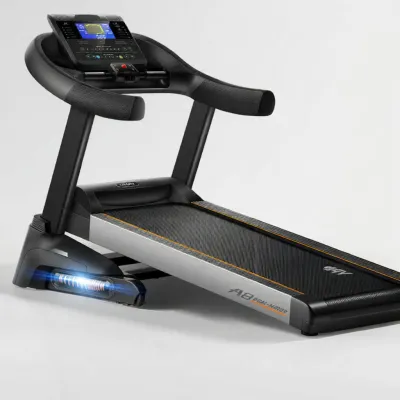
Prices are valid at publication and may change. Please refer to the product page for the latest price.
Logistical constraints represent another common bottleneck in high-rise living. Before finalizing any purchase, trace the exact delivery path from the building’s unloading bay to your unit. Measure the height, width, and diagonal clearance of the service elevator doors, the building’s corridors, and your unit’s front entryway. Many heavy-duty or pre-assembled fitness machines cannot navigate tight L-shaped condo hallways or fit inside standard passenger elevators. Verifying these dimensions beforehand prevents the frustration of delivery teams turning away at your door or charging hefty fees for complex disassembly and reassembly.
Finally, consider the acoustic layout of your home to prevent domestic and neighborly friction. Avoid placing your fitness equipment directly against a shared drywall partition or adjacent to bedrooms where household members sleep. Even the quietest machines produce mechanical hums and structural vibrations that can easily travel through shared walls. Positioning the machine along an exterior concrete wall or in a central living area away from quiet zones is the best way to minimize noise transmission.
Balancing Trademill Footprint and Running Surface
Understanding the difference between a machine’s active footprint and its stored footprint is essential for managing tight spaces. The active, or “in-use,” footprint refers to the total floor area the machine occupies while open and running, which must always include the required safety clearances around the sides and rear. The folded footprint is the space the machine occupies when closed and stored vertically or flat. For studio and one-bedroom condo layouts, a trademill that folds completely flat—ideally under 20 cm in thickness—can easily slide under a bed frame or stand flush against a living room wall, allowing you to reclaim valuable living space when your workout is complete.

However, ultra-compact physical dimensions often come at the expense of running comfort. A belt that is too short or narrow forces you to shorten your natural stride or constantly monitor your feet, which increases the risk of stepping off the side of the deck. For walking and light jogging, a belt surface measuring 100 to 120 cm in length and 40 cm in width is usually sufficient. If you plan to run at higher speeds, you will need a deck that is at least 130 to 140 cm long and 45 to 50 cm wide to accommodate your longer stride safely and comfortably without feeling restricted.
When choosing a machine style, compare the spatial and functional trade-offs of the three main categories available:
- Under-Desk Walking Pads: These ultra-compact, flat machines are lightweight and highly portable, making them ideal for small studio units. However, they generally cap out at walking speeds (typically 6 km/h), lack incline capabilities, and do not offer handrails for high-speed stability.
- Compact Folding Treadmills: These units feature folding handrails and consoles, reaching speeds up to 12 or 16 km/h. They strike an excellent balance for condo dwellers, offering a true running experience while still folding down to a manageable size.
- Standard Residential Treadmills: Built with robust frames, powerful motors, and advanced deck cushioning, these machines offer the best performance and durability. However, they demand a permanent, dedicated floor space, as they are often too heavy and bulky to fold or move on a daily basis.
To decide which category fits your lifestyle, establish a realistic framework based on your daily routine. If you live in a highly constrained space where every square meter counts, a stow-away model is a necessity. If you have a dedicated corner or a spare room that can serve as a home gym, prioritizing a sturdier, non-folding or semi-folding residential model will provide a more stable running experience and superior deck cushioning.
Essential Features for Condo-Friendly Treadmills
Folding Mechanisms and Mobility
When evaluating folding models, prioritize machines equipped with soft-drop hydraulic systems. These systems allow the heavy running deck to lower itself slowly and hands-free to the floor with a simple foot release, preventing sudden drops that can crack tiles, dent wood laminate, or strain your back. Manual folding systems require you to lift and lock the entire weight of the deck yourself, which can be physically demanding and dangerous in tight, cluttered spaces.
Built-in transport wheels are equally critical for daily storage. Look for units that feature multi-directional or high-quality polyurethane wheels rather than cheap, rigid plastic ones. Multi-directional wheels allow you to maneuver the machine sideways around tight furniture corners without scratching your floors. Always verify the manufacturer’s exact folded dimensions and compare them directly against your planned storage closet, wardrobe gap, or under-bed clearance before buying.
Noise and Vibration Control
In high-rise concrete buildings, structural vibration is the primary source of noise complaints from neighbors below. To keep the peace, look for treadmills powered by brushless DC (BLDC) motors. Brushless motors run significantly quieter, generate less heat, and last longer than traditional brushed motors because they eliminate the friction of internal carbon brushes. A motor rating of 1.5 to 2.25 HP is generally quiet and sufficient for walking, while running demands a quieter, more robust 2.5 to 3.0 HP motor.
In addition to the motor, the deck’s shock absorption system plays a massive role in dampening noise. Advanced elastomer cushions and multi-layered, high-density running belts absorb the impact of your feet, converting structural thuds into minor, localized vibrations. To further isolate this energy, always place a thick, high-density rubber anti-vibration mat underneath the machine. This simple addition decouples the treadmill from the concrete floor slab, significantly reducing the low-frequency noise transmitted to the unit below.
Weight Capacity and Structural Limits
Always check the manufacturer’s maximum user weight capacity to ensure safe operation. As a general rule for motor longevity and structural safety, choose a machine with a weight capacity that exceeds your actual body weight by at least 15 to 20 kilograms. Operating a machine close to its maximum weight limit strains the motor and drive belt, which increases operating noise and accelerates wear on internal electronic components.
There is a direct relationship between the machine’s net weight, frame stability, and noise reduction. Lightweight machines (under 40 kg) are incredibly easy to move, but they tend to shake, squeak, and slide across the floor when subjected to high-speed running. Heavier frames (60 kg and above) offer superior structural stability and vibrate less, but they are highly impractical to move daily. While standard residential treadmills are well within the structural load limits of modern concrete condo buildings, you should consult your building administration’s guidelines if you are considering an exceptionally heavy, commercial-grade unit.
Common Space and Setup Mistakes to Avoid
One of the most frequent mistakes condo owners make is neglecting the delivery path. It is common to measure the final room placement perfectly, only to find that the boxed machine cannot fit inside the building’s passenger elevator or clear a tight turn in a narrow corridor. Always confirm the packaged dimensions with the retailer and verify that your building’s service elevator can accommodate the box’s length and weight before scheduling delivery.
Another critical safety error is placing the rear of the running belt directly against a wall, window, or piece of furniture to save space. If you trip or lose your footing while running, you can easily become trapped against the wall while the belt continues to spin, leading to severe friction burns and orthopedic injuries. Never compromise on the mandatory 1.5-meter rear safety clearance zone, regardless of how limited your floor space is.
Many buyers also fall victim to the misconception that all folding treadmills are lightweight and easy to move. In reality, many high-quality folding models still weigh 70 to 90 kg. While they do fold vertically to save floor space, rolling them into a closet or another room after every workout requires significant physical effort. If you do not want to lift and push a heavy machine daily, opt for a lightweight walking pad or plan for a permanent layout placement.
Finally, pay close attention to power management. Treadmills are high-draw appliances that pull significant electrical current, especially when starting up or operating at high speeds. Never plug your machine into a cheap household extension cord or a multi-plug adapter, as this can cause overheating, voltage drops, and potential fire hazards. Ensure your layout allows the power cord to reach a dedicated wall outlet directly, and use cord covers to keep the cable flat against the floor to prevent tripping.
Safe Setup and Maintenance in Compact Spaces
To protect your investment and ensure safe operation, choose your treadmill’s placement carefully. Keep the machine far away from areas exposed to high humidity, direct sunlight, or outdoor elements, such as open balconies, laundry drying areas, or spaces close to the kitchen. The tropical climate in the Philippines can accelerate rust on the steel frame and cause condensation to form inside the sensitive electronic console, leading to premature component failure. Additionally, avoid placing the machine directly under or in front of an air conditioning vent to prevent moisture dripping onto the electronics.
Proper ventilation around the motor housing is essential for preventing overheating. Ensure there is at least 30 to 50 cm of clear space around the front motor hood. Pushing the front of the treadmill flush against a wall, curtain, or heavy furniture blocks the motor’s cooling vents, causing heat to build up rapidly during prolonged workouts. This can trigger automatic thermal shutdowns or damage the motor controller board.
Maintaining your machine in a compact condo environment requires a few simple, regular routines. Vacuum or dust the floor around and underneath the treadmill weekly; small living spaces accumulate dust, lint, and pet hair quickly, which can easily be sucked into the motor housing and clog the internal components. Regularly check the belt’s alignment and tension according to the manufacturer’s care instructions. Lubricate the running deck every three to six months using 100% pure silicone oil—never use household lubricants like WD-40, which can degrade the rubber belt and damage the deck coating.
Lastly, safeguard your machine from local power issues. The electrical grids in many Philippine cities are prone to sudden voltage fluctuations, brownouts, and power surges. Always plug your treadmill into a dedicated, high-quality surge protector rather than directly into the wall. This simple precaution protects the delicate control boards and console electronics from being fried by sudden electrical spikes, ensuring your home gym equipment remains safe and operational for years to come.
Frequently Asked Questions (FAQ)
Can I use a treadmill on a high-floor condo without damaging the floor?
Yes, standard residential treadmills are perfectly safe for the concrete structural slabs used in modern high-rise condo buildings. However, the dynamic impact of running can easily transmit low-frequency noise and vibrations to the unit directly below you. To protect your flooring finish (such as wood laminate or vinyl tiles) and dampen sound, always place a high-density, heavy-duty rubber anti-vibration mat under the machine. It is also wise to check your condo association’s specific house rules regarding fitness equipment, as some developments have strict quiet hours or weight limits for heavy machinery.
Are walking pads a good alternative to traditional treadmills for condos?
Walking pads are an excellent, highly space-efficient alternative if your primary goal is low-intensity cardio, step-counting, or active multi-tasking while working. They are lightweight, operate quietly, fold flat, and can be easily stored under a sofa or bed. However, they have significant functional limitations. Walking pads typically cap out at speeds of 6 to 8 km/h, lack incline settings, have shorter and narrower walking surfaces, and often do not feature sturdy handrails. If you are a serious runner or want to perform high-intensity interval training, a traditional compact folding treadmill is a much safer and more suitable choice.
Community discussion
Share your experience or ask a question. Comments are reviewed before publication.