
Finding the right fitness equipment for a high-rise home requires balancing your workout goals with your actual floor plan. For a small condo unit, the best treadmill is typically a flat-folding model or a compact walking pad that can be stored vertically or slid under furniture. These space-saving designs allow you to maintain a functional living area without sacrificing your daily cardio routine.
The ideal choice depends on your primary exercise style. If your routine consists of light walking or jogging, a low-profile walking pad with a footprint of less than 0.5 square meters when stored is highly efficient. For active runners, a folding machine with a robust frame and a hydraulic folding mechanism is necessary, though it requires a larger operational footprint and dedicated clearance space.
Measure Your Available Space and Clearances
Before browsing online catalogs or visiting a showroom, you must map out the exact physical limits of your condo. A common mistake is measuring only the machine’s static dimensions while ignoring the space required to operate it safely. You must account for two distinct footprints: the stored footprint and the operational footprint.
Products mentioned in this guide
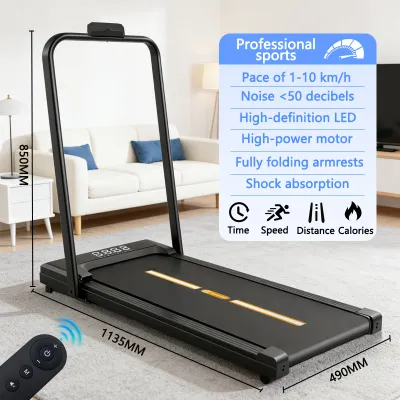
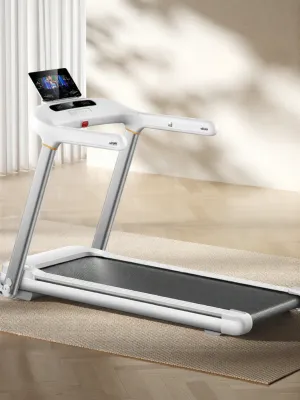
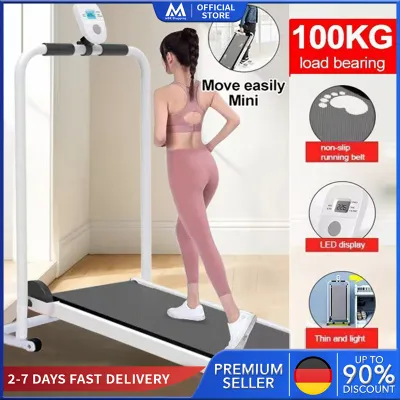
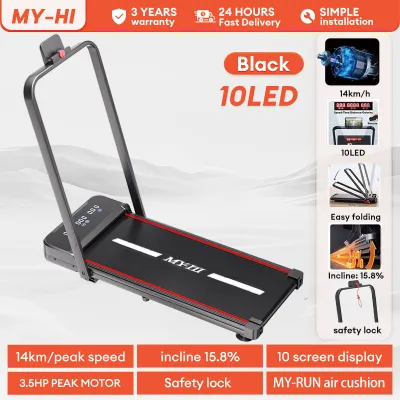
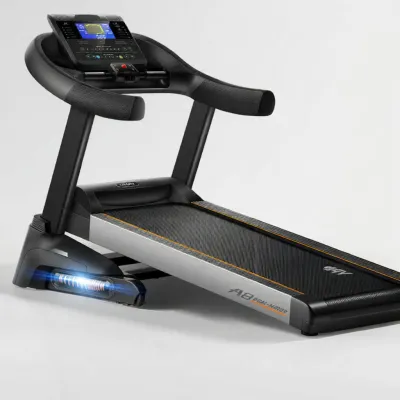
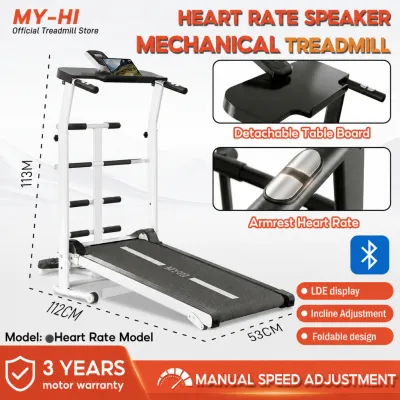
![[COD] Foldable Manual Home Treadmill with Adjustable Slope LED Display Anti-Slip Running Belt Free Twist Disc & Resistance Rope Space Saving Walking Machine for Home Fitness Exercise](https://img.lazcdn.com/g/p/1446617c7dcf63717d1a1640b68a647e.jpg_400x400q80.jpg_.webp)
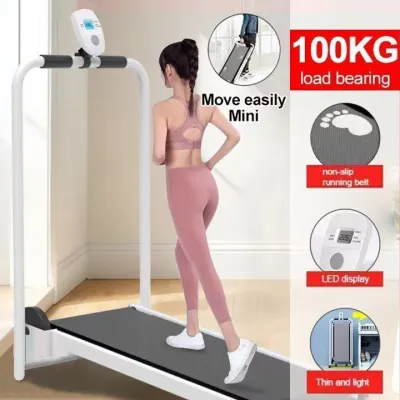
Prices are valid at publication and may change. Please refer to the product page for the latest price.
The stored footprint is the physical space the machine occupies when folded and put away. The operational footprint is the total area required when the deck is fully lowered and in use. Always verify the fully extended length and width against your floor plan to ensure you can walk around the machine without bumping into walls or furniture.
Safety clearances are critical to prevent serious injury in the event of a slip or fall. Manufacturers generally recommend leaving at least two meters of clear, unobstructed space directly behind the belt. Additionally, maintain at least half a meter of open space on both sides of the deck so you can safely dismount in an emergency.
Do not forget to measure your condo’s entry points and delivery pathways. High-rise living introduces unique logistical challenges, such as narrow service elevators, tight hallway corners, and standard door frames. Measure the width and height of your main door, bedroom doors, and elevator openings to ensure the boxed equipment can physically reach your unit.
Compare Treadmill Types for Compact Living
Compact fitness equipment comes in several distinct designs, each catering to different storage preferences and workout intensities. Understanding these categories helps you select a machine that integrates seamlessly into your daily environment.

Folding machines with hydraulic assist are popular for users who want a traditional running experience. These models feature a deck that folds upward toward the console, secured by a hydraulic shock absorber that lowers the deck slowly and safely. While stable, these machines still have a relatively large vertical footprint and cannot be hidden completely out of sight.
Under-desk walking pads represent the most compact end of the spectrum. These minimalist devices lack a bulky upright console, allowing them to lie completely flat. They are designed primarily for walking or light jogging and can easily slide under a sofa, bed, or desk when not in use, making them excellent for multi-purpose rooms.
Flat-folding designs bridge the gap between walking pads and traditional machines. These models feature a console and handrails that fold completely flat against the running deck. Once folded, the entire unit can either slide horizontally under a bed frame or stand upright against a wall, secured by safety locks or kickstands.
Upright storage models lock into a vertical position but remain on a wheeled base. These are ideal if you have a dedicated corner or a closet where the machine can stand. Always check the locking mechanism of any vertical-storage machine to ensure it remains stable and secure, especially if you have pets or small children in the home.
Match Treadmill Dimensions to Your Fitness Needs
While saving space is a priority, the machine must still accommodate your physical size and stride length. A deck that is too short or too narrow can compromise your safety and make your workouts uncomfortable.
When shopping for a compact threadmill, your height and running pace dictate the required belt dimensions. For walking, a belt length of 120 centimeters is generally sufficient for most heights. However, if you plan to run, your stride naturally lengthens, requiring a belt length of at least 140 centimeters to prevent your feet from slipping off the back.
Belt width is equally important for lateral stability. A standard width of 40 to 45 centimeters is common for compact models and works well for walking. If you are taller or prefer a faster running pace, look for a deck width closer to 50 centimeters to give yourself a comfortable margin of error during high-intensity intervals.
Weight capacity and motor specifications must align with your physical profile. Compact machines often have lower weight limits than commercial gym models, so always verify the manufacturer’s maximum user weight on the product label. A motor with a continuous-duty rating of 2.0 to 2.5 horsepower is typically recommended for regular jogging, while walking pads often utilize smaller, quieter motors.
Vibration and stability are major considerations on typical condo flooring, such as ceramic tiles or engineered vinyl planks. Lightweight machines may shake or slide during fast runs, which increases noise and wear. Choosing a machine with a sturdy frame weight and adjustable leveling feet helps keep the unit stable on slightly uneven surfaces.
Plan the Setup and Daily Workflow
Integrating a fitness machine into a compact living space requires careful planning to protect your property and maintain a peaceful home environment. Noise and vibration can easily travel through concrete floors, potentially disturbing your neighbors.
Using a high-density, anti-vibration mat is essential for any condo setup. These specialized mats absorb the impact of your steps, reducing the low-frequency thudding noise transmitted through the floor structure. They also protect your tiles or wood laminate from scratches, sweat, and mechanical grease.
Power management is another critical safety factor in tight spaces. Treadmills draw a significant amount of electrical current, so you must route the power cord away from walking paths to prevent tripping. Avoid running the cord under rugs or mats, as this can trap heat and create a fire hazard.
Establish a practical daily routine for folding and unfolding your equipment. If the process is too difficult or cumbersome, you are less likely to use the machine or clear it away. Choose a location where the transition requires minimal furniture rearrangement, allowing you to transition from living space to workout zone in under two minutes.
Frequently Asked Questions (FAQ)
Can I place a treadmill on a balcony or near a window?
Placing fitness equipment on an outdoor balcony or directly next to a large window is generally not recommended. The tropical climate in the Philippines brings high humidity, intense direct sunlight, and sudden rain showers, all of which can rapidly degrade the electronic console, motor, and running belt.
Additionally, you must verify the structural weight limits of your balcony with your condo’s property management office before placing heavy equipment there. Moisture exposure can cause metal parts to rust and electrical components to short-circuit, voiding your warranty and creating safety hazards.
Do compact treadmills require special electrical outlets?
Most compact fitness machines are designed to run on standard residential electrical outlets. However, because they draw a high amount of power, you should always plug the machine directly into a dedicated wall outlet rather than using an extension cord or a multi-outlet adapter.
Using extension cords can cause voltage drops, which strain the motor and may lead to overheating. It is also wise to check your condo unit’s circuit breaker capacity; running other high-draw appliances like air conditioners or water heaters on the same circuit simultaneously may trip the breaker.
Community discussion
Share your experience or ask a question. Comments are reviewed before publication.