
Finding a tumbler sling bag that securely holds your specific water bottle requires more than just guessing the size. The right fit prevents your bottle from slipping out, reduces uncomfortable bouncing while you walk, and ensures you can easily insert and remove the tumbler when you need a drink. To find a suitable match, you must measure your bottle’s physical dimensions, evaluate the bag’s material flexibility, and check for secure retention features that keep your hydration stable during your daily commute, outdoor walks, or weekend activities.
Measure Your Tumbler Accurately
To find a bag that fits snugly, you must start with precise physical measurements of your water bottle rather than relying solely on the manufacturer’s stated volume in fluid ounces or milliliters. Different brands use distinct shapes, insulation thicknesses, and lid designs, meaning two bottles with the same liquid capacity can have completely different outer dimensions. Grab a flexible measuring tape or a piece of string to capture the actual footprint of your tumbler.
Begin by measuring the total height of your bottle from the very bottom of the flat base to the highest point of the closed lid. If your bottle features a fixed carry loop, a built-in carabiner clip, or a tall straw spout that does not fold down, include these elements in your total height measurement. A bag that is too short may allow a top-heavy bottle to tip forward and fall out, especially when you bend over or pick up pace during a walk.
Products mentioned in this guide
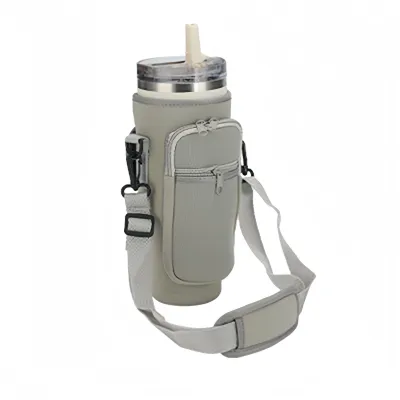
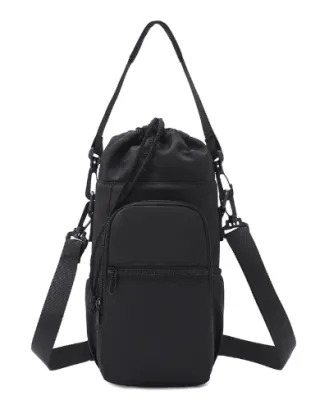
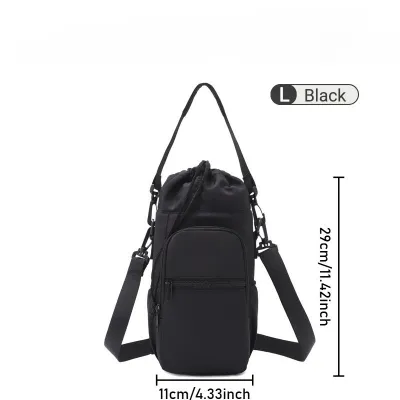
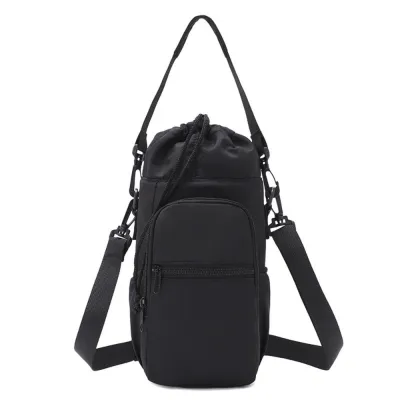
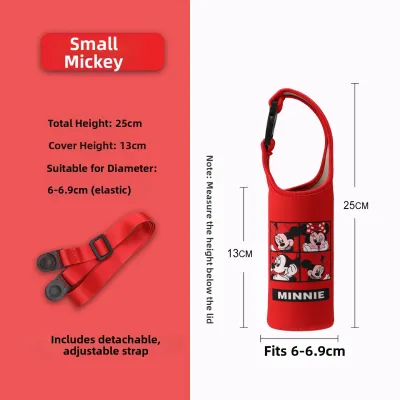
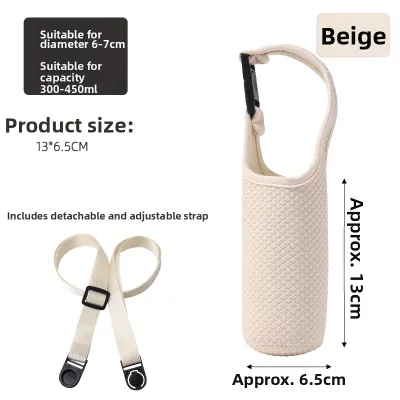
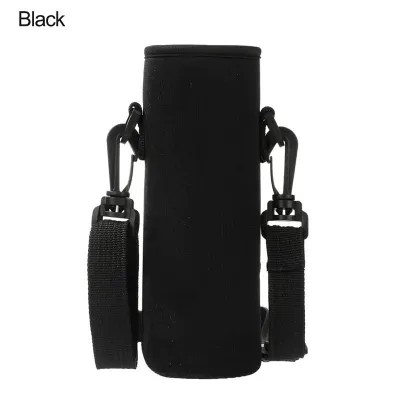
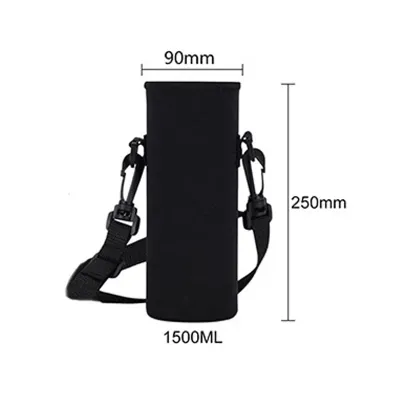
Prices are valid at publication and may change. Please refer to the product page for the latest price.
Next, determine the maximum diameter of your tumbler. Wrap your measuring tape around the widest part of the bottle’s body to find the circumference, then divide that number by 3.14 to calculate the diameter, or simply measure straight across the bottom of the base. Be sure to measure any areas where the bottle flares outward, such as a wide mouth, a protective silicone boot, or a bulging lid assembly. If your bottle is tapered, note both the narrow base diameter and the wider upper diameter to ensure the bag can accommodate the transition.
Finally, take note of any protruding features that alter the overall shape of the bottle. Built-in side handles, external straw holders, or wide flip-lock buttons can prevent a bottle from sliding smoothly into a narrow sleeve. If your tumbler has a permanent handle, you will need to measure the distance the handle extends from the main body. This measurement is crucial because standard cylindrical sleeves will not stretch enough to accommodate a rigid handle without straining the fabric or tearing the seams.
Check the Sling Bag’s Compartment Dimensions
Once you have your bottle’s exact measurements, you can compare them against the internal dimensions of the sling bag. Many manufacturers list the external dimensions of their bags, which can be misleading if the padding or lining is thick. Look specifically for the internal height and diameter specifications. Ideally, the bag’s internal diameter should be slightly larger than your bottle’s widest point—about two to five millimeters of clearance is ideal for a smooth slide without excessive play.

The material of the sling bag plays a significant role in how snugly it holds your bottle. Neoprene is highly popular because of its natural elasticity, allowing it to stretch slightly to accommodate minor bulges or slightly wider bases. This stretch provides a secure, insulating fit that dampens noise and absorbs minor impacts. On the other hand, rigid materials like heavy-duty canvas, nylon, or polyester offer excellent structural support and weather resistance but have zero stretch. If you choose a non-stretch fabric, your bottle’s maximum diameter must be strictly smaller than the bag’s internal compartment width.
You should also look for adjustable retention features that allow you to customize the fit. Many high-quality tumbler bags feature a top drawstring with a cord lock, an elastic bungee cord, or expandable side gussets. These features are incredibly useful if you switch between different bottles or if your bottle is slightly shorter than the sleeve. By tightening the drawstring around the neck of the bottle, you can prevent it from shifting or sliding out when you jog, climb stairs, or navigate crowded public transport.
Additionally, check the depth of the main compartment relative to your bottle’s height. A good rule of thumb is that the bag should cover at least two-thirds of the bottle’s total height to ensure stability. If the sleeve is too shallow, the heavy, water-filled top section of the bottle will create a high center of gravity, causing the bag to flop outward or swing uncontrollably with every step you take.
Evaluate the Bag’s Design and Carrying Features
A well-designed tumbler sling bag does more than just hold your bottle; it distributes the weight comfortably and keeps your hands free during outdoor excursions or daily errands. The base of the bag is a critical area to inspect. Look for a reinforced, flat bottom that allows the bag to stand upright when placed on a table or bench. A sturdy base prevents the bottle from tipping over and spilling, while also protecting the bottom of your tumbler from dents and scratches when you set it down on rough concrete or gravel.
The shoulder strap is the primary point of contact between you and the bag, making its design vital for long-term comfort. A full water bottle can be surprisingly heavy, often weighing over a kilogram when completely filled. Look for a strap that is wide enough to distribute this weight across your shoulder without digging into your neck. Adjustable straps are essential so you can position the bag high on your chest or low on your hip, depending on your body size and activity level. For longer walks or hikes, a strap with removable padding or a breathable mesh lining will help prevent chafing and sweat buildup in hot, humid weather.
Consider how the bag handles your other daily essentials. Many tumbler slings include extra pockets, zippered compartments, or external webbing for keys, cards, a smartphone, or a small wallet. When evaluating these pockets, check whether they expand outward or inward. Inward-expanding pockets can compress the main bottle compartment when stuffed full, making it incredibly difficult to slide your tumbler in or out. Outward-expanding pockets or separate zippered compartments ensure that your essentials remain accessible without compromising the fit of your water bottle.
For active outdoor use, pay attention to the attachment points of the strap. Metal D-rings and heavy-duty plastic swivel clips offer better durability and movement than straps sewn directly into the seams. Swivel clips prevent the strap from twisting as you move, keeping the bag flat against your body and reducing the annoying bouncing motion that can disrupt your stride.
Common Sizing Issues and How to Avoid Them
One of the most common mistakes is choosing a bag that fits too tightly. While a snug fit might seem secure, a struggle to insert or extract your bottle every time you want a sip quickly becomes frustrating. Over time, forcing a tight bottle into a rigid sleeve will put immense pressure on the stitching, eventually causing the seams to split or the zipper to fail. If your bottle’s diameter is exactly the same as the bag’s maximum internal width, it is wiser to size up or choose a more flexible material like neoprene.
Conversely, a bag that is too loose presents its own set of problems. If there is too much empty space around the bottle, it will slosh, tilt, and bounce against your body as you walk. This constant movement is not only annoying but can also throw off your balance during hikes or outdoor activities. Furthermore, a loose fit increases the risk of the bottle slipping out entirely if you bend down to tie your shoe or lean over a railing. If you must use a slightly larger bag, ensure it has a robust drawstring or a top strap that can be cinched down tightly to lock the bottle in place.
Bottles with large, integrated side handles present a unique compatibility challenge. Standard cylindrical sling bags are designed for smooth, handle-free bottles. Trying to force a handled tumbler into a standard sleeve will either block the bottle from sliding in or force the handle to stick out at an awkward angle, straining the fabric. To avoid this, look for specialized open-top slings, wrap-around strap designs, or bags featuring dedicated side cutouts that allow the handle to protrude freely while the main body of the bottle remains securely cradled.
Frequently Asked Questions (FAQ)
Can I use a standard tumbler sling bag for bottles with side handles?
Standard cylindrical sling bags are generally not compatible with bottles that have permanent, rigid side handles. The handle prevents the bottle from sliding down into a continuous fabric sleeve, which can tear the seams or leave the bottle sitting too high and unstable. To carry a handled tumbler, look for open-concept carriers, wrap-around strap harnesses, or sling bags specifically designed with side cutouts or zippered openings that allow the handle to protrude freely while keeping the base and body of the bottle secure.
What should I do if my tumbler is slightly taller than the bag?
If your tumbler is taller than the bag’s sleeve, you can still use it safely as long as the bag covers at least two-thirds of the bottle’s height to maintain a stable center of gravity. Ensure the bag has a reliable top retention mechanism, such as an adjustable bungee cord, a sturdy drawstring, or a cross-strap that buckles over the lid to prevent the bottle from tipping out. Always verify that the bottom of the bag is strong enough to support the weight of a taller, heavier bottle without sagging or tearing.
Community discussion
Share your experience or ask a question. Comments are reviewed before publication.