
Finding the right volleyball net depends on matching the equipment to your playing environment, frequency of use, and local weather conditions. Whether you are setting up a casual weekend game on a grassy backyard, building a permanent concrete court, or preparing a sand court near the coast, the net system you choose dictates the quality of play and player safety. By evaluating key structural components—such as pole materials, tensioning systems, and anchoring methods—you can select a setup that remains stable during intense matches and withstands local environmental demands.
Identify Your Court Surface and Play Frequency
Before browsing equipment options, evaluate the primary surface where you plan to install the net. Grass backyards and sandy shores require anchoring systems that can penetrate the ground, whereas concrete driveways, indoor gym floors, and multi-purpose courts demand free-standing bases or pre-installed floor sleeves. Choosing a net incompatible with your surface can lead to unstable poles, sagging nets, and potential safety hazards during active play.
Next, consider how often you will set up and dismantle the system. If you play occasionally on weekends, a lightweight, portable system that packs into a carrying bag is highly practical. For daily training sessions or dedicated community spaces, a permanent or semi-permanent in-ground installation saves setup time and provides consistent net tension over years of continuous use.
Products mentioned in this guide
![[Ready Stock]Volleyball Net Standard Size 950*100cm International Match Standard Official Size Volleyball Net Ordinary Game Specific Beach Sports Indoor Outdoor Portable Training Net](https://img.lazcdn.com/g/p/15e2a6484446344219a06b26806dc459.jpg_400x400q80.jpg_.webp)
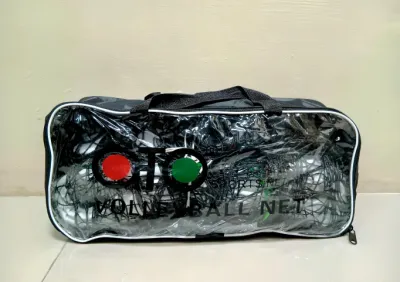
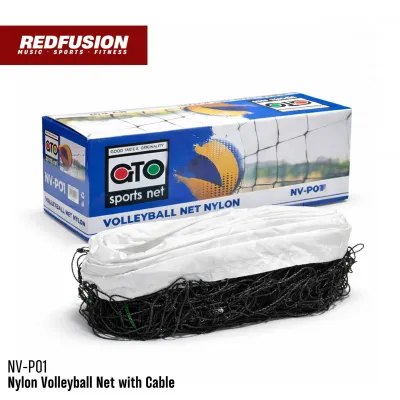
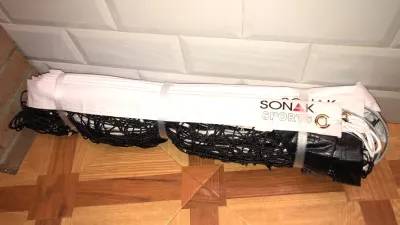
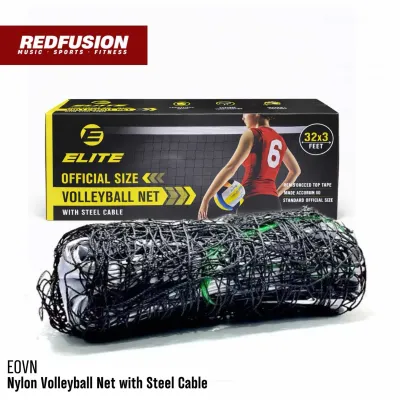
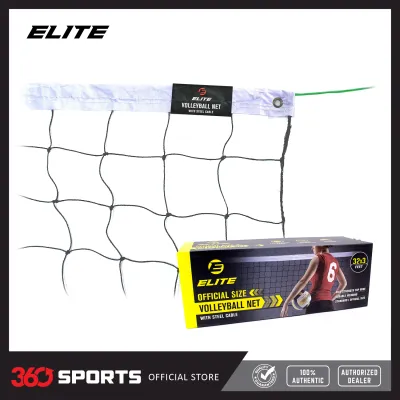
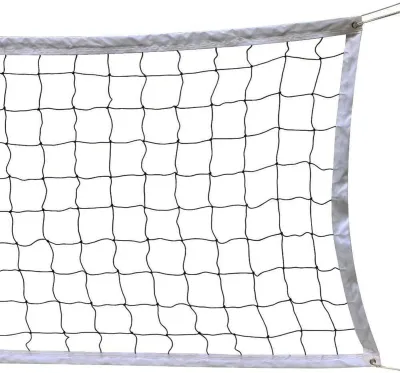
Prices are valid at publication and may change. Please refer to the product page for the latest price.
Finally, assess your storage capacity and local weather exposure. In tropical climates with high humidity and heavy seasonal rainfall, outdoor equipment faces rapid wear. If you cannot store the net indoors after every match, prioritize materials with specialized weather-resistant coatings, UV stabilizers, and rust-resistant hardware to prevent premature degradation.
Portable Nets for Grass, Driveways, and Multi-Surface Use
Portable volleyball nets offer excellent flexibility for recreational players who enjoy matches in various locations, from local parks to spacious driveways. When evaluating portable systems, the pole material is a critical factor in balancing weight and structural integrity. Telescoping aluminum poles are highly favored for their stiffness and light weight, allowing for easy transport without bending under moderate net tension. Fiberglass poles serve as a flexible, budget-friendly alternative, though they may exhibit more flex during high-impact plays.

The tensioning system determines how easily you can eliminate net sag. Basic systems often rely on simple elastic bungee cords, which are quick to hook but tend to lose elasticity over time. For a more professional feel, look for systems utilizing pull-down guy-wire ropes with heavy-duty tension rings or integrated ratchet systems. These mechanical tensioners allow you to apply precise force, keeping the net taut and level throughout the game.
Base stability is the final piece of the portable puzzle. For grass setups, heavy-duty steel ground stakes driven at an angle provide reliable resistance against the pulling force of the guy-wires. If you plan to play on hard surfaces like concrete where stakes cannot be used, verify the availability of weighted fillable bases. These bases, often filled with water or sand, must have sufficient weight capacity to prevent the poles from tipping inward when the net is struck.
Permanent In-Ground Nets for Dedicated Courts
For homeowners, schools, or local sports clubs building a dedicated volleyball court, permanent in-ground systems offer exceptional stability and professional-grade play. The installation process typically begins with ground sleeves, which are cemented into a concrete footing. This design allows you to remove the poles for storage or court maintenance while keeping the foundation securely anchored. Verify that the concrete footing depth complies with local building guidelines to withstand soil shifting and high wind loads.
The structural integrity of the poles depends heavily on their diameter and wall thickness. Heavy-duty steel or high-grade aluminum poles with a diameter of at least three inches are standard for permanent setups. Thicker walls prevent the poles from bowing inward under the extreme tension required for competitive play. When selecting steel poles, ensure they feature a hot-dip galvanized or thick powder-coated finish to protect against rust, especially in coastal or highly humid regions.
To accommodate different age groups, look for poles with integrated height adjustment tracks or pin-lock systems. These mechanisms allow you to slide the net collar smoothly to official heights without dismantling the entire structure. Additionally, ensure the poles are compatible with standard volleyball antennas and boundary markers, which are essential for training players to recognize in-bounds and out-of-bounds plays accurately.
Beach Nets for Sand Courts and Outdoor Weather
Beach volleyball presents unique challenges, requiring specialized gear that can withstand shifting sand, intense sunlight, and salty air. Standard ground stakes fail instantly in loose sand, making specialized sand anchor systems necessary. Look for auger-style stakes that screw deep into the ground, or deadman anchors—flat plates or bags filled with sand buried deep beneath the surface—which utilize the weight of the sand itself to hold the guy-wires taut.
The materials used in the net construction must be highly resistant to environmental degradation. Look for net boundary tape and center straps made from heavy-duty, UV-treated vinyl or reinforced polyester. These materials resist fading, cracking, and stretching under the intense tropical sun. The net mesh itself should be constructed from weather-resistant nylon or polyethylene, which does not absorb moisture or rot when exposed to sudden downpours or coastal humidity.
When setting up a beach court, verify that the net system matches official beach volleyball dimensions, which are slightly smaller than indoor courts. The boundary lines included with the kit should be adjustable and feature wide, sand-anchoring corner plates to keep the court boundaries visible and secure even when players slide or dive near the lines.
Indoor Gym Nets for Hardwood and Competitive Play
Indoor gym nets are designed for facility managers and competitive programs where precision, floor protection, and safety are paramount. Before purchasing, verify your facility’s ceiling clearance and the location of existing floor sleeves. Most indoor systems utilize floor sleeves recessed into the hardwood or concrete floor, covered by brass or chrome floor plates. If floor sleeves are not an option, wall-mount brackets can support the net system, provided the wall structure is certified to handle the lateral pulling forces.
The net mesh for indoor competitive play must meet strict regulatory standards for visibility and durability. High-strength nylon mesh with heavy-duty top and bottom cables—often made of Kevlar or steel—enables the net to remain perfectly flat and responsive. The mesh size must be tight enough to prevent the ball from slipping through while maintaining excellent visibility for players, referees, and spectators.
Tensioning in indoor systems is typically managed by a heavy-duty worm-gear winch mounted directly to one of the poles. This winch mechanism allows for micro-adjustments to the cable tension, ensuring the net height is uniform across the entire width of the court. When operating these winches, always follow the manufacturer’s instructions regarding maximum tension limits to avoid damaging the floor sleeves or snapping the tension cables.
Cross-Scenario Compatibility and Setup Tips
While some high-end net systems advertise multi-surface compatibility, it is important to understand their physical and structural limitations. A portable net designed for backyard grass can occasionally be adapted for beach play, but you will need to swap the standard metal stakes for sand anchors to prevent the poles from collapsing. Conversely, heavy permanent poles designed for in-ground sleeves cannot be easily adapted for temporary use on hard concrete without expensive, specialized free-standing cart systems.
Adjustable height features are highly valuable if your court serves diverse groups of players. Standard systems often feature pre-marked settings for men’s, women’s, and coed heights, as well as lower settings for youth or sitting volleyball. Always adjust the height when the net is slack; attempting to slide collars or pins under full tension can damage the locking mechanisms and pose a sudden pinch hazard to your hands.
Prioritize safety during every setup by performing a comprehensive pre-game inspection. Ensure all exposed poles are wrapped in thick, weather-resistant foam safety padding to protect players during aggressive net play. Check the tension of all guy-wires and clearly mark them with brightly colored flags or ribbons to prevent players from tripping over the support lines. Finally, clear the surrounding free zone of any rocks, debris, or uneven ground before starting the match.
Frequently Asked Questions (FAQ)
What is the official height for a volleyball net?
For standard adult competition, the official net height measured from the center of the court is 2.43 meters (7 feet, 11 5/8 inches) for men and 2.24 meters (7 feet, 4 1/8 inches) for women. For youth, senior, or sitting volleyball formats, these heights are adjusted downward to accommodate physical differences and ensure fair play. Always consult your local sports association or league rulebook to verify the exact height requirements for your specific tournament or age bracket.
How do I maintain a volleyball net left outdoors?
To extend the lifespan of an outdoor volleyball net, regularly rinse the mesh, poles, and tensioning hardware with clean, fresh water to remove dirt, sand, and corrosive salt residue. During the off-season or periods of extreme weather, such as typhoons or heavy monsoon rains, dismantle the net and store it in a dry, well-ventilated indoor space. Periodically inspect the system for signs of wear, including fraying tension cables, rusted winch gears, and UV-induced brittleness in the plastic components, replacing damaged parts immediately to maintain safety.
Community discussion
Share your experience or ask a question. Comments are reviewed before publication.