
Why Women's Wetsuit Proportions Matter for Scuba Diving
Finding the perfect scuba diving suit for women involves understanding that women’s bodies require specific tailoring to function correctly underwater. Unlike unisex designs, which are often scaled-down men’s patterns, specialized women’s suits accommodate a higher bust-to-waist ratio, wider hip curves, and shorter torso lengths. When a suit does not match these natural contours, gaps form, or the material stretches excessively, compromising both comfort and safety.
Thermal insulation in a wet environment relies on a very simple mechanism: trapping a thin layer of water between your skin and the neoprene. Your body heat warms this trapped water, creating a personal thermal barrier against the surrounding ocean. If a suit is too loose, cold water constantly flushes through the neck, wrists, or lower back, forcing your body to continuously expend energy to reheat new water.
In tropical destinations like the Philippines, where water temperatures hover around 26°C to 30°C, repetitive diving can still lead to progressive core cooling and fatigue if cold water constantly circulates through your suit. A snug fit ensures you stay warm across multiple dives throughout the day.
Products mentioned in this guide

![[Ready stock] Dive&Sail With Hood Spearfishing Wetsuit Camouflage Diving Suit One Piece Full Body UV protection](https://img.lazcdn.com/g/p/9076e18179fe3967195dc2d526a6aa0a.jpg_400x400q80.jpg_.webp)
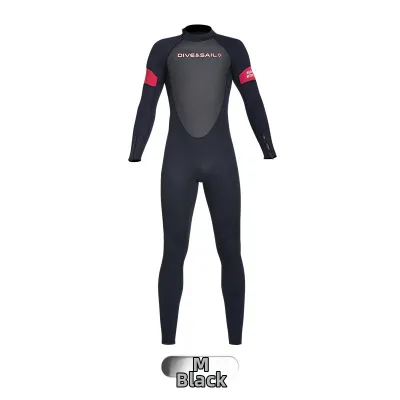
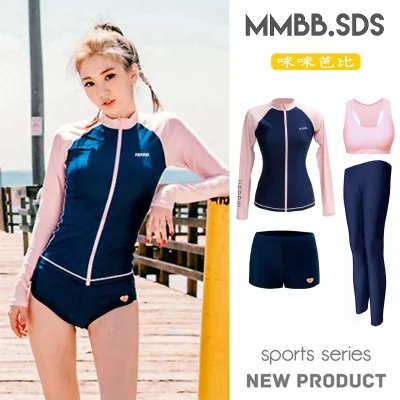

Prices are valid at publication and may change. Please refer to the product page for the latest price.
Conversely, an ill-fitting suit that is too tight introduces its own set of problems. Excessive restriction around the chest can limit lung expansion, leading to shallow breathing and elevated air consumption rates. Tight seals around the neck or underarms can cause painful friction burns, known as chafing, which quickly ruin a multi-dive trip. Selecting a suit cut specifically for female anatomy minimizes these risks, ensuring you stay comfortable and focused on the marine environment.
How to Take Accurate Body Measurements for a Wetsuit
To achieve a reliable fit, you must start with precise physical measurements rather than relying on standard clothing sizes. Standard dress sizes do not translate to neoprene garments because wetsuits require a three-dimensional, high-compression fit that standard fashion does not demand. Gathering accurate data is the only way to navigate the highly variable sizing charts provided by different dive manufacturers.

Before you begin, gather a flexible, non-stretch tailor’s measuring tape. Avoid using metal construction tapes, which cannot contour to the body, or old plastic tapes that have stretched over time. It is highly recommended to perform these measurements while wearing a thin, unpadded swimsuit or a sports bra to ensure you are measuring your actual body dimensions without extra bulk.
Begin with the bust measurement, which is one of the most critical dimensions for a scuba diving suit for women. Place the tape measure around the fullest part of your chest, keeping it level across your shoulder blades. Do not pull the tape so tight that it compresses your chest, and avoid holding your breath; instead, take a normal breath and record the measurement at the end of a gentle exhalation.
Next, locate your natural waistline, which is typically the narrowest part of your torso, located just above the belly button and below the rib cage. Wrap the tape comfortably around this area. For the hip measurement, stand with your feet together and wrap the tape around the widest part of your hips and buttocks. Ensure the tape remains perfectly horizontal to the floor throughout this process.
Finally, measure your total height and weight. Height is crucial because a suit that is too short will pull down on the shoulders and ride up in the crotch, while a suit that is too long will bunch at the joints and create water pockets. Having a partner assist you with these measurements is highly beneficial, as they can verify that the tape remains level and flat against your back, preventing diagonal slips that distort the final numbers.
How to Read Size Charts for a Scuba Diving Suit for Women
Once you have your exact measurements, the next step is translating them into a manufacturer’s sizing guide. Sizing is not standardized across the diving industry; a medium in one brand may easily be a small or a large in another. This variance occurs because brands design their patterns around different regional fit models and use proprietary neoprene blends with varying stretch capabilities.
When analyzing a size chart, prioritize your bust, waist, and hip measurements over your weight. While weight is a helpful general indicator, body composition varies wildly, and two individuals of the same weight can have entirely different skeletal frames and fat distributions. Height and torso length are the next critical priorities, as they dictate whether the suit’s built-in knee pads, elbow joints, and waist curves align correctly with your joints.
If your measurements fall between two sizes, you must apply specific decision rules based on your anatomy. If you have a larger bust or broader shoulders but a narrow waist, sizing up is generally advisable to prevent extreme compression across the chest, which can restrict deep breathing. However, if your height is on the border but your torso and limb circumferences are lean, sizing down is often better to maintain a snug seal and prevent water flushing.
Keep in mind that high-stretch neoprene lines are more forgiving of borderline measurements than entry-level, stiffer materials. If you are purchasing a highly flexible 3mm suit for diving in warm tropical waters, a slightly snugger fit will quickly mold to your shape. For stiffer or thicker suits, prioritizing the largest of your key measurements (usually the bust or hips) ensures you can actually zip the suit without straining the seams.
How to Check the Fit When Trying On a Scuba Diving Suit for Women
Trying on a wetsuit on dry land is notoriously difficult, especially in warm, humid climates. Neoprene is designed to perform in the water, so a dry suit will always feel significantly tighter and more restrictive than it will once you submerge. Understanding what to look for during a dry fitting will save you from discovering a critical fit issue while on a dive boat.
A properly fitting scuba diving suit for women should feel like a snug “second skin.” It should apply uniform, gentle compression across your entire body without causing localized pain, pinching, or numbness. If you struggle to pull the suit over your calves or thighs, or if zipping it requires multiple people pulling with extreme force, the suit is likely too small.
To check for gaps and potential water flushing points, systematically inspect key transition zones. Look at the small of your lower back; if there is a large pocket of loose neoprene, water will pool there and drain your body heat. Check the neck seal, wrists, and ankles to ensure they lie flat against your skin without gaps. While these seals should be snug enough to prevent water entry, they must not restrict blood flow or cause your hands and feet to feel cold or tingly.
Next, perform a series of mobility and function tests. Stand up straight and raise both arms fully above your head, simulating a streamlined swimming position. You should feel some resistance, but you should not feel an intense downward pull on your shoulders or a painful squeeze in the crotch. Squat down deeply to check the flexibility around your knees and hips; if the suit pulls tightly across your lower back or restricts your ability to bend, the torso length may be too short.
Finally, pay close attention to your breathing. Take several deep, deliberate breaths. If you feel a crushing sensation on your rib cage that prevents you from fully expanding your lungs, do not dive in that suit. A suit that restricts breathing on land will cause anxiety and hyperventilation underwater, which is a significant safety hazard. Conversely, if you see visible folds of excess material under your arms, behind your knees, or sagging at the crotch, the suit is too large and will trap excess water, negating its thermal benefits.
Adjusting for Specific Body Types and Neoprene Thickness
Because women’s bodies come in an infinite variety of shapes, standard off-the-rack sizing may not accommodate everyone perfectly. Fortunately, modern dive manufacturers have expanded their offerings to include specialized sizing lines, such as short (petite), tall, and plus-size cuts. These variations adjust the torso length and limb circumferences relative to height, allowing divers with unique proportions to find an excellent fit.
If you find that one-piece suits consistently fail to fit both your upper and lower body—for example, if you require a larger size for your hips but a smaller size for your bust—consider a two-piece wetsuit system. A “Farmer Jane” style (a sleeveless, overall-style bottom) paired with a matching jacket allows you to mix and match sizes for the upper and lower torso. This design also provides double neoprene thickness over your core, which is highly beneficial for longer dives.
The thickness of the neoprene also plays a major role in how a suit fits and feels. A thin 1.5mm or 3mm suit, which is highly popular for diving in tropical regions like the Philippines, offers substantial stretch and is highly forgiving of minor sizing discrepancies. However, if you plan to dive in cooler waters requiring a 5mm or 7mm suit, the thicker material is significantly stiffer and less compliant. When buying a thicker suit, you may need to size up slightly to maintain basic mobility, or look for premium lines that utilize high-stretch, professional-grade neoprene.
For divers whose measurements consistently span three or more different sizes on standard charts, investing in a custom-tailored wetsuit is a highly effective solution. While custom suits carry a higher initial price tag, they are cut to your exact anatomical measurements, eliminating all air pockets and tight spots. A perfectly fitted custom suit provides unparalleled thermal efficiency and comfort, making it a worthwhile investment for active divers who spend significant time in the water.
Community discussion
Share your experience or ask a question. Comments are reviewed before publication.