
Selecting the right overgrip for your badminton racket is one of the most immediate ways to improve your control, comfort, and confidence on the court. Because the racket handle is your sole point of contact with your equipment, the texture and thickness of this connection dictate how effectively you can transfer power from your fingers to the shuttlecock. Wilson offers a variety of overgrip profiles designed to cater to different hand conditions and playing styles, ensuring that every player can find a secure hold.
In a tropical climate like the Philippines, where high humidity and intense heat are constant factors, choosing the wrong grip can quickly lead to a slick handle, misdirected shots, or even a flying racket. Whether you play in a modern, air-conditioned sports complex or a local open-air barangay court, matching your grip to your personal sweat level and playing frequency is essential. By understanding the distinct characteristics of tacky, dry, and cushioned overgrips, you can make an informed decision that enhances your performance and protects your hands from blisters.
Quick Overview of Wilson Overgrip Profiles
Wilson overgrips are generally categorized into three primary surface profiles, each engineered to address specific player needs and environmental conditions. Tacky overgrips feature a smooth, high-friction polyurethane surface that offers a sticky feel, making them highly popular for players who want a secure hold without squeezing the handle too tightly. Dry overgrips, on the other hand, utilize a felt-like, moisture-wicking material that excels at absorbing sweat, providing a soft, powdery texture that remains slip-resistant even when wet. Cushioned overgrips are noticeably thicker, often incorporating foam strips or specialized contours to absorb impact and reduce the vibrations transmitted up the racket shaft.
Products mentioned in this guide
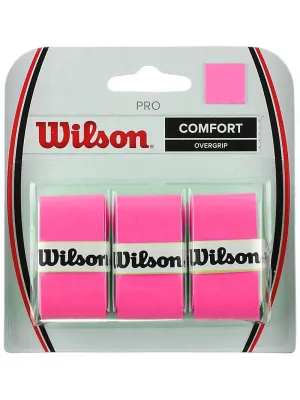
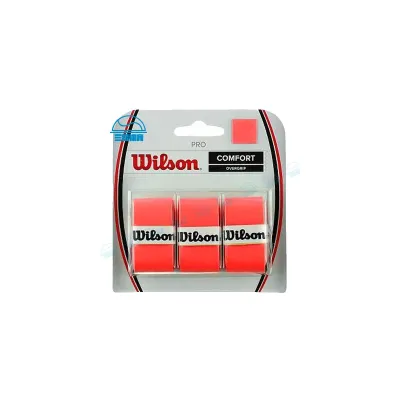
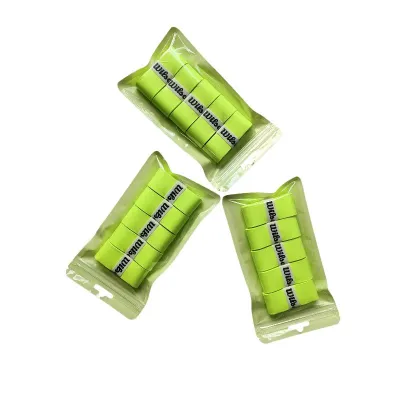
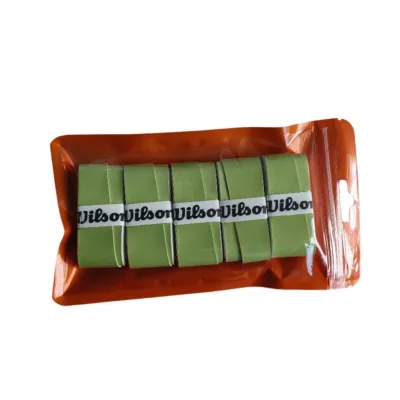
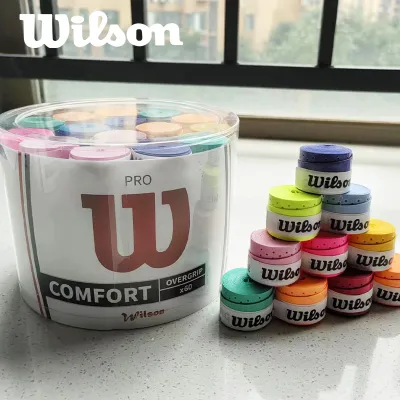
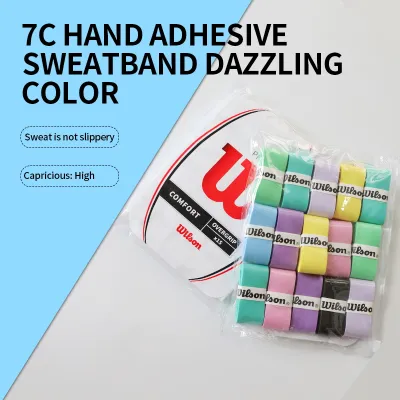
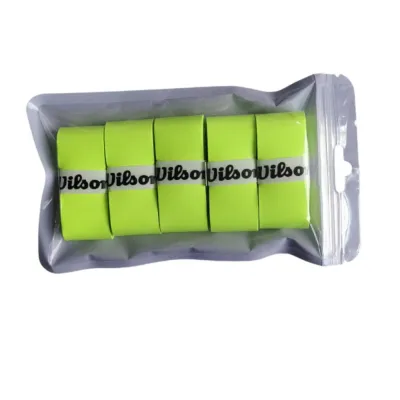
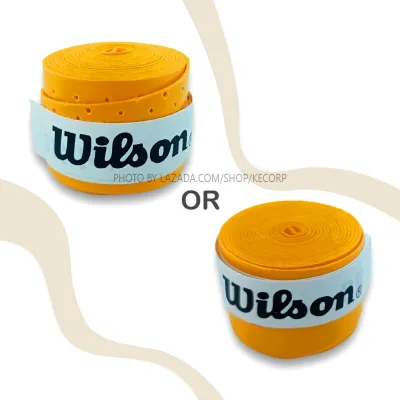
Prices are valid at publication and may change. Please refer to the product page for the latest price.
Matching these profiles to your typical playing environment is key to maintaining a consistent grip throughout your matches. If you primarily play in air-conditioned indoor halls where temperature and humidity are controlled, a tacky grip can provide excellent, long-lasting adhesion. However, if you find yourself playing in humid, non-air-conditioned venues, a dry, absorbent grip is often necessary to prevent sweat from pooling on the handle. Before purchasing, always verify the specific model availability, material composition, and exact dimensions on the product packaging or official retail listings, as manufacturers frequently update their product lines.
How to Assess Your Sweat Level and Grip Preferences
To narrow down your choices, begin by evaluating your personal physical conditions during a typical high-intensity session. Players with low sweat levels can comfortably use almost any grip profile, but they usually benefit most from the immediate security of a tacky grip. Moderate sweaters often find themselves in a transitional zone where they can use tacky grips in cool weather but must switch to dry grips during hot, humid seasons. Heavy sweaters, who find their hands wet after just a few rallies, must prioritize maximum absorption to prevent the racket from twisting in their palm during fast defensive exchanges.

Your playing frequency also plays a major role in determining which grip style is most practical for your budget and routine. If you play multiple times a week, your grips will wear out rapidly due to friction, salt buildup, and dirt. Tacky grips tend to lose their adhesive quality faster than dry grips, meaning frequent players must be prepared to replace them regularly to maintain that premium, out-of-the-box feel. If you play only occasionally, a durable cushioned grip might last for months, providing consistent comfort without requiring frequent maintenance.
Finally, consider your grip tension preference and how you physically hold the racket during different phases of a rally. Players who prefer a relaxed, loose hold until the exact moment of impact rely heavily on surface tackiness to keep the racket from slipping out of their hand during the backswing. Conversely, players who tend to squeeze the handle tightly throughout the game often experience hand fatigue and blisters, making a cushioned overgrip a highly beneficial choice to soften the pressure. Understanding these personal habits allows you to select a grip that complements your natural biomechanics rather than forcing you to adjust your playstyle.
Tacky Overgrips: Best for Dry Hands and Precision Control
Tacky Wilson overgrips are designed for players who demand maximum feedback from their racket and prioritize precise finger adjustments. Because these grips are thin and highly adhesive, they allow you to feel the octagonal bevels of the racket handle clearly, which is essential for executing delicate net drops and quick cross-court slices. This direct feedback ensures that you always know the exact angle of your racket face without having to look down at your hand. They are particularly effective in cool, dry environments where hand moisture is minimal, allowing the sticky polyurethane surface to perform optimally.
Despite their excellent control benefits, tacky overgrips have distinct trade-offs when exposed to moisture and heat. When subjected to heavy sweat or high tropical humidity, the smooth surface can lose its friction and become incredibly slippery, turning what was once a secure hold into a liability. Furthermore, dust, dirt, and dead skin cells easily adhere to the sticky surface, gradually reducing its effectiveness over time. To prolong the life of a tacky grip, players should dry their hands between games and store their rackets in a cool, dry compartment inside their sports bag.
When browsing local sports shops or online marketplaces, pay close attention to the packaging details regarding thickness and texture. A standard tacky overgrip typically ranges from 0.5mm to 0.6mm in thickness, which adds minimal bulk to your racket’s original handle size. Look for labels that specify a smooth, high-tack finish, and avoid grips that feel overly thick if your primary goal is maintaining maximum finger-power control. Inspecting these specifications ensures you do not accidentally purchase a grip that alters your racket’s balance or handle circumference.
Dry and Absorbent Overgrips: Best for Heavy Sweaters
Dry-style overgrips are the ultimate solution for players who struggle with wet hands and need a reliable, slip-resistant hold during intense rallies. Instead of relying on surface stickiness, these grips feature a highly porous, felt-like texture that acts like a towel, drawing moisture away from your palm and into the inner layers of the material. This capillary action ensures that even during long, grueling matches in non-air-conditioned halls, the surface of the grip remains dry and comfortable to the touch, giving you the confidence to swing at full power.
While dry overgrips excel at moisture management, they do come with specific trade-offs that players must accept. Because they lack a polyurethane topcoat, they do not offer the immediate, sticky sensation of a tacky grip, which can feel unusual to players accustomed to a high-friction surface. Additionally, the constant absorption of sweat and salt causes the fibers to wear down and fray faster than synthetic tacky materials. Over time, the grip can become stiff, rough, and less absorbent, requiring more frequent replacements to maintain its performance benefits.
When selecting a dry overgrip, look for key indicators on the packaging such as moisture-wicking technology, quick-dry descriptions, or a suede-like material composition. These features are specifically engineered to handle high volumes of liquid without becoming heavy or waterlogged. If you frequently play in high-temperature environments, keeping a multi-pack of dry overgrips in your bag is a practical way to ensure you always have a fresh, dry surface ready for your next match.
Cushioned Overgrips: Best for Comfort and Vibration Dampening
Cushioned overgrips are designed for players who prioritize hand comfort, shock absorption, and a thicker handle feel. When executing powerful smashes, a significant amount of vibration travels down the racket shaft and into your wrist, elbow, and shoulder, which can contribute to joint fatigue or conditions like tennis elbow. Cushioned grips utilize thicker materials, often integrated with EVA foam strips or air-filled chambers, to absorb these harsh vibrations and provide a plush, forgiving surface for your hand.
However, the added comfort of a cushioned grip comes with notable performance trade-offs that can affect your playing style. The extra thickness—often exceeding 1.5mm—inevitably rounds out the sharp bevels of the racket handle, making it more difficult to feel the exact orientation of the racket face. This loss of direct feedback can make precise, finger-controlled shots more challenging to execute. Additionally, the extra material adds weight to the handle, which can slightly alter the overall balance of your racket, making a head-heavy power racket feel more even-balanced.
Before choosing a cushioned overgrip, it is crucial to measure your current handle size and understand how the extra bulk will affect your play. If you have smaller hands, wrapping a thick cushioned grip over a standard G5 or G6 handle can make the grip circumference too large, preventing your fingers from wrapping around securely and reducing your ability to generate quick wrist snaps. To check if a cushioned grip is suitable, wrap a temporary strip of paper around your handle to simulate the added thickness, ensuring you can still hold the racket comfortably without straining your hand muscles.
Pre-Purchase Checks and Wrapping Guidelines
Before purchasing any Wilson overgrip, always verify its physical dimensions on the packaging to ensure compatibility with your badminton racket. While many overgrips are marketed as universal, tennis overgrips are significantly longer and wider than those designed specifically for badminton. If you purchase a tennis-sized overgrip, you will need to wrap it with a tighter overlap or trim a substantial portion of the excess material at the top of the handle to avoid creating an awkward, bulky buildup near the racket cone.
It is also important to inspect the condition of your racket’s underlying replacement grip before applying a new overgrip. An overgrip is designed to be wrapped on top of a functional base grip; it cannot fix a degraded, crumbling, or rotting base. If the original grip underneath is flaking or emitting an odor, applying a fresh overgrip will only trap the moisture and accelerate the decay, eventually damaging the wooden handle underneath. If necessary, strip away the old base grip, clean the wooden handle, and apply a fresh replacement grip or cushion wrap before wrapping your new overgrip.
When you are ready to apply the overgrip, follow consistent wrapping guidelines to ensure a smooth, professional finish. Start at the butt cap of the racket, securing the tapered end of the grip with a small piece of adhesive or by wrapping over the starting tab. Maintain a firm, steady tension as you spiral up the handle, overlapping each turn by approximately 1.5mm to 2mm to prevent gaps from forming. Avoid pulling the material too tightly, as this can thin out the grip and reduce its shock-absorbing and moisture-wicking properties. Once you reach the cone, cut the excess material at an angle and secure it firmly with the included finishing tape.
Frequently Asked Questions (FAQ)
How often should I replace my badminton overgrip?
You should replace your overgrip based on observable visual and tactile signs of wear rather than a strict calendar schedule. Common indicators that it is time for a change include a noticeable loss of surface texture, peeling edges, a slick feel when dry, or a persistent sour odor from trapped sweat. If you play frequently in hot, humid conditions, the salt and acidity from your sweat will accelerate the breakdown of the material, requiring a replacement every few weeks, whereas casual players in air-conditioned environments may only need to change their grip every few months.
Can I use a Wilson overgrip designed for tennis on a badminton racket?
Yes, you can use a tennis overgrip on a badminton racket, but you must make adjustments during the wrapping process. Tennis overgrips are typically longer, wider, and slightly thicker than badminton-specific grips to accommodate larger tennis handles. When wrapping a tennis grip on a narrower badminton handle, you will have a significant amount of excess material that must be trimmed at the top. Additionally, you must wrap it carefully to avoid creating excessive bulk, which can round out the handle bevels and reduce your finger control during fast rallies.
Community discussion
Share your experience or ask a question. Comments are reviewed before publication.