
Selecting the right yoga roller is not a one-size-fits-all decision. The ideal tool depends heavily on your current physical conditioning, your specific flexibility or recovery goals, and your practice environment. Whether you are looking to soothe sore muscles after an intense workout, deepen your backbends, or target stubborn knots in your shoulders, choosing the wrong type of roller can lead to ineffective sessions or even physical strain. By understanding the mechanical differences between foam rollers, yoga wheels, and massage sticks, you can select a tool that safely supports your body and enhances your overall wellness routine.
What Are the Main Types of Yoga Rollers and How Do They Work?
To make an informed choice, you must first understand how different rollers interact with your musculoskeletal system. While they are often grouped together under the broad category of yoga or recovery accessories, these tools operate on entirely different mechanical principles. Some rely on your body weight to compress large muscle groups, others use rigid curves to support and extend the spine, and some are handheld devices designed for manual pressure control.
Foam Rollers for Broad Myofascial Release
Standard cylindrical foam rollers are designed for self-myofascial release (SMR), a technique that applies broad, compressive pressure to skeletal muscles and the surrounding connective tissue (fascia). To use a foam roller, you position your body on top of the cylinder and use your own body weight to roll back and forth over large muscle groups, such as your quadriceps, hamstrings, and upper back. This broad compression helps increase local blood circulation, relax tight tissues, and prepare your muscles for movement or recovery. However, because you must support your own body weight during the process, using a foam roller requires a baseline level of core stability and upper-body strength to control your movements and maintain proper alignment on the floor.
Products mentioned in this guide
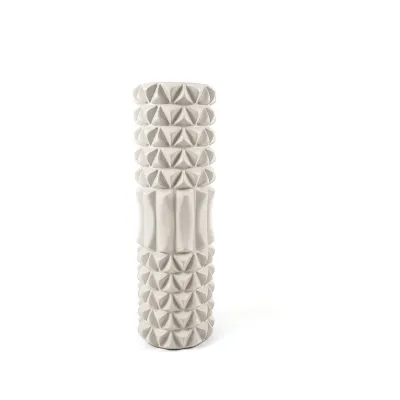
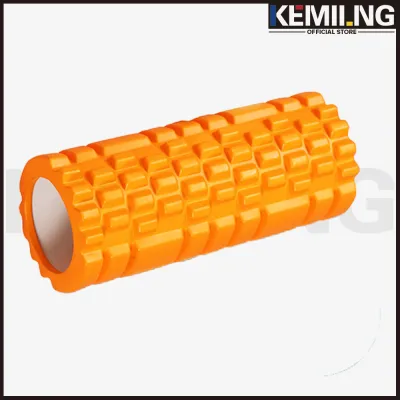
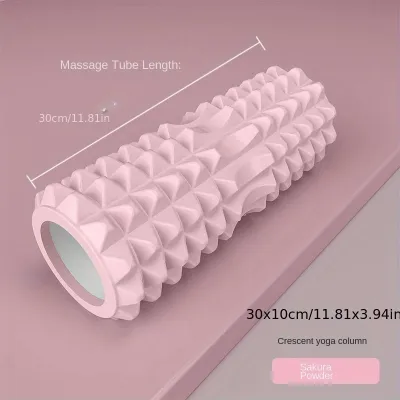
Prices are valid at publication and may change. Please refer to the product page for the latest price.
Yoga Wheels for Backbends and Core Stability
Unlike foam rollers, yoga wheels are rigid, circular props designed primarily to support the spine and assist in deep stretching. The convex curve of the wheel is engineered to cradle the natural curvature of your back, helping to open up the chest, shoulders, and hip flexors during backbends. Beyond flexibility, the yoga wheel serves as an unstable surface that you can integrate into your balance and core training. For example, placing your feet on the wheel during planks or lunges forces your stabilizing muscles to work harder to maintain balance. It is important to note that yoga wheels are structural support and flexibility props; they are not designed for deep-tissue massage or broad myofascial release.
Massage Rollers and Sticks for Targeted Pressure
Handheld massage rollers and sticks offer a highly localized approach to muscle recovery. These tools consist of a central rod with rotating gears, beads, or foam sleeves, flanked by handles on both ends. Instead of lying on the floor and using your body weight, you hold the handles and manually roll the tool over specific muscles, such as your calves, shins, forearms, or neck. This design gives you precise control over the angle, location, and intensity of the pressure, making it easy to target deep, hard-to-reach knots without straining your joints. Because they do not require floor space or complex body positioning, handheld sticks are highly portable and convenient for quick, targeted relief.
Which Yoga Roller Fits Your Current Practice Level?
Your experience level in yoga and physical conditioning should dictate the type of roller you choose. Using a tool that is too intense or structurally demanding for your current level can overwhelm your nervous system, cause protective muscle guarding, or lead to joint strain. Matching the tool to your physical readiness ensures a safe, progressive path toward your flexibility and recovery goals.

Beginners: Prioritizing Stability and Gentle Support
If you are new to yoga, myofascial release, or general flexibility training, your primary focus should be on stability and gentle sensory feedback. For beginners, smooth, low-density foam rollers or large-diameter yoga wheels are highly recommended. Softer foam rollers compress slightly under your weight, distributing pressure more evenly and providing a gentler sensation that allows your nervous system to adapt without triggering pain. Similarly, a larger yoga wheel (typically 12 inches in diameter) offers a wider, more gradual curve that provides stable, comfortable support for gentle chest openers. Beginners should avoid highly textured, rigid, or extra-firm rollers, as intense pressure can cause involuntary muscle tensing, defeating the purpose of the practice.
Intermediate Practitioners: Progressing to Deeper Stretches
As your body awareness, core strength, and tissue tolerance improve, you can transition to tools that offer deeper stimulation and more challenging stretches. Intermediate practitioners often benefit from medium-density, textured foam rollers (often featuring grid patterns) or standard-sized yoga wheels. The grid patterns on textured rollers mimic the hands of a massage therapist, allowing you to target specific fascial adhesions and stubborn muscle knots more effectively. If you are comfortable with basic backbends, a standard yoga wheel can help you safely explore deeper spinal extension and shoulder opening. During this transition, it is crucial to maintain controlled, deep breathing and active muscular engagement to protect your joints as you increase the intensity of your stretches.
Advanced Yogis: Managing Intense Release and Deep Inversions
Highly conditioned practitioners and advanced yogis require specialized tools capable of delivering intense tissue release or supporting advanced mobility work. Advanced options include high-density, firm foam rollers (such as those made from Expanded Polypropylene, or EPP) that do not compress under heavy loads, allowing for deep, concentrated myofascial work. Advanced practitioners also utilize smaller-diameter yoga wheels (around 6 to 10 inches) to target highly specific segments of the spine or to assist in advanced inversions, forearm balances, and deep backbends. However, these advanced tools demand precise anatomical knowledge and exceptional core control. It is vital to remember that specialized equipment cannot replace proper training or professional instruction; you must always respect your structural limits and avoid forcing your body into extreme positions.
How to Match Your Roller to Your Flexibility and Recovery Goals
While your practice level sets the baseline for safety, your specific physical goals should guide your final selection. Different rollers excel at different tasks, whether you are looking to accelerate post-workout recovery, counteract the effects of prolonged sitting, or find a portable solution for daily tension.
Goal: Post-Workout Muscle Recovery
If your primary goal is to reduce muscle soreness, flush metabolic waste, and restore tissue elasticity after intense physical activity, standard or textured foam rollers are your best option. These tools are highly effective for rolling out large muscle groups like the quadriceps, hamstrings, glutes, and latissimus dorsi. To maximize recovery, avoid rolling rapidly back and forth. Instead, use slow, deliberate movements, and when you find a tender spot or “trigger point,” hold sustained, gentle pressure on that area for 20 to 30 seconds while breathing deeply to allow the muscle to release. For immediate, localized relief on smaller muscle groups like the calves or forearms, a handheld massage stick is an excellent secondary tool that can be used immediately after a workout while sitting down.
Goal: Improving Spinal Flexibility and Posture
For those seeking to counteract the slouched posture associated with desk work, open up the chest, and safely increase spinal extension, the yoga wheel is the premier tool. The wheel’s convex shape is designed to support the thoracic spine (upper and middle back) while allowing the shoulders and chest to open passively. You can practice passive stretching by gently draping your back over the wheel and letting gravity open your chest, or active stretching by using the wheel to support your body as you actively engage your core and legs in backbend variations. However, you must exercise caution: never place a rigid, non-yielding tool directly under your lumbar spine (lower back) without proper core engagement or professional guidance, as the lower back is highly susceptible to hyperextension injuries.
Goal: On-the-Go Targeted Relief
If you travel frequently, have limited floor space at home, or need a quick way to relieve tension during the workday, portability and ease of use are paramount. Handheld massage rollers, sticks, or compact, travel-sized foam rollers (typically 12 inches or shorter) are ideal for these scenarios. Handheld tools are particularly valuable because they allow you to apply precise, manual pressure to sensitive, localized areas—such as the sides of the neck, the jawline, or the forearms—where rolling your body weight on a floor roller would be awkward, impractical, or unsafe. While these compact tools are incredibly convenient, keep in mind that they are designed for targeted relief and cannot fully replicate the broad, systemic myofascial release provided by a full-sized floor roller.
Essential Specs to Check Before Buying a Yoga Roller
When shopping for a roller in sports equipment stores or online marketplaces, it is easy to get overwhelmed by the variety of options. To ensure you choose a high-quality, durable tool that matches your needs, you should evaluate several key physical specifications before making a purchase.
Material Composition and Core Density
The materials used to construct a roller directly determine its firmness, weight capacity, and lifespan.
- EVA (Ethylene-Vinyl Acetate): This is a lightweight, slightly soft, and forgiving foam material. It is highly comfortable for beginners but may compress, lose its shape, or soften over months of heavy use.
- EPP (Expanded Polypropylene): This is a high-density, bead-like foam that is extremely firm, lightweight, and durable. EPP rollers retain their shape under heavy loads and over long periods, making them ideal for deep-tissue work, though they can feel uncomfortably hard for beginners.
- ABS or PC Cores: High-quality yoga wheels feature a rigid inner core made of Acrylonitrile Butadiene Styrene (ABS) or Polycarbonate (PC), wrapped in a thin layer of TPE or EVA foam. When buying a yoga wheel, always verify the manufacturer's stated weight capacity (often ranging from 150 to 250 kilograms) to ensure it can safely support your body weight during standing or balancing exercises.
Dimensions: Length and Diameter
The physical dimensions of a roller dictate which exercises you can perform and how easy it is to store and transport.
- Length: Standard full-sized rollers are typically 36 inches (approx. 90 cm) long. This length is ideal for rolling out your entire back, as it allows you to lie along the length of the roller to support your spine and head simultaneously. Shorter rollers, ranging from 12 to 18 inches (approx. 30 to 45 cm), are highly portable, require less floor space, and are perfect for targeting individual limbs like the calves, IT bands, or quadriceps.
- Diameter: Most standard foam rollers have a 5-to-6-inch diameter, which provides a stable height and a comfortable rolling angle for most body types. Yoga wheels generally feature a larger diameter of 12 inches, which provides a gradual, supportive curve for backbends. Smaller-diameter rollers or wheels (6 to 10 inches) offer more intense, localized pressure and are better suited for targeted deep-tissue work or advanced flexibility training.
Surface Texture and Grip
The surface design of a roller affects both the intensity of the massage and your safety during use.
- Smooth Surfaces: These provide even, consistent pressure across the muscle tissue. They are highly recommended for beginners, sensitive areas, and general warm-ups, as they minimize discomfort and allow for a smooth rolling motion.
- Textured or Grid Surfaces: These feature raised ridges, bumps, or grid patterns designed to mimic the fingers and palms of a massage therapist. They provide targeted, high-intensity pressure to help release stubborn trigger points, but they require a higher pain tolerance.
- Grip and Slip Resistance: In hot and humid tropical climates, such as in the Philippines, sweat can quickly make smooth plastic or closed-cell foam surfaces slippery. Look for rollers and yoga wheels with textured, non-slip outer layers (such as textured TPE or natural cork) to ensure you maintain a secure grip on the floor and your body during humid home workouts or active yoga sessions.
Quick Selection Guide: Matching Rollers to Your Needs
To help you quickly identify the best tool for your routine, the table below summarizes the core differences, ideal users, and primary trade-offs of the three main roller types.
| Roller Type | Primary Goal | Best Practice Level | Key Benefit | Main Limitation |
|---|---|---|---|---|
| Foam Roller | Broad myofascial release, muscle recovery, and warm-ups | Beginner to Advanced (depending on density) | Covers large muscle groups efficiently using body weight | Requires floor space and baseline core stability to use |
| Yoga Wheel | Spinal flexibility, chest opening, and balance training | Intermediate to Advanced | Supports the spine's natural curve for deep backbends | Poor for deep-tissue muscle massage; rigid structure |
| Massage Stick | Targeted, localized muscle relief and trigger point therapy | Beginner to Advanced | Precise manual pressure control without lying on the floor | Cannot provide broad, systemic floor-based release |
Safety Limits and Maintenance for Your Yoga Roller
Using yoga rollers and wheels can significantly enhance your physical well-being, but these tools must be used with care to prevent injury. Furthermore, proper maintenance is essential to protect your investment, especially when storing sports equipment in warm, humid environments.
Safety Boundaries and Stop Conditions While stretching and myofascial release can involve mild discomfort, they should never cause sharp pain. If you experience sharp, shooting pain, numbness, tingling, or a loss of sensation while using any roller, stop the activity immediately. These symptoms often indicate nerve compression or joint strain rather than muscle release.
- Areas to Avoid: Never roll directly over your joints (such as the knees or elbows), your lumbar spine (lower back), or the front of your neck. These areas lack the protective muscle mass of the upper back or thighs, and applying heavy pressure can damage delicate ligaments, nerves, or spinal discs.
- Training and Judgment: Remember that equipment cannot replace professional instruction, physical therapy, or personal judgment. If you are recovering from an injury or have a chronic musculoskeletal condition, always consult a qualified healthcare professional or physical therapist before incorporating these tools into your routine.
Cleaning and Maintenance in Humid Climates In the tropical climate of the Philippines, high humidity and sweat can accelerate the degradation of foam and plastic materials, while creating a breeding ground for bacteria and mold.
- Post-Workout Wipe Down: After every session, immediately wipe down your roller or yoga wheel with a damp cloth and a mild, non-abrasive soap. Avoid harsh chemical cleaners or bleach, which can dry out and degrade EVA or TPE foams, causing them to crack or peel. Allow the equipment to air dry completely in a well-ventilated indoor area before storing.
- Environmental Protection: Prolonged exposure to direct sunlight or extreme heat (such as leaving your roller in a hot car or on a sunny balcony) can warp plastic cores, melt adhesives, and cause foam to become brittle and crumble. Always store your rollers in a cool, dry place indoors, away from direct sunlight.
- Regular Inspection: Periodically inspect your equipment for signs of wear. Check for deep cracks, structural warping, permanent flattening, or a peeling outer layer. If you notice any structural damage, retire the equipment immediately to prevent sudden failure or injury during use.
Frequently Asked Questions (FAQ)
Can I use a yoga wheel if I have lower back pain?
You should exercise extreme caution if you have lower back pain. While a yoga wheel is excellent for mobilizing the thoracic spine (upper and middle back), placing a rigid wheel directly under your lumbar spine (lower back) can easily cause hyperextension and worsen existing pain or injury. If you suffer from lower back issues, consult a physical therapist or a certified yoga instructor before using a wheel. For gentle, supported back care, a standard, soft foam roller placed horizontally under the upper back is generally a much safer starting point.
How often should I replace my foam roller?
There is no fixed expiration date for a foam roller; its lifespan depends on the material quality, how often you use it, and how well it is maintained. Low-density EVA rollers used daily may need replacement every 6 to 12 months as they soften and lose their shape. High-density EPP rollers or those with rigid plastic cores can last for several years. You should replace your roller immediately if you observe permanent flattening, a significant loss of firmness, deep structural cracks, or a peeling outer surface that compromises your grip and hygiene.
Is a longer foam roller always better for full-body use?
A longer foam roller (typically 36 inches) is highly versatile because it allows you to roll out both sides of your body simultaneously and can support your entire spine horizontally for chest-opening exercises. However, it is not always the best choice for everyone. Long rollers require significant floor space, are difficult to pack for travel, and can be cumbersome to store in smaller homes. A medium-length roller (18 to 24 inches) often provides the ideal compromise, offering ample surface area for most full-body exercises while remaining highly portable and easy to store.
Community discussion
Share your experience or ask a question. Comments are reviewed before publication.