
Choosing the right Yonex badminton racket is a balance of matching the frame’s physical properties to your current physical strength, swing speed, and technical consistency. Using a racket that does not align with your current playing ability can hinder your development, cause early fatigue on hot and humid courts, and even increase the risk of joint strain. By systematically evaluating your skill level, understanding key technical specifications, and learning how to navigate the brand’s distinct product families, you can select a racket that complements your natural mechanics and helps you progress on the court.
Assess Your Current Skill Level and Playing Style
Identifying your current proficiency is the first step in narrowing down your racket options. Beginners typically focus on developing clean contact with the shuttle, learning basic footwork, and mastering the overhead clear. If you struggle to consistently hit the shuttle from your own baseline to your opponent’s baseline, or if your timing is still inconsistent, you are in the beginner stage. At this level, your swing speed is generally slower, and your wrist muscles are still adapting to the specific demands of racket sports.
Intermediate players have developed consistent overhead clears, can execute basic drop shots, and are comfortable with defensive blocks. If you can direct the shuttle with reasonable accuracy and have begun participating in fast-paced double matches, you fall into this category. At this stage, you are likely identifying your preferred playing style and looking for a racket that enhances either your defensive speed or your attacking power.
Products mentioned in this guide
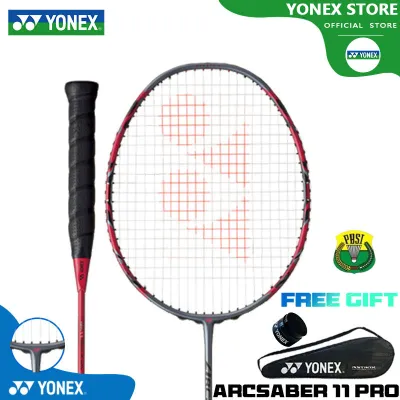
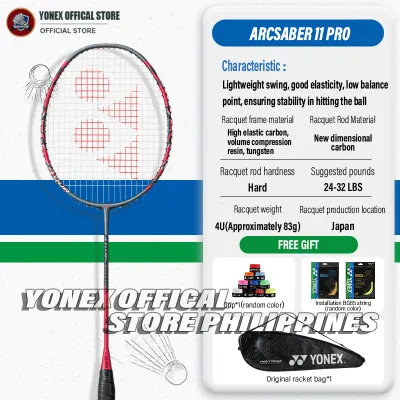
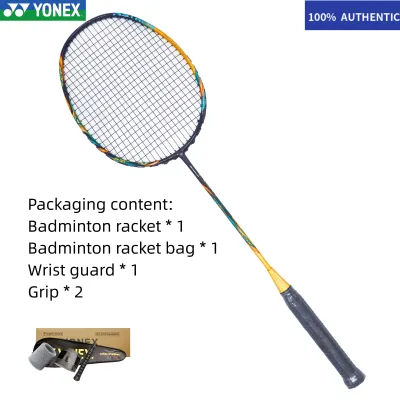
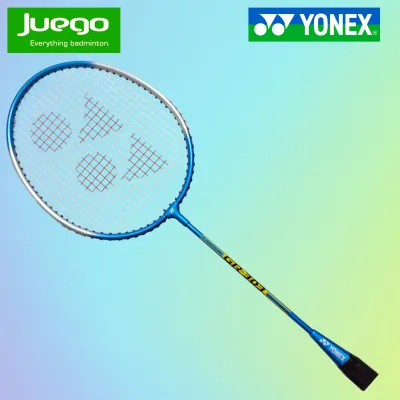
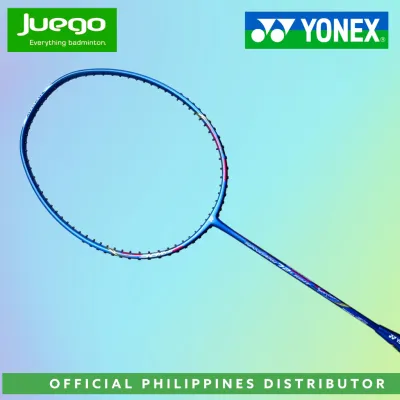
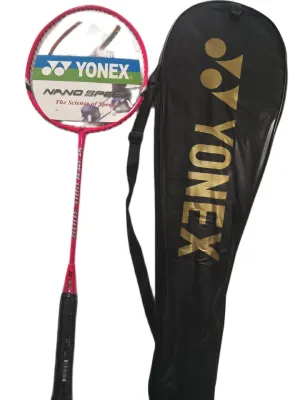
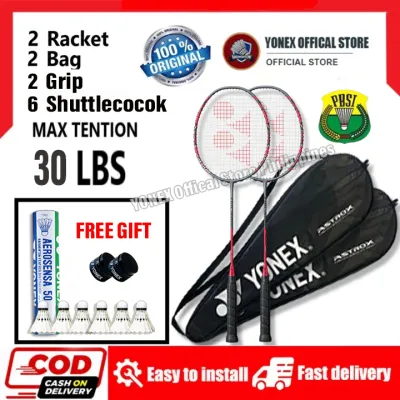
Prices are valid at publication and may change. Please refer to the product page for the latest price.
Advanced players possess explosive swing speeds, precise footwork, and the ability to generate high power even from difficult, late positions in the backcourt. If you can seamlessly transition between hard smashes, delicate net play, and rapid defensive drives, you require a highly responsive racket that can handle high string tensions and rapid directional changes.
Your dominant playing style also dictates your equipment needs. Attacking players rely on powerful smashes and aggressive rear-court play, requiring gear that maximizes downward force. Defensive players prioritize quick reaction times, rapid net exchanges, and fast recovery, demanding highly maneuverable frames. All-around players seek a balance of control, placement, and speed to adapt to various match situations.
Finally, consider your physical conditioning and natural swing speed. Playing in tropical climates often accelerates physical fatigue during long rallies. If you do not have highly developed wrist and forearm strength, choosing a racket that is too demanding will quickly tire your arm, leading to poor form and potential injury.
Understand Key Racket Specifications
Rather than choosing a racket based on popularity or professional endorsements, you should focus on the technical specifications. These physical attributes directly dictate how the racket behaves during a swing, affecting everything from defense to power generation.

Weight Categories and Grip Sizes
Weight is categorized using a standard “U” classification system, which you can find printed on the racket’s cone or shaft. Common categories include 3U (typically 85 to 89 grams), 4U (80 to 84 grams), and 5U (75 to 79 grams). Heavier rackets, such as those in the 3U class, provide more mass behind the shuttle, making it easier to generate deep clears and powerful smashes if you have the physical strength to swing them. However, they are more tiring to use over long sessions. Lighter rackets, like 4U and 5U models, offer superior maneuverability and faster reaction times, making them highly suitable for defensive play, quick net exchanges, and players looking to minimize arm fatigue.
Grip sizes are indicated by a “G” rating, such as G4 or G5, where a higher number represents a smaller handle circumference. In many local sports shops, G5 is the standard offering because it fits a wide range of hand sizes. It is generally practical to select a smaller grip size like G5, as you can easily customize the thickness and sweat absorption by adding a replacement grip or a soft overgrip. Trying to reduce the size of a handle that is already too large is much more difficult.
Balance Point and Shaft Flexibility
A racket’s balance point determines where the majority of its weight is distributed. Head-heavy rackets concentrate weight toward the top of the frame, acting like a hammer to generate extra momentum and power for smashes. Head-light rackets distribute more weight toward the handle, allowing for rapid swing speeds, quick defensive blocks, and agile net play. Even-balance rackets distribute weight evenly across the frame, offering a versatile middle ground for players who want a mix of control, speed, and moderate power.
Shaft flexibility is equally critical and ranges from flexible to medium, stiff, and extra stiff. Flexible shafts bend easily during your swing, storing energy and releasing it like a slingshot to help generate power with less physical effort. This is highly beneficial for beginners and intermediate players who are still developing their swing speed. Stiff and extra-stiff shafts do not bend easily; they require rapid, explosive swing speeds and precise timing to transfer energy to the shuttle. While stiff shafts offer advanced players exceptional control and placement accuracy, they can feel like a solid wooden board and cause joint strain if used by players without the proper technique.
Navigate Yonex Series Based on Player Profiles
Yonex organizes its racket lineup into distinct series, each designed around a specific playing philosophy. Understanding these design intents allows you to match your skill level and playing style to the appropriate product family.
The Astrox series is designed with a head-heavy balance and is engineered for attacking players who want to dominate rallies with steep, powerful smashes. The Nanoflare series features a head-light construction, optimized for rapid swing speeds, quick defensive maneuvers, and fast-paced drive exchanges. The Arcsaber series utilizes an even-balance design, focusing on shuttle hold and control, making it suitable for all-around players who prioritize precise placement and tactical consistency.
When browsing these families, it is important to consult the manufacturer’s official series descriptions and target player charts rather than relying on marketing hype. Within each individual series, Yonex produces models tailored to different skill levels. For example, a single series name might include a beginner-friendly model with a flexible shaft and a lighter frame (often designated by suffixes like “Play” or “Game”), alongside an ultra-stiff, demanding version designed for professional athletes (often designated as “Pro”). Always verify the exact weight category and shaft stiffness of the specific model you are considering to ensure it matches your physical capabilities.
Final Checks Before You Buy
Before making your final decision, try to test or borrow a racket with similar specifications. Many local badminton clubs or sports centers have players willing to let you try a few swings, or they may offer demo programs. Feeling how a specific weight and balance point behave during actual play is the most reliable way to validate your choice before committing financially.
Because counterfeit rackets are common on online marketplaces, verifying authenticity is crucial. Always purchase from authorized sports retailers or official brand stores. When inspecting a racket, check for the official Yonex hologram sticker on the cone, which should be difficult to peel off and should change color when tilted. Look for clean, laser-engraved serial numbers on both the shaft and the cone rather than cheaply printed text. Examine the overall build quality, ensuring the paint job is flawless and the grommets are perfectly aligned and seated.
Finally, remember to factor the cost of strings and professional stringing services into your budget. Most mid-to-high-end rackets are sold unstrung to allow players to customize their setup. You will need to budget for a set of high-quality strings and the service fee of a professional stringer (typically priced in ₱). For beginners and intermediate players, a moderate string tension between 20 to 24 pounds is generally recommended, as higher tensions reduce the sweet spot and require advanced technique to generate power.
Frequently Asked Questions (FAQ)
Should beginners buy an expensive professional Yonex racket?
No, beginners should generally avoid high-end professional rackets. These models are typically designed with very stiff shafts and head-heavy balances, which require precise timing and explosive swing speeds to operate effectively. Using a professional racket without the proper technique can lead to poor power generation, early fatigue, and physical discomfort in your wrist, elbow, or shoulder. Beginners will progress much faster using lighter, more flexible, and more forgiving models that assist with power generation and encourage correct form.
How often should I restring my Yonex racket?
You should restring your racket when you notice visible signs of wear, such as fraying string fibers, or when you experience a significant loss of tension. When tension drops, the string bed loses its crisp feel, and the shuttle may feel like it is sinking into the racket rather than bouncing off cleanly, forcing you to swing harder to achieve the same distance. As a general guideline, if you play twice a week, you should aim to restring your racket at least twice a year. However, if you play frequently in hot, humid conditions, or if you use thin, high-performance strings, you may need to restring more often to maintain optimal playability.
Community discussion
Share your experience or ask a question. Comments are reviewed before publication.