
For most men starting their home strength training journey, selecting the right barbell set is the single most important decision for long-term fitness success. The ideal starter setup must balance durability, safety, and adaptability to ensure you do not quickly outgrow your investment.
To make an informed choice, you must first decide between an Olympic barbell system and a standard barbell system. While standard sets are often more affordable initially, Olympic sets offer superior weight capacity, standardized plate sizing, and rotating sleeves that protect your joints during heavy lifts.
Beyond the bar itself, your home setup requires a careful evaluation of your physical space, flooring protection, and safety mechanisms. A complete starter kit should include an adjustable bar, a selection of compatible weight plates, secure collars, and high-density rubber flooring to protect your home from damage.
Products mentioned in this guide
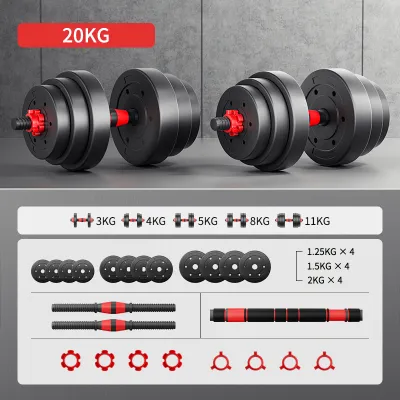
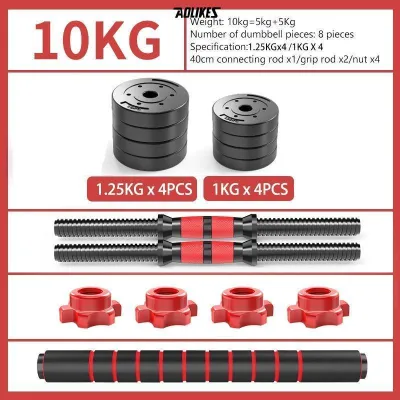
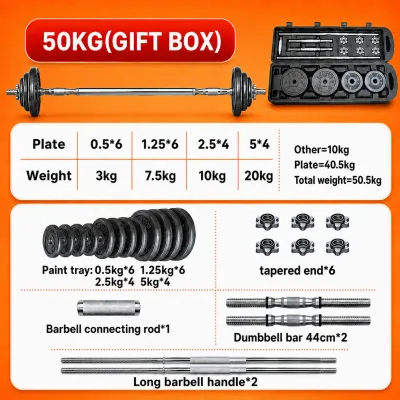
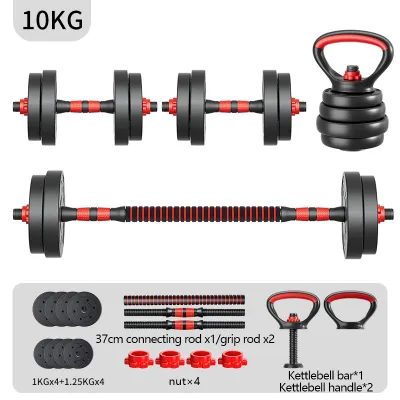
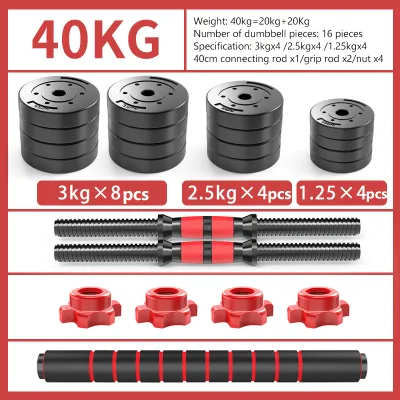
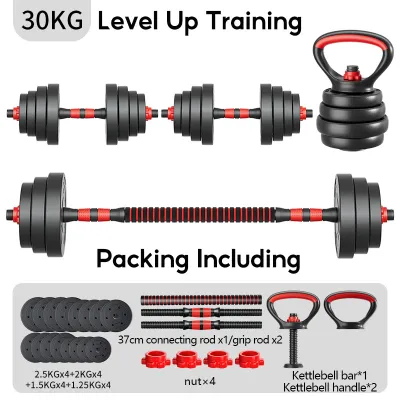
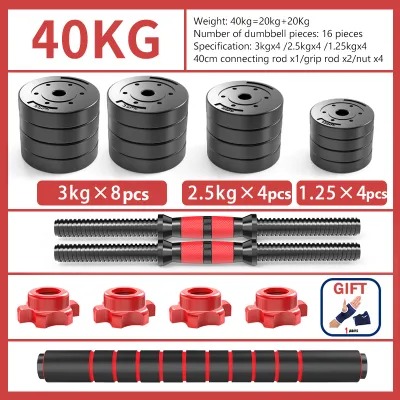
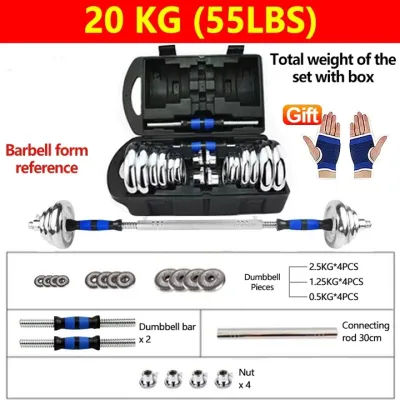
Prices are valid at publication and may change. Please refer to the product page for the latest price.
Understanding Barbell Types for Beginners
Before browsing online marketplaces, it is essential to understand that not all barbells are built the same way. The market is broadly divided by sizing standards and loading mechanisms, both of which directly impact your training progression and safety.
Choosing the wrong type of barbell can lead to compatibility issues with racks, plates, and other accessories down the line. By understanding these fundamental categories, you can select a system that aligns with your current strength level and long-term training goals.
Olympic vs. Standard Barbells
The primary distinction you will encounter when shopping for a barbells set for men is the difference between Olympic and standard bars. This classification refers to the diameter of the bar’s sleeves—the outer ends where you slide the weight plates.
Olympic barbells feature sleeves with a 2-inch (approximately 50mm) diameter. These bars are the global standard for commercial gyms, powerlifting, and weightlifting competitions. They are built to handle heavy loads, typically starting at a base weight of 20 kilograms (about 44 pounds) for men’s standard bars. Crucially, Olympic bars feature rotating sleeves that allow the weight plates to spin independently of the shaft, which significantly reduces the rotational torque transferred to your wrists, elbows, and shoulders during dynamic movements.
Standard barbells, on the other hand, feature a uniform 1-inch (approximately 25mm) diameter across the entire length of the bar. These bars are lighter, often weighing between 5 to 10 kilograms, and their sleeves do not rotate. While standard sets are highly accessible and sufficient for light, high-rep conditioning or basic arm exercises, they have severe limitations. They typically have a much lower weight capacity, are prone to bending under moderate loads, and will not fit standard power racks or squat stands. For progressive overload and long-term strength development, investing in an Olympic system is generally the more sustainable path.
Fixed vs. Adjustable Sets
Another key decision is choosing between fixed-weight barbells and adjustable, plate-loaded sets. Fixed barbells are pre-assembled, solid pieces of equipment where the weights are permanently welded or bolted to the shaft, similar to what you see on accessory racks in commercial gyms.
While fixed barbells offer maximum convenience—allowing you to simply pick up the bar and lift without any setup time—they are highly impractical for a home gym. To progress in strength, you would need to purchase an entire rack of multiple fixed bars, which requires a massive amount of floor space and a substantial financial investment.
Adjustable barbell sets utilize a single bar and a collection of separate weight plates that you manually slide on and off. This design is highly versatile, cost-effective, and space-efficient. It allows you to adjust the total weight in small increments to match different exercises, making it the absolute standard for home strength training.
Key Specifications to Check Before Buying
When evaluating product listings on ecommerce platforms, you must look past marketing buzzwords and scrutinize the technical specifications. Matching the bar and plate dimensions to your body mechanics and home environment is critical for safety and comfort.

Manufacturers provide detailed measurements for a reason. Verifying these specifications beforehand prevents the frustration of buying equipment that is too long for your room, too thick for your grip, or incompatible with your existing gear.
Bar Length, Weight, and Shaft Diameter
A standard men’s Olympic barbell measures 7.2 feet (approximately 2.2 meters) in length and weighs 20 kilograms. This length is designed to fit perfectly on standard power racks and squat stands, providing ample space for your grip and plate loading.
If your home gym space is highly restricted, you might consider shorter alternatives, often sold as 5-foot or 6-foot Olympic bars. However, before purchasing a shorter bar, you must verify its “shaft length”—the distance between the inner collars of the sleeves. If the shaft length is too short, the bar will not rest securely on a standard width squat rack, forcing you to perform lifts without a safety stand.
Shaft diameter is another critical comfort factor. For men’s multi-purpose and powerlifting bars, a shaft diameter between 28mm and 29mm is standard. This thickness provides an optimal balance of grip security and bar stiffness. Avoid bars with excessively thick shafts (30mm or more) unless you are specifically training grip strength, as they can cause premature hand fatigue during pulling movements like deadlifts and rows. Conversely, bars thinner than 28mm may whip or bend excessively under moderate weights.
To ensure a safe setup, measure your training room’s width before ordering. A standard 7.2-foot bar requires at least 10 feet of clear wall-to-wall width. This extra space ensures you can safely slide weight plates onto the sleeves without hitting walls, furniture, or storage racks.
Weight Plates: Material and Bumpers
The plates you choose will dictate the noise level, floor impact, and overall feel of your home workouts. Weight plates are generally categorized by their construction materials, each suited to different training styles and environments.
- Cast Iron Plates: These are the traditional, metallic plates that make the classic clanking sound. They are highly durable, compact, and typically the most budget-friendly option. However, in tropical climates with high humidity, bare or poorly coated cast iron is highly susceptible to rust. They also offer zero shock absorption, meaning they can easily crack floor tiles or dent concrete if dropped.
- Rubber-Coated and Urethane Plates: These are cast iron plates encased in a protective layer of rubber or polyurethane. The coating significantly reduces noise, protects your floors from minor impacts, and resists rust. Be aware that some budget rubber-coated plates can emit a strong, pungent chemical odor when new, which can be unpleasant in unventilated indoor spaces.
- Bumper Plates: Made entirely of high-density rubber or urethane with a steel center hub, bumper plates are designed to be dropped from overhead or shoulder height. They are essential if you plan to perform Olympic lifts or dynamic cross-training movements. Because they absorb the impact, they protect both the bar and your floor. However, they are much thicker than iron plates, which limits the total amount of weight you can fit on the bar sleeve.
Regardless of the material, always verify the plate’s center hub diameter. For an Olympic bar, the hub must be exactly 2 inches (approx. 50.4mm) to ensure a snug, secure fit. A loose fit will cause the plates to rattle and shift during your lifts, destabilizing your balance.
Collars, Sleeves, and Weight Tolerance
Safety on a barbell set relies heavily on how the plates are secured and how the bar handles rotation. You must verify these mechanical features before making a purchase.
- Collars: Never lift without collars. Spring collars are the most common and affordable, but they can lose tension over time. Lock-jaw or nylon quick-release collars offer a much tighter grip on the sleeve and are highly recommended for home safety. Threaded spin-lock collars are common on cheap standard bars, but they are slow to adjust and prone to loosening mid-set.
- Sleeves: High-quality Olympic bars use either bushings or bearings inside the sleeves. Bushings are ideal for powerlifts (squats, bench, deadlifts) as they provide a smooth, controlled spin and high durability. Bearings spin much faster and are preferred for Olympic weightlifting, though they generally require more maintenance and cost more.
- Weight Tolerance: Always locate the manufacturer's stated maximum weight capacity. Entry-level bars may only be rated for 300 lbs (approx. 136 kg), while high-quality steel bars can support over 1,000 lbs. Always apply a safety margin; if you plan to lift close to a bar's maximum rating, upgrade to a higher-tensile strength bar to prevent catastrophic bending.
Space, Flooring, and Safety Considerations
Setting up a barbell in a residential space requires careful planning to prevent structural damage to your home and serious injury to yourself. Unlike commercial gyms with reinforced concrete floors, home environments demand extra precautions.
First, evaluate your vertical and horizontal clearance. Overhead presses require sufficient ceiling height so the plates do not smash into light fixtures or ceiling fans. Ensure your designated lifting area is completely clear of household traffic, glass windows, and low-hanging decorations.
Flooring protection is non-negotiable, especially in homes featuring ceramic tiles, polished concrete, or hardwood floors. Dropping even a light barbell on these surfaces can cause immediate, costly structural damage. To mitigate this, install high-density rubber gym mats. Standard yoga mats or thin foam play mats do not provide adequate shock absorption. Look for specialized rubber tiles or stall mats with a thickness of at least 15mm to 20mm to distribute the impact force safely.
In tropical, high-humidity environments, rust is a constant threat to gym equipment. Sweat and ambient moisture will quickly corrode bare steel shafts and cast iron plates. To protect your investment, prioritize barbells finished with hard chrome, black phosphate, zinc, or stainless steel. Additionally, establish a simple maintenance routine: wipe down the bar shaft with a dry microfiber cloth after every workout to remove sweat and hand oils.
Finally, safety must be your top priority when training alone at home. Exercises like the squat and bench press carry inherent risks if you fail a repetition. To train safely without a spotter, you must use a power rack, half-rack, or squat stand equipped with adjustable safety spotter arms. These safety bars are designed to catch the barbell before it pins you, eliminating the risk of entrapment. If you do not have safety arms, you must learn how to safely bail from a lift, and you should avoid locking your weight plates with collars during the bench press so you can slide the plates off in an emergency.
Building Your Starter Set: A Conditional Checklist
Assembling your first barbell set does not require buying hundreds of kilograms of weight all at once. A strategic, modular approach allows you to build a highly functional setup while managing your budget.
To ensure a smooth progression, your starter plate collection should feature pairs of varying increments. This allows you to make small, manageable jumps in weight as your strength improves. A balanced starter plate set typically includes:
- One pair of heavy plates (e.g., 15kg or 20kg) for compound lower-body lifts.
- One pair of medium plates (e.g., 10kg) for upper-body movements.
- One pair of light plates (e.g., 5kg) for progressive transitions.
- Two pairs of micro-plates (e.g., 2.5kg and 1.25kg) to allow for small, consistent weekly increases.
Depending on your primary training goals, you should tailor your purchasing decisions using the following conditional pathways:
- If your focus is Powerlifting (Squat, Bench, Deadlift): Prioritize a stiff, 29mm Olympic barbell with a high weight capacity (at least 700 lbs). Pair this with thin cast iron or rubber-coated plates to maximize sleeve space, and invest in a sturdy flat bench and a squat rack with robust safety spotter arms.
- If your focus is General Fitness and High-Rep Conditioning: Opt for a highly versatile 28mm multi-purpose Olympic bar with smooth bushing rotation. Pair this with a modest set of rubber-coated plates or bumper plates, which are quieter and gentler on home floors during high-tempo workouts.
- If your focus is Olympic Weightlifting (Clean & Jerk, Snatch): Invest in a high-quality 28mm bar with excellent sleeve spin (preferably needle bearings) and moderate whip. You must pair this exclusively with high-density bumper plates and a dedicated lifting platform to protect your subfloor during overhead drops.
Before finalizing any purchase on an online marketplace, perform these critical verification steps:
- Verify Dimensions: Double-check that the plate hub diameter matches the bar sleeve diameter exactly (2-inch for Olympic, 1-inch for standard).
- Check Return Policies: Barbell sets are heavy and expensive to ship. Ensure the seller offers a clear return or replacement policy in case the bar arrives bent or damaged during transit.
- Read User Reviews: Look closely at customer feedback on the ecommerce platform. Pay attention to reviews mentioning rust out of the box, loose sleeve construction, or inaccurate plate weights.
Frequently Asked Questions (FAQ)
Can I use a standard barbell for heavy deadlifts and squats?
Using a standard 1-inch barbell for heavy compound lifts like deadlifts and squats is not recommended. Standard bars are typically made from lower-grade steel and have a much lower weight capacity, often bending permanently or warping under loads exceeding 100 kilograms. Furthermore, because standard sleeves do not rotate, the rotational force of the spinning plates during a lift is transferred directly to your wrists and lower back, significantly increasing the risk of joint strain. For heavy lower-body training, upgrading to an Olympic barbell system is essential for safety and structural integrity.
How much weight should a beginner man start with on the barbell?
As a beginner, you should always start your very first session using only the empty barbell. A standard men’s Olympic bar weighs 20 kilograms (44 pounds), which is a substantial starting weight for mastering basic movement patterns, balance, and proper form. Once you can perform an exercise with perfect technique for 3 sets of 8 to 12 repetitions, you can begin adding weight in small, controlled increments. Utilize light change plates, such as 2.5kg or 1.25kg per side, to ensure your body adapts safely without compromising your lifting posture.
Do I need a barbell rack if I am only doing floor exercises?
If your training routine consists strictly of floor-based exercises, you do not immediately need a barbell rack. Movements such as deadlifts, floor presses, bent-over rows, barbell curls, and Romanian deadlifts can all be performed safely starting directly from the floor. However, if you plan to incorporate squats, overhead presses, or traditional bench presses into your routine, a rack becomes absolutely necessary. Attempting to clean a heavy barbell to your shoulders just to perform a squat is highly dangerous and severely limits the amount of weight you can safely train with.
Community discussion
Share your experience or ask a question. Comments are reviewed before publication.