
To choose your first Brazilian Jiu-Jitsu (BJJ) gi, focus on three primary dimensions: gym compliance, fabric weight (GSM) suited to your climate, and a secure yet mobile fit. For beginners, a pearl weave gi with a fabric weight of 350 to 450 GSM is generally the ideal starting point. It offers the best balance of durability, breathability, and weight, especially in warm climates.
Selecting the right uniform is crucial because BJJ involves intense physical contact, pulling, and friction. A poorly chosen gi can restrict your movement, wear out prematurely, or even violate your gym’s rules. By understanding the fundamentals of weaves, fabric weights, and sizing, you can make an informed purchase that keeps you comfortable and focused on the mats.
Define Your Training Goals and Gym Requirements
Before browsing online marketplaces or local martial arts specialty shops, you must check your gym’s specific dress code rules. Some academies enforce strict uniform policies. For example, some traditional schools require students to wear plain white gis, while others allow blue or black but prohibit patches from outside teams. Asking your instructor beforehand prevents you from spending money on a uniform you cannot wear to class.
Products mentioned in this guide
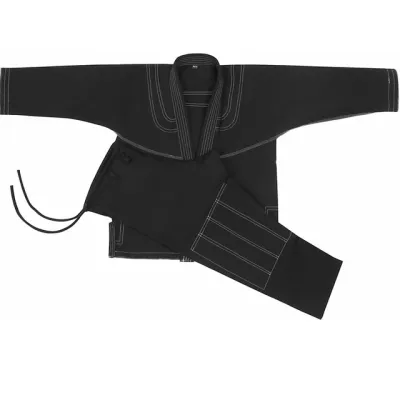
Prices are valid at publication and may change. Please refer to the product page for the latest price.
If you plan to compete in the future, aligning your purchase with the International Brazilian Jiu-Jitsu Federation (IBJJF) guidelines is a smart way to future-proof your investment. Under IBJJF rules, uniforms must be uniform in color: strictly white, royal blue, or black. You cannot mix a black jacket with blue pants, nor can you wear colors like red, green, or camouflage on the competition mats.
Avoid buying highly stylized, ultra-bright, or heavily patched gis for your first purchase. While a neon or heavily branded gi might look appealing, many coaches prefer a clean, respectful appearance on the mats. Starting with a compliant, understated uniform ensures you blend in seamlessly and focus entirely on learning the fundamentals. In terms of budget, entry-level BJJ gis typically range from ₱2,500 to ₱4,500, which provides a durable, high-quality option without a massive financial commitment.
Understand BJJ Gi Weave Types and Fabric Weight
The weave of a BJJ gi refers to the specific way the cotton threads are knitted together to form the jacket. This structural pattern directly dictates the uniform’s texture, overall weight, drying time, and how easy it is for your training partners to establish a strong grip on you.

There is no single “best” weave for every practitioner. Instead, choosing a weave involves balancing trade-offs between lightweight comfort and heavy-duty durability. Thicker weaves make it harder for opponents to hold onto your collar, but they can feel like a heavy blanket in a warm, non-air-conditioned gym. Conversely, ultra-light weaves keep you cool but may stretch out or tear more easily under intense pulling.
Common Weave Types for Beginners
- Pearl Weave: This is the industry standard and the most recommended option for beginners. It features tiny, pearl-like bumps on the fabric surface. It is highly durable, relatively lightweight, and dries much faster than heavier weaves, making it excellent for regular training.
- Gold Weave: Originally designed as a hybrid between single and double weaves, gold weave offers exceptional durability and a soft, thick feel. However, it is significantly heavier, tends to stretch when wet with sweat, and takes a long time to dry.
- Single Weave: This option uses less fabric, resulting in a very light and affordable gi. While it keeps you cool during intense rolling sessions, it is less durable than pearl weave and is more prone to ripping or stretching under heavy grappling stress.
Decoding GSM and Climate Considerations
GSM stands for Grams per Square Meter, which measures the density and weight of the fabric. In the tropical, high-humidity climate of the Philippines, GSM is one of the most critical factors to consider.
- Low GSM (350–450): Highly recommended for training in warm environments. A lighter jacket allows better heat dissipation and prevents you from overheating during intense sparring sessions. It is also much easier to wash and air-dry overnight.
- High GSM (500+): These heavy-duty fabrics are incredibly durable and stiff, making them excellent for competition because they are difficult for opponents to grip. However, in a humid tropical climate, they retain massive amounts of sweat, become heavy, and can take days to dry completely, increasing the risk of mildew.
How to Get the Right Fit and Account for Shrinkage
Unlike regular athletic wear or street clothing, BJJ gis do not use standard small, medium, or large sizing. Instead, they use an “A” (Adult) scale for men and unisex sizing (e.g., A0, A1, A2, A3, A4), and often “F” (Female) or “M” (Kids) scales.
Because sizing standards vary significantly between brands, you should never guess your size. Always measure your current height and weight, then compare these numbers directly to the manufacturer’s specific sizing matrix. If you fall on the border between two sizes, it is generally safer to choose the larger size, as cotton uniforms are highly prone to shrinking.
Many brands also offer intermediate sizes to accommodate different body types. If you are tall and slender, look for “L” (Long) sizes, such as A1L or A2L. If you have a stockier build, look for “H” (Husky) or “S” (Short) variations. These specialized cuts help ensure the gi fits securely without excess fabric hanging loose.
The fabric’s treatment determines how much it will shrink after washing. “Pre-shrunk” gis have undergone a manufacturing process to minimize shrinkage, but they will still shrink slightly (typically 2% to 5%) when exposed to heat. Unpreshrunk or standard cotton gis can shrink up to 10% or more, completely changing how the uniform fits.
When trying on your gi for the first time, check the basic fit guidelines. The jacket sleeves should reach your wrist bones when your arms are extended straight out in front of you. The pants should end near your ankle bones. There must be enough fabric clearance to allow you to move freely, but not so much loose fabric that your training partners can easily grab and control you.
To preserve the fit and prevent the gi from shrinking past legal or comfortable limits, always wash your uniform in cold water and hang it up to air-dry. Never put your gi in a hot dryer unless you are intentionally trying to shrink a slightly oversized uniform—and even then, do so in short, carefully monitored increments.
Evaluate Durability, Stitching, and Design Details
Grappling subjects a uniform to immense pulling, twisting, and friction. To ensure your investment lasts, closely inspect the build quality and structural reinforcements of the gi before making a purchase.
Look for reinforced stitching—ideally triple or quadruple stitching—along high-stress areas. These include the armpits, the crotch gusset, the side vents of the jacket, and the cuffs of both the sleeves and pants. Poorly reinforced seams will quickly unravel after a few sessions of guard passing and sweep attempts.
The lapel (the thick collar of the jacket) plays a major role in both defense and comfort. Consider these common lapel constructions:
- EVA Foam Core: This is the modern standard. It uses a lightweight, flexible foam insert inside the lapel. It dries quickly, resists bacteria buildup, and maintains its shape well.
- Rubber Core: Stiffer and harder for opponents to grip, making it highly functional for defensive play, though it can feel slightly rigid initially.
- Cotton Core: Softer and more traditional, but it absorbs sweat easily, takes longer to dry, and can become a breeding ground for odors if not dried properly.
Pay close attention to the pants. They should feature reinforced, double-layered fabric panels over the knees to withstand constant contact with the mats during takedowns, passing, and knee-on-belly drills. Additionally, look for a thick, round rope drawstring rather than a flat, thin elastic band. Rope drawstrings slide smoothly through the loops and stay tied much more securely during high-intensity rolling.
When evaluating pants materials, you will typically choose between cotton drill and ripstop. Cotton drill is traditional, soft, and durable, but it can feel heavy when wet. Ripstop pants utilize a crosshatch weaving pattern of nylon and cotton, making them incredibly lightweight, highly resistant to tearing, and ideal for hot, humid climates.
Final Fitting and Pre-Training Checklist
Once your new gi arrives, you must verify its fit and comfort before wearing it to an actual class. Perform a quick mobility test in your living room.
Do a series of deep squats, raise your arms fully overhead, and simulate guard retention movements by bringing your knees toward your chest. The pants should not pinch your thighs or restrict your hips, and the jacket should not ride up excessively or pull tightly across your upper back.
Next, run your hands along the inside of the collar and the inner seams. Feel for any rough patches, exposed nylon threads, or stiff tags. These minor imperfections can cause severe friction burns (mat burn) or skin irritation once you start sweating and moving dynamically on the mats.
Before your very first training session, run the gi through a proper initial wash. Use cold water and a mild detergent. Avoid using bleach, fabric softeners, or harsh chemical additives, as these can break down the cotton fibers and weaken the collar. Hang the gi to dry in a shaded, well-ventilated area out of direct, intense sunlight, which can stiffen the fabric. This initial wash removes manufacturing residues and sets the fabric fibers.
Frequently Asked Questions (FAQ)
Can I use a judo gi or karate gi for BJJ?
Karate gis are designed for striking and are made of very thin, lightweight cotton. If you wear a karate gi to a BJJ class, the fabric will likely rip or tear during the very first sparring session.
Judo gis are highly durable and made to withstand grappling, but they are cut differently than BJJ uniforms. Judo jackets typically feature wider sleeves, a longer skirt, and a looser fit, which gives your opponents a massive advantage by offering easy grips. Additionally, the excess fabric may not comply with strict BJJ competition rules. While some gyms might allow a judo gi for your first few trial classes, you will want a dedicated BJJ gi for regular training.
How many BJJ gis should a beginner own?
If you are training once or twice a week, a single high-quality gi is usually sufficient, provided you wash it immediately after every class. However, if you plan to train three or more times a week, owning at least two gis is highly recommended.
In the humid climate of the Philippines, cotton uniforms take a significant amount of time to air-dry completely. Damp gis can quickly develop a persistent, sour mildew smell and harbor bacteria. Having a second uniform in your rotation ensures you always have a clean, bone-dry gi ready for your next session, protecting both your skin and your training partners.
Community discussion
Share your experience or ask a question. Comments are reviewed before publication.