
Starting your Brazilian Jiu-Jitsu (BJJ) journey is an exciting milestone, and tying your first white belt signifies the official beginning of this demanding path. Choosing the right white belt involves balancing your physical measurements, your academy’s specific regulations, and the tropical climate conditions of your training environment. A belt that is too long can trip you up during sparring, while one that is too stiff or thick might constantly come undone during intense rolling sessions.
To find the perfect fit, you must evaluate three primary factors: your gym’s uniform policy, your body dimensions relative to manufacturer size charts, and the material construction of the belt. In warm, humid climates like the Philippines, managing sweat and fabric shrinkage is particularly crucial. By understanding how different weaves and materials behave under daily training and frequent washing, you can select a belt that stays secure, lasts through your white belt journey, and supports your progression on the mats.
Understand Your Gym's Belt Requirements
Before browsing online marketplaces or visiting a local martial arts supply shop, your very first step must be checking with your head instructor or academy manager. Every BJJ gym operates under its own set of rules regarding uniforms, and purchasing a belt without verifying these guidelines can lead to wasted money. Some traditional academies enforce strict rules regarding the brand, color shade, or even the placement of patches on your gear.
Products mentioned in this guide
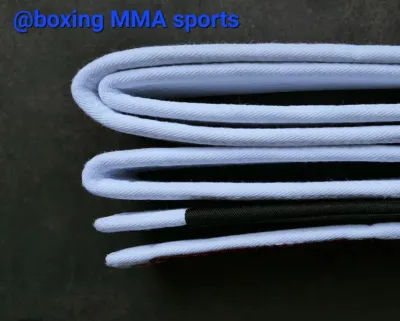
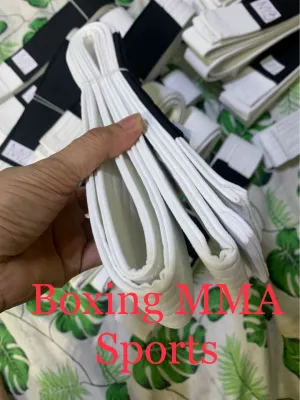
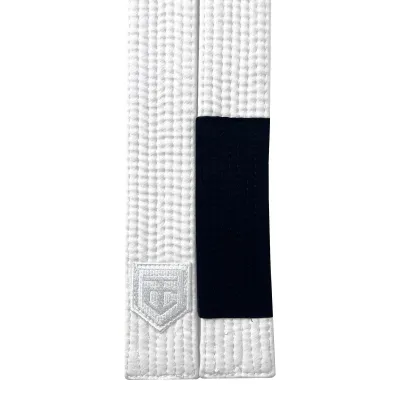
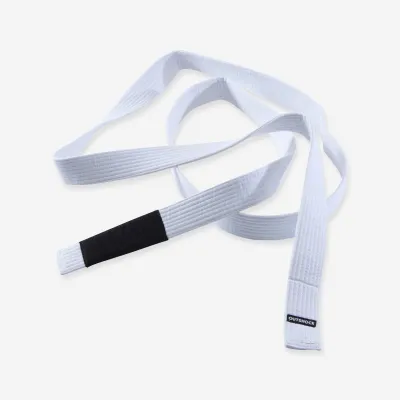
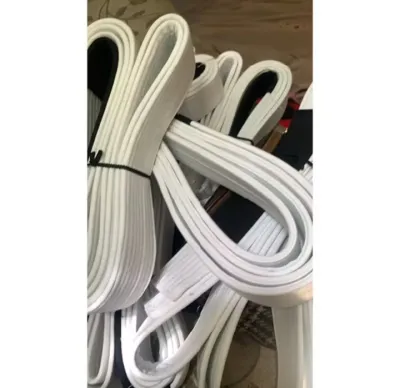
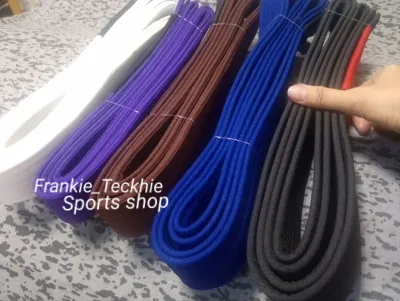
Prices are valid at publication and may change. Please refer to the product page for the latest price.
You should specifically ask if there are any restrictions on belt width and thickness. While standard BJJ belts generally range from 4 to 4.5 centimeters in width, some modern variations are exceptionally thick or thin, which might not align with your gym’s aesthetic or safety preferences. A belt that is too thick can also make it difficult to tie a secure knot, especially for beginners whose hands are still adapting to the grip demands of the sport.
Additionally, check if your academy provides a white belt as part of your initial enrollment package. Many gyms in the Philippines include a basic white belt and a gi when you sign up for a membership package. If your gym does provide one, you can save your budget for other essential gear, or use that basic belt as a backup while you look for a higher-quality secondary option that fits your personal preferences better.
Finally, verify if your gym requires a specific type of black sleeve (the ranking bar) on one end of the belt. The black sleeve is a standard feature on BJJ belts used to hold the white stripes that instructors award to track your progress. Ensure any belt you consider purchasing features this sleeve, as some generic martial arts belts lack this crucial element, making them unsuitable for BJJ progression tracking.
How to Determine the Correct BJJ Belt Size
Finding the right belt size is not as simple as matching your standard waist size for casual clothing. BJJ belts are sized using an alphanumeric system (such as A0, A1, A2, A3, and A4) that corresponds to the sizing of your jiu-jitsu gi. However, because manufacturers use different cutting patterns and materials, you must always consult the specific brand’s sizing chart before making a decision.

Your height and weight serve as the primary baseline for selecting a belt size. If you fall between two sizes on a manufacturer’s chart, it is generally safer to choose the larger size, especially if you plan to wash and dry your belt regularly. For instance, if you are training in a humid environment where gear takes longer to air-dry, you might occasionally use a mechanical dryer, which can cause significant shrinkage.
You must account for material shrinkage, particularly if you choose a belt made of 100% cotton. Unsanforized cotton can shrink by several centimeters after the first few hot washes. If you buy a belt that fits perfectly right out of the package, it may become too short to tie securely after a month of regular maintenance. Check the product label to see if the fabric is pre-shrunk, and adjust your size choice accordingly.
To test the length using the standard wrap-around rule of thumb, wrap the belt twice around your waist and tie a standard square knot. Once tied, both ends of the belt should hang down evenly, extending roughly 20 to 30 centimeters from the knot. If the ends reach past your knees, the belt is too long and poses a tripping hazard; if they are shorter than 15 centimeters, the knot is highly likely to slip loose during active sparring.
Choosing the Right Material and Weave Type
The construction of a BJJ belt dictates how it feels, how easily it stays tied, and how well it withstands the friction of daily training. The most common material choice is 100% cotton, valued for its traditional feel, excellent grip, and natural breathability. Cotton belts tend to be stiffer initially, requiring a break-in period, but they develop a soft, secure hold over time as the fibers loosen.
Alternatively, many modern manufacturers offer cotton-polyester blends. These synthetic blends are highly resistant to shrinkage and color fading, making them a practical choice if you want your belt to maintain its original length and clean white appearance. Blend belts also tend to dry faster after washing, which is a significant advantage in tropical climates where high humidity can slow down the air-drying process and lead to musty odors.
Weave types also play a major role in the belt’s performance and weight. A single weave belt is lightweight, supple, and easy to tie right from the start. It is highly breathable, making it comfortable for training in warm gyms, though it may fray faster under heavy use. In contrast, double weave or gold weave belts are much thicker, heavier, and highly rigid. While they offer exceptional durability, they require a longer break-in period and can feel bulky around your waist.
Consider your training frequency when choosing between these options. If you plan to train once or twice a week, a lightweight single weave or a cotton-blend belt will provide immediate comfort and easy maintenance. If you are training multiple times a week and engaging in intense sparring, a heavier cotton double weave will offer the structural integrity needed to survive constant pulling and gripping, even if it takes a few weeks of washing and rolling to soften up.
Step-by-Step Guide to Tying and Caring for Your Belt
Tying your BJJ belt correctly is essential for keeping your gi jacket closed and preventing unnecessary interruptions during training. Start by finding the midpoint of your belt and placing it against your stomach, just below your navel. Wrap both ends around your back, cross them over, and bring them back to the front, ensuring the layers lie flat against each other to avoid creating uncomfortable pressure points on your spine.
Next, take the outer end of the belt and tuck it under both layers of the wrapped belt from the bottom up, pulling it snug. Take the other end (the one hanging from the bottom) and cross it over the top end to form a loop. Feed the top end through this loop and pull both ends horizontally to tighten the knot. This classic square knot creates a secure, flat profile that resists coming undone when you are moving on the mats.
Proper hygiene is non-negotiable in martial arts, and your belt must be washed after every single training session to prevent the buildup of bacteria and fungi. Always check the manufacturer’s care label for specific washing instructions. To minimize shrinkage and preserve the fabric fibers, wash your belt in cold water on a gentle cycle, and hang it to dry in a well-ventilated area away from direct sunlight, which can weaken the cotton fibers over time.
Regularly inspect your belt for signs of extreme wear that could compromise safety. While a slightly weathered look is common, deep fraying, torn stitching, or a stretched-out core can cause the belt to snap or catch on your partner’s fingers during a roll. If you notice structural damage or if the belt has stretched to an unsafe length, it is time to replace it to ensure a safe training environment for both you and your training partners.
Frequently Asked Questions (FAQ)
Do I need to wash my BJJ white belt before the first use?
Yes, washing your new BJJ white belt before your first training session is highly recommended. A pre-wash helps remove any chemical residues, starches, or dust left over from the manufacturing and packaging processes, making the fabric softer and more comfortable against your skin. Additionally, this initial wash initiates the controlled shrinkage process, allowing you to verify that the belt still fits correctly before you wear it to class. To prevent extreme warping or excessive shrinkage on your first wash, use cold water and let the belt air-dry completely.
Can I use a karate or judo belt for BJJ?
While it might be tempting to repurpose an old karate or judo belt, BJJ belts are specifically designed to handle the unique demands of ground grappling. BJJ belts are generally thicker, wider, and feature much heavier stitching to withstand constant pulling, dragging, and friction. Furthermore, BJJ belts include a dedicated black sleeve on one end for ranking stripes, which is absent on standard karate and judo belts. Using a non-BJJ belt may not only violate your academy’s uniform policy, but the thinner material is also highly likely to stretch, tear, or constantly come untied during a sparring session.
How long should the ends of my BJJ belt hang after tying?
Once you have tied your belt using a secure knot, the remaining ends should ideally hang down between 20 and 30 centimeters on each side. This length ensures that the knot has enough tail to stay secure without slipping loose when subjected to the dynamic movements of grappling. If the ends are too short, the tension from rolling will easily undo the knot, forcing you to constantly stop and re-tie your belt. Conversely, if the ends are too long, they can easily wrap around an opponent’s limbs, get stepped on during standing techniques, or whip into your eyes during fast transitions.
Community discussion
Share your experience or ask a question. Comments are reviewed before publication.