
Selecting your first pair of training stix is a foundational step in your martial arts journey, particularly for disciplines like Arnis, Escrima, or Kali. The ideal pair must match your height, arm span, grip size, and training environment. Choosing correctly ensures you develop proper striking mechanics, build symmetrical muscle memory, and minimize the risk of joint strain. While advanced practitioners often utilize specialized materials for conditioning, beginners need a balanced pair that offers immediate tactile feedback and forgiving impact dynamics.
Why the Right Specifications Matter for Beginners
When you begin training, your body is adapting to rapid, repetitive rotational movements of the wrists, elbows, and shoulders. Using improperly sized or excessively heavy training stix can quickly lead to poor form, joint strain, or delayed reaction times. If a stick is too long, you will constantly struggle with floor clearance during downward strikes, leading to interrupted flows and altered mechanics. If it is too heavy, your wrists will bear the brunt of the deceleration forces, which can cause repetitive strain injuries like tendonitis.
A beginner’s first pair should prioritize control and physical feedback over extreme durability or heavy conditioning. Your early sessions are about learning how to manipulate the weapon as an extension of your arm, understanding spatial awareness, and practicing safe partner drills. By focusing on the three decision pillars—length for reach and body mechanics, material for impact safety, and weight/diameter for grip security—you set a solid foundation for your training.
Products mentioned in this guide
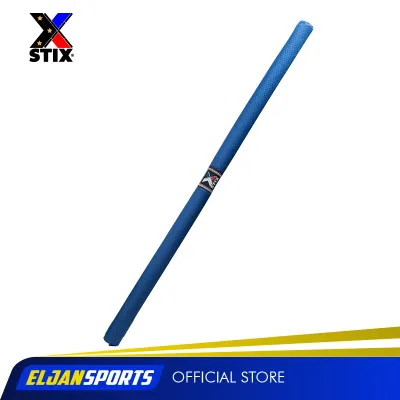
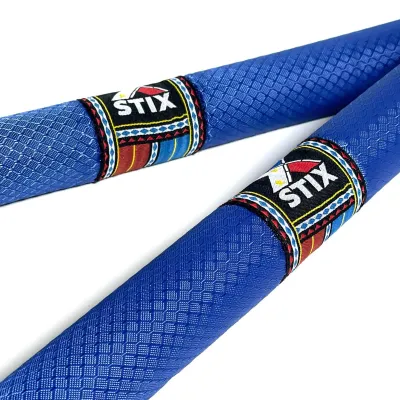
Prices are valid at publication and may change. Please refer to the product page for the latest price.
How to Determine the Correct Stix Length for Your Body
Selecting the correct length ensures that your strikes remain fluid and your defensive blocks cover the target areas effectively without compromising your posture.

Standard Lengths and Height Guidelines
Most commercial training stix are available in standard lengths of 24, 26, 28, and 30 inches. Generally, shorter individuals under 5’4″ (162 cm) find 26-inch sticks most manageable, while those between 5’5″ and 5’11” typically opt for the standard 28-inch length. Taller practitioners often require 30-inch sticks to maintain an appropriate reach.
However, personal biomechanics and the specific style of martial arts you practice can dictate slight variations. For instance, some regional systems of Arnis emphasize close-quarters combat and prefer shorter, faster sticks, while long-range systems favor maximum reach. Because of these differences, always consult your instructor’s recommendations and check specific manufacturer sizing charts rather than relying solely on generic height assumptions.
The Arm-Span and Body Measurement Methods
To find your ideal custom fit at home, you can use two traditional measurement methods. The first is the “armpit method.” Stand barefoot on a flat surface, place the end of a measuring tape on the floor, and measure straight up to your armpit. This measurement provides a reliable, traditional baseline length that aligns with your natural arm length and torso height.
The second approach is the “shoulder method,” which measures from the floor to your shoulder joint or collarbone. This method is highly suited for training styles that demand longer reach and broader defensive arcs.
Once you have a measurement, verify its practical clearance. Take a temporary mock stick, such as a cut wooden dowel of the same length, and perform a few slow, low-angle strikes. If the tip consistently scrapes or strikes the floor during natural downward or lateral movements, the length is too long for your height and should be adjusted downward by an inch or two.
Comparing Common Stix Materials for Training
The material of your training stix dictates how it behaves upon impact, how much vibration is transferred to your hands, and how safe it is for your training partners.
Rattan
Rattan remains the traditional and most highly recommended material for beginners. Derived from a natural climbing palm, rattan features a fibrous, flexible structure. Unlike solid wood, which can snap and create dangerous, sharp shards, rattan is designed to compress, dent, and fray gradually under heavy impact. This fibrous breakdown absorbs a significant portion of the impact energy, providing excellent tactile feedback and protecting your wrists during partner blocking drills.
Because rattan is a natural vine, expect each stick to have unique characteristics. You will notice raised rings, known as nodes, along the shaft, as well as slight variations in straightness and color. These natural variations do not compromise the stick’s performance, provided the fiber structure is sound.
Hardwood
Dense hardwoods, such as Kamagong (Philippine Ebony) or Bahi (derived from the wild palm), are highly valued for their density and sheer weight. These materials are significantly heavier and more rigid than rattan, making them excellent tools for solo form practice or heavy bag conditioning.
However, hardwoods are generally not recommended for beginner partner sparring or high-impact drills. The lack of flexibility means that almost all impact force is transferred directly to your partner’s stick or your own joints, increasing the risk of hand fatigue and bone bruising. Furthermore, if a hardwood stick does break under extreme stress, it can splinter into sharp, dangerous pieces. Many local training centers and gyms explicitly restrict or ban hardwood weapons on the mat during partner drills for safety reasons.
Synthetic and Padded Options
Modern synthetic alternatives, including high-impact plastics, polymers, and rubber-coated composites, offer high durability and complete resistance to weather. In highly humid tropical climates like the Philippines, natural wood and rattan can absorb ambient moisture or warp over time if left in a damp gear bag. Synthetic options eliminate this maintenance worry and provide perfectly uniform weight and straightness.
Padded or foam-over-core stix represent the safest entry point for beginners practicing light, unarmored sparring. These consist of a rigid plastic or bamboo core surrounded by dense foam and a nylon sleeve, allowing you to practice targeting and timing with minimal risk of injury.
The primary trade-off with synthetic and padded options is the loss of traditional tactile feedback. Solid polymer sticks do not absorb shock well, meaning hard impacts can transfer painful vibrations directly to your palms and wrists, while padded sticks can feel overly light and bouncy, which may hinder the development of proper structural alignment.
Matching Stix Weight and Diameter to Your Skill Level
Finding the right balance of weight and grip thickness prevents hand fatigue and allows you to practice for longer periods without risking repetitive strain injuries.
Weight Distribution and Control
Beginners should always start with lighter stix, typically weighing between 150 to 200 grams per stick. Lighter equipment allows you to focus entirely on developing speed, wrist flexibility, and correct striking mechanics. If you train with sticks that are too heavy from day one, your muscles will fatigue quickly, causing your form to deteriorate and forcing your shoulders to compensate for weak wrist alignment.
Heavier stix (250 grams and above) are valuable tools, but they should be introduced gradually as conditioning implements once your structural alignment is sound. When selecting a stick, check its balance point by resting it on your finger. The balance point should ideally sit a few inches above the grip area, making the stick feel like a natural, agile extension of your arm rather than a top-heavy club.
Grip Diameter and Hand Size
The diameter of your training stix directly influences your grip security and hand comfort. Standard diameters range from 3/4 inch (approx. 1.9 cm) to 1 inch (approx. 2.5 cm). If you have smaller hands, a thicker 1-inch stick will force your hand muscles to work excessively hard just to maintain a grip, leading to rapid fatigue and cramping. Conversely, a stick that is too thin can slip easily during high-speed swings.
A practical way to test grip size before purchasing is to hold a common household object of a similar diameter, such as a thick marker or a wooden dowel. Your fingers should wrap comfortably around the cylinder, leaving a small gap between your fingertips and the heel of your palm. Additionally, be aware that some stix feature carved handles or tapered ends. Verify if these ergonomic features are designed for a specific dominant hand or if they are fully ambidextrous to suit your training style.
Step-by-Step Guide to Inspecting Your First Pair
When your first pair of stix arrives, or when you are selecting them in a physical sporting goods store, perform these four essential quality checks:
- Straightness Check: Place the stick on a flat floor or table and roll it gently with your palm. A high-quality training stick should roll smoothly. If it wobbles, jumps, or displays a visible gap between the shaft and the surface, it is warped. Severe warping can alter your striking angles and disrupt your accuracy during drills.
- Node and Grain Inspection: For natural rattan, examine the nodes along the shaft. The nodes should be sanded down relatively flat so they do not cut your hands, but they must not show deep cracks or signs of splitting. Look closely at the ends of the stick; the grain should be dense and tightly packed, without hollow pockets or soft, spongy areas.
- Surface Finish: Run your bare hands carefully along the entire length of the shaft. Check for rough splinters, sharp edges, or burrs that could cause cuts. If the stick has a varnished or lacquered finish, ensure it is not excessively thick or sticky, as tropical humidity can make heavy varnishes feel slick and difficult to grip securely.
- Pair Matching: Hold both stix simultaneously, one in each hand. They should feel virtually identical in weight, length, and balance. If one stick is noticeably heavier or thicker than the other, it will disrupt your bilateral coordination and can lead to uneven muscle development and joint strain over time.
Basic Maintenance and Safety Checks
Proper care extends the lifespan of your training gear and ensures it remains safe for you and your training partners. For natural rattan stix, the primary goal is preventing the fibers from drying out and becoming brittle. In air-conditioned training halls or highly variable tropical environments, natural fibers can lose their moisture. Periodically applying a light coat of mineral oil or raw linseed oil to the shaft helps preserve the flexibility of the fibers. Apply the oil with a soft cloth, let it penetrate for a few hours, and then wipe off any excess to prevent a slippery grip.
Always store your stix in a cool, dry place, away from direct sunlight or damp gear bags, which can cause warping or mold growth.
Establish clear “stop-use” conditions for your gear. You must retire a stick immediately if you observe deep longitudinal cracks that run along the shaft, severe splintering that cannot be sanded down, or a soft, spongy feel when you compress the tip. Training with compromised equipment poses a severe safety risk, as a cracked stick can shatter during a high-velocity partner drill, potentially causing eye or skin injuries. Perform a quick visual and tactile inspection before every single training session to ensure your gear is in safe, working condition. Remember, high-quality equipment cannot replace proper training, safety gear, and sound personal judgment.
Frequently Asked Questions (FAQ)
How do I know when my rattan stix is no longer safe to use?
It is normal for rattan stix to develop minor surface dents, flattening, and superficial fraying over time; these are signs of the fibers absorbing impact safely. However, you must retire the stick immediately if you notice deep, longitudinal cracks splitting the shaft, severe crushing at the impact zone, or if the stick becomes permanently bent. If the stick feels unusually light, hollow, or makes a rattling sound when struck, the internal fiber structure is compromised and it is no longer safe for partner drills.
Do I need to buy a matched pair or can I mix different weights?
For beginners, it is highly recommended to purchase a matched pair of identical length, weight, and material. Training with symmetrical equipment helps you build balanced coordination, muscle memory, and posture across both sides of your body. Mixing weights or lengths is an advanced conditioning technique that can confuse a beginner’s spatial awareness, disrupt their timing, and lead to uneven joint strain on the wrists and shoulders.
Community discussion
Share your experience or ask a question. Comments are reviewed before publication.