
When you step onto the mats for the first time, learning how to shift taekwondo stances and execute high-speed kicks requires gear that does not restrict your lower body. Your uniform, known as a dobok, is more than just traditional attire; it is a functional piece of athletic equipment designed to withstand intense stretching, rapid footwork, and heavy perspiration. Choosing the wrong uniform can lead to restricted movement, chafing, or even being barred from participating in official school sessions and grading exams.
To find the perfect first dobok, you must balance the rules of your specific training hall (dojang) with practical considerations like fabric weight, material blends, and cut. Because taekwondo is highly dynamic, a uniform that fits poorly or is made of the wrong material will actively hinder your progress. By understanding the differences in federation standards, material performance in tropical climates, and key construction details, you can make an informed purchase that supports your training from white belt to your first promotion.
Identify Your Federation and School Requirements
Before browsing online marketplaces or visiting a local martial arts supply store, your very first step must be to consult your instructor (Sabomnim) or school administrator. Taekwondo is globally split into different governing bodies, and individual schools often enforce strict dress codes regarding uniform style, color, and branding. Purchasing a uniform without verifying these rules is a common beginner mistake that can result in an expensive piece of gear being restricted from official classes, sparring sessions, or belt grading exams.
Products mentioned in this guide
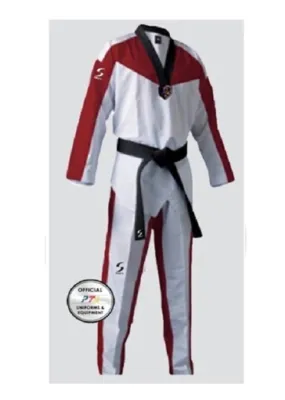
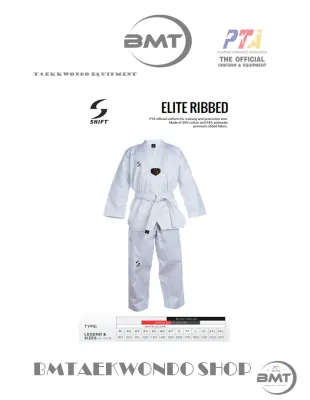
Prices are valid at publication and may change. Please refer to the product page for the latest price.
In the Philippines, many local clubs are registered under the Philippine Taekwondo Association (PTA), which aligns with World Taekwondo (WT) rules, while other independent schools follow the International Taekwondo Federation (ITF) guidelines. Each federation has distinct design philosophies that reflect their approach to the martial art. Wearing an ITF-style uniform to a WT-focused school, or vice versa, is generally not permitted because the designs dictate how the uniform functions during specific movements and patterns.
World Taekwondo (WT) Uniforms
World Taekwondo uniforms are designed with modern, fast-paced sport sparring and dynamic poomsae (forms) in mind. The most recognizable feature of a WT-style dobok is its pullover jacket, which features a distinctive V-neck collar. This design eliminates the need for side ties or velcro, ensuring the jacket stays securely closed and flat against the torso during high-intensity sparring matches where chest protectors (hogu) are worn.
For beginners and color belt practitioners (geup holders), the V-neck collar must be plain white. As you progress, the collar design changes to reflect your rank: junior black belts under the age of 15 (poom ranks) wear a red-and-black striped V-neck, while adult black belts wear a solid black V-neck. WT uniforms also feature specific areas designated for federation, national, or school logos, which are typically embroidered or patched onto the left chest, the arm, or across the upper back.
International Taekwondo Federation (ITF) Uniforms
International Taekwondo Federation uniforms adhere to a more traditional aesthetic that emphasizes the martial art’s historical roots. Instead of a pullover design, an ITF dobok features a jacket with a vertical front opening that overlaps and secures down the center using a zipper or high-strength hook-and-loop fasteners. This design allows the jacket to open fully, making it easier to put on and adjust.
An ITF uniform is traditionally solid white, with the lower hem of the jacket trimmed in black only for black belt instructors. The uniform features highly specific badge placements, including the official ITF patch over the left chest and the federation’s name embroidered vertically or in a semi-circle on the back. The trousers are also cut slightly wider than WT pants to accommodate the deep, stable stances characteristic of ITF patterns (tul).
Select the Right Fabric Weight and Material
The fabric of your dobok directly affects your comfort, stamina, and overall performance during long training sessions. In martial arts, the weight and composition of the material determine how well the uniform breathes, how much sweat it retains, and whether it produces the distinct “snap” sound when you execute a crisp punch or kick. For your first uniform, prioritizing lightweight comfort and ease of maintenance is far more practical than choosing heavy, stiff competition fabrics.

Fabric Blends for Tropical Climates
Training in a tropical country like the the Philippines presents unique challenges, especially if your local dojang relies on wall fans rather than centralized air conditioning. High heat and humidity mean you will sweat heavily within the first fifteen minutes of warm-ups. Choosing the right fiber blend is essential to prevent your uniform from becoming a heavy, soggy burden.
- 100% Cotton: While natural cotton is highly breathable and soft against the skin, it acts like a sponge for moisture. A pure cotton dobok will absorb sweat, become heavy and clingy, and take a long time to dry. It is also highly prone to shrinking during washing and requires tedious ironing to look presentable.
- Polyester-Cotton Blends: A blend of polyester and cotton (typically a 65/35 or 80/20 ratio) is highly recommended for beginners. The polyester content prevents the fabric from absorbing excessive moisture, allowing sweat to evaporate quickly while keeping the uniform lightweight. Poly-cotton blends are exceptionally durable, resist shrinking in the wash, and require little to no ironing to maintain a crisp, professional appearance.
Uniform Weight and Thickness
Martial arts uniforms are categorized by fabric weight, measured in ounces (oz) per square yard. Understanding this measurement helps you select a thickness that matches your training environment and experience level:
- Lightweight (6oz to 8oz): This is the ideal range for beginners, children, and anyone training in hot, humid climates. These uniforms are thin, highly breathable, and offer minimal resistance when you move. They allow maximum airflow, helping you stay cool during intense cardiovascular drills.
- Middleweight (9oz to 10oz): Offering a balance between durability and comfort, middleweight uniforms are slightly stiffer. They provide a moderate level of structure and are often favored by intermediate students who want a uniform that lasts through years of regular sparring.
- Heavyweight (11oz and above): Typically reserved for advanced practitioners, instructors, and poomsae competitors. Heavyweight canvas uniforms are stiff and thick, which helps them hold a sharp shape and produce a loud, satisfying "snap" sound when techniques are executed with maximum speed and power. However, they are heavy, retain heat, and can feel incredibly restrictive for a beginner who is still building basic flexibility.
Determine the Correct Fit to Shift Taekwondo Stances and Kicks
To properly shift taekwondo stances from a deep front stance to a rapid back stance, your uniform must offer completely unrestricted lower-body mobility. Taekwondo is world-renowned for its dynamic, high-reaching kicks, such as the roundhouse kick (dollyo chagi) and the axe kick (an chagi). If your trousers are too tight or the rise is too low, the fabric will bind against your thighs, limiting your range of motion and potentially ripping at the seams mid-kick.
When shopping for a dobok, keep in mind that sizing is typically based on the practitioner’s total height in centimeters (e.g., size 160 fits someone around 160 cm tall) or a single-digit sizing system ranging from 000 (for toddlers) to 7 (for very tall adults). Because Asian and Western brands often use slightly different cuts, always refer to the manufacturer’s specific sizing chart and compare both your height and weight measurements. If your measurements fall between two sizes, it is generally safer to choose the larger size, as a slightly loose uniform can be hemmed, whereas a tight uniform cannot be expanded.
Pay close attention to these key fit areas when trying on your first uniform:
- Sleeve Length: When your arms are relaxed at your sides, the sleeves of the jacket should end near your wrist bone. If the sleeves cover your hands, they will interfere with hand blocks and fist formations; if they sit halfway up your forearm, the uniform will look poorly fitted and restrictive.
- Pant Length: The hem of the trousers should rest just above your ankle bone. This is a critical safety feature. If the pants are too long and bunch up around your feet, you risk slipping, tripping, or catching your toes on the puzzle mats during fast footwork and pivoting maneuvers.
- Gusseted Crotch: Look for trousers that feature a diamond-shaped piece of fabric sewn into the crotch area, known as a gusset. This construction detail redistributes tension away from the central seams, allowing you to perform deep splits and high kicks without the fabric pulling tight or tearing.
- Jacket Room: The jacket should drape comfortably over your chest and shoulders without pulling tight when you cross your arms in front of you. When you extend your arms fully during a punch, the back of the jacket should not ride up excessively or restrict your shoulder blades.
Evaluate Design Details and Construction
While fabric and fit are the most critical factors, small design details and construction techniques determine how long your dobok will last under the daily abuse of martial arts training. Inspecting these details before purchasing will save you from premature wear and tear.
First, evaluate the waistband construction of the trousers. Beginners and active sparring practitioners generally benefit most from an elastic waistband combined with an internal drawstring. The elastic provides a secure, comfortable grip around your hips that stays in place even when the fabric is damp with sweat, while the drawstring allows you to customize the tightness. Traditional tie-only waistbands are common in some classic designs but can easily come undone during vigorous jumping and kicking, requiring constant adjustment.
Second, check the reinforcement stitching at high-stress points. Because taekwondo involves repetitive, explosive movements, the seams at the armpits, the side slits of the jacket, and the crotch of the pants take a massive amount of abuse. High-quality uniforms feature double or triple rows of flat-felled stitching in these areas to prevent the seams from splitting under pressure.
Finally, inspect the finish of the collar or V-neck. The collar should have multiple parallel rows of stitching to give it structural integrity, but the inner seam that rests against your neck must be finished smoothly. A rough, poorly stitched collar will quickly chafe your neck and collarbones during continuous turning and twisting movements, distracting you from your training.
Care and Maintenance for Your First Dobok
Taking proper care of your first dobok ensures it remains bright white, free of stubborn odors, and structurally sound for years to come. Because martial arts uniforms are subjected to heavy sweat and physical friction, they require regular, gentle maintenance to prevent fabric degradation.
- Wash Immediately After Training: Never leave a damp, sweaty dobok crumpled inside your gear bag overnight. The warm, dark environment of a gym bag is a breeding ground for bacteria, which cause persistent sour odors and yellow sweat stains. Wash your uniform in cold water as soon as possible after every class to flush out sweat salts and oils.
- Avoid Chlorine Bleach: While it is tempting to use harsh chlorine bleach to keep your uniform looking snow-white, doing so will actually shorten its lifespan. Chlorine bleach chemically attacks and weakens cotton fibers and can cause the polyester fibers in synthetic blends to turn a dull, permanent yellow. Instead, use oxygen-based fabric brighteners, a cup of white vinegar, or baking soda in your wash cycle to lift stains and neutralize odors naturally.
- Air-Dry in the Shade: Hang your uniform to dry on a sturdy hanger in a well-ventilated, shaded area. Avoid using a hot tumble dryer, as the intense heat will cause significant shrinkage—especially in uniforms containing cotton—and can warp the rubber or stiffening inserts inside the collar. Keep the uniform out of direct, intense tropical sunlight for extended periods, as prolonged UV exposure can make the fabric stiff and brittle.
- Fold with Respect: Once dry, fold your dobok neatly along its natural seams. In traditional martial arts, folding your uniform with care is considered an extension of the discipline, showing respect for your gear, your dojang, and the art itself. Neatly folded uniforms also resist deep creases, ensuring you look sharp and disciplined when you step onto the mats for your next session.
Frequently Asked Questions (FAQ)
Do I need to buy a belt with my first dobok?
Most high-quality beginner doboks are sold as a two-piece set (jacket and pants) and do not include a belt. Upon enrolling in a formal dojang, the school will typically provide you with your official white belt as part of your registration package, or they may require you to purchase a specific branded belt directly from them. Always check with your instructor before buying a belt separately to ensure it complies with your school’s uniform code.
Can I wear a karate or judo uniform for taekwondo?
No, wearing a karate or judo uniform (gi) is generally not suitable for taekwondo training. A judo gi is constructed from incredibly thick, heavy woven cotton designed to withstand aggressive grabbing and throwing; wearing it in a taekwondo class will cause you to overheat quickly and will severely restrict your kicking height. While a karate gi looks similar, it is cut differently—often featuring shorter sleeves, a longer jacket skirt, and a heavier canvas weight that does not accommodate the rapid footwork and high-reaching stance shifts unique to taekwondo.

Community discussion
Share your experience or ask a question. Comments are reviewed before publication.