
There is no single, universal starting dumbbell weight that works for every beginner. The ideal weight depends entirely on your current physical baseline, the specific exercise you are performing, and your personal fitness goals. A weight that feels challenging for an overhead press might feel incredibly light for a squat. To build strength safely and effectively, you must find a personalized starting point rather than relying on generic recommendations.
Assess your daily physical activity. If your routine involves regular manual labor, carrying heavy groceries, or active recreation, your baseline strength will naturally differ from someone transitioning from a sedentary desk job. Prior experience with bodyweight exercises, yoga, or pilates also influences your starting point, as these activities build foundational core stability and joint mobility.
Your training goals dictate your target repetition ranges, which in turn determine how heavy your dumbbells should be. For muscular endurance, you will typically target higher repetitions (such as 12 to 15 reps per set) with a lighter load. If your goal is hypertrophy (muscle growth), you will aim for moderate repetitions (around 8 to 12 reps) with a heavier load.
Products mentioned in this guide
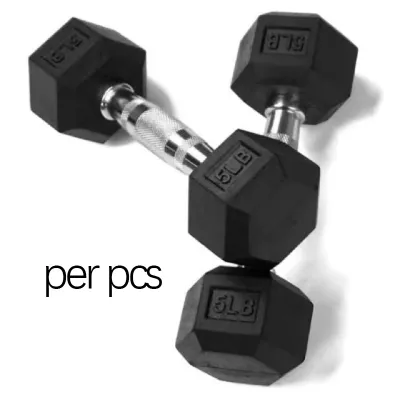
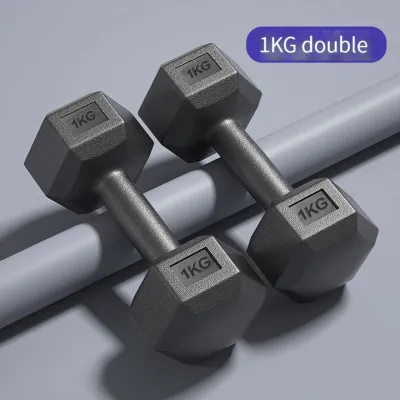
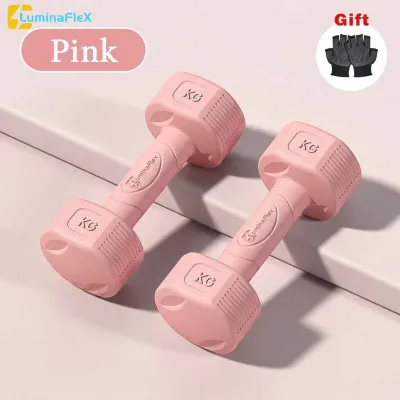
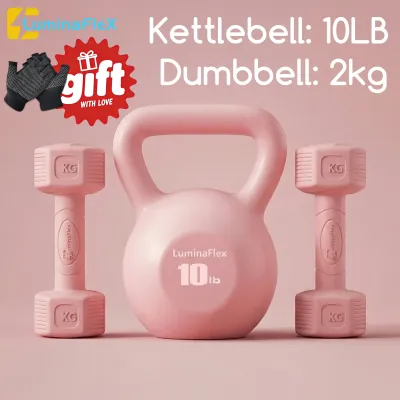
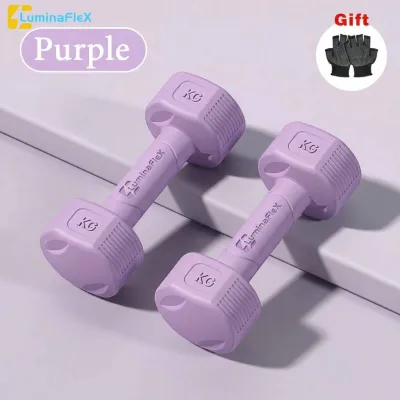
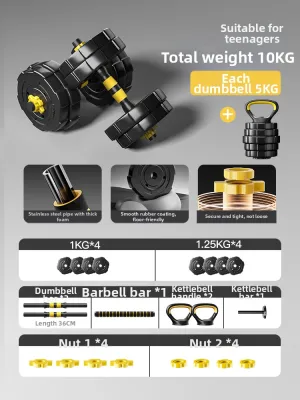
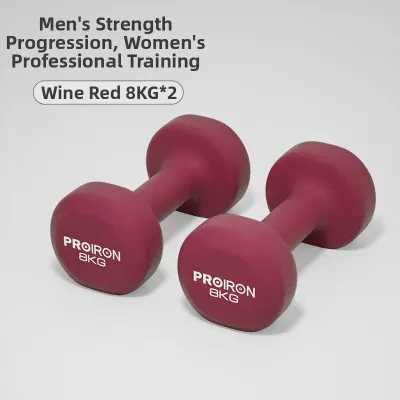
Prices are valid at publication and may change. Please refer to the product page for the latest price.
It is crucial to recognize that baseline strength varies significantly across individuals. Factors like age, gender, and body size do not dictate a fixed starting weight. A beginner should never feel pressured to lift a specific number just because of demographic stereotypes; instead, focus on your unique physical feedback.
Adjust Expectations Based on Exercise Type
Different exercises target different muscle groups, meaning you cannot use the same dumbbell weight for every movement. Compound exercises, such as squats, lunges, and chest presses, recruit multiple large muscle groups and joints simultaneously. Because these movements utilize massive muscle structures like the glutes, quadriceps, and pectorals, they naturally allow you to lift heavier loads.
In contrast, isolation exercises like bicep curls, lateral raises, and tricep extensions target smaller, single muscle groups across a single joint. These smaller muscles have a much lower force-production capacity. Attempting to use your squat weight for a lateral raise will not only make the exercise impossible to perform correctly but will also place dangerous stress on your shoulder joints.
Generally, your lower body is capable of handling much heavier weights than your upper body. Your legs support your body weight daily, making them highly adapted to load-bearing activities. Therefore, a well-rounded beginner routine requires a range of weights to accommodate these biomechanical differences.
This strength disparity highlights the practical necessity of having multiple weight increments. Relying on a single pair of dumbbells will inevitably leave you under-training your legs or over-straining your arms. Investing in a set of varying fixed weights or a versatile adjustable dumbbell system is essential to match the unique demands of each exercise.
Perform the Rep Test to Find Your Starting Weight
To find your exact starting weight without guesswork, you can perform a simple, structured physical assessment known as the rep test. This test relies on real-time feedback from your muscles to determine if a weight is appropriate for a specific movement. Before starting, select a target repetition range based on your fitness goals, such as 10 repetitions for general strength.

Choose a light dumbbell that you are confident you can lift. Perform the exercise while maintaining strict form, a full range of motion, and a controlled tempo (such as taking two seconds to lift the weight and two seconds to lower it). Avoid swinging your body, using momentum, or rushing through the movement, as poor technique invalidates the test results.
Pay close attention to how your muscles feel during the final two or three repetitions of your set. If you reach your target repetition count and feel like you could easily perform five or more additional reps with perfect form, the weight is too light. If you cannot complete the target reps, or if your form breaks down before you reach the end, the weight is too heavy.
The ideal starting weight is one where the final repetitions feel challenging, yet you can still complete them with perfect technique. You should feel a distinct burning sensation in the target muscles, and your speed might naturally slow down slightly, but you should not have to strain your neck, arch your back, or shake uncontrollably to finish the set.
Safety must always come first during physical testing. If you experience any sharp joint pain, sudden discomfort, or a feeling of instability at any point during the test, stop the movement immediately. Muscle fatigue is a normal part of training, but joint pain is a clear signal to lower the weight or re-evaluate your form.
Monitor Form and Fatigue Signals During Workouts
As you begin your regular workouts, continuously monitor how your body responds to the selected weights. A common mistake is continuing to lift a weight that has become too heavy due to daily fatigue. Warning signs of an excessive load include relying on momentum to swing the dumbbells, feeling tension in your lower back or neck instead of the target muscles, or experiencing joint discomfort during or after your session.
Conversely, you must also watch for signs that your dumbbells are no longer challenging enough to stimulate progress. If you finish your planned sets and reps feeling completely energized, without any localized muscle fatigue or warmth, the load is insufficient. While starting light is excellent for safety, staying with a weight that is too light indefinitely will limit your physical adaptations.
Once you can consistently complete all your scheduled sets and repetitions with perfect form and minimal struggle, it is time to apply progressive overload. This does not always mean jumping to a much heavier weight immediately. You can progress by adding one or two repetitions to your sets, slowing down the tempo, or reducing your rest periods before moving to the next weight increment.
Plan Your Initial Dumbbell Purchase
When translating your test results into a purchase, you must choose between fixed-weight pairs and adjustable dumbbell systems. Fixed dumbbells are highly durable, simple to use, and require no setup time, making them excellent for quick workouts. However, buying multiple pairs can quickly clutter your living space and become expensive if you plan to progress rapidly.
Adjustable dumbbell systems allow you to change the weight by adding or removing plates or turning a dial. They are incredibly space-efficient and cost-effective in the long run, as a single pair can replace an entire rack of fixed weights. This versatility is particularly beneficial for home workouts where space is limited.
Before purchasing, carefully inspect the physical attributes of the dumbbells. In warm, humid tropical climates like the Philippines, sweaty hands can easily lose grip on smooth handles. Look for dumbbells with textured knurling or non-slip rubber coatings to ensure a secure grip. Additionally, consider rust-resistant materials like neoprene, rubber-encased hex heads, or high-quality chrome to prevent corrosion from high humidity.
A practical starter strategy is to select a versatile setup that covers your tested baseline for both upper and lower body movements. If opting for fixed weights, a set consisting of a light pair for isolation movements, a medium pair for upper body compound exercises, and a heavier pair for lower body training will provide an excellent foundation. This ensures you can train safely, progress systematically, and get the most value out of your investment in ₱.
Frequently Asked Questions (FAQ)
Can I use the same dumbbell weight for every upper body exercise?
No, using a single weight for all upper body exercises is highly inefficient and can lead to injury. Your upper body consists of large, powerful muscles like the latissimus dorsi in your back and smaller, delicate muscles like the rotator cuff and lateral deltoids in your shoulders. A weight that is light enough for a lateral raise will not provide enough resistance to stimulate your back muscles during a row, while a weight heavy enough for a row could easily strain your shoulders during an isolation lift.
How do I know when it is time to increase the weight?
You are ready to increase the weight when you can comfortably complete your target repetition range across all scheduled sets with perfect form. For example, if your goal is to perform 3 sets of 10 repetitions, and you can complete all 30 repetitions with controlled movement and without breaking form, it is time to progress. When upgrading, make small, incremental jumps—typically adding just enough weight to bring you back to the lower end of your target rep range.
Is it safer to start with a weight that feels too light?
Yes, starting with a weight that feels slightly too light is highly recommended for beginners. This conservative approach allows your nervous system to learn the correct motor patterns and gives your tendons, ligaments, and joints time to adapt to resistance training without excessive stress. Once you have mastered the form and built a solid mind-muscle connection, you can safely and systematically increase the weight to a level that provides a true training stimulus.
Community discussion
Share your experience or ask a question. Comments are reviewed before publication.