
Selecting the right starting weight range for a dumbbell set depends on your current fitness level, your athletic background, and the specific exercises you plan to perform. For most men starting a home strength routine, a single pair of dumbbells is rarely enough; instead, a versatile range spanning from 5 kg to 20 kg (approximately 11 lbs to 44 lbs) per dumbbell serves as an ideal baseline. This spectrum allows you to safely perform light isolation movements while still having enough resistance to challenge your larger muscle groups during compound lifts.
Assess Your Baseline Strength Before Buying
To avoid purchasing a set that is either too light to stimulate muscle growth or too heavy to lift safely, you must first evaluate your current physical baseline. Fitness levels vary widely, and your starting point dictates the lower and upper boundaries of your initial dumbbell set.
If you are a complete beginner with no history of resistance training, your primary focus is building neuromuscular coordination and joint stability. For this group, starting with a lighter range—such as 2.5 kg to 10 kg per dumbbell—is highly recommended to master basic movement patterns without risking joint strain.
Products mentioned in this guide
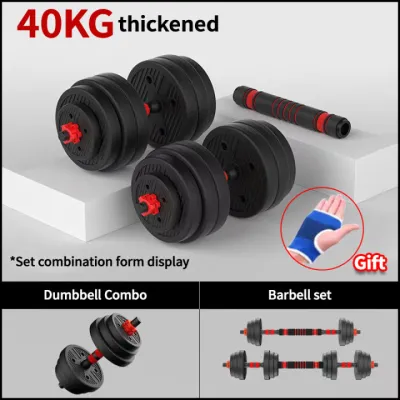
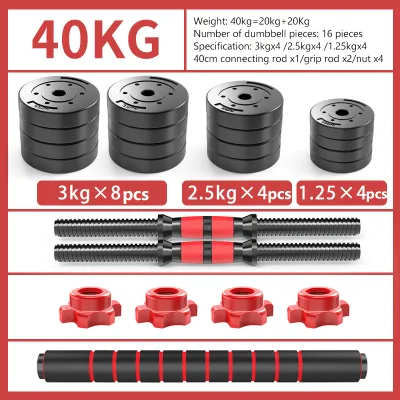
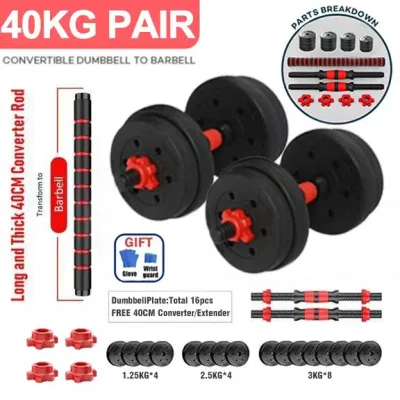
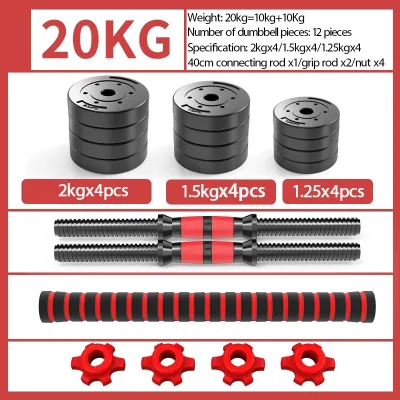
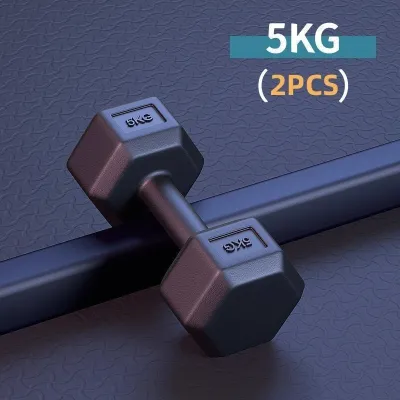
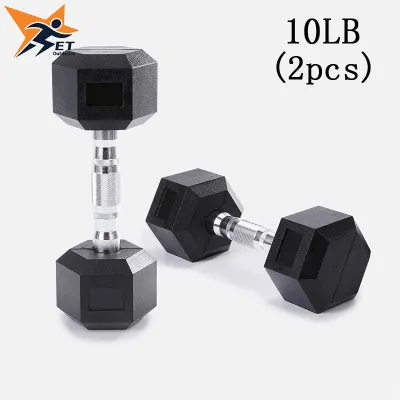
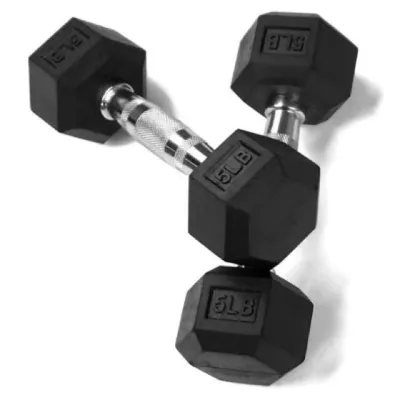
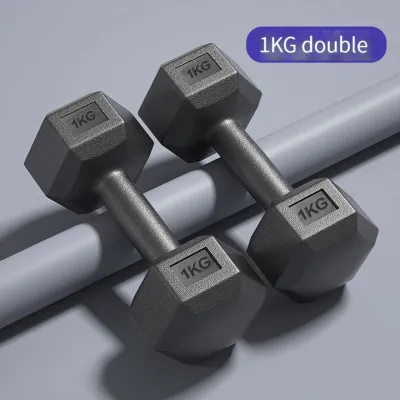
Prices are valid at publication and may change. Please refer to the product page for the latest price.
If you have a general athletic background, such as playing basketball, football, or running, but have never lifted weights consistently, your connective tissues and larger muscle groups already possess some conditioning. You can typically start with a slightly heavier range, such as 5 kg to 15 kg, as your body will adapt quickly to the new resistance.
For those returning to strength training after a long break, your muscles retain some memory of past lifts, but your tendons and ligaments require time to recondition. It is safest to start with a moderate range, beginning your first few weeks of training at a lower intensity to prevent overuse injuries.
You can estimate your baseline strength at home using simple bodyweight benchmarks. For example, if you can complete 15 to 20 controlled, full-range push-ups with proper form, your upper body has sufficient foundational strength to start with heavier pressing weights, such as 10 kg to 12.5 kg dumbbells. If you struggle to complete 5 push-ups, you should prioritize lighter weights, starting around 5 kg for upper-body presses, to protect your shoulder joints.
Alternatively, if you have access to standard gym machines, you can gauge your baseline by observing your working weights on a chest press or leg press machine. Translate these machine weights to dumbbells by reducing the total load by roughly 30% to account for the stabilizing muscles required to balance free weights.
Regardless of your background, prioritizing joint stability and proper form must always come before ego-lifting. Selecting an arbitrary starting number based on what others lift often leads to compensation patterns, where your lower back or neck takes over the load, increasing the risk of injury. Equipment cannot replace proper training, physical preparation, and sound lifting judgment.
Match the Weight Range to Your Exercise Types
A common mistake when buying a dumbbell set is assuming one weight can cover every exercise in your routine. In reality, your body consists of vastly different muscle groups that require distinct levels of resistance to stimulate adaptation.

Compound movements involve multiple joints and large muscle groups working in unison. Exercises like goblet squats, Romanian deadlifts, and flat dumbbell chest presses allow you to lift significantly heavier loads because you are recruiting major muscles like the glutes, hamstrings, and pectorals. For these movements, a starting weight of 12.5 kg to 20 kg per dumbbell is often necessary to provide adequate resistance for an adult male.
Conversely, isolation exercises target a single joint and a smaller muscle group. Movements such as lateral raises for the shoulders, rear delt flies, and bicep curls cannot be performed safely or effectively with heavy weights. For these exercises, even experienced lifters often use weights between 2.5 kg and 7.5 kg to maintain strict form and avoid shoulder impingement.
The size of the muscle group directly dictates the maximum weight capacity your set will require. Your lower body is naturally much stronger than your upper body. If you buy a dumbbell set that tops out at 10 kg, you will quickly find it insufficient for squats and lunges, even if it remains challenging for your shoulder presses.
Therefore, your initial dumbbell set must provide a broad enough spectrum to accommodate both heavy compound work and light isolation exercises. A well-planned set allows you to transition seamlessly from a heavy chest press to a light lateral raise without forcing awkward form compromises or risking joint damage.
How to Test and Lock In Your Exact Starting Weight
To find the precise starting weights for your specific body, you can use a practical testing framework based on modern training principles. This prevents guesswork and ensures your investment matches your physical capabilities.
A reliable method to determine weight suitability is using Reps in Reserve (RIR) or the Rate of Perceived Exertion (RPE) scale. When testing a weight, aim for a target range of 8 to 12 repetitions. The ideal starting weight is one where the last 2 to 3 repetitions feel highly challenging, yet you can still complete them with perfect form. This corresponds to an RIR of 2 to 3, or an RPE of 7 to 8 out of 10.
If you are testing dumbbells at a local sports retailer, pay close attention to physical feedback during the movement. Observe your grip comfort and ensure the handle diameter allows you to wrap your fingers securely. Check your wrist alignment; if your wrists bend backward or wobble during a press, the weight is too heavy for your current forearm and grip strength.
Additionally, monitor your core control. If you must arch your lower back, swing your torso, or bounce your knees to complete a bicep curl or shoulder press, you are using momentum rather than muscle contraction. This is a clear sign to step down to a lighter pair.
For online shoppers who cannot physically test the weights beforehand, it is crucial to evaluate the manufacturer’s weight increment specifications. Look for sets that offer small, manageable jumps, particularly in the lower weight ranges. Increments of 1 kg to 2 kg are ideal for upper-body exercises, as they allow for micro-progressions without stalling your progress. Avoid sets that jump directly from 5 kg to 10 kg, as a 100% increase in weight is often too drastic for isolation movements.
Fixed vs. Adjustable Sets for Long-Term Progression
Once you understand your required weight range, you must choose between purchasing a collection of fixed-weight dumbbells or investing in an adjustable dumbbell system. Both options have distinct advantages depending on your training environment, budget, and long-term goals.
Fixed dumbbell sets consist of individual pairs of dumbbells at set weights, often stored on a multi-tier rack. These are highly durable, require zero setup time between exercises, and are ideal for quick drop-sets where you need to change weights instantly. However, they require a dedicated physical space and can become expensive as you purchase more pairs to match your increasing strength.
Adjustable dumbbell systems utilize a single handle with a mechanism to add or subtract weight plates, either manually with collars or via a dial-and-lock system. These are incredibly space-efficient, making them perfect for compact living spaces or home workouts in tropical climates like the Philippines, where maximizing airflow in a small room is essential. While a quality adjustable set may require a larger upfront investment of several thousand pesos (₱), it often proves more economical than buying multiple individual pairs over time.
When shopping for adjustable models, safety must be your primary concern. Always verify the reliability of the locking mechanism by reviewing the manufacturer’s product manual and checking verified user feedback. Ensure the plates lock securely into place without rattling, as loose plates can shift during overhead movements, posing a safety hazard. Additionally, inspect the handle knurling; a textured, non-slip grip is essential for maintaining control when your hands sweat during humid workouts.
Your choice of system will directly impact how you apply progressive overload—the gradual increase of stress placed upon the body during training. If you choose fixed dumbbells, you will eventually need to purchase heavier pairs as your strength improves. If you choose an adjustable system, ensure the maximum weight limit of the set allows room for growth, so you do not outgrow the system within your first few months of consistent training.
Frequently Asked Questions (FAQ)
How do I know if my dumbbells are too light or too heavy?
Your body provides clear physical signals when a weight is incorrect. If your dumbbells are too heavy, you will experience joint compensation, a reduced range of motion, an inability to complete your minimum target repetitions, or strain in your lower back and neck. If the dumbbells are too light, you will easily complete your target repetitions with zero muscle fatigue, feel no tension in the target muscle, and find yourself relying on momentum rather than controlled muscle contraction to move the weight.
Should I buy a set with small or large weight increments?
For a well-rounded routine, a set with small weight increments is highly beneficial. Small increments, such as 1 kg to 2 kg, are essential for upper-body isolation movements like lateral raises and bicep curls, where small muscle groups adapt in minor increments. Larger weight jumps are acceptable for lower-body compound movements, such as squats and deadlifts, where larger muscle groups can handle bigger increases in resistance as your absolute strength develops.
Community discussion
Share your experience or ask a question. Comments are reviewed before publication.