
Selecting the perfect tusa diving mask depends on matching your facial geometry—specifically your face width, nose bridge height, and cheekbone structure—with the skirt volume and lens configuration required for your diving style. A mask is your primary window to the marine world, and a poor fit can lead to constant clearing, water leakage, and eye strain. In the tropical waters of the Philippines, where world-class dive sites like Apo Reef and Tubbataha Reef demand your full attention, a reliable, comfortable mask is essential.
To find the ideal model, you must evaluate how different frame shapes and silicone skirts interact with your facial features. TUSA offers a wide array of designs, from panoramic multi-window masks to ultra-low-volume options. By understanding your face shape and matching it to the correct mask profile, you can ensure a leak-free, comfortable dive every time you step off the boat.
Quick Diagnostic: Match Your Face and Dive Style to a Mask Profile
Before diving into technical specifications, a rapid self-assessment can help narrow down your choices. Your facial structure dictates the physical shape of the mask skirt, while your diving style dictates the internal volume and lens type.
Products mentioned in this guide
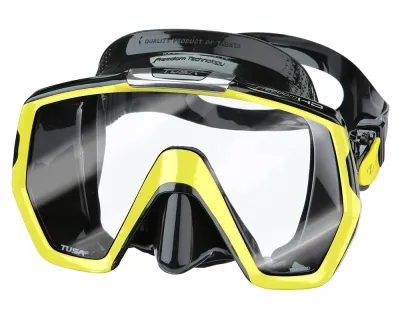
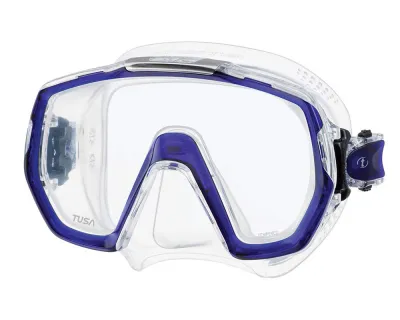
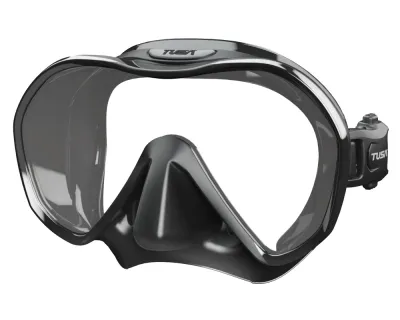
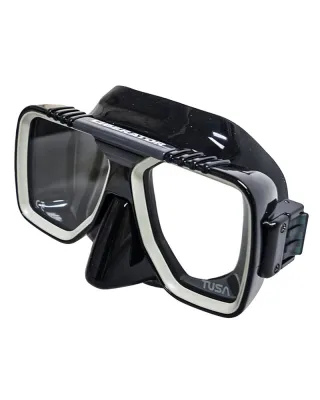
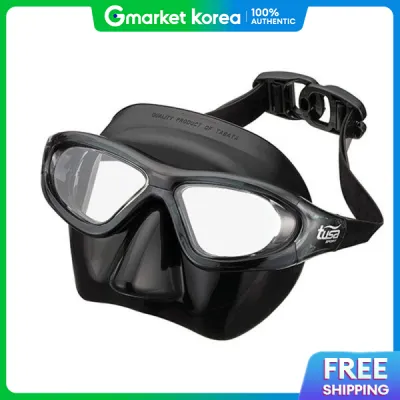

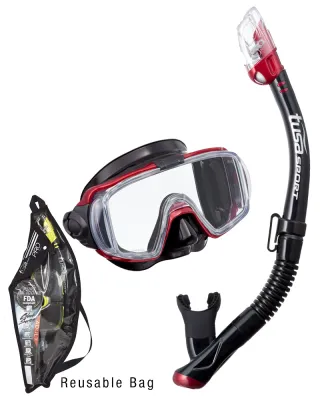
Prices are valid at publication and may change. Please refer to the product page for the latest price.
For face width, consider whether standard sunglasses fit you snugly or feel tight; wider faces require a broader skirt with highly flexible edges, while narrower faces need a compact frame to prevent air gaps near the temples. Next, assess your nose bridge. High nose bridges require deep nose pockets to prevent painful contact with the frame, whereas lower nose bridges need a well-designed, flexible pocket that seals without collapsing.
Finally, align these physical traits with your primary water activity. Scuba diving generally favors medium-volume, dual-lens masks that offer a wide field of view and accommodate prescription lenses. Freediving and spearfishing demand ultra-low-volume masks that require minimal air to equalize during rapid descents. Snorkeling emphasizes maximum light entry and panoramic views. Use this baseline to filter through TUSA’s lineup, keeping in mind that verifying specific product dimensions and testing the physical seal remains the ultimate step to a perfect fit.
Assess Your Face Shape and Fit Requirements
A mask’s primary job is to create an airtight and watertight seal against your skin. Because human faces vary wildly, no single mask design fits everyone. Understanding the nuances of your facial anatomy is the first step in selecting a tusa diving mask.

Face Width and Skirt Design The width of your face determines how wide the silicone skirt needs to be. If you have a wider face, a mask with a narrow skirt will sit too close to the outer corners of your eyes. This restricts your peripheral vision and causes the silicone edge to rest on your temples, where facial movement can easily break the seal. For wider profiles, look for masks featuring broad skirts with flared edges. Conversely, if you have a narrow or petite face, a wide mask will overlap your hairline or sit too close to your ears. This allows water to channel along the hair shafts and flood the mask. A compact, streamlined skirt profile ensures the silicone rests entirely on smooth skin, creating a reliable seal.
Nose Bridge and Pocket Depth The shape of your nose bridge significantly influences mask comfort. Divers with high, prominent nose bridges often experience pain or bruising if the rigid plastic frame of the mask presses directly against the nasal bone. If you have a high nose bridge, you must select a mask with a deep, spacious nose pocket that provides ample clearance. For divers with lower nose bridges, which is a common facial characteristic in the Philippines, the challenge is different. A nose pocket that is too large or stiff can collapse under water pressure, or fail to seal properly at the base of the nose, leading to persistent leaks. A soft, highly pliable silicone nose pocket that conforms easily to a lower bridge is essential for comfort and easy equalization.
Cheekbones and Upper Lip Clearance High cheekbones can push the bottom edge of a mask skirt upward, causing the silicone to bunch up near the lower eye sockets and break the seal. When trying on a mask, pay close attention to where the skirt rests on your cheeks. It should sit comfortably below the prominent part of your cheekbones. Additionally, check the clearance between the bottom of the nose pocket and your upper lip. If the skirt extends too far down, it will rest on your upper lip line. When you insert a regulator mouthpiece or snorkel, your lip shape changes, which will lift the skirt and cause immediate leaking. The skirt should leave a clear gap above your upper lip to accommodate facial expressions and gear usage.
When browsing TUSA models, look for specific “fit” or “volume” indicators on the product labels and packaging. These indicators help categorize whether a model is optimized for narrow, standard, or wide facial profiles.
Align the Mask Design with Your Diving Style
Your diving discipline determines the functional design of the mask, including the number of lenses, the internal volume, and the color of the silicone skirt. Selecting a design optimized for your specific activity ensures better performance and comfort.
Scuba Diving Recreational scuba divers typically spend 45 to 60 minutes underwater at varying depths. For this style of diving, dual-lens masks are highly popular. The dual-lens configuration positions the glass closer to your eyes, which provides an excellent field of view while keeping the internal volume moderate. More importantly, dual-lens masks are the primary choice for divers who require corrective lenses, as the individual lenses can easily be swapped out for prescription glass. A medium-volume design balances the ease of clearing water with a spacious, non-restrictive feel, making it comfortable for long, relaxed dives.
Freediving and Spearfishing Freediving and spearfishing require a completely different approach. As you descend rapidly on a single breath, the air inside your mask compresses. To prevent mask squeeze, you must exhale a small amount of precious air from your lungs into the mask through your nose. To conserve air, freedivers require ultra-low-volume masks. These masks have a very small internal air space, meaning they require minimal equalization. The frame is exceptionally low-profile, bringing the lenses as close to your face as possible to maximize the field of view despite the compact size.
Snorkeling and Recreational Diving If your primary activity is snorkeling or casual shallow-water diving, your main priority is likely a panoramic, unobstructed view of the marine life. Multi-window masks, which feature side lenses in addition to the front glass, are excellent for this. They allow maximum light to enter the mask, significantly reducing any feelings of claustrophobia and helping you spot fish or dive buddies in your peripheral vision. Because you remain near the surface, the slightly larger internal volume of these masks is not a drawback, as equalizing and clearing the mask require very little effort.
Skirt Color Selection The choice between a clear and a black silicone skirt is more than just an aesthetic preference; it directly impacts how you perceive your underwater surroundings. Clear skirts allow ambient light to enter from the sides, creating a bright, open, and airy feeling. This is highly recommended for beginners, night divers, or anyone prone to claustrophobia, as it helps maintain spatial awareness. Black skirts block all peripheral light, eliminating distracting reflections and glare on the inside of the lenses. This is the preferred choice for underwater photographers, who need to focus entirely on their camera viewfinder, and spearfishermen or divers in the bright, sunny conditions of the Philippines, where intense sunlight reflecting off shallow sandy bottoms can cause visual fatigue.
Evaluate Key TUSA Design Features for Your Needs
TUSA is known for incorporating specific engineering features designed to improve fit, comfort, and visibility. Understanding what these features do allows you to evaluate product descriptions and find the technology that addresses your personal pain points.
Skirt Edge Technology Standard mask skirts often have a flat, sharp edge that cuts into the skin under pressure, leaving deep red lines and causing discomfort during long dives. TUSA utilizes advanced skirt designs, such as Freedom Technology, which feature a rounded edge with a cross-section shape that minimizes pressure on the face. Additionally, the skirt incorporates dimpled areas around the forehead and cheekbones, combined with varied silicone thicknesses. This allows the skirt to stretch and conform to different skin textures and facial contours, maintaining a reliable seal even when you move your jaw or smile.
Lens Angle and Field of View When diving, you frequently need to look down to check your pressure gauge, locate your dive computer, or adjust your BCD straps. Standard masks require you to tilt your head downward to see your chest. TUSA addresses this by angling the lenses slightly downward and outward. This low-profile, angled design dramatically increases your lower vertical field of view, allowing you to monitor your equipment and navigate uneven terrain on the seabed with minimal head movement.
Buckle and Strap Systems The way a mask attaches to your head plays a major role in overall comfort. Look for masks where the quick-adjust buckles are mounted directly to the silicone skirt rather than the rigid outer frame. This design allows the strap to flex and align naturally with the curvature of your head, reducing tension on the frame. Swivel buckle systems and 3D anatomical straps conform to the shape of your head, preventing the strap from slipping down. This is particularly beneficial for divers with long hair, those wearing thick hoods, or anyone needing to make quick, secure adjustments while geared up on a rocking dive boat.
Always verify the specific technology names, silicone grades, and lens treatments on the current product packaging or official manufacturer specifications to ensure you are getting the exact features you need.
Perform a Reliable Pre-Dive Fit Test
Even if a mask has the perfect specifications on paper, you must perform a physical fit test to ensure it matches your unique facial structure. This test should be done dry before you ever head to the dive site.
The Inhale Test To perform the basic dry-fit test, clear all hair away from your forehead and temples. Place the mask gently on your face without putting the strap over your head. Look slightly upward, inhale gently through your nose, and hold your breath. The mask should suction to your face and remain securely in place without sliding or falling off. If you feel air leaking in around the skirt, or if the mask falls immediately, the fit is incorrect, and water will inevitably enter when you dive.
Expression Check While holding the gentle nasal suction, simulate the facial movements you will make underwater. Smile, yawn, and mimic the action of biting down on a regulator mouthpiece. A well-fitting mask should maintain its seal during these subtle facial movements. If the suction breaks immediately when you smile, the silicone skirt is likely too stiff or does not align correctly with your cheekbones.
Strap Tension Rule One of the most common mistakes among new divers is over-tightening the mask strap to stop leaks. The strap is only designed to keep the mask in place on your head; it is the ambient water pressure that pushes the mask against your face to create the seal. Over-tightening deforms the soft silicone skirt, creating folds and channels that actually let water in. It also causes painful pressure on the nose bridge and forehead. Adjust the strap so it is snug but comfortable.
Safety Boundary If a mask persistently leaks, pinches your nose, or causes painful pressure points during a shallow-water test or pool session, do not proceed with a deep dive. Stop, readjust the strap, clear any trapped hair, or switch to a different mask model. Diving with a constantly leaking mask increases the risk of saltwater inhalation, eye irritation, and anxiety, which can compromise your safety underwater.
Frequently Asked Questions (FAQ)
Can I put prescription lenses in any TUSA diving mask?
Dual-lens TUSA masks are generally designed to accommodate corrective optical lenses, which can easily replace the standard tempered glass. This makes them highly suitable for divers who wear glasses or contact lenses. However, single-lens masks and specialized ultra-low-volume freediving masks typically do not support standard drop-in prescription lenses due to their structural design. If you require vision correction, always verify the specific model’s manufacturer guidelines and compatibility charts to ensure it supports optical insert compatibility before making a purchase.
How do I prevent my TUSA mask from fogging up?
New masks come with a thin layer of protective silicone residue on the inside of the glass from the manufacturing process, which causes rapid fogging. You must remove this residue before your first dive. While some divers use a mild abrasive pre-cleaner or non-gel toothpaste, you must check your mask’s manual first, as abrasive cleaners can permanently scratch or damage factory-applied anti-reflective or UV coatings on premium lenses. For regular pre-dive preparation, apply a commercial defogger or a drop of mild, non-conditioning baby shampoo to the dry lenses, rub it gently, rinse it quickly in fresh or salt water, and wear the mask immediately.
What is the difference between clear and black silicone skirts?
The primary difference lies in light transmission and visual focus. Clear silicone skirts allow ambient light to enter from the sides, providing a bright, open field of view that helps reduce feelings of claustrophobia, making them excellent for recreational snorkeling and beginner divers. Black silicone skirts block all peripheral light, which eliminates distracting glare and internal lens reflections. This is highly advantageous in bright, sunny tropical destinations like the Philippines, where intense sunlight reflects off shallow white sand, allowing underwater photographers and spearfishermen to focus entirely on their target.
Community discussion
Share your experience or ask a question. Comments are reviewed before publication.