
Organizing a home gym requires more than just stacking weights in a corner. A dedicated dumbbell organizer rack keeps your workout space safe, protects your flooring, and makes your training sessions much more efficient. To find a suitable fit, you must look beyond the number of slots on a shelf. Matching a rack to your collection requires a precise calculation of physical dimensions, total weight, and structural limits.
Whether you are investing ₱3,000 or ₱10,000 in a storage solution, understanding how your weights interact with the rack’s frame prevents structural failures and keeps your training area organized. By analyzing your current inventory and planning for future strength goals, you can select a rack that offers long-term stability and convenience.
Assessing Your Current and Future Dumbbell Collection
Start by laying out every dumbbell you currently own. Group them by pairs and measure their physical dimensions. Hexagonal dumbbells, whether made of cast iron or encased in rubber, have flat sides that prevent rolling, allowing them to sit flush against each other on flat shelves. Round dumbbells, however, require cradles or angled lips to keep them securely in place. If you use adjustable dumbbells, they often feature bulky dial mechanisms or long selector pins, requiring a completely flat, wide shelf rather than a standard tiered rack with pre-spaced rails.
Products mentioned in this guide
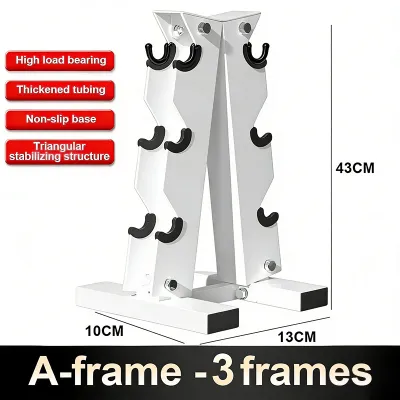
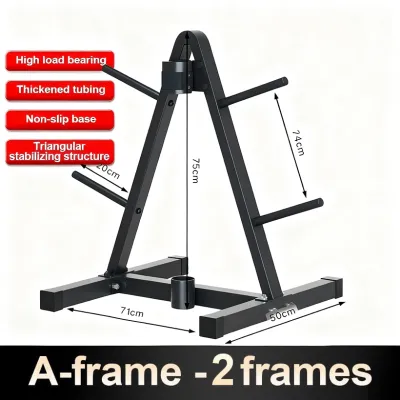
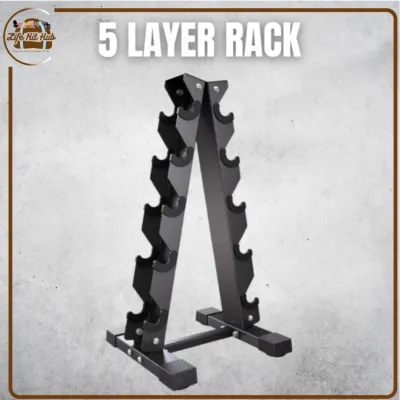
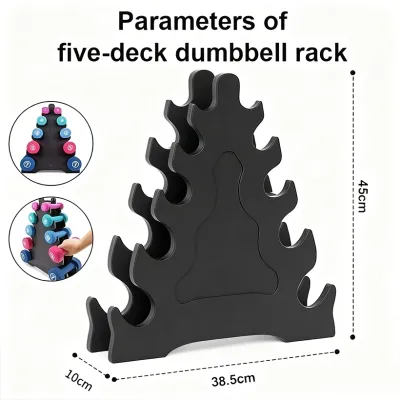
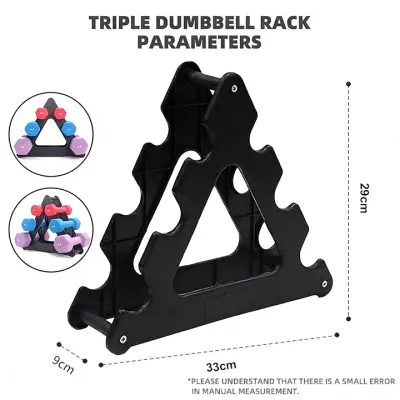
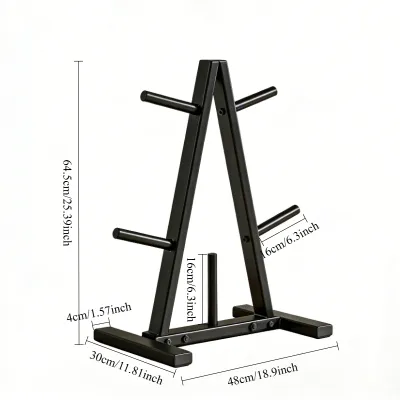
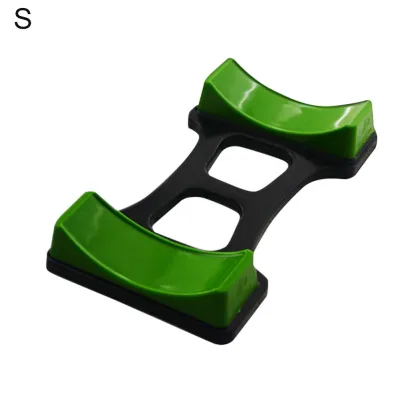
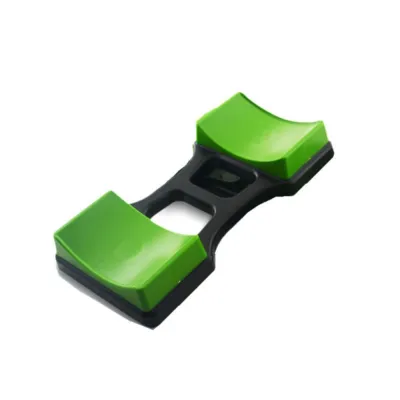
Prices are valid at publication and may change. Please refer to the product page for the latest price.
Next, calculate the total weight of your current setup. Add up the weight of every single dumbbell to establish your baseline load-bearing requirement. If you currently own pairs ranging from 5 kg to 25 kg, the cumulative weight can easily exceed 150 kg. This total weight dictates the minimum structural capacity your new rack must support.
Finally, plan for your future strength progression. If you are actively practicing progressive overload, you will eventually need heavier pairs. Avoid buying a rack that only fits your current inventory. Instead, add a buffer of at least one or two extra pairs to your target slot count and estimate their weight to ensure your rack remains useful as your strength develops.
Understanding Rack Weight Limits and Structural Safety
Every reputable dumbbell organizer rack comes with a manufacturer-specified weight rating. It is vital to verify both the total weight capacity of the entire frame and the individual weight limits for each tier or shelf. A rack rated for 300 kg total might limit each of its three shelves to 100 kg. Exceeding a single shelf’s limit can cause the metal to bow or fail, even if the total weight is well under the overall frame capacity.

You must also account for the difference between static and dynamic weight. Static weight is the load of the dumbbells resting quietly on the shelves. Dynamic weight refers to the sudden force applied when you drop or heavily place a heavy dumbbell back onto the rack at the end of an exhausting set. A rack must have a sufficient safety margin to handle these sudden impacts without bending or shifting.
To verify structural safety, look for key physical indicators of quality. Heavy-duty racks typically utilize thick-gauge steel, often 12-gauge or 14-gauge, which resists bending under heavy loads. Check the base of the rack; a wider, flared base provides greater stability and prevents tipping. Examine the welds at the joints; clean, continuous welds offer far superior structural integrity compared to spot welds or thin bolts.
Evaluating Space, Footprint, and Layout Requirements
Before purchasing any storage solution, measure your available floor space and vertical clearance. Dumbbell racks generally come in three main configurations: vertical A-frames, horizontal multi-tier racks, and wall-mounted systems. A-frame racks have a very small floor footprint, making them excellent for tight corners, but they are typically limited to holding smaller, lighter pairs. Horizontal racks require more floor space but offer easier access and higher weight capacities.
In home gyms, especially in tropical climates like the Philippines where workouts might take place in covered carports, garage spaces, or rooms with high humidity, space planning is crucial. High humidity can accelerate rust on steel frames, so verifying that the rack has a durable, rust-resistant powder coat is essential. Additionally, you must leave a safe loading zone around the rack. Ensure there is at least 60 to 90 centimeters of clear walking space in front of and beside the rack so you can lift and return heavy weights without straining your back or tripping over other equipment.
Wall-mounted racks are highly space-efficient but demand extreme caution. You must verify that the wall material and stud placement can safely support the combined static and dynamic load of your dumbbells. Mounting a heavy weight rack directly into drywall or thin wood paneling without securing it to solid concrete or heavy-duty wall studs will lead to structural failure and potential injury.
Matching Rack Tiers and Slots to Dumbbell Sizes
The physical design of the rack’s shelves must match the anatomy of your dumbbells. Check the cradle width and the spacing between slots. If you own dumbbells with thick, ergonomic handles or exceptionally large rubber-coated heads, they may overlap or jam if the rack’s slots are too narrow. Ensure the distance between the front and rear support rails matches the handle length of your dumbbells; if the rails are too far apart, smaller dumbbells might slip through the middle.
Proper weight distribution is a fundamental safety rule for any tiered storage system. Always arrange your heaviest pairs on the lowest shelves. This keeps the center of gravity low, significantly reducing the risk of the rack tipping forward when you pull a heavy weight from the top. The upper shelves should be reserved for your lightest pairs, which are also easier to lift at shoulder height.
If you are using adjustable dumbbells, verify the docking requirements. Many adjustable systems require their own proprietary trays or flat, heavy-duty shelves to sit safely. Standard angled dumbbell rails may not support the flat, wide bases of adjustable blocks, which can lead to instability or damage to the adjustment mechanisms.
Common Capacity and Sizing Mistakes to Avoid
One of the most common mistakes is ignoring per-shelf weight limits and overloading the top tiers. Placing heavy dumbbells on the upper shelves makes the rack top-heavy and highly unstable, posing a severe tipping hazard during use.
Another frequent error is overcrowding the shelves to squeeze in extra pairs. When dumbbells are packed too tightly, their handles interfere with one another. This makes it incredibly difficult to get a secure grip when retrieving a weight, increasing the risk of pinching your fingers or dropping a heavy dumbbell onto your feet.
Lastly, do not underestimate the physical footprint of adjustable dumbbells. While they replace multiple individual pairs, their docking cradles are often much wider and heavier than a single standard dumbbell. Ensure your rack has a flat, dedicated space that can accommodate the specific dimensions of these adjustable systems.
Frequently Asked Questions (FAQ)
Can I mix fixed and adjustable dumbbells on the same rack?
Yes, you can store both types on a single rack, provided the shelf design accommodates their different shapes. Fixed dumbbells typically require angled rails or cradles, while adjustable dumbbells need a flat, stable surface for their docking stations. If you plan to mix them, look for a multi-tier rack that features at least one flat shelf alongside standard angled rails. Always verify that the total weight of both systems does not exceed the manufacturer’s specified limits for each individual tier.
How much extra weight capacity should I plan for future additions?
Rather than relying on a generic percentage, base your future capacity buffer on your personal strength training goals. If you are focused on progressive overload, estimate the weight of the next two to three pairs of dumbbells you plan to acquire and add that to your current total. If you anticipate significant growth in your collection, consider a modular rack system. Modular designs allow you to add extra shelves or expansion kits later, saving you from having to buy an entirely new rack as your strength increases.
Community discussion
Share your experience or ask a question. Comments are reviewed before publication.