
Finding the correct martial arts belt size is essential for comfort, safety, and compliance during training and competition. To determine your ideal belt length, you must measure your waist while wearing your full uniform, account for a double-wrap around your torso, and add enough length for a secure square knot with even hanging ends. Generally, this means adding 80 to 100 centimeters (32 to 40 inches) to your waist measurement. However, the exact dimensions depend heavily on your specific discipline, as karate, taekwondo, judo, and Brazilian Jiu-Jitsu (BJJ) all follow distinct standards for thickness, width, and material.
Many beginners searching for a “boxing belt” are often surprised to learn that traditional boxing does not utilize a ranking belt system. Whether you are looking for a martial arts rank belt, a boxing championship replica, or a supportive weightlifting belt for combat conditioning, understanding how to measure and select the right size prevents costly purchasing mistakes. In tropical climates like the Philippines, where high humidity and intense heat lead to heavy sweating and frequent washing, choosing the right material and size is even more critical to account for fabric shrinkage and wear.
Belt Standards Across Martial Arts and Boxing
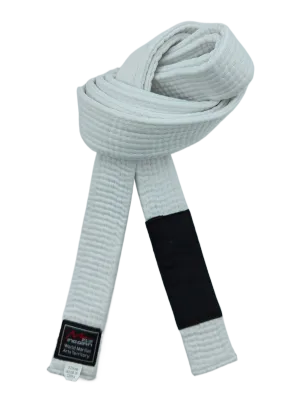
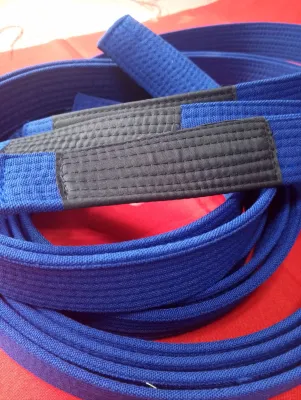
Traditional martial arts disciplines use ranking belts to signify a practitioner’s progress, skill level, and experience. In Karate, Taekwondo, Judo, and BJJ, these belts are not merely decorative; they must comply with strict rules set by international governing bodies. For instance, the International Brazilian Jiu-Jitsu Federation (IBJJF) and the International Judo Federation (IJF) have precise regulations regarding belt width, thickness, and the presence of rank bars. A belt that is too thin, too thick, or lacks the required black sleeve (common in BJJ) can lead to disqualification at the tournament check-in table.
Products mentioned in this guide
Prices are valid at publication and may change. Please refer to the product page for the latest price.
When people search for a boxing belt, they are typically looking for one of two things: a decorative championship replica belt or a heavy-duty weightlifting belt used for strength and conditioning. Traditional boxing does not feature a ranking belt system; fighters progress through weight classes and professional records rather than belt colors. If you are purchasing a replica championship belt for display or collection, these are generally designed as one-size-fits-all products with adjustable snap buttons or long hook-and-loop straps. For strength training, a leather or nylon weightlifting belt is used to stabilize the core during heavy squats and deadlifts, requiring a snug, single-wrap waist measurement rather than the double-wrap of a martial arts belt.
Using the wrong belt type or size carries practical risks that go beyond aesthetic issues. A lightweight Karate belt, designed for low-contact forms and striking, will quickly shred or snap under the intense pulling, friction, and ground grappling of a BJJ or Judo session. Conversely, a stiff, heavy Judo belt might restrict the fluid, high-kicking movements required in Taekwondo. Furthermore, a belt that is too short may constantly come untied during sparring, disrupting your focus and posing a tripping hazard on the mats, while an excessively long belt can be stepped on by your training partner, leading to joint strains or falls.
How to Measure Your Waist for a Martial Arts Belt
To get an accurate measurement for your martial arts belt, you need the right tools and a clear understanding of where the belt will sit on your body. Avoid guessing your size based on your everyday pants or jeans size, as martial arts uniforms sit differently and feature much thicker fabric.

Start by gathering a flexible tailor’s measuring tape. If you do not have one, you can use a long piece of non-stretch string or a soft cord, which you can then lay flat against a standard rigid metal ruler or hardware tape measure. Avoid using elastic bands or stretchy ropes, as these will yield inaccurate, overly short measurements when pulled tight.
Stand naturally with your feet shoulder-width apart and measure around your torso where your martial arts uniform (gi or dobok) pants sit, which is typically near or slightly below the navel. Do not suck in your stomach or pull the tape too tight; it should rest comfortably against your skin or undergarments.
Because you will never wear your belt on bare skin, you must account for the thickness of your uniform jacket. The best way to do this is to put on your full gi or dobok, cross the jacket flaps over as you would for training, and measure directly over the fabric. If you are ordering your belt before your uniform arrives, a reliable rule of thumb is to take your bare waist measurement and add 5 to 8 centimeters (2 to 3 inches) to account for the heavy cotton layers of the jacket.
Once you have your base waist measurement over the uniform, apply the “Wrap and Tie” rule. Standard martial arts belts are designed to wrap around your waist exactly twice before being tied. To calculate the total length needed, double your waist measurement, add the length required to tie a standard square knot (usually around 30 to 40 centimeters), and then add an additional 20 to 30 centimeters (8 to 12 inches) for each of the two hanging ends. For example, if your waist measurement over your gi is 90 cm, your calculation would be: (90 x 2) + 40 (for the knot) + 50 (for two 25 cm hanging ends), totaling 270 cm.
Standard Belt Dimensions by Discipline
Each martial art has evolved its own belt specifications based on the physical demands of the sport. Understanding these differences helps you choose a belt that supports your movements rather than hindering them.
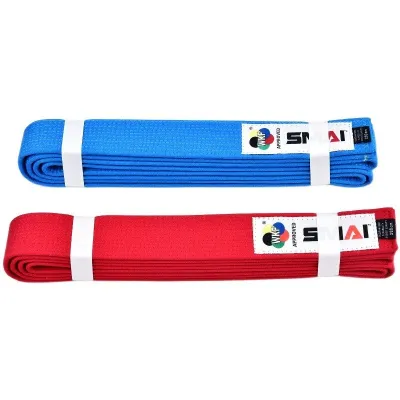
Karate and Taekwondo belts are typically narrower and lighter, measuring between 4 and 5 centimeters in width. Because these arts emphasize rapid footwork, high kicks, and quick transitions, a lighter belt is preferred to prevent unnecessary weight and restriction around the hips. These belts are often made of a single layer of cotton or a polyester-cotton blend, making them highly flexible right out of the package.
Judo and BJJ belts are significantly more robust, usually measuring between 4.5 and 5.5 centimeters in width. They are constructed with multiple layers of thick cotton webbing, heavy stitching, and a dense inner core to withstand the constant pulling, gripping, and mat friction inherent in grappling. BJJ belts also feature a distinct black sleeve (or red sleeve for instructors) on one end, known as the rank bar, where stripes are awarded. These belts are stiff when new and require a breaking-in period to knot securely.
When shopping, you will find that manufacturers categorize belts using a numerical sizing system, typically ranging from Size 0 (for children) up to Size 6 or 7 (for larger adults). While a Size 4 belt from one brand might measure 280 cm, another brand’s Size 4 might be 270 cm or 290 cm. Always refer to the manufacturer’s specific sizing chart and match your calculated “Wrap and Tie” length to their physical belt length rather than relying solely on the size number. In the Philippines, standard ranking belts typically range from ₱300 for entry-level cotton options to over ₱1,500 for premium, heavy-duty brands.
Given the tropical climate and high humidity in the Philippines, training gear requires frequent washing to prevent mold and unpleasant odors. This makes understanding fabric shrinkage vital. If a product label does not explicitly state that the belt is “pre-shrunk,” you must expect it to shrink by 5% to 10% after its first few washes. To prevent your perfectly fitted belt from becoming too short, consider purchasing one size up if you are at the upper limit of a size bracket, or look specifically for pre-shrunk cotton or synthetic-blend options.
Testing the Fit and Tying Your Belt
Once your new belt arrives, you must test its fit before removing any tags or wearing it to a class where it might get soiled. A proper fit test ensures you have full mobility and that your belt remains secure during intense physical activity.
Put on your uniform, wrap the belt twice around your waist, and tie a standard square knot. Stand in front of a mirror and perform a quick visual check. Both ends of the belt should hang downward at a relatively even length. Ideally, the tips of the belt should reach down to your mid-thigh area. If the ends barely clear the knot or point straight out to the sides, the belt is too short; if they hang past your knees, it is too long and may trip you during dynamic movements.
If your belt is slightly too long, you can often adjust the fit by altering how tightly you overlap the wraps around your waist. Pulling the under-layer tighter can take up some of the excess slack. If the belt is too short, verify if you accidentally ordered a size down or if you washed it in hot water, causing it to shrink prematurely.
Tying your belt correctly is crucial for keeping it secure. The standard square knot involves crossing the left end over the right, tucking it under both wraps from the bottom up, and then crossing the right end over the left to pull it tight horizontally. This creates a flat, secure knot that distributes pressure evenly across your abdomen and resists coming undone when you are grabbed or thrown.
If the belt cannot be tied with a complete square knot while leaving at least 15 centimeters of clearance on each end, or if it wraps around your torso three times instead of two, do not attempt to force it to work. An ill-fitting belt will constantly distract you during training. It is best to initiate an exchange with the retailer immediately for a size that matches your measurements.
Frequently Asked Questions (FAQ)
Can I use a karate belt for Brazilian Jiu-Jitsu?
While physically possible for casual drilling, using a karate belt for BJJ is highly discouraged. Karate belts are too thin and lightweight, meaning they will tear quickly under BJJ grappling and mat friction. Furthermore, official BJJ competitions require specific belt widths, thicknesses, and a black rank bar that standard karate belts do not feature.
Do boxing championship belts come in standard sizes?
Official boxing championship belts are custom-fitted to the individual champion. Replica belts sold for fans, collectors, or display are usually one-size-fits-all, featuring adjustable snap buttons or long leather straps that require no precise waist measurement.
How do I wash my martial arts belt without it shrinking?
To prevent severe shrinkage, wash your belt in cold water and air dry it flat or hang it in the shade. Avoid using hot water or machine dryers, which cause the cotton fibers to contract rapidly, permanently shortening your carefully measured belt.
Community discussion
Share your experience or ask a question. Comments are reviewed before publication.