
To find the correct taekwondo belt size, you must measure your waist circumference while wearing your full training uniform, calculate the required length for a double wrap, and add an appropriate allowance for the knot and hanging ends. Because martial arts brands do not follow a universal sizing standard, relying solely on generic size labels like “Size 3” or “Medium” often leads to an ill-fitting belt. Instead, taking precise physical measurements in centimeters or inches and comparing them directly against a manufacturer’s specific product dimensions is the most reliable way to secure a proper fit. This guide outlines the exact steps to measure your waist over your uniform, calculate the ideal total length, and navigate brand variations to find a belt that supports your training.
Why Proper Taekwondo Belt Sizing Matters
Wearing a correctly sized taekwondo belt is essential for both physical safety and traditional etiquette during training. In active martial arts practice, which involves high-reaching kicks, rapid footwork, and intense sparring sessions, an excessively long belt poses a serious physical hazard. Loose, dangling ends can easily catch on an opponent’s gear, trip you during a pivot, or whip upward into your face during spinning techniques. Conversely, a belt that is too short is highly prone to coming undone, forcing you to constantly pause your training to re-tie it, which disrupts the flow of the class and distracts from your focus.
Beyond safety, the belt holds deep symbolic value in the training hall, representing your progress, dedication, and respect for the art. Traditional etiquette dictates that after tying a proper square knot, both ends of the belt should hang symmetrically and reach a balanced length. Symmetrical ends represent the balance of mind and body, a core philosophy in taekwondo. Showing up to class with a belt that is either dragging near your knees or barely long enough to form a knot reflects poorly on your presentation and attention to detail. Selecting the right size ensures you remain compliant with school standards while training without unnecessary distractions.
Products mentioned in this guide
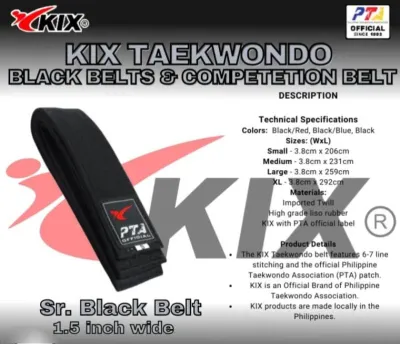
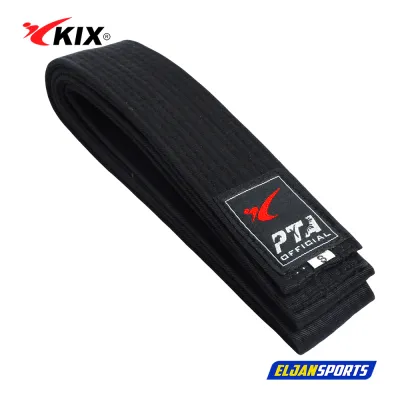
![[Local] BC 1PCS Martial Arts Karate Judo Taekwondo Professional Belts Judo Jiu jitsu Standard Tapes Protective Waistband](https://img.lazcdn.com/g/p/b2068399405b9b6e543d8e2e6bd7094d.jpg_400x400q80.jpg_.webp)
Prices are valid at publication and may change. Please refer to the product page for the latest price.
Tools You Need for Measuring
Before beginning the measurement process, gathering the correct tools ensures your final calculations are accurate and reliable. You will need a flexible fabric measuring tape, which is the standard tool for tailoring and body measurements because it easily conforms to the curves of your body and the folds of your uniform. Avoid using metal construction tape measures, as their rigid design cannot wrap smoothly around your waist and will likely result in an inaccurate, oversized reading.

If you do not have a flexible fabric measuring tape on hand, you can easily substitute it with a long piece of non-stretch string, yarn, or a sturdy cotton cord, along with a standard flat ruler or a metal tape measure. You will wrap the string around your waist, mark the exact point where it meets, and then lay the string flat against the ruler to determine the length. Additionally, you must wear your actual training uniform during this process, as measuring over casual clothing or bare skin will fail to account for the substantial bulk of the uniform fabric.
Step-by-Step Guide to Measuring Your Waist
To obtain an accurate base measurement, you must replicate the exact conditions of your training sessions. Start by putting on your complete training uniform, including both the pants and the jacket. Tie the inner and outer side strings of the jacket securely, smoothing out any large bunches of fabric across your chest and stomach. The heavy cotton or polyester-blend fabric of a standard uniform overlaps in the front, creating a thick layer that adds several centimeters to your natural waistline. Measuring over this uniform is the only way to ensure your belt will fit comfortably during class.
Once your uniform is properly adjusted, take your flexible measuring tape and wrap it around your waist. Position the tape exactly where you intend to wear your belt during training. In taekwondo, the belt typically sits around the natural waistline, which is usually located near the navel and slightly above the hip bones. Ensure that the measuring tape remains perfectly level all the way around your back and parallel to the floor, as a slanted tape will produce an artificially inflated measurement.
With the tape in position, perform a quick tension check to ensure the measurement is realistic for active movement. The tape should be snug against the uniform fabric, but it must not squeeze your waist or restrict your breathing. Take a deep breath in and out, bend slightly at the waist, and lift one knee as if preparing for a basic kick. If the tape feels excessively tight or slips out of place during these movements, adjust the tension until you find a comfortable balance that allows for full mobility.
Finally, read and record the measurement at the point where the zero end of the tape meets the remaining length. It is highly beneficial to write down this number in both centimeters and inches. Because martial arts equipment manufacturers are located worldwide, some brands list their sizing charts in metric units while others use imperial measurements. Having both numbers readily available saves time and prevents calculation errors when comparing products online or in local sports shops.
How to Calculate the Final Belt Length
Once you have recorded your waist measurement over your uniform, you must convert this figure into the total length of the belt. Traditional taekwondo belts are designed to wrap around your waist twice before being tied. This double-wrap style provides essential core support during physical exertion and helps keep the heavy uniform jacket securely closed. To account for this, your first step is to multiply your recorded waist measurement by two to establish your base wrap length.
After calculating the base wrap length, you must add a specific allowance for the knot and the hanging ends. Tying a traditional square knot requires a significant amount of fabric, and the remaining ends must hang down cleanly on both sides. The standard recommendation is to add between 30 and 50 centimeters of extra length for each side, which translates to a total knot allowance of 60 to 100 centimeters. The exact allowance you choose often depends on your personal height, physical build, and the specific aesthetic preferences of your training school.
To make this calculation simple, you can use the standard formula: (Waist Measurement x 2) + Knot Allowance = Total Belt Length. For example, if your waist measurement over your uniform is 85 centimeters, multiplying this by two gives you a base wrap length of 170 centimeters. If you decide on a standard total knot allowance of 70 centimeters to ensure a balanced hang, your calculation would be 170 plus 70, resulting in a target belt length of 240 centimeters.
Keep in mind that your physical height and body shape can influence how the belt hangs. Taller practitioners or those with a broader build may require a slightly larger knot allowance to ensure the ends look proportional to their frame. Conversely, shorter practitioners might prefer an allowance on the lower end of the spectrum to prevent the belt from dangling too low. Discussing these preferences with your instructor can help you determine the ideal hanging length for your specific training environment.
Navigating Brand Sizing Charts and Variations
With your calculated total belt length in hand, you are ready to select a size from a manufacturer’s chart. It is critical to understand that sizing is highly inconsistent across different martial arts brands. A “Size 3” belt from one manufacturer might measure 250 centimeters, while a “Size 3” from another brand could be 270 centimeters. Never purchase a belt based solely on the size number or generic labels like “Medium” or “Adult.”
When viewing a brand’s sizing chart, locate the column that lists the actual, physical length of the belt in centimeters or inches. Compare your calculated total belt length directly to these physical measurements. Your goal is to find the size that matches your calculated number as closely as possible. If the brand lists waist sizes instead of belt lengths, read the fine print carefully to verify whether those waist sizes already account for the double wrap and knot, or if they represent raw waist measurements.
If your calculated length falls directly between two standard sizes, you must decide whether to size up or size down. In most cases, sizing up is the safer option, especially if your training school is strict about uniform appearance. A slightly longer belt can be adjusted by tying the knot tighter or overlapping the wraps more snugly. However, if you prefer a lighter feel and your school allows shorter ends, sizing down may be acceptable, provided the belt is still long enough to tie a secure, double-knotted square knot that will not slip during sparring.
Because of these brand-to-brand variations, it is highly recommended to check the return and exchange policies of the sports retailer or online marketplace before finalizing your purchase. If you receive the belt and find that the stiffness of the material or the actual cut does not fit as expected, having the option to exchange it for a different size prevents unnecessary expenses. Keep the original packaging and tags intact until you have verified the fit on your uniform.
Adjusting and Tying the Belt for a Secure Fit
When your new belt arrives, the final step is to verify the fit by tying it over your uniform. Stand in front of a mirror and tie the belt using a standard martial arts square knot, ensuring the wraps lie flat against each other on your back. Once the knot is pulled tight, observe how the ends hang. Ideally, both ends should be relatively equal in length, extending downward past the knot without reaching past your mid-thighs.
If you notice that one end is significantly longer than the other, you can often correct this asymmetry without needing a different size. Try adjusting the starting position of the belt before you begin wrapping. By shifting the midpoint of the belt slightly to the left or right against your stomach before wrapping it around your back, you can balance out the final length of the ends. Additionally, ensuring the two wraps are perfectly aligned on top of each other can free up extra fabric for a cleaner knot.
However, there are clear signs that a belt is fundamentally the wrong size, regardless of how you attempt to adjust it. If you cannot comfortably wrap the belt around your waist twice and still have enough fabric to tie a secure knot, the belt is too small and must be exchanged. On the other hand, if the ends hang down near your knees or flap wildly against your legs when you move, the belt is too long and will interfere with your training. In either scenario, exchanging the belt for the correct size is the best course of action to ensure safety and comfort during practice.
Frequently Asked Questions (FAQ)
Do children need a different measuring approach for their taekwondo belts?
Because children grow rapidly, parents are often tempted to purchase a larger belt size to ensure it lasts longer. While buying a slightly longer belt is generally acceptable, you must avoid choosing an excessively long size that the child could easily trip over during active drills, jumping, or sparring. A belt that drags too low can compromise their safety on the training mat.
Before making a purchase, consult with your child’s instructor regarding the school’s specific rules. Some training centers have relaxed uniform standards for young practitioners or may utilize single-wrap belts for very young children, which require a completely different sizing calculation. If a standard double-wrap belt is required, aim for a size that fits comfortably over their current uniform with just a small margin for growth, ensuring they can train safely and confidently.
Will a new cotton taekwondo belt shrink after washing?
Yes, cotton is a natural fiber that is highly susceptible to shrinkage when exposed to water and heat. A brand-new, 100% cotton martial arts belt can shrink by several centimeters over its lifespan if it is washed and dried using high temperatures. This potential shrinkage is an important factor to keep in mind, especially if your calculated belt length is already on the shorter end of a specific size range.
To prevent significant shrinkage and maintain the structural integrity of your belt, avoid washing it frequently. If the belt becomes dirty or holds sweat odors, wash it by hand or on a gentle cycle using cold water, and always hang it to air dry in a well-ventilated area away from direct sunlight. Never place a martial arts belt in a clothes dryer, as the intense heat will cause rapid shrinkage and can warp the internal stiffening materials, permanently ruining the shape and feel of the belt. Always check the manufacturer’s care label for specific washing instructions.
Community discussion
Share your experience or ask a question. Comments are reviewed before publication.