
Choosing the right size for a roller skate set comes down to measuring your actual foot length in millimeters and comparing it directly to the manufacturer’s specific size chart, rather than relying on your everyday shoe size. Because roller skates require a precise, supportive fit to ensure control and safety, even a minor sizing error can lead to discomfort or loss of balance. A proper fit should feel snug and secure, holding your heel firmly in place while allowing your toes to wiggle slightly without pressing painfully against the front of the boot.
Whether you are purchasing a roller skate set for a child who needs room to grow or selecting a high-performance pair for adult fitness, understanding how different boot styles fit is the first step. By taking accurate measurements at home and knowing how to evaluate adjustable versus fixed-size boots, you can confidently select a set that provides the right balance of comfort, stability, and control for your skating adventures.
Why Proper Sizing Matters for Roller Skates
Unlike standard sneakers, roller skates act as an extension of your body, transferring your energy directly into the wheels and the ground. When your skates fit correctly, they provide crucial ankle support that helps you maintain balance, execute turns, and stop safely. A snug fit ensures that your foot does not slide around inside the boot, which is essential for maintaining control on uneven outdoor surfaces like concrete paths, barangay sports courts, or park trails.
Products mentioned in this guide
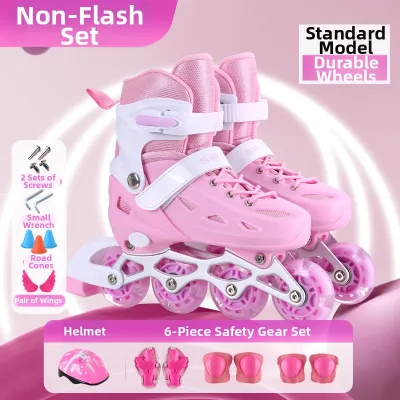
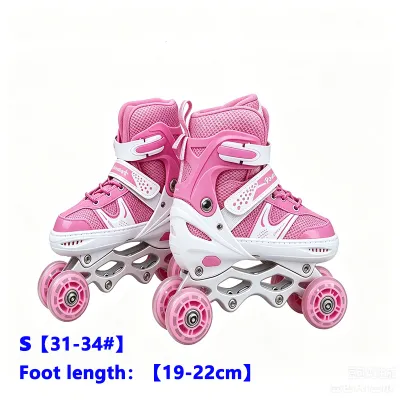
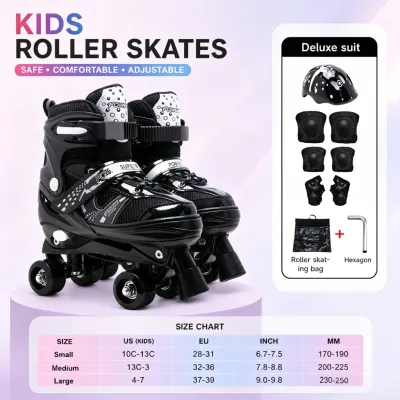
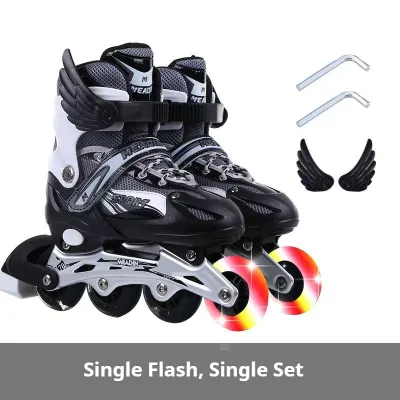
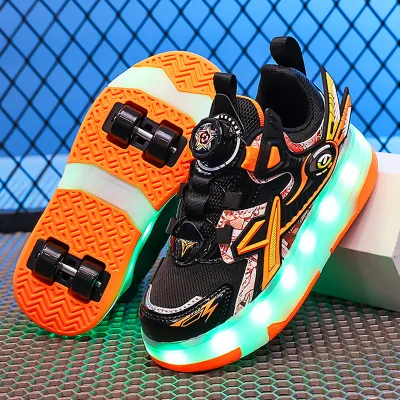
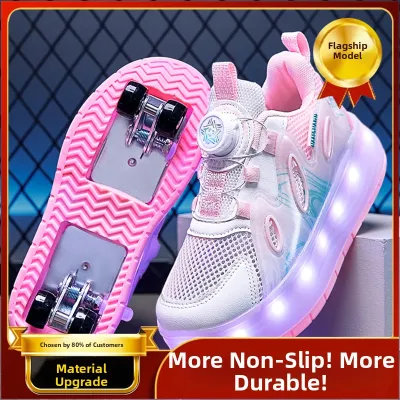
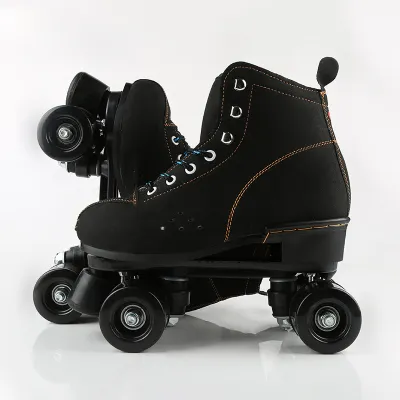
Prices are valid at publication and may change. Please refer to the product page for the latest price.
If your skates are too loose, your feet will constantly slide forward and backward with every stride. This friction quickly leads to painful blisters, chafing, and raw skin, especially in hot and humid tropical climates where sweat increases friction inside the boot. Furthermore, loose boots fail to support the ankles, increasing the risk of ankle rolls, foot fatigue, and loss of balance as your muscles work overtime to keep the skate stable.
Conversely, skates that are too tight can restrict blood circulation, causing cramping, numbness, and severe pain in the arches or toes. The correct fit is often described as a firm, supportive hug around the entire foot. Your heel should remain locked in the back of the boot when you bend your knees, and your toes should just brush the front of the liner without being bent or cramped.
How to Measure Your Feet Accurately at Home
To find your true skate size, you must measure your feet using physical dimensions rather than guessing based on your casual footwear. You will need a few simple tools: a blank sheet of paper larger than your foot, a pen or pencil, a ruler or measuring tape, and a flat wall. It is highly recommended to perform this measurement on a hard, level floor rather than on carpet to ensure accuracy.

To achieve highly accurate results, measure your feet in the afternoon or evening. Your feet naturally swell throughout the day due to heat, humidity, and activity, and measuring them at their largest prevents you from buying skates that feel too tight during long afternoon skate sessions. Additionally, put on the exact socks you plan to wear while skating, as sock thickness significantly influences how the boot fits.
To begin, place the sheet of paper flat on the floor, flush against the wall. Stand up straight with your heel resting lightly against the wall and your full weight distributed evenly on both feet. Have a friend trace the outline of your foot, keeping the pen completely vertical to avoid adding or subtracting millimeters from your actual foot shape. If you are measuring alone, carefully mark the furthest point of your longest toe on the paper.
Once you have marked the outline, use your ruler to measure the distance from the edge of the paper that was against the wall to the tip of your longest toe. This measurement gives you your foot length, which is typically recorded in centimeters or millimeters. Repeat this process for both feet, as it is very common for one foot to be slightly larger than the other. Always use the measurement of your larger foot when choosing your roller skate set.
Understanding Skate Sizing: Adjustable vs. Fixed Options
When browsing for a roller skate set, you will encounter two primary boot designs: adjustable skates and fixed-size skates. These options cater to different stages of physical growth, skill levels, and usage patterns. Understanding how these mechanisms function helps you decide whether to prioritize long-term value or specialized performance.
Adjustable skates are designed to adapt to changing foot sizes over time, making them a common choice for younger skaters. Fixed-size skates, on the other hand, feature a solid, unyielding structure tailored to a single specific size, offering maximum stability and power transfer for adults and experienced skaters.
Adjustable Roller Skates for Growing Kids
Adjustable roller skates feature an internal sliding mechanism that allows the boot to expand or contract across several sizes. This adjustment is typically controlled by a simple push-button, a locking lever, or an internal screw system. When activated, the toe cap of the boot slides forward, extending the length of the sole and the frame to accommodate growing feet without requiring a brand-new purchase every few months.
These skates usually cover a range of three to four standard sizes within a single pair, such as small, medium, or large brackets. This design offers practical cost-efficiency for parents, ensuring that a single roller skate set can last through multiple growth spurts. It is a practical solution for casual recreational skating and beginners who are still developing their balance and basic skills.
However, adjustable skates do have structural trade-offs that are important to consider. As the boot is extended to its maximum length, the center of gravity and weight distribution over the frame can shift, which may slightly affect stability. Additionally, the multi-piece construction of adjustable boots inherently offers less rigid ankle support and structural integrity compared to a solid, single-piece fixed boot, making them less suitable for high-impact tricks or advanced maneuvers.
Fixed-Size Skates for Adults and Advanced Skaters
Fixed-size roller skates are constructed with a single, solid boot shell and a non-moving frame. This rigid design ensures efficient energy transfer, meaning every bit of force from your leg muscles is directed straight into your stride, resulting in better speed, control, and responsiveness. For adults whose feet have stopped growing, and for skaters of any age pursuing advanced disciplines like artistic skating, derby, or street skating, fixed-size boots are the standard choice.
Because these boots do not have moving parts, they provide enhanced lateral ankle support and a more uniform wrap around the foot. This structural stability is essential for preventing injuries when executing sharp turns, jumps, or sudden stops. Adults should avoid adjustable models, as the mechanisms are generally not engineered to support adult weight distribution or the higher forces generated by mature skaters.
When selecting fixed-size skates, you must pay close attention to the liner materials and shell construction. Many high-quality fixed-size skates feature padded liners that conform to your foot shape over time, and some advanced models even offer heat-moldable liners for a customized fit. If you fall between sizes or have particularly wide feet, you will need to look for brands that offer half-sizes or specific wide-fit boot shapes to avoid painful pressure points.
Step-by-Step Guide to Selecting Your Skate Size
Once you have your exact foot measurements in millimeters, you can begin the process of selecting your size. Never assume that your roller skate size will match your standard sneaker size, as skate manufacturers use different lasting processes and sizing standards. A size 38 in one brand of skates may fit completely differently from a size 38 in another brand or in your everyday shoes.
Start by locating the official size chart provided by the manufacturer of the roller skate set you are interested in. Locate your foot measurement in millimeters or centimeters on the chart, and identify the corresponding skate size. If your measurement falls directly between two sizes, consult the manufacturer’s specific recommendations. Some brands advise sizing up for a more comfortable recreational fit, while others recommend sizing down for a tight, performance-oriented fit.
Next, consider your foot width and instep height. Standard size charts primarily focus on length, but the volume of your foot plays a major role in how a boot feels. If you have wide feet or a high arch, a stiff plastic hard-boot skate might pinch the sides of your feet or press uncomfortably on the top of your instep. In such cases, look for soft-boot designs that offer more flexibility, or consider sizing up slightly if the brand runs narrow.
Before finalizing your purchase on an online marketplace, spend some time reading customer reviews and user feedback. Look for specific patterns in the comments regarding fit, such as multiple buyers noting that the model “runs small” or “has a narrow toe box.” This real-world feedback is incredibly valuable for adjusting your choice, especially when transitioning between different skate styles or brands.
How to Verify the Fit When Your Skates Arrive
When your new roller skate set arrives, it is crucial to verify the fit indoors before taking them outside to the street or park. Once skates show signs of outdoor wear, such as scratched frames or dirty wheels, they are typically no longer eligible for return or exchange. Find a clean, carpeted area or a soft indoor surface to try them on.
Put on your skating socks, slip your feet into the boots, and lace them up completely, securing all buckles and straps. Once laced, stand up and assume a proper skating stance with your knees slightly bent and your weight centered over your feet. In this position, your toes should gently touch or sit just short of the front of the boot, and your heel should feel firmly locked into the back pocket without lifting when you walk or mimic a skating stride.
Perform the “finger test” to check for excess space. Try to slide a finger down behind your heel while your skates are fully laced; if you can easily fit a finger or two behind your heel, the skates are likely too large, which will cause your foot to slide and blister. Next, pay attention to any immediate pressure points, pinching along the sides of your feet, or tingling in your toes, which indicate that the boot is too narrow or small.
If you experience severe pain, numbness, or if your heel lifts significantly when you bend your knees, stop and initiate a return or exchange. Do not attempt to “break in” a skate that is fundamentally the wrong size or shape for your foot. A proper break-in period can soften a snug liner, but it cannot stretch a plastic shell or make a short boot longer, so starting with the correct base size is essential for a safe and enjoyable skating experience.
Frequently Asked Questions (FAQ)
Should I buy roller skates one size bigger than my regular shoes?
Generally, you should not buy roller skates one size bigger than your regular shoes as a default rule. Street shoes are often worn with extra wiggle room, but roller skates require a precise, snug fit to prevent your foot from sliding, which causes painful friction blisters and reduces your control over the wheels. Buying a size too large can compromise ankle support and make balancing much more difficult. Only size up if the manufacturer’s specific size chart explicitly recommends doing so, or if you have exceptionally wide feet and are purchasing a model known to run narrow.
How do I know if my roller skates are too narrow?
You can tell your roller skates are too narrow if you experience sharp pain along the outer edges of your feet, cramping in your arches, or numbness and tingling in your toes after wearing them for a few minutes indoors. While some soft-boot skates will stretch slightly as they break in, stiff plastic hard-boot skates will not expand. If the narrowness causes your toes to overlap or forces your foot into an unnatural, painful shape, you should look for a different model designed with a wider toe box rather than hoping the boot will stretch over time.
Community discussion
Share your experience or ask a question. Comments are reviewed before publication.