
To find the correct size of a life jacket for kids, you must measure your child’s exact body weight and chest circumference. These two metrics, rather than age or clothing size, dictate the flotation capacity and the physical fit of the personal flotation device (PFD). In the tropical waters of the Philippines—whether you are visiting the beaches of Batangas, island hopping in El Nido, or enjoying a resort pool in Laguna—ensuring your child’s safety requires precise gear selection.
However, keep in mind that safety equipment is never a substitute for active adult supervision, water safety training, or sober parental judgment. If a child does not know how to swim, or if local water conditions are rough, do not rely solely on a life jacket. Establish clear limits, monitor the weather closely, and stop water activities immediately if you observe strong currents, high winds, or signs of fatigue in your child.
Why Proper Sizing is Critical for Water Safety
A correctly fitted life jacket is non-negotiable for children because their physical proportions and buoyancy needs differ significantly from those of adults. Children have a higher center of gravity and relatively larger, heavier heads in proportion to their bodies. Consequently, standard flotation designs will not perform correctly on a child unless the jacket is specifically engineered and sized for their unique physical build.
Products mentioned in this guide
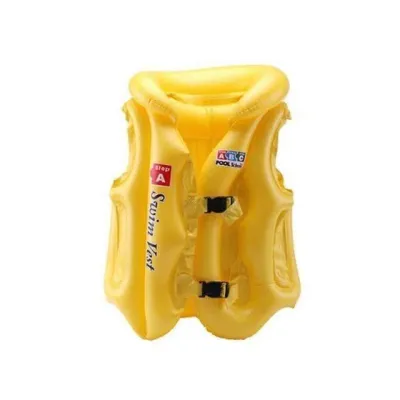
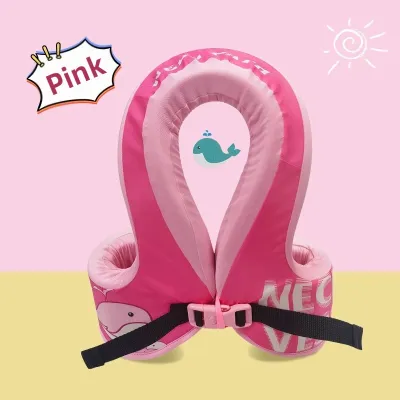
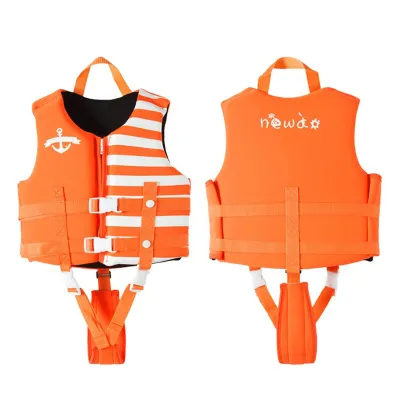
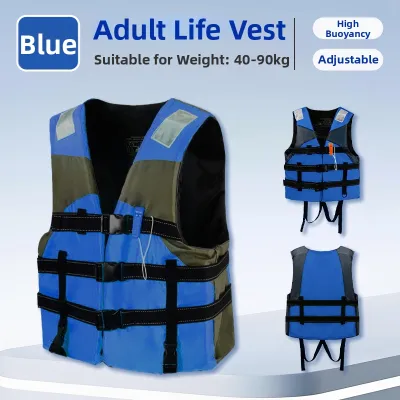
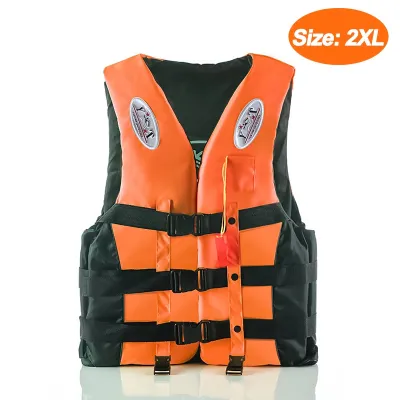
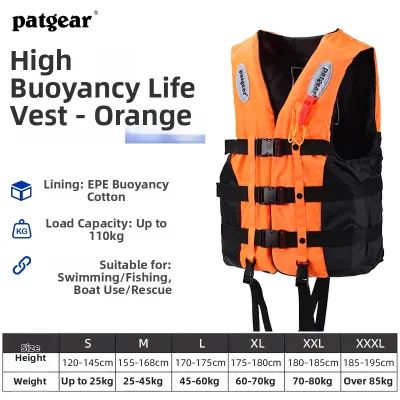
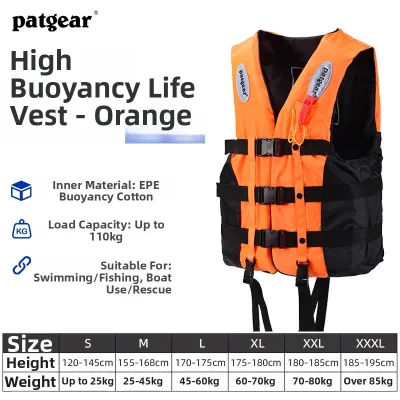
Prices are valid at publication and may change. Please refer to the product page for the latest price.
An ill-fitting life jacket poses severe, immediate risks in the water. If the jacket is too large, it can easily slip off over the child’s head when they enter the water, leaving them without any flotation support. Alternatively, a loose jacket can ride up high against their face, blocking their vision, covering their nose and mouth, and restricting their breathing. Conversely, a jacket that is too small will not provide enough buoyancy to keep the child’s mouth and nose safely above the water line, especially in choppy waves.
Specialized kids’ life jackets are designed with critical safety features that address these anatomical differences. Many models include a large, padded head support collar designed to keep an unconscious child floating face-up in the water. They also feature dedicated crotch straps that run between the legs to prevent the vest from sliding upward. Understanding these design elements highlights why guessing a child’s size or choosing a jacket based on convenience can have catastrophic consequences.
What You Need Before Measuring
Taking accurate measurements requires preparation and the right tools. To begin, you will need a reliable digital bathroom scale to determine your child’s exact body weight. You will also need a flexible, soft measuring tape, such as a tailor’s tape, which can easily wrap around the curves of your child’s torso without causing discomfort. Avoid using stiff metal construction tapes, as they cannot provide the precise, snug measurements required for safety gear.

Before you begin measuring, have your child dress in lightweight, form-fitting clothing. Ideally, they should wear the exact swimwear, rash guard, or UV-protection shirt they plan to wear under the life jacket. Measuring your child in bulky everyday clothing, heavy cotton shirts, or jackets will add unnecessary bulk to the measurements. This distortion can lead you to purchase a life jacket that is too large and loose once they are in their actual swimwear.
Finally, keep a pen and paper or a digital notes app nearby to record the numbers immediately. It is easy to forget the exact figures or confuse the weight and chest measurements when browsing different brand charts. Having these numbers written down in both metric (kilograms and centimeters) and imperial (pounds and inches) units will make cross-referencing different manufacturer size charts much easier.
Step-by-Step Guide to Measuring Your Child
Relying on age-based sizing or clothing sizes is one of the most common and dangerous mistakes parents make when selecting a life jacket for kids. Children of the same age can vary drastically in height, weight, and chest width. To ensure the jacket functions as intended, you must collect both the weight and chest measurements and apply them systematically to the manufacturer’s specific sizing guidelines.
The following steps outline how to obtain these two critical metrics accurately. By following this sequence, you can eliminate guesswork and select a life jacket that provides the exact buoyancy and secure fit your child needs to stay safe in the water.
Step 1: Weigh Your Child Accurately
To get an accurate body weight, place your digital scale on a flat, hard surface like a tiled floor rather than a rug or carpet. Have your child stand completely still in the center of the scale with both feet planted firmly. Wait for the digital readout to stabilize before recording the weight.
Record the weight exactly as it appears on the scale, without rounding up or down to the nearest whole number. Weight is the primary safety metric used by manufacturers to determine the flotation capacity of a life jacket. The foam inside the jacket is engineered to lift a specific range of mass. If your child’s actual weight is outside the manufacturer’s stated range printed on the label, the jacket will not perform reliably in an emergency.
Step 2: Measure the Chest Circumference
To measure the chest circumference, have your child stand up straight with their arms slightly raised to the sides. Wrap the flexible measuring tape under their arms, across their shoulder blades, and over the widest part of their chest. Once the tape is in position, ask your child to lower their arms to a natural position.
Ensure the measuring tape remains level and parallel to the ground all the way around their body. The tape should be snug against the skin or rash guard, but not tight enough to compress their chest or restrict their breathing. Ask your child to take a deep breath in and out to ensure the measurement accounts for normal chest expansion during active play. Record this measurement in both inches and centimeters.
Step 3: Check the Manufacturer's Size Chart
Once you have recorded both the weight and chest measurements, locate the specific size chart for the life jacket you intend to purchase. Sizing is not universal across brands; a “Small” from one manufacturer may correspond to a “Medium” from another. You can typically find these charts on the product’s packaging, hangtags, or the manufacturer’s official website.
Cross-reference both of your child’s measurements with the chart. If your child’s weight and chest measurements point to two different sizes, or if their measurements fall directly on the boundary between two sizes, prioritize safety and fit. In these cases, it is highly recommended to try on both sizes or consult the manufacturer’s customer service for specific guidance. In the Philippines, high-quality, certified life jackets for kids typically range from ₱1,200 to ₱4,500 depending on the brand and safety certifications. Never simply choose the larger size under the assumption that they will grow into it, as an oversized jacket can fail in the water.
How to Test the Fit Before Hitting the Water
Securing the correct measurements is only the first step; you must physically test the life jacket on your child before allowing them near the water. This hands-on evaluation ensures the straps, buckles, and overall design align perfectly with your child’s unique body shape.
Follow this systematic process to verify the fit of the life jacket in a dry environment before testing it in calm water:
- Preparation and Adjustment: Have your child put on the life jacket. Zip up the front closure completely, fasten all plastic buckles, and secure the crotch strap if the jacket has one. Gently pull the adjustment straps starting from the waist and moving upward to the shoulders. The straps should be snug enough that you cannot easily slip more than two fingers under them, but loose enough that your child can breathe comfortably without restriction.
- The Lift Test: Stand behind your child and firmly grasp the shoulder straps of the life jacket. Pull straight upward with moderate force, simulating the upward lift of water. Observe how the jacket behaves on your child's body. If the jacket rides up past their chin, ears, or nose, it is either adjusted too loosely or is simply too large. The jacket should stay securely in place, with the collar resting comfortably below the ears.
- Mobility and Comfort Check: Ask your child to perform a series of simple movements while wearing the adjusted jacket. Have them walk around, bend over to touch their toes, sit down on a chair, and swing their arms in a circular motion. Watch for any signs of chafing around the neck, chin, or underarms. If the jacket blocks their vision when they turn their head or pinches their skin, it is not a suitable fit.
- Shallow Water Test: If the jacket passes the dry test, conduct a practical test in a highly controlled, shallow-water environment, such as a swimming pool or a very calm, shallow beach area. Under close, direct adult supervision, let your child gently tilt back and float on their back. Observe if the jacket naturally supports their head, keeps their chin and mouth well clear of the water, and allows them to maintain a stable, relaxed floating posture without rolling forward.
Common Mistakes to Avoid When Buying Kids' Life Jackets
When shopping for a life jacket for kids, parents often fall into common traps that can compromise their child’s safety in the water. Being aware of these pitfalls allows you to make an informed, safety-first purchase.
Avoid the following mistakes when selecting and using a child’s life jacket:
- Buying a Size to "Grow Into": Purchasing a larger life jacket so that it lasts for multiple seasons is incredibly dangerous. An oversized jacket will fail the lift test, ride up over the child's face, or allow them to slip out entirely when they plunge into the water. Always buy a jacket that fits your child perfectly right now.
- Ignoring the Printed Label: Never use a life jacket if your child's weight or chest size falls outside the printed specifications on the manufacturer's label. Even if the jacket looks like it fits visually, the internal foam volume may not provide sufficient buoyancy to keep their head above water if they exceed the weight limit.
- Using Adult or Unapproved Alternatives: Adult life jackets, water wings, pool noodles, and inflatable swim rings are not substitutes for certified kids' life jackets. Adult jackets are structurally too large, while inflatable toys are prone to popping, sliding off, or deflating, offering zero guaranteed flotation security.
- Skipping the Crotch Strap: The crotch strap is a vital safety feature on infant and child life jackets. It prevents the jacket from riding up over the child's head when they are suspended in water. Failing to thread or buckle this strap renders the jacket significantly less effective and highly unsafe.
Frequently Asked Questions (FAQ)
Are inflatable life jackets safe for all children?
Inflatable life jackets are generally not recommended or approved for young children, non-swimmers, or toddlers. These devices rely on manual inflation cords or automatic carbon dioxide (CO2) cartridges to inflate upon water contact, which introduces mechanical failure risks and requires a level of swimming competence to manage. For young children and beginners, inherently buoyant life jackets filled with solid foam are the standard safety recommendation because they provide immediate, passive flotation without any user intervention. Always check local maritime safety regulations and the manufacturer’s label, as many inflatable models carry strict minimum age and weight limits.
How often should I re-measure my child for a new life jacket?
You should re-measure your child and check the fit of their life jacket at the beginning of every water season, or after any noticeable growth spurt. Children grow rapidly, and a jacket that fit perfectly at the start of the dry season may become too small or tight by the end of the year. Regularly comparing your child’s current weight and chest measurements against the specifications printed on the jacket’s label is essential to ensure continuous, reliable protection during all water activities.
Community discussion
Share your experience or ask a question. Comments are reviewed before publication.