
Finding the right roller skate size for your daughter is essential for her safety, comfort, and confidence on wheels. Unlike standard street shoes, which feature flexible materials that stretch, roller skates have rigid boots designed to support the ankles and protect the feet. If the skates are too small, they can cause painful cramping and blisters; if they are too large, her feet will slide around, leading to instability and an increased risk of falls.
In warm and humid climates like the Philippines, measuring accurately is even more critical. Heat naturally causes feet to swell slightly during physical activity, meaning a skate that feels snug indoors might become painfully tight after twenty minutes of skating outdoors. By taking precise centimeter measurements of both feet and comparing them to manufacturer-specific size charts, you can select a pair of skates that fits perfectly today while still allowing for healthy, natural growth.
What You Need Before Measuring
To get an accurate measurement of your daughter’s feet, you must set up a proper testing environment and gather the right tools. Measuring her feet on a soft, carpeted surface or while she is sitting down will lead to inaccurate results, as the foot naturally expands when bearing weight. Find a flat, uncarpeted area of your home—such as tile, hardwood, or smooth concrete—directly adjacent to a flat, vertical wall.
Products mentioned in this guide
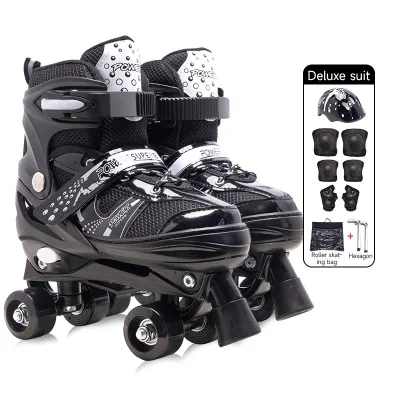
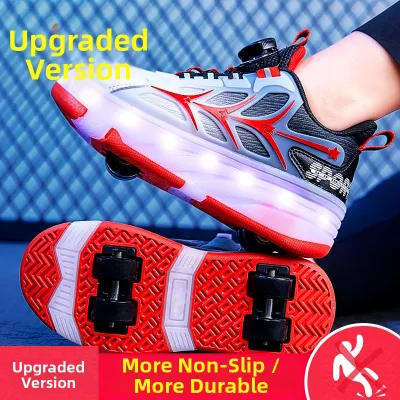
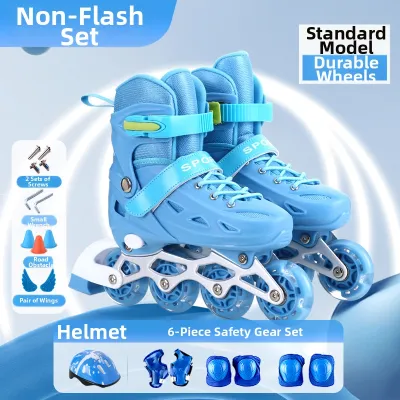
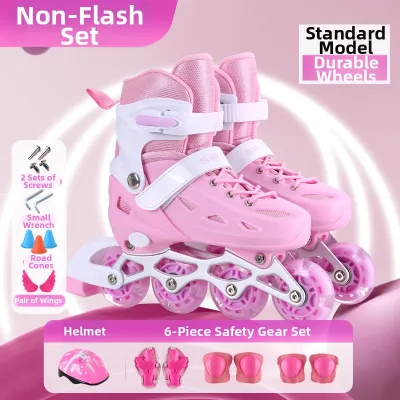
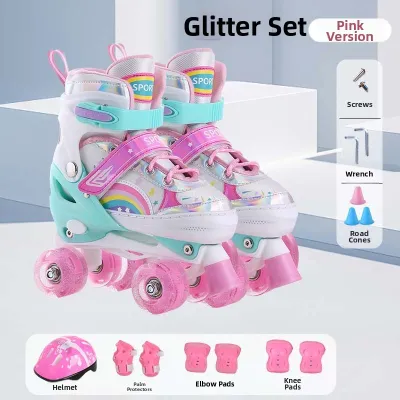
Prices are valid at publication and may change. Please refer to the product page for the latest price.
You will need a few basic household items to complete the measurement process. Gather a large sheet of plain white paper, a sharp pencil or pen, and a reliable ruler or measuring tape that displays centimeters. Centimeters are the standard unit of measurement used by most major roller skate manufacturers, and using them directly eliminates the risk of mathematical errors during unit conversion.
Additionally, make sure your daughter is wearing the exact type of socks she plans to use while roller skating. In tropical climates, it is tempting to measure feet barefoot, but skating requires a slightly thicker, moisture-wicking athletic sock to prevent friction and absorb sweat. Measuring her feet with these socks on ensures that the skates will accommodate the extra layer without pinching her toes once she is out on the pavement.
Finaly, ensure your daughter is standing completely upright with her full body weight distributed evenly across both feet. When a child sits or leans, her feet do not spread to their maximum length and width. Having her stand straight, looking forward, allows her feet to expand naturally to the exact size they will be when she is actively balancing and rolling on her skates.
Step-by-Step Guide to Measuring Foot Length and Width
Once you have prepared the space and gathered your tools, you can begin the physical tracing process. Start by taping the sheet of paper securely to the hard floor, ensuring the back edge of the paper is aligned perfectly flush against the flat wall. Have your daughter step onto the paper, placing her heel lightly against the wall. Her heel should make contact with the wall without being pressed so hard that it distorts her posture.

With your daughter standing still and upright, hold the pen or pencil perfectly vertical, at a strict 90-degree angle to the floor. If you angle the pen inward under the curve of her foot, you will record a measurement that is several millimeters too small. Carefully trace the entire outline of her foot, keeping the pen tip in constant contact with her skin and the paper.
After completing the outline, use your ruler to measure the distance from the very back of the heel to the tip of her longest toe. Keep in mind that the longest toe is not always the big toe; for many children, the second or third toe extends the furthest. Mark this peak point clearly on the paper and draw a straight line down to the heel line to read the exact length in centimeters.
Repeat this entire tracing and measuring process for her other foot. It is completely normal for one foot to be slightly larger than the other due to natural asymmetry. Always write down both measurements and use the larger of the two numbers when selecting her skate size. Sizing for the smaller foot will result in painful pinching and restricted blood flow in the larger foot.
To ensure a comprehensive fit, you should also measure the width of her feet. Locate the widest part of the foot outline, which is typically the ball of the foot just below the toes. Measure this distance horizontally in centimeters. Knowing her foot width is highly beneficial, as some skate brands are designed with narrow, tapered toe boxes, while others offer a wider, more accommodating shape that prevents painful side-to-side squeezing.
How to Translate Measurements into Roller Skate Sizes
With your daughter’s precise centimeter measurements in hand, you are ready to find her corresponding skate size. The most important rule of skate shopping is to never rely on her current street shoe size or age-based sizing charts. Street shoes are often sized inconsistently across fashion brands, and they do not require the precise, secure fit that a heavy, rolling sports boot demands. Furthermore, children grow at highly individualized rates, making age-based estimates highly unreliable.
Instead, locate the official size chart provided by the specific manufacturer of the roller skates you are considering. Every brand utilizes its own unique manufacturing molds, meaning a size 3 in one brand may have a completely different centimeter length than a size 3 in another. Look for the column labeled “Mondopoint,” “Insole Length,” or simply “Centimeters” on the brand’s chart, and match your daughter’s larger foot measurement directly to that value.
It is also essential to consider how different skate styles and boot materials influence the overall fit. Hard-shell plastic skates, which are common for beginners because they offer excellent ankle support, have rigid outer structures that will not stretch or break in over time. Soft-boot skates, made of synthetic leather or reinforced mesh, offer a bit more flexibility and may conform slightly to the shape of her foot after several hours of use. If her measurement falls directly between two sizes on a hard-shell skate chart, it is generally safer to choose the larger size to avoid painful pressure points.
Finally, always check the manufacturer’s specific guidelines regarding growth allowance. Some brands build a small amount of extra space into their sizing charts to accommodate growth, while others expect you to buy the exact size of the foot. Avoid the temptation to add an arbitrary centimeter to her measurement “just in case,” as this extra space can compromise her safety and stability on the wheels.
Verifying the Fit: Signs of a Properly Sized Roller Skate
Once the new roller skates arrive, you must thoroughly verify the fit before your daughter takes her first roll outdoors. Have her put on her skating socks, lace up the skates, and secure all buckles and straps firmly. The first thing to check is her toe position. While she is standing straight, her toes should gently brush the front of the toe box. They must lie completely flat; if her toes are curled, cramped, or pressed hard against the front, the skates are too small and must be exchanged.
Next, evaluate the heel lock, which is crucial for maintaining balance and preventing painful friction blisters. Have your daughter lift one foot and gently flex her ankle, or hold her skate while she tries to lift her heel inside the boot. Her heel should remain locked securely at the back of the skate with minimal upward movement. If her heel slips up and down easily, the boot is too large, which will cause her feet to slide forward, leading to toe pain and a severe loss of steering control.
You must also check the width comfort of the skates. Ask her if she feels any tight, pinching sensations along the sides of her feet, particularly at the pinky toe or the ball of the foot. Conversely, check for excessive side-to-side movement. If her foot sloshes around horizontally inside the boot when she wiggles her feet, the skates are too wide, which will prevent her from transferring her weight effectively to edge and turn.
To get the most accurate assessment of the fit, have her stand in a proper skating stance rather than standing completely upright. In a skating stance, her knees should be slightly bent, and her shoulders should lean slightly forward over her toes. This posture naturally pushes her heel back into the heel pocket of the boot, drawing her toes slightly away from the very front. If the skates feel comfortable and secure in this active position, you have found the correct size.
Adjustability and Growth: Making the Skates Last Longer
Because children’s feet grow rapidly, many parents worry about having to replace expensive sports equipment every few months. Fortunately, adjustable-size roller skates offer an excellent solution to this problem. These skates feature a built-in mechanical adjustment system—usually operated by a simple push-button or a lever near the heel—that allows the toe cap of the boot to slide forward or backward. This design enables a single pair of skates to expand across three to four full sizes, making them a highly practical investment. Quality adjustable models typically range from ₱1,500 to ₱3,500 in local outdoor specialty shops and reputable online marketplaces.
While adjustable skates are highly convenient, you must never compromise safety by purchasing a pair that is too large with the hope that she will “grow into them.” Wearing oversized skates presents significant physical risks. Without a snug fit, the rigid ankle cuffs cannot provide the structural support needed to keep her ankles straight. This lack of support leads to inward pronation, severe friction blisters, and a dramatic reduction in stability, making it incredibly difficult for her to learn proper skating techniques and increasing her risk of falling.
To ensure her safety, learn to recognize the physical signs that indicate it is time to adjust or replace her skates. Rather than relying on a strict calendar timeline, pay close attention to her physical feedback. If she complains of foot fatigue, cramping, or pain in her toes after a short skating session, or if you notice red pressure marks on her feet after she takes the skates off, the boots have become too small. Regularly checking the fit ensures she can continue to develop her skating skills safely, comfortably, and with absolute confidence.
Frequently Asked Questions (FAQ)
Should I buy roller skates a size bigger for growth?
No, buying roller skates a size larger than necessary is a common mistake that can compromise your daughter’s safety and comfort. Excess empty space inside the boot prevents the ankle cuff from providing proper support, which can lead to ankle strain, severe friction blisters, and a loss of balance. Instead of buying oversized fixed-size skates, invest in high-quality adjustable roller skates that can be expanded safely as her feet grow, or strictly follow the manufacturer’s specific growth allowance recommendations.
Do I need to measure both feet?
Yes, you must always measure both feet because it is highly common for a child’s feet to differ slightly in length or width. Always use the measurement of the larger foot when selecting her roller skate size to prevent painful pinching and restricted circulation. If the size difference is noticeable, you can easily accommodate the smaller foot by adding a supportive insole or having her wear a slightly thicker sock on that foot to ensure a secure, balanced fit.
How often should I re-measure my child's feet?
Children’s feet grow rapidly and unpredictably, so you should check the fit of her roller skates every two to three months. Additionally, re-measure her feet immediately if she complains of toe pain, cramping, or sudden instability while skating. Regular checks ensure that you can adjust her expandable skates or replace outgrown boots before they cause physical discomfort, blisters, or safety hazards on the pavement.
Community discussion
Share your experience or ask a question. Comments are reviewed before publication.