
To find your correct golf glove size, you must measure two primary dimensions of your lead hand: the circumference of your palm just below the knuckles (excluding the thumb) and the length from the base of your palm to the tip of your middle finger. These two measurements allow you to match your hand shape against manufacturer size charts, ensuring a snug, second-skin fit that prevents the club from slipping during your swing.
A properly fitted golf glove acts as a critical friction interface between your skin and the club grip. When your glove fits correctly, you can maintain a secure hold on the club with minimal grip pressure, which promotes smoother wrist release and better tempo. This guide walks you through the exact measurement process, how to interpret size charts, and what to look for when verifying the fit.
Why Exact Sizing Matters for Your Golf Grip
A golf glove is not just a fashion accessory; it is a vital piece of equipment that directly impacts your swing mechanics. The primary purpose of the glove is to increase friction between your lead hand and the club grip. When the glove fits snugly, it eliminates any micro-slippage that can occur during the high-speed transition from the backswing to the downswing. This secure connection allows you to maintain control of the club without having to squeeze the handle excessively.
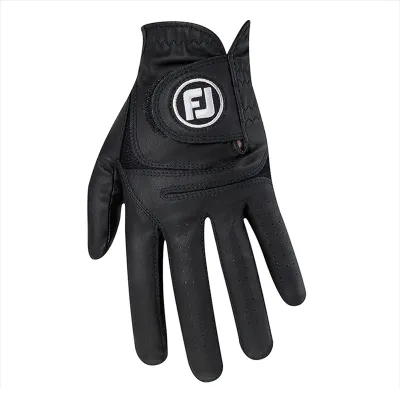
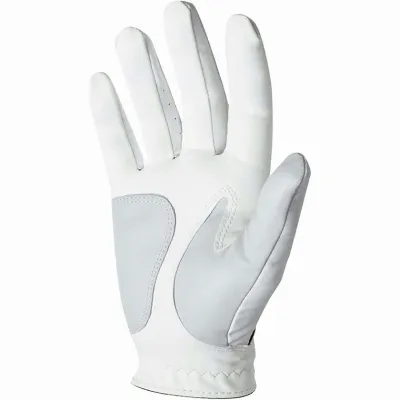
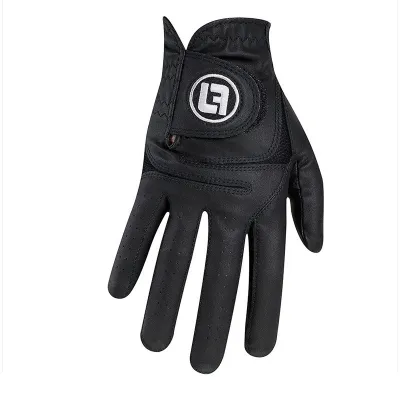
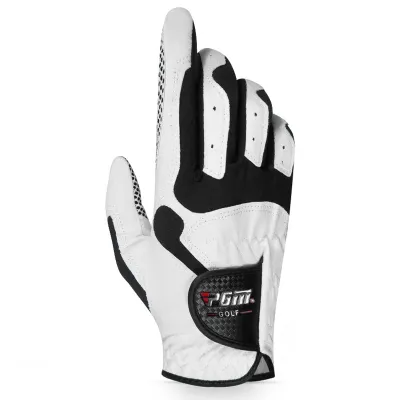
Products mentioned in this guide
![[Korea] Malbon Golf Gloves Mens Genuine Leather Wear-Resistant Sports Comfortable Fashion Golf Gloves Anti-Slip Breathable#M01](https://img.lazcdn.com/g/p/29cadc146e37a98a1fd7b70a70489f34.jpg_webp_400x400q80.jpg_.webp)
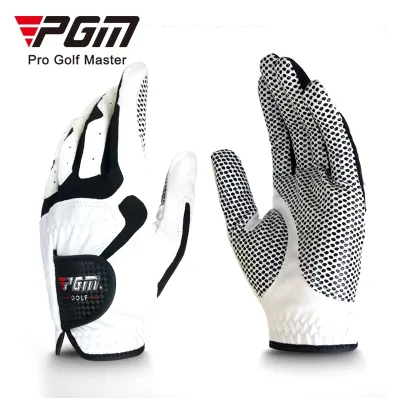
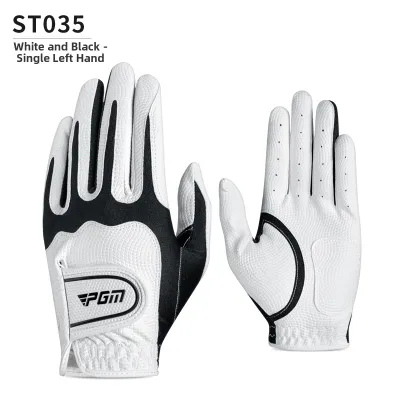
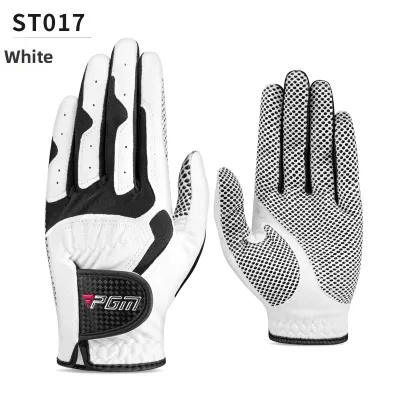
Prices are valid at publication and may change. Please refer to the product page for the latest price.
Maintaining light grip pressure is essential for a fluid, powerful swing. If your glove is too large, the excess material will bunch up in your palm and fingers, creating air pockets and reducing your connection to the club. To compensate for this loose feeling, you will instinctively tighten your grip. This extra tension travels up your forearms and into your shoulders, restricting your natural rotation and disrupting your swing tempo. Over time, the constant friction from loose material rubbing against your skin will also cause painful blisters.
Conversely, an undersized glove can be just as detrimental to your game. A glove that is too tight restricts blood flow to your fingers, leading to hand fatigue, numbness, and a loss of tactile feedback during a long round. It also limits your hand’s natural range of motion, making it difficult to close your fingers comfortably around the grip. Furthermore, the excessive tension placed on the seams of an undersized glove will cause the stitching to rip prematurely, especially when subjected to the high-torque forces of a full driver swing.
Tools Needed for Accurate Hand Measurement
Obtaining precise hand measurements does not require specialized equipment. You can easily gather the necessary data at home using a few simple, everyday items.

The most convenient tool for this task is a flexible fabric measuring tape, such as those used for tailoring or sewing. This type of tape easily contours to the curves of your hand, providing an immediate and accurate reading. Ensure the tape is clean and has not stretched out over years of use, as even a small discrepancy can lead to purchasing the wrong glove size.
If you do not have a flexible measuring tape, you can use a non-stretchable piece of string, a strip of paper, or a long ribbon. You will wrap this material around your hand, mark the intersection point clearly with a pen, and then lay the material flat against a standard rigid ruler to read the measurement. Avoid using elastic bands or stretchy cords, as they will stretch during the measurement process and yield inaccurate, smaller-than-actual readings.
Keep a notepad or a digital device nearby to record your measurements immediately. It is highly recommended to write down your measurements in both inches and centimeters. Different golf brands utilize different units on their official sizing charts, and having both numbers ready will simplify the comparison process when shopping across various brands.
Step-by-Step Hand Measurement Guide
Taking accurate hand measurements requires proper hand positioning and consistency to avoid distorted readings.
When measuring, keep your hand completely flat with your fingers extended naturally and spread slightly apart. Do not clench your fist, curl your fingers, or overstretch your hand, as these actions alter the natural width and length of your palm. Keep your hand relaxed but fully open, resting flat on a table if necessary to maintain stability.
When wrapping the measuring tape or string around your hand, apply just enough tension so that the tool lies flat against your skin without pinching or digging into your flesh. The tape should simulate the snug, secure feeling of a well-fitting glove. If the tape is sliding around loosely, your measurement will be too large; if it is compressing your skin, the resulting glove will likely be too tight.
Always measure the hand that will actually wear the glove. For the vast majority of golfers, this is the lead hand—the left hand for right-handed players, and the right hand for left-handed players. Because human hands are rarely perfectly symmetrical, measuring your dominant hand when you need a glove for your lead hand can lead to sizing errors. If you plan to wear gloves on both hands, measure each hand individually and select sizes accordingly.
Measuring Hand Circumference
Hand circumference is the primary metric used by almost all golf glove manufacturers to determine size.
To find this measurement, locate the widest part of your palm, which lies just below your knuckles. Start on the outer edge of your hand, just below the pinky joint, and wrap the tape horizontally across your palm to the area between your index finger and thumb. Crucially, do not include your thumb in this measurement, as the glove’s thumb pocket is designed separately and including it will result in a glove that is far too large.
Ensure the measuring tape wraps evenly around the back of your hand, forming a straight, level loop. It is helpful to look at your hand from both sides or use a mirror to verify that the tape has not twisted or slipped diagonally across your knuckles. Any misalignment will artificially inflate the measurement.
Once the tape is positioned correctly, note the point where the zero mark overlaps the remaining length. Record this measurement to the nearest millimeter or sixteenth of an inch. If your measurement falls between two markings, round up to the nearest standard fraction to ensure you do not purchase a glove that restricts your hand movement.
Measuring Hand Length
While circumference determines the width of the glove, hand length ensures that the fingers of the glove match your physical proportions.
To measure your hand length, place your hand flat on a table with your palm facing upward and your fingers pressed together. Locate the primary crease at the very base of your palm, where your hand meets your wrist. This crease serves as your starting point.
Align the zero end of your ruler or measuring tape with this wrist crease, and measure in a straight line up the center of your palm to the absolute tip of your middle finger. Make sure your middle finger is fully extended and not bent. Record this length carefully in both inches and centimeters.
Understanding your hand length is particularly important if you have long, slender fingers or short, wide hands. If your hand length suggests a larger size than your hand circumference, the length should generally take precedence. A glove with fingers that are too short will pull down on your fingertips, causing discomfort and restricting your grip, whereas a slightly loose palm can often be secured using the adjustable closure strap.
Translating Measurements to Glove Sizes
Once you have recorded your hand circumference and length, you must translate these numbers into standard golf glove sizes.
Most manufacturers categorize gloves into Men’s, Women’s, and Junior sizes, each designed around different anatomical proportions. Men’s gloves are cut wider through the palm and fingers, while Women’s gloves are narrower and have relatively longer finger pockets. Junior gloves are scaled down significantly to accommodate smaller hands and developing grip strength. It is important to shop within the correct category, as a men’s small will fit very differently than a women’s medium, even if their nominal measurements seem similar.
In addition to standard sizes, many brands offer a “Cadet” sizing option for men. Cadet gloves are specifically designed for players with wider palms and shorter fingers. If your hand circumference indicates a large size but your hand length points to a medium, a Cadet Large will likely provide a highly comfortable fit, preventing excess material at the fingertips while comfortably accommodating the width of your hand.
When your measurements fall exactly between two sizes, consider the material of the glove you plan to buy. Natural leather gloves will stretch slightly over time, so choosing the smaller size is often advisable to ensure a long-lasting, snug fit. Synthetic gloves, however, have very little stretch, meaning you should round up to the larger size to avoid excessive tightness and seam strain.
How to Verify the Fit When Trying On Gloves
Measuring your hand provides an excellent starting point, but you must always verify the fit physically when trying on a new golf glove.
Begin by checking the fingertips. When you pull the glove on completely, there should be no excess material dangling at the tips of your fingers. The leather or synthetic fabric should sit flush against your fingertips without pulling tightly against your nails. If you can pinch more than a couple of millimeters of empty space at the end of any finger, the glove is too large, which will compromise your feel and control over the club.
Next, examine the palm and the back of your hand. The material should lie flat and smooth across your skin when your hand is open. If you notice wrinkles, folds, or bunching when you close your hand into a fist, the glove is too loose. Conversely, if the fabric feels like it is stretching to its absolute limit, or if you feel a pulling sensation across the knuckles when gripping a club, the glove is too small.
Finally, look at the adjustable closure tab on the back of the glove. When you fasten the Velcro strap, it should ideally cover about 75 percent of the matching loop patch, leaving a small gap of exposed Velcro on the side. This positioning is intentional; it allows you to tighten the glove further as the material naturally stretches and wears over time. If the strap pulls all the way across and covers the entire patch immediately, the glove is already too large and will quickly become loose and unusable.
Accounting for Material Stretch and Weather Conditions
Environmental factors and material composition play a significant role in how a golf glove fits and performs over time, especially in tropical climates.
Premium golf gloves made from cabretta leather offer excellent feel and softness, but they are highly susceptible to moisture. In hot and humid conditions, such as those experienced on golf courses across the Philippines, sweat and atmospheric moisture will cause natural leather to stretch during play. As the leather dries after your round, it can shrink and become stiff or brittle. To manage this, many golfers choose a cabretta leather glove that feels exceptionally snug—almost tight—when brand new, knowing it will stretch to a comfortable fit within a few holes.
Synthetic gloves and those featuring mesh inserts offer excellent dimensional stability. These materials do not stretch significantly when wet, nor do they shrink or stiffen as they dry. If you frequently play in rainy weather or high humidity, synthetic gloves provide a highly consistent fit and superior durability. When buying synthetic gloves, select the size that fits comfortably right out of the packaging, as you cannot rely on the material stretching to accommodate a tight fit.
For players who sweat heavily or play in tropical downpours, keeping multiple gloves in your bag is a practical strategy. Rotating between two or three gloves during a round allows each glove to dry out naturally, preserving its shape, fit, and grip performance. Storing your gloves flat in their original packaging or using a glove hanger prevents them from wrinkling and shrinking into unusable shapes between rounds.
Frequently Asked Questions (FAQ)
Should I wear a golf glove on my lead hand or both hands?
The standard convention in golf is to wear a single glove on your lead hand, which is the hand positioned at the top of the club grip. For right-handed golfers, this is the left hand; for left-handed golfers, it is the right hand. The lead hand experiences the greatest amount of rotational force and friction during the swing, making the glove essential for preventing slippage and blisters. The trail hand, which sits lower on the grip, relies on direct skin-to-grip contact for enhanced feel and touch on delicate shots.
However, there are specific situations where wearing gloves on both hands is highly beneficial. In extremely hot, humid, or rainy conditions, wearing two gloves can help maintain a secure grip on the club when moisture makes handles slippery. Some players with sensitive skin or those prone to blisters also prefer the protection of two gloves. If you choose to wear two gloves, ensure you measure both hands, as your dominant hand is often slightly larger than your non-dominant hand.
How often should I replace my golf glove?
A golf glove’s lifespan depends heavily on your frequency of play, practice habits, and how well you care for the material. On average, a high-quality leather glove will last between 15 to 20 rounds of golf, or equivalent practice sessions, before it begins to lose its structural integrity. You can extend this lifespan by removing the glove between shots to let it air dry and storing it flat rather than crumpled up in your golf bag.
You should replace your glove immediately when you observe clear signs of wear. Visual indicators include thinning leather, especially in the heel of the palm or the thumb, fraying seams, or actual holes. Performance indicators are equally important; if the glove has stretched out to the point where it bunches up in your palm, or if the leather has lost its soft, tacky grip and feels slick or stiff, it can no longer provide the friction needed for a secure swing. Investing in a fresh glove ensures your hands remain comfortable and your grip stays secure.
Community discussion
Share your experience or ask a question. Comments are reviewed before publication.