
Pairing dive boots with open-heel fins is a critical step in building a comfortable, safe scuba diving kit. The connection between your foot, the boot, and the fin pocket determines how efficiently you move through the water and how well you can control your buoyancy. A secure fit prevents painful chafing, reduces muscle fatigue, and ensures your fins do not slip off mid-dive.
Achieving this balance requires understanding how boot thickness, sole design, and fin pocket dimensions interact. Because dive gear is an investment in your safety and comfort, taking the time to properly match these components pays off on every dive.
Why Boot and Fin Compatibility Matters for Dive Safety
Open-heel fins are designed with a spacious foot pocket and an adjustable strap system. Unlike full-foot fins, which are worn barefoot and rely on a snug rubber pocket, open-heel fins require dive boots to provide the necessary friction, thermal insulation, and structural support. The boot acts as a protective buffer between your skin and the rigid plastic or rubber of the fin.
Products mentioned in this guide
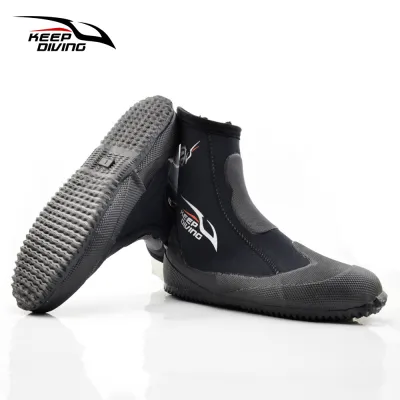
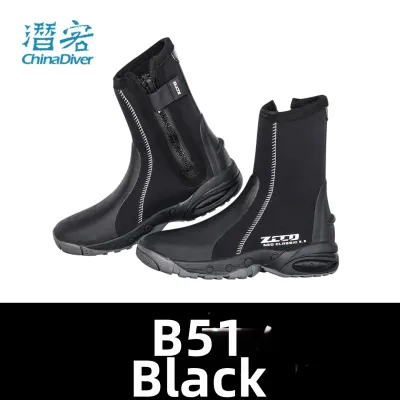
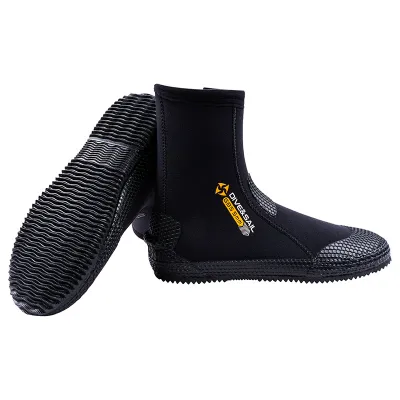
Prices are valid at publication and may change. Please refer to the product page for the latest price.
Without this buffer, the constant motion of kicking can quickly lead to painful blisters and raw skin. A poor match between your boot and fin compromises your control underwater. If the boot is too loose inside the pocket, your foot will slide sideways or back and forth with every kick cycle.
This movement wastes energy, reduces your propulsion, and can cause severe muscle cramping in your calves and arches as your feet strain to keep the fins in place. In strong currents, a loose fin can even slip off entirely, creating an immediate safety hazard.
The relationship between the neoprene thickness of your boot and the internal volume of the fin pocket is the foundation of a secure fit. Neoprene compresses under water pressure, but on the surface, it must sit snugly within the pocket without being crushed. Understanding how these two pieces of gear interface allows you to maintain proper circulation while ensuring your kicking effort translates directly into smooth forward movement.
How Match Boot Thickness to Fin Pocket Size
Finding the right combination begins with accurate measurements rather than relying solely on your everyday shoe size. Dive boot sizing can vary significantly between manufacturers, and the added thickness of neoprene alters how your foot sits inside a fin. To get a precise starting point, measure the length and width of your foot while wearing a thin sock, then compare these measurements to the specific sizing charts provided by the dive boot manufacturer.

When building your gear setup, the recommended purchasing sequence is to select your dive boots first, then try on open-heel fins while wearing those exact boots. If you already own a pair of fins, you must bring them along when shopping for new boots. Slipping your booted foot into the fin pocket is the only reliable way to verify the physical fit, as the shape of the pocket—whether wide, narrow, high-arched, or flat—varies across different fin models.
The thickness of your boot’s neoprene directly dictates how much space is left inside the fin pocket. For warm-water diving, such as exploring tropical reefs in the Philippines, a thin 3mm boot is often sufficient for thermal protection and fits easily into standard fin pockets.
However, if you transition to colder waters requiring a 5mm or 7mm boot, the increased volume will crowd the fin pocket. This extra material can make it difficult to insert your foot fully, requiring a larger fin size to maintain stability and comfort.
Selecting the Right Boot Sole for Your Dive Environment
Dive boots generally feature either soft, flexible soles or thick, rigid hard soles, each serving distinct environmental needs. Soft-soled boots are lightweight and highly flexible, making them excellent for boat dives where you only need to walk a few steps on a flat deck before giant-striding into the water. They compress easily, allowing for a closer, more sensitive feel inside the fin pocket, which many divers prefer for precise trim adjustments.
Hard-soled boots are designed for rugged shore entries where you must walk over sharp coral, hot sand, or slippery, wet rocks. The rigid sole protects your feet from punctures and provides the arch support needed when carrying heavy scuba cylinders over uneven terrain.
However, this rigidity means the sole does not compress or flex inside the fin pocket. You must ensure the fin pocket is wide and tall enough to accommodate the non-yielding shape of a heavy-duty sole.
The tread pattern and overall bulk of the sole also influence how the boot sits inside the fin. Bulky, wrap-around rubber outsoles designed for maximum traction can sometimes catch on the edges of the fin pocket, making it difficult to slide your foot in or out smoothly. Additionally, an oversized sole can alter the angle of your foot, pushing it upward and misaligning the heel strap. When testing, verify that the strap sits securely in the groove above your heel without riding up or slipping down.
Common Pairing Mistakes That Compromise Your Dive
One of the most frequent mistakes is forcing a thick boot into a fin pocket that is too small. While it might feel secure on land, a cramped pocket squeezes your foot, restricting blood circulation. In the water, restricted blood flow leads to cold feet, numbness, and rapid onset of painful cramps, turning an enjoyable dive into an uncomfortable struggle. If you have to push with significant force to get your foot into the pocket, the combination is too tight.
Conversely, pairing thin boots with oversized fin pockets creates a sloppy fit that compromises your safety. Divers sometimes buy larger fins thinking they will upgrade to thicker boots later, but wearing them with thin boots in the meantime causes the foot to slide around. To compensate, divers often over-tighten the heel straps. This excessive tension puts intense pressure on the Achilles tendon, leading to soreness and potential gear failure if the strap snaps under stress.
Another overlooked issue is the placement of zippers, heavy seams, or velcro ankle straps on the boot. If these structural elements align directly with the rigid plastic edges of the fin pocket, they will rub constantly during your kick cycle. This friction can wear down the neoprene of your boot, damage the zipper mechanism, and cause painful abrasion on your ankles. Always check that the fin pocket edges rest on smooth neoprene rather than on hardware or thick seams.
Pre-Dive Fit Testing to Ensure a Secure Connection
Before heading out to the dive site, perform a comprehensive dry fit test at home or at the dive shop. Put on your dive boots, zip them up completely, and slide your feet into the fins. Adjust the heel straps to a comfortable tension. While seated, lift your legs and simulate a slow, deliberate flutter kick and frog kick. Pay close attention to whether your feet slide inside the boots or if the boots shift within the fin pockets.
During this dry test, check for adequate toe room by wiggling your toes inside the boot while it is locked into the fin. Your toes should not be bent or pressed hard against the front of the boot. There should be enough space to move them slightly, which helps maintain circulation and prevents cramping. If your toes feel crushed or if you feel a distinct pressure point on the top of your instep, you need a larger fin pocket or a lower-profile boot.
Finally, verify the alignment of the heel strap. The strap should rest snugly in the indentation just above the heel of your boot, preventing it from sliding downward during a kick. If your fins use spring straps or bungee straps, ensure they stretch sufficiently to allow easy donning but retain enough tension to hold the boot firmly in place. A properly paired setup should feel like a natural extension of your leg, allowing you to walk safely on the boat deck and swim effortlessly underwater.
Frequently Asked Questions (FAQ)
Can I use the same dive boots for both open-heel and full-foot fins?
Generally, dive boots are too bulky to fit inside full-foot fins, which are designed to be worn barefoot or with thin neoprene socks. Attempting to force a structured dive boot into a full-foot fin can stretch and damage the pocket, or restrict blood flow to your feet. If you transition between open-heel fins for scuba diving and full-foot fins for warm-water snorkeling, you should use dedicated thin socks for the full-foot models and structured boots for the open-heel set.
Should I size up my open-heel fins if I plan to wear thick dive boots?
Yes, if you are transitioning from thin warm-water boots to thick cold-water boots, you will likely need to size up your open-heel fins. The added thickness of 5mm to 7mm neoprene, along with the heavier soles often found on cold-water boots, significantly increases the overall volume of your foot. Trying to use the same small or medium fin pocket will pinch your feet. Always test the thick boots with the larger fin size to ensure a comfortable, unrestrictive fit.
Community discussion
Share your experience or ask a question. Comments are reviewed before publication.