
Quick Answer: Space Requirements at a Glance
Determining how much space you need for a manual treadmill for adult users in a small condo depends entirely on your specific model’s manufacturer specifications. Because manual machines lack heavy electric motors, they are often more compact than motorized alternatives, but they still require a dedicated footprint to operate safely.
To plan your layout effectively, you must consider three distinct spatial zones: the physical footprint of the machine, the active operational clearance around it, and the storage area if you select a folding model. Before making any purchase, locate the product manual or official specification sheet to verify the exact length, width, and height metrics of the machine.
Measuring Your Condo Floor Space and Clearances
To ensure your treadmill fits comfortably without disrupting your daily living space, you must conduct precise physical measurements of your designated workout area. Start by using a steel tape measure to map out the available floor space, making sure to account for baseboards, wall trim, and any irregular wall angles that are common in modern studio or one-bedroom condo layouts.
Products mentioned in this guide
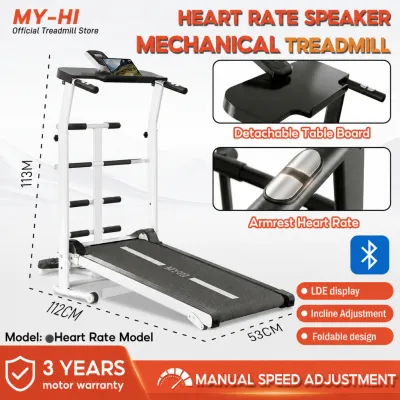
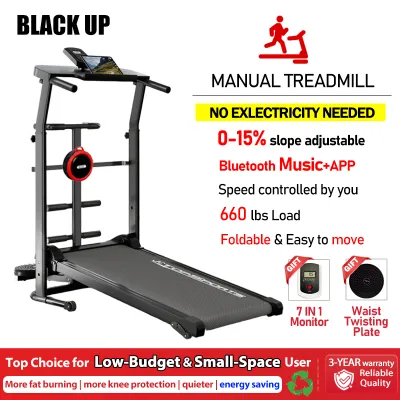
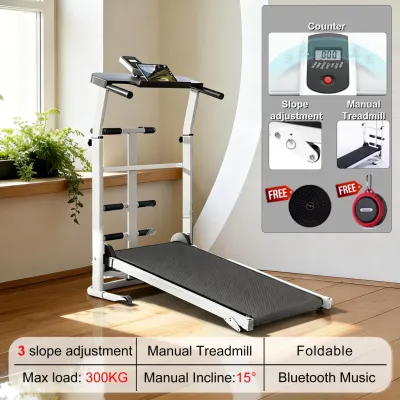
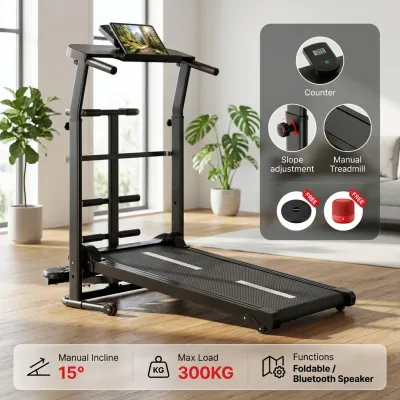
![[COD] Foldable Manual Home Treadmill with Adjustable Slope LED Display Anti-Slip Running Belt Free Twist Disc & Resistance Rope Space Saving Walking Machine for Home Fitness Exercise](https://img.lazcdn.com/g/p/1446617c7dcf63717d1a1640b68a647e.jpg_400x400q80.jpg_.webp)
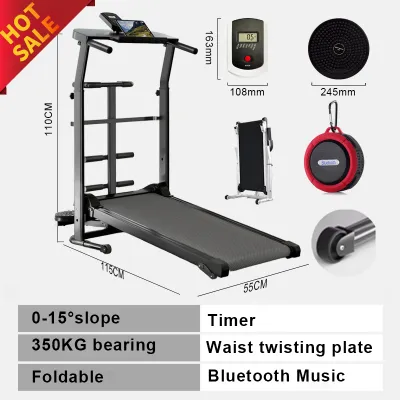
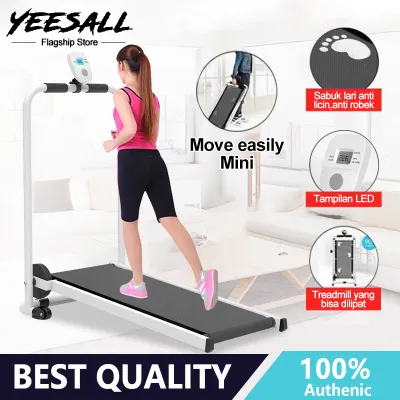
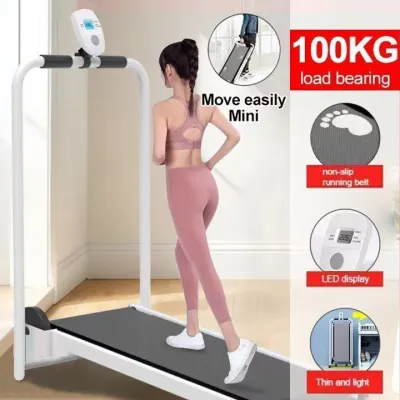
Prices are valid at publication and may change. Please refer to the product page for the latest price.

Calculating overhead clearance is equally critical, especially since manual treadmills often feature a curved deck design that sits higher off the floor than a standard flat motorized deck. To find your required ceiling height, combine your own physical height with the treadmill’s maximum deck elevation, then add a safety buffer of at least several inches to prevent your head from contacting the ceiling during high-intensity running strides.
Finally, map out how the treadmill will interact with the rest of your room. Check the swing paths of nearby closet doors, bathroom doors, and main entryways to ensure the machine does not block emergency exits or daily pathways. You can use painter’s tape on the floor to visualize the physical footprint of the machine before it arrives, allowing you to test the flow of the room around your existing furniture.
Evaluating Treadmill Footprints and Folding Options
When selecting a manual treadmill for adult fitness, you will generally choose between fixed-frame and folding designs. Fixed-frame models, particularly heavy-duty curved manual treadmills, offer excellent stability for running but occupy a permanent footprint that cannot be minimized when the machine is not in use. This option is best suited for larger condo units where a dedicated workout corner is feasible.
If you are working with limited square footage, folding manual treadmills offer a practical way to reclaim your floor space after a workout. When evaluating these models, verify both the unfolded operational dimensions and the folded storage dimensions. Some models fold completely flat to slide under a bed or sofa, while others fold upright to stand against a wall or inside a utility closet.
Before relying on a folding design, check the weight distribution of the machine and verify the presence of built-in transport wheels. Moving a heavy piece of fitness equipment across delicate condo flooring can be challenging without proper wheels. Additionally, inspect the locking mechanisms and hydraulic pins to ensure the frame remains securely locked in its folded position, preventing any accidental deployment in your living area.
Safety Margins and Environmental Checks for Home Gyms
Operating a treadmill in a confined residential space requires strict adherence to safety clearances to prevent accidents. Manufacturers typically recommend leaving a clear, unobstructed safety buffer behind the rear of the treadmill deck. This open space is crucial in case you lose your balance or need to step off the machine quickly during a workout. Side clearances should also remain free of furniture, walls, or sharp corners.
Condo living also introduces structural and neighborly considerations, such as floor load capacity and noise transmission. Because manual treadmills rely entirely on your physical stride to move the belt, they can generate significant downward force and vibration. Placing a dense, high-quality equipment mat under the machine helps distribute the weight, protects your floor tiles or engineered wood from scratches, and dampens the sound traveling to the neighbors living directly below you.
Environmental factors in tropical climates also play a major role in equipment longevity and user comfort. High humidity can accelerate sweat accumulation and potential corrosion on metal components. Position your treadmill in a well-ventilated area, ideally near an air conditioning unit or a fan, while keeping it away from direct sunlight, open balcony doors where rain might enter, or high-moisture zones like bathroom entrances.
Common Space Planning Mistakes to Avoid
One of the most frequent errors condo owners make is confusing the folded storage dimensions of a treadmill with its active operational dimensions. You cannot safely use the machine in its folded state, so planning your workout space solely around storage measurements will leave you with insufficient room to run. Always design your layout based on the fully extended, active footprint of the treadmill.
Another common oversight is failing to measure the delivery pathway leading into your condo unit. A treadmill might fit perfectly in your living room, but it must first pass through the building’s service elevators, narrow hallways, tight corner turns, and your front door frame. Check these entry point dimensions against the product’s shipping box dimensions to avoid delivery day complications.
Lastly, do not overlook the practical needs of your workout environment, such as lighting and display visibility. While manual treadmills do not require a wall outlet to power a motor, many models feature battery-operated digital consoles that track your speed, time, and distance. Ensure your workout area has adequate lighting so you can easily read the display console during early morning or late-night exercise sessions.
Frequently Asked Questions (FAQ)
Can I place a manual treadmill directly on condo tiles or hardwood floors?
Placing heavy fitness equipment directly on hard condo flooring is not recommended. The pressure and vibration from your workouts can scratch hardwood, crack ceramic tiles, and cause the treadmill to slide during use. To protect your floors and reduce noise transmission to your neighbors, place a dense rubber equipment mat beneath the treadmill. Budgeting a few thousand ₱ for a high-quality mat will safeguard your flooring and keep the machine stable.
How do I move a heavy manual treadmill through narrow condo doors?
To navigate tight condo doorways and hallways, start by measuring the narrowest points of your entry path before moving the equipment. Many manual treadmills feature built-in transport wheels that allow you to tilt and roll the machine vertically through standard door frames. If the unit is too wide or heavy, consult the manufacturer’s manual to see if the handlebars or console can be safely disassembled temporarily to facilitate easier transport.
Community discussion
Share your experience or ask a question. Comments are reviewed before publication.