
A true heavy-duty rubber boat is defined by a combination of multi-layer material construction, robust seam technology (such as thermo-welding), and structural design (including tube diameter and multiple independent air chambers). It is never defined by a single metric or a vague marketing label. Before analyzing technical specifications, remember that even the most durable inflatable boat cannot replace formal water safety training, proper personal flotation devices (PFDs), and sound maritime judgment. Always verify local sea conditions, weather forecasts, and your own physical limits before launching. To find a reliable rubber boat heavy duty enough for rough coastal waters or demanding utility work, you must look past retail buzzwords and inspect the manufacturer’s technical spec sheets.
Material Thickness and Denier Count: Beyond the Marketing Numbers
Material thickness is typically measured in millimeters (mm), with heavy-duty inflatables generally ranging from 0.9mm to 1.2mm. While a thicker outer layer provides superior puncture resistance against sharp rocks and debris, it introduces a clear trade-off in weight and portability. A thicker hull is significantly heavier, more difficult to roll up, and harder to transport in a standard vehicle trunk. You must verify the exact millimeter measurement on the manufacturer’s spec sheet rather than relying on vague retail claims of “extra-thick” construction.
Beyond the outer coating, the true backbone of an inflatable boat’s structural strength is the base fabric, which is measured in Denier (D). Denier represents the weight and thickness of the individual threads used to weave the inner polyester or nylon mesh. A high denier count, such as 1000D or 1100D, provides the essential tensile strength and tear resistance required to hold high air pressure and withstand structural twisting. A boat with a slightly thinner outer coating but a high-denier base fabric will often outperform and outlast a thicker boat built on a weak, low-denier fabric mesh.
Products mentioned in this guide
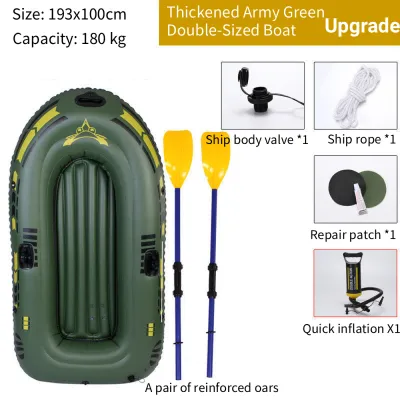
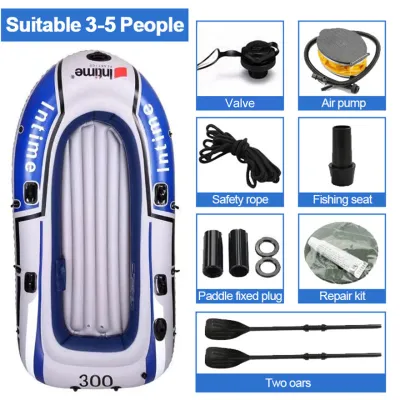
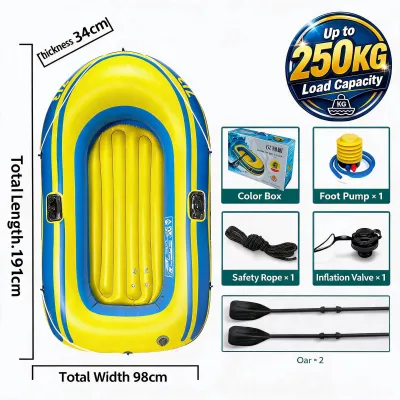
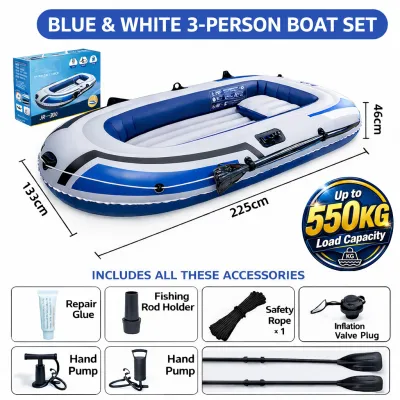
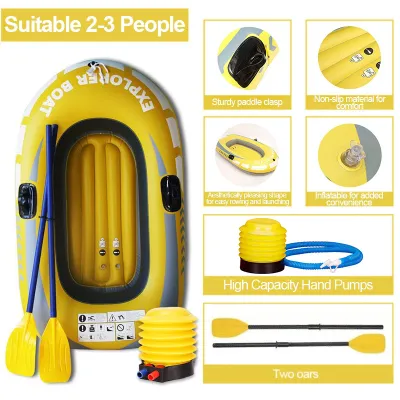
Prices are valid at publication and may change. Please refer to the product page for the latest price.
To ensure maximum durability, look for multi-layer composite construction specs. True heavy-duty boats typically utilize a three-layer or five-layer sandwich design. This construction features a central high-denier fabric core completely encased on both sides by protective layers of polyvinyl chloride (PVC) or chlorosulfonated polyethylene (often known by the brand name Hypalon). These outer layers provide airtightness and shield the structural core from physical abrasion.
In hot, humid environments like the Philippines, the quality of these outer layers is non-negotiable. Intense equatorial UV radiation and constant exposure to warm saltwater can accelerate polymer degradation, leading to a sticky, weakened hull—a process known as hydrolysis. When selecting a boat for local waters, verify that the outer coating includes specific UV-inhibiting compounds designed to withstand tropical sun exposure.
Seam Construction: The True Test of Heavy-Duty Integrity
The seams are the most critical point of failure on any inflatable boat. No matter how tough the fabric is, a boat is only as reliable as the technology holding its panels together. When evaluating specifications, you will primarily choose between thermo-welded seams and glued seams. Thermo-welding uses heat, radio frequency, or lasers to melt the polymer coatings of adjacent panels together, fusing them into a single, continuous piece of material. This method creates a bond that is actually stronger than the surrounding fabric and is the gold standard for high-pressure, heavy-duty inflatable tubes.

In contrast, glued seams rely on chemical adhesives to bond the panels. While high-end marine glues can be durable, glued construction is highly dependent on manual labor quality and environmental conditions. If a boat utilizes glued seams, you must verify that the manufacturer uses wide overlap joints reinforced with internal and external seam tape. Simple butt joints without reinforcing strips are highly prone to peeling under pressure.
Environmental stress plays a massive role in seam integrity, especially in tropical climates. In the Philippines, high ambient temperatures combined with direct sunlight can cause the air inside the tubes to expand rapidly, dramatically increasing internal pressure. At the same time, intense heat can soften inferior adhesives, leading to sudden seam failure or slow, frustrating air leaks. For boats stored outdoors or used frequently in tropical coastal waters, thermo-welded seams offer a critical safety advantage.
Because you cannot always test a boat’s seams in a showroom, visual verification is essential. If purchasing online through local distributors or specialty marine e-commerce platforms, ask the seller for high-resolution, close-up photos of the seam lines. Look for uniform seam tape application, clean edges, and an absolute absence of sticky glue residue or bubbling along the joints, which are common signs of poor quality control.
Tube Diameter and Chamber Design: Stability and Safety Specs
The physical dimensions of the inflatable tubes directly dictate how the boat handles rough water and carries weight. Tube diameter is a critical specification that is often overlooked. Larger tube diameters (typically 40 centimeters or larger for heavy-duty models) provide greater buoyancy and a higher load capacity. Crucially, larger tubes increase the boat’s freeboard—the height of the tube tops above the waterline. A higher freeboard keeps splashing waves and choppy water out of the cockpit, ensuring a drier, safer ride in open water.
However, you must distinguish between maximum weight capacity and practical, comfortable capacity. A manufacturer’s spec sheet might state a high maximum weight capacity based purely on physical volume and displacement. In practice, carrying heavy gear, outboard motors, fuel tanks, and passengers requires physical space and balanced weight distribution. Ensure the boat’s dimensions and floor space align with your specific utility or recreational needs, rather than relying solely on the maximum weight limit.
Safety redundancy is another non-negotiable specification, achieved through multiple independent air chambers. A true heavy-duty rubber boat must feature at least three separate tube chambers, excluding the inflatable keel or floor. These chambers are divided by internal baffles that equalize pressure. If one chamber is punctured by a sharp object, the remaining intact chambers must provide sufficient buoyancy to keep the boat afloat, support the passengers, and allow you to safely navigate back to shore.
The type of floor construction also influences structural rigidity. While standard inflatable or wooden slat floors are common, high-pressure drop-stitch floors are increasingly popular for heavy-duty applications. Drop-stitch technology uses tens of thousands of fine polyester threads to link the top and bottom fabric layers, allowing the floor to be inflated to high pressures (often 10 PSI or more). This creates a rock-solid platform that mimics a rigid hull, improving overall stability, tracking, and handling in choppy conditions.
Marketing Buzzwords and Specs to Deprioritize
When shopping for a heavy-duty inflatable, you will encounter numerous marketing terms designed to sound impressive but lack standardized technical meaning. Labels such as “military-grade,” “pro-level,” or “commercial-grade” are frequently used as marketing buzzwords. Unless these claims are accompanied by specific, verifiable certifications—such as ISO 6185 ratings or CE certification categories—they should be completely ignored in favor of hard material specifications like denier and millimeter thickness.
Similarly, do not let a high accessory count distract you from poor hull quality. Manufacturers often bundle cheap accessories like plastic oars, basic foot pumps, multiple cup holders, or built-in fishing rod mounts to make a low-quality boat appear more appealing. A heavy-duty hull with zero included accessories is always a better investment than a fragile, single-layer PVC boat loaded with plastic add-ons. You can always purchase high-quality aftermarket D-rings, rod holders, and oars later.
Finally, color options should be treated as a secondary, practical choice rather than a metric of durability. While color does not affect the physical strength of the fabric, it does impact thermal management. Darker colors, such as black or dark grey, absorb significant solar heat, causing the air inside the chambers to expand rapidly in the Philippine sun, which requires careful pressure monitoring. Lighter colors, like light grey or white, reflect heat better and keep tube temperatures lower, though they show dirt and stains more easily.
A Pre-Purchase Checklist for Verifying Durability Claims
To ensure your investment stands up to demanding conditions, follow this practical checklist before finalizing any purchase:
- Request the Official Spec Sheet: Ask the seller or manufacturer for the detailed technical specification sheet. Verify the exact material thickness in millimeters, the base fabric denier (look for 1000D or higher), and the specific seam construction method.
- Review the Warranty Terms: A genuine heavy-duty boat should be backed by a comprehensive warranty that explicitly covers seam separation and material defects for several years. Read the fine print to ensure the warranty is not voided by use in saltwater, high-temperature environments, or light commercial activities.
- Check the Valve Quality: Inspect the inflation valves. Heavy-duty boats should feature high-quality, recessed valves (such as Halkey-Roberts style) that seal tightly and are easy to replace. Additionally, verify if the boat is equipped with automatic pressure relief valves, which safely vent excess air when high tropical temperatures cause the internal pressure to spike.
Frequently Asked Questions (FAQ)
Is a thicker PVC always better for a heavy-duty rubber boat?
While thicker PVC (such as 1.2mm) offers superior puncture resistance against sharp rocks and debris, it is not always the best choice for every user. Thicker material dramatically increases the boat’s overall weight and stiffness, making it much harder to fold, carry, and store. For most heavy-duty recreational and utility uses, a balanced specification of 0.9mm PVC paired with a high-strength 1000D or 1100D base fabric provides excellent durability without sacrificing portability.
How does tropical heat affect rubber boat seams?
Prolonged exposure to intense tropical heat and direct sunlight causes the air inside the inflatable tubes to expand, creating high internal pressure. At the same time, extreme heat can soften low-quality adhesives used in glued seams, leading to sudden seam separation or slow leaks. To prevent this in hot climates like the Philippines, look for boats with thermo-welded seams or those built with high-temperature, marine-grade polyurethane adhesives, and always monitor tube pressure during the hottest parts of the day.
Community discussion
Share your experience or ask a question. Comments are reviewed before publication.