
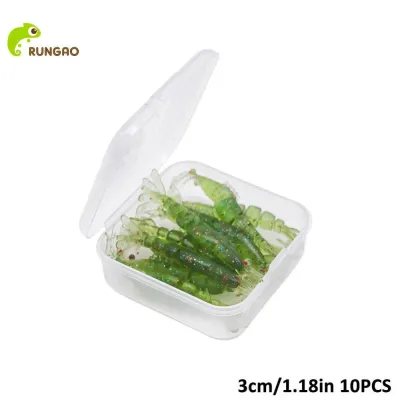
To catch fish consistently with a mini shrimp soft bait like the Duoduoyu mini shrimp, you must master the art of mimicking a real shrimp’s natural, erratic movements while adapting your rigging to the underwater terrain. These downsized soft plastics are highly effective because shrimp form a primary food source for many predatory fish in both fresh and saltwater environments. Success relies on selecting the right tackle, rigging the bait completely straight to prevent unnatural spinning, and choosing a retrieval style that matches the activity level of the fish. By focusing on subtle rod movements and precise presentations, you can trigger aggressive strikes even from highly pressured fish.
Matching Tackle to Your Mini Shrimp Bait
Using ultra-light or light-power fishing rods is essential when casting lightweight lures like the Duoduoyu mini shrimp. A rod with a fast or extra-fast action provides the sensitive tip needed to feel subtle bites while offering enough backbone to set the hook quickly. If your rod is too stiff, you will struggle to cast the light bait and may tear the soft plastic during a hookset. Conversely, a rod that is too soft will make it difficult to control the erratic hopping motions required to bring the shrimp imitation to life.
Your choice of fishing line directly impacts both your casting distance and your ability to detect delicate taps. A main line of light braided line, typically between 4 to 8 pounds, offers excellent casting distance and zero stretch, which transmits every underwater vibration directly to your hands. To prevent fish from spotting the line in clear water, tie a fluorocarbon leader of about 4 to 6 pounds to the end of your braid. Fluorocarbon is nearly invisible underwater and provides crucial abrasion resistance when dragging your bait over sharp rocks, barnacles, or submerged branches.
Products mentioned in this guide
![[COD] CISWGE SPORTS 20PCS Mini Soft Worm Shrimp Fishing Lure 0.4g 40mm Artificial Baits Bass Silicone Fishing Tackle](https://img.lazcdn.com/g/p/7375d22cf17ac3c053b9b70e71c6e356.jpg_400x400q80.jpg_.webp)
Prices are valid at publication and may change. Please refer to the product page for the latest price.
Before heading out, always check the manufacturer labels on your soft bait packaging and terminal tackle. These labels often specify the recommended hook sizes and jighead weights that match the physical dimensions of the mini shrimp. Using a hook that is too large will damp the natural movement of the soft plastic, while a hook that is too small will fail to expose the point sufficiently, leading to missed hooksets.
Rigging Methods for Different Fishing Environments
The way you rig your mini shrimp soft bait determines how realistically it moves through the water column. A primary rule of soft plastic fishing is to ensure the bait is completely straight on the hook. Any slight bend or twist in the plastic body will cause the lure to spin unnaturally when retrieved, which twists your line and scares away wary fish.

Additionally, you must inspect the bait’s delicate appendages, such as the antennae and legs, before casting. Ensure these parts are free and not pinned against the hook shank or trapped inside the plastic body. When these appendages are allowed to move freely, they create micro-vibrations in the water that mimic the subtle swimming motions of a live crustacean.
Weedless Setup for Heavy Cover
When fishing around dense vegetation, submerged logs, or rocky shorelines, a weedless setup is indispensable for preventing frustrating snags. For a mini shrimp bait, select a small offset wide-gap hook or a specialized weedless jighead equipped with a wire guard. These hooks are designed to keep the sharp point shielded from debris while remaining ready to penetrate the fish’s mouth upon a hookset.
To rig the bait weedless, insert the hook point straight through the center of the shrimp’s nose, pushing it in about five millimeters before bringing it out through the bottom of the head. Slide the bait up to the hook eye, rotate it 180 degrees, and measure where the bend of the hook naturally meets the body of the shrimp. Push the hook point vertically through the body at that exact spot, ensuring the bait remains completely straight, and bury the very tip of the hook point just underneath the thin outer skin of the plastic.
Before casting into heavy cover, perform a quick physical test by pulling the rigged bait gently across the palm of your hand. The hook point should not catch on your skin, indicating that it will slide cleanly over weeds and branches. However, when you apply light downward pressure to the bait’s body, the hook point should easily pop out of the plastic, confirming that it will hook a fish when it bites.
Jighead Setup for Open Water
In open water areas with minimal structure, such as sandy flats, deep pools, or clear channels, an exposed-hook jighead setup is a highly effective choice. This configuration maximizes your hook-up ratio because the hook point is already fully exposed and positioned to grab hold of a fish’s mouth instantly. The weight of the jighead should be carefully matched to the depth of the water and the strength of the current, ensuring the bait can reach the bottom without sinking too quickly.
To rig the mini shrimp on a standard jighead, hold the bait next to the jighead to visualize where the hook curve should exit the back of the shrimp. Insert the hook point directly into the center of the bait’s nose, threading it carefully along the center line of the body. Guide the hook point out through the top of the back at your pre-measured exit point, then slide the bait forward until the nose sits flush against the lead head.
Once threaded, verify that the shrimp sits completely level and straight along the hook shank. If the bait is bunched up or curved, slide it off and re-thread it, as an uneven bait will spin during retrieval. A level presentation ensures the lure glides smoothly through the water, mimicking a drifting or swimming shrimp with high accuracy.
Retrieval Techniques to Imitate Live Shrimp
To convince predatory fish that your soft plastic is a live meal, your retrieval technique must replicate the natural behaviors of a real shrimp. Before casting your lure into deeper water, drop it into a shallow, clear area right in front of you. Observe how the bait behaves as you twitch your rod tip, noting how fast it sinks and how the appendages flutter.
This visual check allows you to adjust your retrieve speed and rod movements based on the immediate water conditions. If the water is warm and the fish are highly active, a faster, more aggressive retrieve is often successful. In contrast, cooler water or high fishing pressure requires a slower, more deliberate presentation to entice hesitant predators.
The Hop-and-Drop for Active Predators
The hop-and-drop technique is designed to mimic the sudden, darting escape response of a threatened shrimp, making it highly effective for active predators. To execute this movement, cast your bait out and let it sink completely to the bottom. Once the line goes slack, raise your rod tip quickly from a horizontal position to about a 45-degree angle with one or two sharp twitches, causing the bait to pop off the bottom.
After twitching, immediately lower your rod tip slightly to let the bait glide back down, but maintain a semi-taut line as it sinks. Most strikes occur during this drop phase, as predatory fish watch the shrimp dart upward and rush in to grab it as it falls helplessly back to the bottom. If your line is completely slack during the drop, you will miss the subtle tick or twitch of a fish taking the bait.
Learning to distinguish between a bottom bump and a true fish bite is a critical skill for this technique. A bottom bump feels like a dull, heavy thud that stops the bait’s forward motion, whereas a fish bite typically registers as a sharp, double-tap sensation or a sudden sideways movement of your fishing line. When you feel that distinct tap, quickly wind up any excess slack and sweep the rod upward to set the hook.
Slow Dragging for Lethargic Fish
When fish are inactive, heavily pressured, or seeking shelter from harsh weather, aggressive hopping motions can scare them away. In these situations, a slow dragging technique is far more effective because it presents the mini shrimp as an easy, low-energy meal. Cast your rig out, allow it to settle on the bottom, and slowly sweep your rod to the side to drag the bait across the substrate.
As you drag the bait, maintain constant, light contact with the bottom structure, allowing the weight of your rig to tick against rocks and sand. Use your reel only to collect the slack line as you bring your rod back to the starting position. The natural water current will assist in moving the delicate appendages of the Duoduoyu mini shrimp, creating a lifelike presence even when the bait is moving very slowly.
Incorporate frequent pauses into your retrieve, letting the bait sit completely still on the bottom for several seconds at a time. Many cautious fish will follow the dragging bait out of curiosity and only strike when it stops moving, perceiving it as a vulnerable target. Patience is key with this method, as the slowest movements often yield the best results when conditions are tough.
Adjusting for Water Conditions and Target Species
To maximize your success with the Duoduoyu mini shrimp, you must adapt your approach to the specific environmental conditions and target species you encounter. Water clarity is a primary factor when choosing the color of your soft bait. In clear water, opt for natural, translucent tones like motor oil, watermelon, or clear silver flake, which blend seamlessly with the surroundings and do not raise suspicion. In stained, muddy, or turbid water, switch to high-visibility colors like solid white, chartreuse, or dark pink to help fish locate the bait through the gloom.
Wind and current also require immediate adjustments to your terminal tackle. Strong winds can bow your fishing line, pulling your lightweight bait off the bottom and ruining your presentation. To counter this, increase your jighead weight slightly or add a small split shot sinker to your leader, ensuring your bait remains in the strike zone.
In the coastal and inland waters of the Philippines, shrimp are a staple diet for a wide variety of prized sport fish. Species such as mangrove jack, barramundi, and various groupers naturally hunt along mangrove roots, rocky structures, and sandy drop-offs. When targeting these species, adjust your retrieval zone to match their feeding habits; for instance, keep the bait close to the bottom near mangrove roots for mangrove jack, or work it slowly along sandy channel edges where barramundi wait to ambush passing prey.
Maintaining and Storing Your Soft Baits
Proper maintenance and storage are essential to preserve the soft texture, scent, and shape of your mini shrimp baits. The tropical climate of the Philippines brings intense heat and high humidity, which can quickly ruin soft plastics if they are left exposed. Always store your baits in a cool, shaded area, away from direct sunlight, as extreme heat can cause the plastic to melt, warp, or fuse together into an unusable mass.
Keep your soft baits in their original resealable packaging or in tackle trays specifically labeled as safe for soft plastics. Mixing different brands or types of soft plastics in the same compartment can trigger a chemical reaction, causing the baits to liquefy, discolor, or harden.
Before every fishing trip, take a moment to inspect your baits for any damage. Check for tears around the nose where the hook inserts, as a torn bait will slide down the hook shank and ruin your presentation. If you notice deformed appendages, you can sometimes restore their shape by dipping them briefly in warm water, ensuring they flutter correctly on your next cast.
Frequently Asked Questions (FAQ)
Can I use a mini shrimp soft bait in saltwater?
Yes, mini shrimp soft baits are highly effective in saltwater environments, but you must verify the manufacturer’s specifications on the packaging to ensure the plastic compound can withstand marine conditions. Saltwater is highly corrosive to terminal tackle, so it is crucial to rinse your hooks, jigheads, and the soft baits themselves in clean, fresh water after every outing. This simple maintenance step prevents rust from weakening your hooks and preserves the integrity of the soft plastic for future trips.
How do I know if my hook size is correct for the bait?
To determine if your hook size is correct, perform a quick visual check by laying the hook flat against the side of the mini shrimp bait. The hook point should exit the body near the middle or the upper third of the shrimp’s length to ensure the bait can move naturally without being stiffened by too much metal. Additionally, verify that the hook gap—the distance between the hook shank and the point—is wide enough to clear the bait’s body when compressed, which is essential for achieving a solid hookset when a fish strikes.
Community discussion
Share your experience or ask a question. Comments are reviewed before publication.