
A locking S-hook is an incredibly convenient piece of gear for organizing climbing equipment, managing camp setups, and securing loose items. However, using an s hook with lock safely during climbing activities requires a strict understanding of its structural limitations. While the locking mechanism adds an extra layer of security, these devices are almost exclusively designed for utility purposes and must never be integrated into your life-support chain.
To keep your gear secure and prevent dangerous gear failures, you must master the specific loading techniques, environmental maintenance, and retirement signs of these specialized hooks. This is especially vital in tropical climbing environments where moisture, salt air, and grit can rapidly compromise locking mechanisms.
Critical Safety Boundaries: Where to Use (and Never Use) an S Hook with Lock
Climbing and mountaineering demand absolute clarity regarding which gear can support human weight and which cannot. An s hook with lock is a highly functional tool, but it belongs firmly in the utility category. Unless a device is explicitly stamped with recognized climbing certifications such as UIAA (International Climbing and Mountaineering Federation) or CE EN 12275, it must never be used for belaying, rappelling, building top-rope anchors, or clipping into personal anchor systems.
Products mentioned in this guide
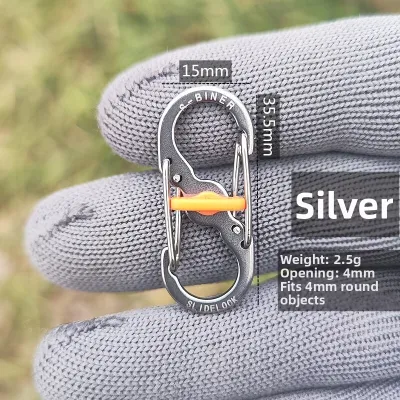
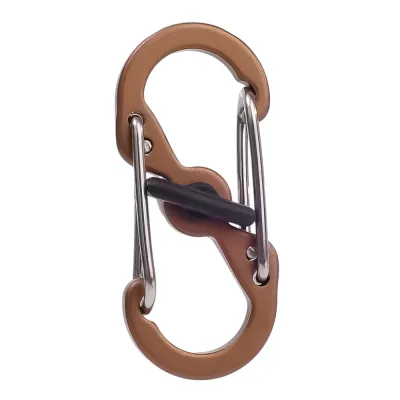
Prices are valid at publication and may change. Please refer to the product page for the latest price.
- Life-Safety vs. Utility: Standard utility S-hooks are designed to hold static loads like water bottles, climbing shoes, or haul bags. They lack the dynamic energy-absorption capabilities and rigorous batch-testing required for life-safety equipment. Mixing up utility gear with life-support hardware can lead to catastrophic failure under the high-impact forces of a lead fall.
- Approved Utility Applications: On the crag or at base camp, these locking hooks excel at keeping your gear organized and off the ground. You can safely use them to hang heavy water bladders from tree branches, secure camp tarps against sudden tropical downpours, organize quickdraws on your gear sling, or manage haul bags at a belay station. These tasks keep your essential items accessible and clean without introducing safety risks to your climbing system.
- The Geometry of Gate Failure: The fundamental S-shape of these hooks introduces unique physical vulnerabilities that standard D-shaped or oval climbing carabiners do not share. Because an S-hook has two open ends and two gates, it is twice as susceptible to accidental unclipping or cross-loading. If the hook rotates during movement, the load can easily shift toward the weaker minor axis or directly press against the gate sleeve, causing the lock to fail under minimal pressure.
- The Verification Rule: Before packing any locking S-hook for a trip to local crags, inspect its body for laser-etched markings. Look for a kilonewton (kN) rating or an explicit weight limit. If the device is marked only in kilograms or pounds, or if it bears a "Not for Climbing" warning, treat it strictly as a low-load accessory. Never guess or assume the load capacity of unbranded hardware.
Proper Techniques for Utility and Camp Applications
Operating an s hook with lock requires deliberate physical handling to ensure the locking mechanism performs its job. Even when managing non-life-support tasks, a failure can result in lost gear, damaged water filters, or a collapsed camp shelter during a sudden storm.

- Engaging the Locking Mechanism: S-hooks generally utilize screw gates, twist locks, or spring-loaded auto-lockers. For screw-gate models, thread the sleeve until it is completely closed and covers the gate notch fully. Avoid over-tightening the sleeve with excessive force; metal expands in the heat of a tropical afternoon, and over-tightened gates can easily jam, forcing you to use tools to pry them open, which can damage the aluminum alloy.
- Ensuring Correct Load Alignment: Always align your ropes, slings, or accessory cords within the deepest part of the hook's basket. This ensures the load pulls directly along the spine (the major axis), which is the strongest part of the hardware. Never allow a sling or cord to rest near the gate or on the curve of the S-shape where it can slide side-to-side, as this cross-loading drastically reduces the weight the hook can safely hold.
- Preventing Gate Rub and Friction: When hanging gear against rock faces, rough tree bark, or other metallic hardware, pay close attention to the positioning of the locking sleeves. Wind, rope movement, or shifting gear can rub the locking sleeve against these abrasive surfaces. This friction can gradually unscrew a manual gate or force open a twist-lock mechanism, leaving your gear vulnerable to falling. Position the hook so the gates face away from contact surfaces.
- Applying Redundancy in Camp Setups: When using S-hooks to hang heavy items or tension large tarps in unpredictable mountain weather, always build redundancy into your system. If a single hook fails during a heavy downpour, your entire shelter could collapse. Using two locking S-hooks in opposite directions or backing them up with a simple utility cord knot ensures that a single point of failure does not ruin your camp setup.
Inspection and Maintenance in Humid Climates
Climbing in tropical climates exposes your gear to extreme humidity, heavy monsoon rains, and highly corrosive, acidic sweat. Without regular care, the delicate springs and threads of a locking S-hook can quickly seize or rust, rendering the locking feature useless.
- The Pre-Climb Visual and Tactile Check: Before every outing, perform a quick, hands-on inspection of your utility hooks. Press each gate to ensure the internal spring snaps it shut instantly without any sluggishness or sticking. Rotate the locking sleeve through its entire range of motion; the threads should feel smooth and free of gritty resistance. If you notice excessive lateral play in the gate hinge, the rivet may be wearing out, requiring immediate retirement.
- Clearing Out Chalk, Sand, and Grit: Outdoor environments are filled with fine particles like climbing chalk, trail dust, and volcanic sand that easily migrate into the gate hinge and locking threads. To clean this debris, flush the mechanism under warm running water. Use a soft-bristled brush, such as an old toothbrush, to gently scrub the threads and pivot points. Avoid using harsh household detergents, degreasers, or chemical solvents, as these can strip away protective anodized coatings and accelerate metal degradation.
- Combating Tropical Moisture and Sweat: High humidity and salty sea breezes can cause rapid oxidation, even on high-grade aluminum and stainless steel components. After climbing in wet conditions or handling gear with sweaty hands, never throw damp S-hooks directly into a closed gear bag. Wipe them down with a clean, dry cloth and lay them out in a shaded, well-ventilated indoor space until they are completely dry before storing them.
- Applying the Right Lubricant: Once the hardware is completely clean and dry, apply a tiny drop of lubricant to the gate hinge and the locking sleeve threads. Always use a dry, PTFE-based lubricant or a specialized dry climbing hardware lube. Avoid wet oils, WD-40, or household grease; these substances act as magnets for dust, dirt, and climbing chalk, forming an abrasive paste that will grind down the metal threads over time. Wipe away any excess lubricant with a clean paper towel to prevent it from transferring to your ropes or slings.
Retirement Criteria: When to Replace Your S-Hook
Even the most meticulously maintained utility hardware has a finite lifespan. Knowing when to retire a locking S-hook is critical to maintaining a safe climbing environment and protecting your expensive camp gear.
- Persistent Gate and Lock Malfunctions: If a locking sleeve remains stiff, grinding, or stuck even after a thorough cleaning and lubrication, the hardware must be retired. Similarly, if the gate spring loses its tension and fails to snap shut automatically, the hook is no longer safe to carry. A utility hook that cannot lock reliably is a liability that can easily cause gear loss on the trail.
- Identifying Wear Grooves and Metal Fatigue: Over time, sliding ropes, steel cables, or heavy webbing can wear deep grooves into the inner baskets of your S-hook. Inspect these contact points closely. If you observe grooves deeper than one millimeter, or if the metal has developed sharp edges that could slice through your slings or accessory cords, replace the hook immediately.
- Evaluating Corrosion and Pitting: While minor surface oxidation is common and can often be rubbed away, deep corrosion is a structural threat. Inspect the hinge pin, the spring chamber, and the thread grooves for signs of pitting—rough, crater-like spots where rust has eaten into the metal. Pitting permanently weakens the structural integrity of the alloy, meaning the hook could fail at a fraction of its rated capacity.
- Chemical Exposure and Heat Damage: Aluminum alloys can suffer invisible structural damage when exposed to harsh environments. If your gear bag has been contaminated by leaking battery acid, insect repellent, or unknown chemical cleaners, or if you accidentally left your hardware baking in direct sunlight on a car dashboard during a hot summer day, the metal's temper may be compromised. Because this damage is invisible to the naked eye, safety dictates that any chemically or thermally stressed hardware must be retired and discarded.
Frequently Asked Questions (FAQ)
Can I use a locking S-hook to connect my personal anchor to the rock?
No, you should never use a locking S-hook to connect a personal anchor system (PAS) or any life-support system to an anchor. Personal anchors require certified, high-strength climbing carabiners (typically D-shaped, oval, or HMS) that are rigorously tested to withstand dynamic fall forces. S-hooks lack the structural geometry, uniform load distribution, and life-safety certifications necessary to protect you in a fall.
How do I fix a locking sleeve that is stuck or hard to turn?
Do not use pliers or heavy wrenches to force a stuck locking sleeve, as this can permanently warp the threads or bend the gate. Instead, submerge the S-hook in warm, soapy water for 10 to 15 minutes to dissolve accumulated dirt, sweat, or dried climbing chalk. Gently scrub the threads with an old toothbrush, rinse thoroughly with clean water, dry the hook completely, and apply a drop of dry, PTFE-based lubricant. If the sleeve remains difficult to turn after this process, retire the hardware immediately.
Is it safe to use an S-hook for hanging a hammock at base camp?
You can use a locking S-hook to hang a hammock only if the hook’s rated working load limit explicitly exceeds the combined weight of the hammock and the occupant, and if the lock is fully engaged. However, because hammock setups often subject hardware to unpredictable dynamic forces and sharp angles, using dedicated climbing carabiners or heavy-duty soft shackles is a much safer and more reliable choice for human occupancy.
Community discussion
Share your experience or ask a question. Comments are reviewed before publication.