
Using a rope with hook system during mountain climbing requires absolute precision, specialized gear, and rigorous safety checks. In vertical environments, a single point of failure can lead to catastrophic consequences. Properly securing this equipment involves verifying that every component is rated for life-support, selecting an unyielding anchor point, and managing the rope to prevent friction-induced damage.
Many recreational climbers mistake utility hooks or grappling hooks for legitimate climbing gear due to popular media. In actual mountaineering, hooks are highly specialized tools—such as aid climbing hooks—designed only for specific progression techniques, not for catching high-impact falls. Understanding how to inspect, position, and load these systems is fundamental to surviving challenging vertical ascents.
Identifying Your Rope and Hook Equipment
Before packing your gear for an ascent up peaks like Mount Apo or Mount Guiting-Guiting, you must verify the exact classification of your equipment. A common and highly dangerous mistake is assuming any rope with hook assembly bought from a general hardware store or online marketplace is safe for climbing. These utility items are engineered for hauling cargo, securing light loads, or marine use, and they will fail under the dynamic forces of a human fall.
Products mentioned in this guide
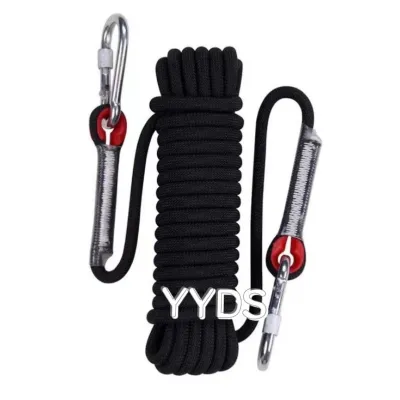
Prices are valid at publication and may change. Please refer to the product page for the latest price.
True climbing hooks, often referred to as skyhooks or cliff hangers, are specialized tools used almost exclusively in aid climbing. They are designed to hook onto tiny rock ledges, flakes, or pockets to allow a climber to stand on a webbing ladder and place the next piece of protection. They are not designed to hold long, dynamic falls on their own. Standard climbing setups rely on certified carabiners, which are closed-loop metal gates, to secure the rope to anchors.
To ensure your gear is safe, you must inspect the manufacturer labels for explicit load ratings. Look for certifications from recognized international safety bodies, such as the Union Internationale des Associations d’Alpinisme (UIAA) or the European Conformity (CE) mark. These certifications guarantee the gear has undergone rigorous testing to withstand specific kilonewton forces. If a hook or rope lacks these clear, permanent markings, it must never be used for human support.
Pre-Climb Gear Inspection
The tropical climate of the Philippines presents unique challenges for climbing gear storage and maintenance. High humidity, intense heat, and salt air from coastal areas can accelerate the degradation of both synthetic ropes and metal hardware. A thorough pre-climb inspection is your first line of defense against equipment failure.

Begin by examining the rope along its entire length. Run your hands slowly down the line to feel for any internal deformities. You are checking for core shots, which occur when the internal load-bearing core is damaged while the outer sheath remains intact. Look for fuzzy or frayed sections, stiff spots that do not bend smoothly, or discoloration caused by prolonged exposure to ultraviolet rays. Any rope showing these signs must be retired immediately.
Next, turn your attention to the metal hook or carabiner. Inspect the surface under bright light for hairline cracks, deep scratches, or signs of rust and corrosion. Pay close attention to any moving parts, such as gate hinges or spring-loaded mechanisms, ensuring they operate smoothly without sticking. Even minor deformation or bending in the metal body indicates that the hardware has been subjected to forces beyond its design limit and must be discarded.
Always refer to the manufacturer’s documentation to determine the maximum lifespan of your gear. Synthetic ropes typically have a shelf life of up to ten years from the manufacture date, even if unused, but heavy use in rugged terrain can reduce this lifespan to a single season or less. Metal hardware does not have a strict expiration date but must be retired immediately if it fails visual inspection, suffers a major drop onto a hard surface, or shows measurable wear from rope friction.
Selecting and Testing the Anchor Point
A certified rope and hook are only as secure as the anchor point to which they are attached. When climbing in tropical mountain environments, you will encounter a wide variety of rock types and vegetation. Volcanic rock, common in many local ranges, can be highly brittle, crumbly, and prone to shearing under sudden loads.
When selecting a natural anchor point, look for solid, monolithic rock formations that show no signs of fracturing or peeling away from the main cliff face. If you are using a tree as an anchor, ensure it is a thick, deeply rooted, live specimen. Avoid dead trees, rotting wood, or shallow-rooted vegetation that could easily pull free under tension. The anchor must be completely stable and capable of supporting multi-directional forces.
Avoid placing your hook over sharp, fragile rock edges or inside crumbling cracks. A sharp edge acts like a knife under tension, capable of severing a loaded rope with minimal movement. If you must route your rope over an edge, position the hook so that the rope hangs clear of the sharpest points, or use dedicated edge protection.
Before committing your full body weight to the system, perform a gradual, low-to-the-ground test load. Secure the hook to the chosen anchor while keeping your feet firmly on a safe ledge. Slowly apply weight to the rope, watching the hook and the anchor closely for any shifting, slipping, or cracking sounds. This controlled test allows you to verify the security of the placement without risking a dangerous fall.
Securing the Hook and Managing the Rope
Properly positioning the hook is critical to preventing sudden slippage or mechanical failure. Metal hooks are engineered to bear loads along a specific, primary axis. You must align the hook so that the downward pull of the rope aligns perfectly with this strongest axis, keeping the load centered in the basket of the hook.
Strictly avoid side-loading or cross-loading the hook. Side-loading occurs when the hook is forced against a rock feature that bends it sideways, while cross-loading pulls the hook in opposing directions across its weaker lateral dimensions. Both scenarios drastically reduce the load capacity of the metal, risking sudden breakage. Ensure the rope runs freely from the hook without twisting or wrapping around the hardware in an unintended manner.
Rope management is equally vital to prevent abrasion and maintain control. As you climb, the rope will naturally stretch and move, rubbing against the rock face. Use heavy-duty canvas edge protectors, split fire hoses, or dedicated roller modules to shield the rope at high-friction contact points. A damaged sheath can quickly expose the core, leading to sudden rope failure under tension.
Clear and standardized communication with your climbing partners is essential throughout this process. Before initiating any movement or tensioning the rope, use clear, pre-agreed verbal commands. Confirm that your partner is ready to manage the belay or anchor before you apply weight. In windy or rainy tropical conditions, where voice communication can be muffled, establish clear rope-tug signals to convey critical safety commands.
Critical Stop Conditions and Safety Limits
Knowing when to stop is the most important skill any climber can possess. No piece of equipment, regardless of its cost or certification, can guarantee safety if environmental conditions deteriorate or if the gear begins to fail. You must establish clear, non-negotiable stop conditions before you begin your climb.
Stop your ascent immediately and prepare for a safe descent if you observe any of the following warning signs:
- The hook slips or shifts even slightly under load.
- The rock anchor shows signs of cracking, flaking, or crumbling.
- The rope develops sudden, unexplained wear, discoloration, or soft spots.
- Weather conditions deteriorate, bringing heavy rain that makes rock surfaces slick and unpredictable.
It is vital to acknowledge that specialized gear like ropes and hooks cannot replace formal climbing training, route-finding skills, and sound professional judgment. Attempting to use aid hooks or complex rigging systems without hands-on instruction from a certified professional is extremely dangerous. Equipment is merely a tool; your knowledge and decision-making are what keep you safe.
If you encounter unfamiliar terrain, highly complex rock formations, or high-risk routes that exceed your current skill level, do not attempt to force your way through. Consult certified mountain guides or local rescue professionals who possess intimate knowledge of the specific area. Prioritizing safety over reaching the summit ensures you live to climb another day.
Frequently Asked Questions (FAQ)
Can I use a standard utility hook for mountain climbing?
No, you must never use a standard utility, marine, or hardware store hook for mountain climbing. These hooks are designed for static, low-force applications like securing cargo or towing light loads. They lack the specialized engineering, material quality, and rigorous testing required to withstand the high-impact dynamic forces generated during a human fall. Climbing-rated gear is certified by international safety bodies like the UIAA or CE, ensuring it can safely support life. Using non-certified hardware in a climbing system poses an immediate, catastrophic risk of equipment failure and fatal falls.
How do I know if my rope and hook need to be replaced?
You must replace your rope immediately if you observe visual or tactile signs of damage, such as a frayed outer sheath, exposed core fibers, localized stiff or soft spots, or significant discoloration from UV exposure. For the metal hook, inspect for any visible cracks, bending, deep grooves from rope friction, or rust and corrosion. Additionally, if the hook has been subjected to a severe drop onto a hard surface, it must be retired even if no damage is visible, as internal micro-fractures can compromise its structural integrity. Always adhere to the manufacturer’s specified lifespan limits.
Community discussion
Share your experience or ask a question. Comments are reviewed before publication.