
Selecting the right towel grip for your badminton racket in the Philippines depends on your sweat volume, hand size, and how you manage the high humidity of local indoor courts. A high-quality cotton-rich towel grip provides unmatched moisture absorption, helping you maintain a secure hold during intense rallies. However, choosing the ideal option requires balancing fabric thickness, adhesive backing, and proper maintenance to ensure your racket remains responsive and hygienic.
Quick Guide: Is a Towel Grip Right for You?
Playing badminton in the Philippines often means dealing with high indoor temperatures, especially in community sports centers without centralized air conditioning. This tropical environment accelerates sweating, making a secure hold on your racket a primary challenge. When your hands are constantly wet, standard grips can quickly lose their traction, leading to slipped shots or compromised control.
To address this, players typically choose between towel grips, polyurethane (PU) grips, and dry overgrips. PU grips offer a tacky, rubbery feel that works well in dry conditions but can become incredibly slippery once saturated with sweat. Dry overgrips handle mild moisture by utilizing a paper-like, matte texture, but they can quickly saturate during long, humid sessions. Towel grips, made of looped fabric, act like a sponge to absorb heavy sweat continuously, making them the preferred choice for heavy sweaters.
Products mentioned in this guide
![[Ready Stock] Badminton Racket Towel Absorbent Non-Slip Anti-Sweat Grip Strap Grip Badminton Towel Grip 10 Meter Towel Grip Sweat Band And Yonex Towel Syntheric Wrap Strong Grap](https://img.lazcdn.com/g/p/cdc97e29ad35e1bbbd305e5982ce98c1.jpg_400x400q80.jpg_.webp)
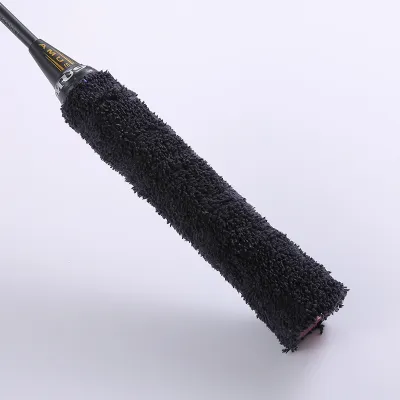
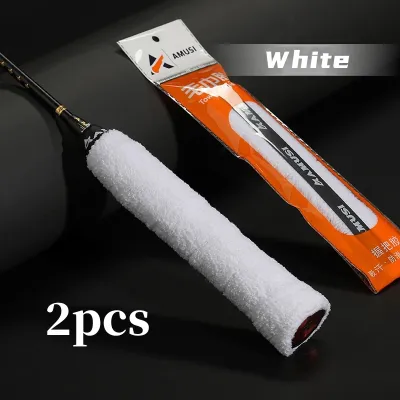
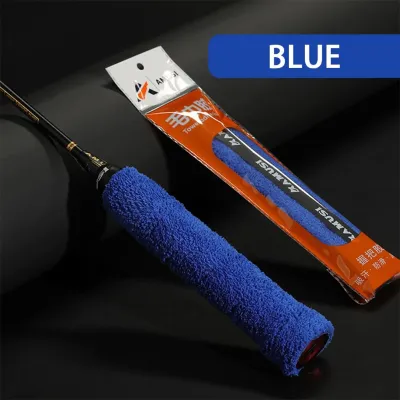
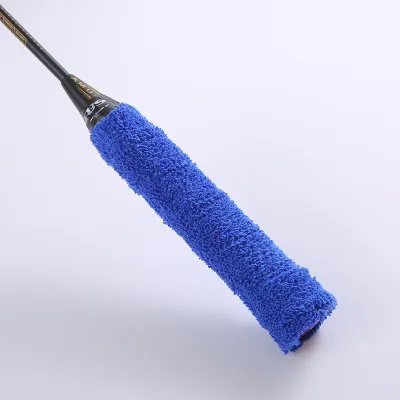

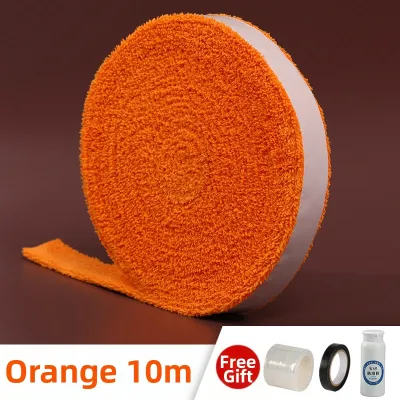
Prices are valid at publication and may change. Please refer to the product page for the latest price.
However, towel grips come with distinct trade-offs. While they excel at moisture management, they add noticeable thickness and weight to the handle. This extra bulk can alter the racket’s balance point, shifting it slightly toward the handle and potentially reducing head-heavy power. Players must weigh the benefit of a slip-free hold against a slightly heavier, thicker grip profile before making the switch.
Key Selection Criteria for Towel Grips
The height of the fabric loops, known as the pile height, directly determines how thick the grip feels in your hand. A high pile offers excellent shock absorption and a plush, cushioned feel, which is comfortable for players who grip the racket tightly. However, a thicker grip can make it harder to feel the bevels of the wooden handle, slightly reducing your control over precise shot angles and quick finger transitions.

Look closely at the fabric composition to determine how the grip handles moisture. Pure cotton grips offer exceptional initial absorbency and a soft feel, but they tend to hold onto moisture longer, which can lead to a heavy, damp handle by the end of a long session. Blends containing synthetic fibers like polyester dry faster and often maintain their structural integrity longer, though they might feel slightly less plush than pure cotton.
Towel grips generally come with either full-coverage adhesive backing or a single thin strip of tape down the center. Full-coverage adhesive keeps the grip securely anchored to the handle, preventing any sliding or bunching during aggressive swings. However, full adhesive can leave a sticky residue on your wooden handle or base grip when removed, whereas center-strip designs are easier to replace but require more tension during installation to prevent slipping.
Fabric density is a key indicator of how long a towel grip will last under frequent use. Low-density grips wear down quickly, flattening out and losing their absorbent properties after just a few games. High-density weaves resist matting and maintain their texture over multiple sessions, making them a more reliable and cost-effective choice for regular players.
Evaluating Options Available in the Philippines
To find genuine badminton gear, prioritize authorized physical sports retailers located in major shopping malls or official brand flagship stores on reputable e-commerce platforms. Purchasing from verified sources minimizes the risk of buying counterfeit grips that use low-grade synthetic fibers with poor absorbency. These imitation products often look identical to premium brands but fail quickly under real playing conditions.
Inspect the physical packaging carefully before making a purchase. Authentic premium grips usually feature clear, high-quality printing, holographic security seals, and distinct batch numbers on the packaging. Feel the texture of the fabric if a sample is available; counterfeit towel grips often feel stiff, scratchy, or excessively thin compared to the soft, dense feel of genuine products.
In the Philippine market, towel grips are available across various price points to suit different budgets. Entry-level options, often sold in bulk rolls or simple single packs, typically cost under ₱100 and are highly economical for players who replace their grips weekly. Premium individual grips, which feature advanced adhesive backings and specialized cotton blends, generally range from ₱150 to ₱300, offering better durability and comfort.
When shopping on online marketplaces, look for sellers with high positive ratings, detailed customer reviews, and clear return policies. Avoid listings with generic product photos or unusually low prices, as these are common indicators of substandard or imitation goods. Checking community forums or asking local coaches for recommended online distributors can also guide you to reliable sellers.
Proper Installation and Maintenance Routine
Start wrapping at the bottom of the handle, securing the tapered end of the grip with a small piece of tape if necessary. Wrap upward at a consistent angle, applying firm, even tension to prevent wrinkles or loose spots. Avoid overlapping the grip too heavily, as this creates bulky ridges that can cause blisters; instead, aim for a slight, uniform overlap of about two millimeters to ensure complete coverage. Secure the top near the cone with the provided finishing tape.
A towel grip requires regular replacement to maintain hygiene and performance. Look out for visible matting, where the fabric loops flatten completely and lose their soft texture. If the grip feels hard, crusty, or develops a persistent sour odor even after drying, it has accumulated dried sweat and bacteria and must be replaced immediately to protect your hands and the racket handle.
After every playing session, avoid immediately placing your racket inside a sealed bag, as trapped moisture promotes bacterial growth and can rot the wooden handle underneath. Allow the racket to air-dry in a well-ventilated room away from direct sunlight, which can degrade the adhesive and fibers. For players who sweat heavily, applying a light dusting of grip powder can help manage moisture during play and extend the grip’s usable life.
Frequently Asked Questions (FAQ)
Can I use a towel grip on a smaller grip size racket?
Using a towel grip on a smaller factory handle, such as a G5 or G6 size, is a common strategy. The naturally thinner handle provides extra clearance, allowing the thick towel fabric to wrap around without making the final grip size excessively bulky. If you prefer a precise feel, wrap the towel grip with higher tension to stretch the fabric slightly, reducing its overall thickness.
How often should I replace my towel grip?
The replacement frequency depends on how often you play and how much you sweat. Casual players who play once a week may only need to change their grip every three to four weeks. However, competitive players or those training daily in humid conditions often need to replace their towel grip every two to three sessions to maintain optimal traction and hygiene.
Do I need to remove the original base grip before applying a towel grip?
It is generally recommended to keep the original factory base grip intact to protect the raw wooden handle from sweat penetration. Applying a towel grip directly onto the bare wood can cause the wood to absorb moisture, leading to rot and structural weakness over time. If you need to reduce the handle’s thickness, wrap a thin layer of waterproof electrical tape or cushion wrap over the bare wood before applying the towel grip.
Community discussion
Share your experience or ask a question. Comments are reviewed before publication.