
Selecting the ideal fit and flexibility for your yuke swimming fins is the most critical step to ensuring a comfortable, high-performance experience in the water. Unlike standard athletic shoes, swimming fins must function as a seamless extension of your lower body. A mismatch in either size or blade stiffness can quickly lead to painful muscle cramps, skin chafing, or a severe loss of propulsion. To make an accurate choice, you must measure both the length and width of your feet, match those dimensions to the specific model’s size chart, and select a blade flexibility that aligns with your current leg strength and swimming style.
Why Correct Sizing and Blade Stiffness Matter for Efficiency
The physics of swimming with fins relies entirely on efficient energy transfer. When you kick, the power generated by your hips and thighs travels down your legs and is transferred directly through the foot pocket to the fin blade. If the foot pocket is too loose, your foot will slide around inside, causing a significant portion of your kicking energy to be lost as friction. This slippage not only reduces your speed but also creates rapid, painful chafing and blisters along your heel and toes.
Conversely, a foot pocket that is too tight restricts local blood circulation. In the aquatic environment, restricted blood flow combined with cool water temperatures is a direct recipe for sudden, debilitating arch and calf cramps. Furthermore, tight pockets compress the small bones of your feet, leading to rapid fatigue and discomfort that can cut your swimming session short.
Products mentioned in this guide
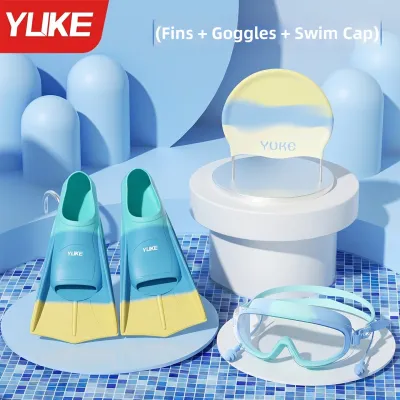
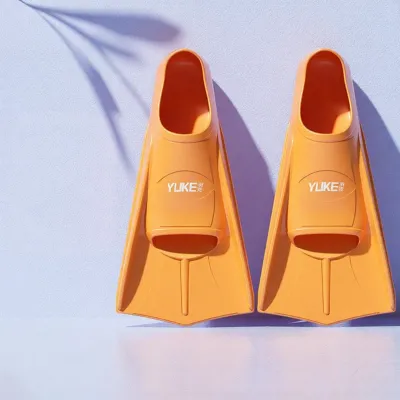
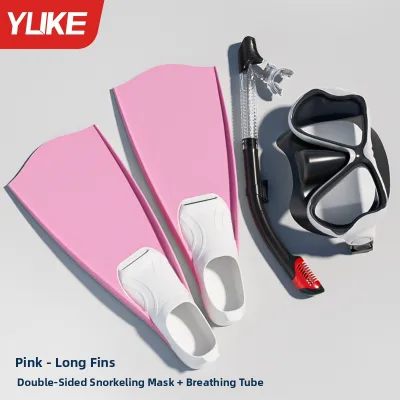
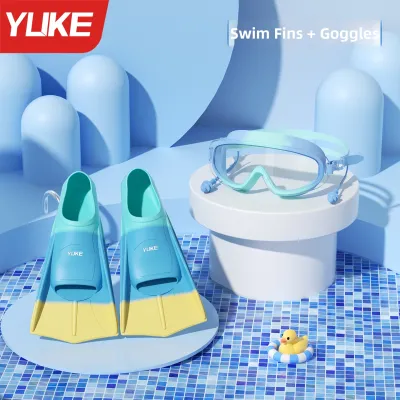
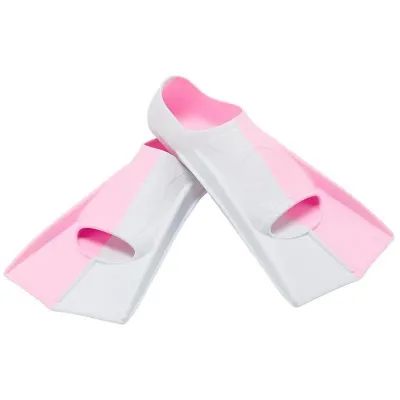
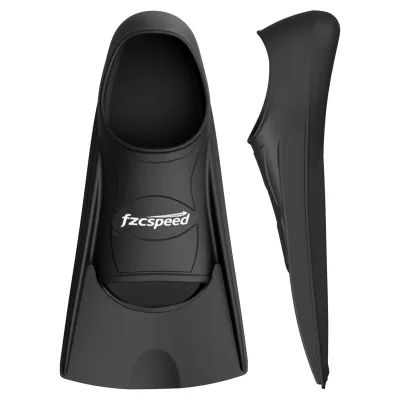
Prices are valid at publication and may change. Please refer to the product page for the latest price.
Blade stiffness plays an equally vital role in determining how much water your fins can displace with each kick. An overly rigid blade requires immense muscular torque to bend. If your legs are not highly conditioned, driving a stiff blade will quickly exhaust your muscles and cause severe cramping. On the other hand, a blade that is too soft for a powerful swimmer will flex excessively under load, shedding water off the sides rather than pushing it backward, leaving you kicking rapidly without gaining significant forward momentum.
What You Need Before Measuring Your Feet
To get the most accurate measurements for your new fins, you will need to gather a few basic household items. Prepare a blank sheet of paper that is larger than your foot, a sharp pencil or pen, a flexible measuring tape or a standard ruler, and a flat, hard floor surface. Avoid conducting measurements on soft carpets or rugs, as these surfaces allow your feet to sink, which distorts the actual width and length profile.

It is highly recommended to measure your feet at the end of the day. Throughout the day, gravity, walking, and warm tropical temperatures cause your feet to swell slightly. Measuring your feet in the morning when they are at their smallest can lead to purchasing fins that feel uncomfortably tight during an afternoon session in the water.
Additionally, consider the gear you plan to wear. If you intend to use neoprene socks or booties for thermal protection or blister prevention, you must wear them during the measurement process. Even a thin neoprene sock will change the overall volume of your foot, which directly impacts the required size of the fin pocket.
How to Measure and Select Your Yuke Fin Size
Measuring Foot Length and Width Accurately
Start by placing the sheet of paper flat on the hard floor, flush against a straight wall. Stand upright with your heel resting lightly against the wall and your weight distributed evenly across both feet. Standing ensures that your foot fully expands to its natural weight-bearing length and width.
Have a friend trace the outline of your foot with the pen held perfectly vertical. If you are measuring alone, carefully mark the furthest point of your longest toe and the widest points across the ball of your foot. Repeat this process for both feet, as it is highly common for one foot to be slightly larger than the other; always use the measurements of your larger foot when selecting gear.
Once marked, use your ruler to measure the distance from the heel edge of the paper to your longest toe in centimeters. Next, measure the widest distance across the ball of your foot. Paying close attention to width is essential, as many swimmers with wider feet experience painful lateral compression when squeezing into standard-width rigid foot pockets.
Navigating the Yuke Size Chart
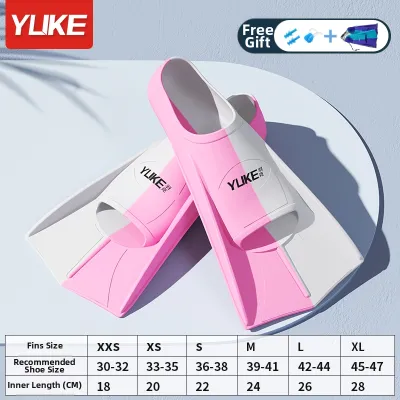
Once you have your exact measurements in centimeters, locate the official size chart for the specific model of Yuke fins you are purchasing. Sizing molds can vary significantly between different product lines, such as full-foot snorkeling fins versus open-heel scuba fins. Do not rely solely on your everyday shoe size, as shoe sizing standards differ between brands and do not account for the unique snugness required of water sports equipment.
When comparing your measurements to the chart, prioritize the centimeter length first. If your length matches a specific size but your width is at the absolute maximum limit for that size, it is generally safer to choose the next size up to prevent painful squeezing. A pocket that is slightly too wide can be easily adjusted with a thin sock, whereas a pocket that is too narrow cannot be stretched.
If your measurements fall directly between two sizes, consider your foot shape. Swimmers with narrow, low-volume feet should typically opt for the smaller size to ensure a secure heel lock. Swimmers with wider feet or high arches should size up to maintain comfortable circulation.
Accounting for Neoprene Socks
Neoprene socks are incredibly useful for preventing friction blisters and providing mild insulation. In warm tropical waters, such as those found throughout the Philippines, a thin 1.5mm to 2mm neoprene sock is usually sufficient to protect your skin without causing excessive heat buildup.
Even these thin socks add several millimeters of volume around your entire foot. If you plan to wear them, make sure to measure your feet while wearing the socks. If you cannot measure with them on, a reliable rule of thumb is to add approximately 5mm (half a size) to your barefoot measurements before comparing them to the Yuke size chart.
For colder deep-water diving where thicker 3mm to 5mm boots are required, you will almost certainly need to select an open-heel fin model with adjustable straps, or size up by at least one to two full sizes in a full-foot pocket model to prevent your toes from being painfully crushed at the front of the fin.
Matching Blade Stiffness to Your Leg Strength and Technique
Assessing Your Leg Strength and Kick Technique
Choosing the correct blade stiffness requires an honest self-evaluation of your swimming mechanics and physical conditioning. An efficient fin kick relies on a straight-leg flutter kick that originates entirely from your hips and glutes, keeping your knees relaxed but relatively straight. This technique allows you to utilize the largest muscle groups in your body to drive the blade through the water.
If you have a habit of ‘bicycle kicking’—where you bend your knees deeply as if riding a bike—you will find that stiff blades place immense, unnatural strain on your knee joints and quadriceps. Swimmers with this technique will struggle to bend a rigid blade, leading to rapid fatigue. Your overall cardiovascular fitness and how often you swim will dictate how much resistance your legs can comfortably handle over long periods.
Beginners, casual snorkelers, and those who do not engage in regular leg-strength training should avoid rigid blades. Developing the specific muscle memory and endurance required to drive a stiff blade takes time, and starting with a blade that is too demanding will only result in frustration and physical strain.
Understanding General Blade Flex Categories
- Soft Flex: These blades bend with very little resistance, making them exceptionally easy on the joints and muscles. They are ideal for beginners, smaller-framed individuals, and long-distance surface snorkelers. While they require a faster kick cadence to reach high speeds, they protect your legs from early exhaustion and cramps.
- Medium Flex: Offering a balanced middle ground, medium blades are highly versatile and suitable for intermediate swimmers with average leg strength. They provide respectable propulsion per kick without demanding athletic-level leg conditioning, making them a popular choice for recreational divers.
- Hard/Stiff Flex: These highly rigid blades are built for advanced divers, spearfishes, and rescue swimmers who must carry heavy gear or swim against strong currents. They deliver maximum thrust per kick but require a slow, deliberate, and powerful kick cycle, backed by excellent muscular conditioning.
Always verify the exact stiffness labels used by Yuke for your specific model, as materials can range from flexible plastic composites to highly rigid carbon fiber.
Recognizing the Signs of Incorrect Stiffness
If your fin blade is too stiff for your current strength level, your body will give you clear warning signs very quickly. You will experience acute cramping in your calves, shins, or the arches of your feet, along with localized aching in your knee joints. Your kicks will feel heavy, slow, and labored, and you will find it difficult to maintain a steady, continuous rhythm.
If your blade is too soft, you will experience a sensation of ‘spinning your wheels.’ You will find yourself kicking rapidly and working your cardiovascular system hard, yet noticing very little forward momentum. This mismatch is common when strong, muscular individuals or experienced divers use entry-level soft fins that cannot handle the power of their kick.
How to Test the Fit and Troubleshoot in the Water
Before heading out into open water, perform a dry fit check in a comfortable indoor setting. Slide your foot into the pocket; it should feel snug and secure, similar to a firm handshake. Your toes should lightly touch the end of the pocket without being bent or cramped, and the heel area should grip your foot firmly without digging sharply into your Achilles tendon.
Once you are satisfied with the dry fit, conduct your initial water test in a shallow, controlled environment such as a swimming pool or a calm, shallow beach. Testing in shallow water allows you to get accustomed to the weight, buoyancy, and flex of the fins without the added stress of deep-water currents or waves.
Pay close attention to early signs of discomfort during your test. If you feel a ‘hot spot’ or a localized rubbing sensation on your heel or toes, stop swimming immediately to adjust your straps or put on a pair of protective socks before a blister forms. Ignoring these early warning signs will quickly result in painful skin damage that can ruin your diving trip.
Safety Boundary: If you experience severe muscle cramping at any point during your test, exit the water immediately. Fin equipment cannot replace physical preparation or proper hydration, and attempting to push through a severe cramp in deep water compromises your safety and your ability to stay afloat.
Adapting Your Choice for Snorkeling vs. Diving
Your final decision on size and blade stiffness should also factor in the specific water activity you plan to pursue. For surface snorkeling along shallow reefs, such as those in Anilao or Moalboal, shorter and softer blades are highly advantageous. They allow for quick, agile movements in tight spaces, are easy to pack in travel luggage, and greatly minimize the risk of accidentally kicking and damaging delicate coral structures.
For freediving or scuba diving, longer and stiffer blades are generally preferred. These activities require managing negative buoyancy, crossing thermoclines, and ascending from depth, where maximizing propulsion per kick is vital. The longer blade provides the necessary surface area to move your body and heavy dive gear efficiently through the water column.
Always check if your chosen Yuke model is optimized for a specific discipline. Using a long, rigid freediving fin for casual surface snorkeling can be clumsy and tiring, while using short pool-training fins for a deep scuba dive will leave you underpowered and struggling against ocean currents.
Frequently Asked Questions (FAQ)
Should I size up or down if my measurements fall between two Yuke sizes?
If your foot measurements fall directly between two sizes, it is generally recommended to size up if you have wide feet, high arches, or plan to wear neoprene socks. Sizing down is only advisable if you have very narrow, low-volume feet, plan to swim barefoot, and want to ensure a highly secure fit to prevent heel slippage.
Can I use the same Yuke swimming fins for both pool training and open water?
While physically possible, long open-water Yuke fins are often too cumbersome for standard pool lanes and can easily damage pool tiles or injure other swimmers during turns. For pool workouts, short-blade training fins are much more practical, leaving your longer Yuke fins reserved for open-water environments.
How do I prevent foot and calf cramps when using stiff blades?
To minimize cramping, ensure you are fully hydrated and have adequate electrolyte levels before entering the water. Perform thorough land-based stretches for your calves and Achilles tendons, and focus on keeping your ankles relaxed while driving the kick from your hips rather than bending your knees.
Community discussion
Share your experience or ask a question. Comments are reviewed before publication.