
When preparing for a match or an intense training session, purchasing a genuine soccer ball adidas is critical for ensuring consistent performance on the pitch. In the Philippines, where counterfeit sports equipment is common across both online marketplaces and physical stalls, knowing how to verify authenticity before you buy can save you from a disappointing purchase. A genuine ball is engineered to strict aerodynamic and material standards, whereas a counterfeit imitation will quickly degrade under the demands of regular play.
Why Authenticity Matters for Your Game
Playing with a counterfeit ball directly impacts your skill development and overall experience on the field. Genuine sports equipment is designed to maintain a predictable trajectory when kicked, allowing players to practice passing, shooting, and ball control with accuracy. Counterfeit balls, by contrast, are often made with low-grade bladders and uneven weight distribution, leading to erratic flight paths and an inconsistent bounce that can disrupt your training sessions.
Durability is another major concern, especially in the tropical climate of the Philippines. High humidity and heat can accelerate the degradation of cheap adhesives used in fake balls, causing panels to peel or seams to split. Furthermore, authentic balls utilize advanced impact-absorption materials that protect your joints during hard strikes and headers. Counterfeit alternatives often rely on stiff, unregulated plastics that fail to absorb impact, increasing the risk of minor foot or ankle strain during play.
Products mentioned in this guide
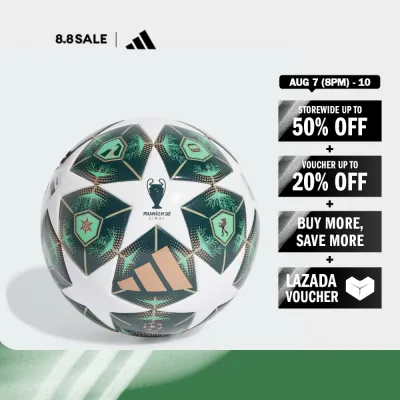
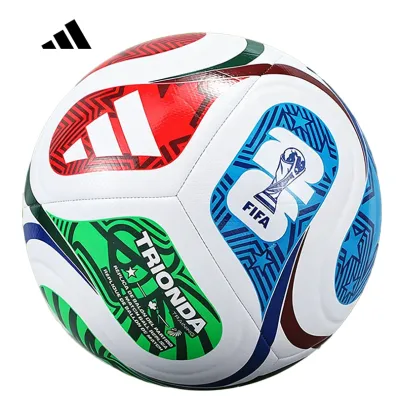
Prices are valid at publication and may change. Please refer to the product page for the latest price.
Visual and Physical Traits of an Original Soccer Ball Adidas
To distinguish a genuine product from an imitation, you must carefully examine its physical construction and presentation. High-quality manufacturing leaves distinct markers that counterfeiters struggle to replicate.

Packaging, Tags, and Labeling
Official packaging is your first line of defense when verifying authenticity. Genuine Adidas soccer balls are typically sold in high-quality cardboard boxes with crisp, high-resolution printing, or in durable mesh carrying bags featuring clean branding. The fonts used on the packaging are perfectly aligned and free of color bleeding or smudging. Every authentic ball comes with a physical tag that details specific product information.
This tag features an Article (ART) number, which is a six-character alphanumeric code unique to that specific model and colorway. This ART number must perfectly match the product code printed on the ball itself and the retail packaging. Additionally, the tag provides precise details regarding the ball’s size, material composition, and manufacturing origin. Most high-end Adidas soccer balls are manufactured in specialized facilities in countries like Pakistan. If you notice spelling errors, smudged ink, or missing material specifications on the tag, the item is highly likely to be a counterfeit.
Panel Construction, Texture, and Valve Quality
The tactile feel and construction of the ball provide immediate clues about its origin. Adidas designs its premium match balls with seamless thermal bonding technology, which fuses the panels together using heat and pressure. This eliminates stitched seams, preventing water absorption and ensuring a perfectly round shape. For training-tier balls, Adidas utilizes high-quality machine or hand stitching with thick, durable threads that lie flush against the surface.
Surface texture is another critical indicator of quality. Authentic match balls feature a micro-textured outer casing with tiny dimples or grip patterns designed to optimize aerodynamics and control. Imitations are often completely smooth or have a cheap, glossy finish that becomes slippery when wet. Finally, inspect the inflation valve. A genuine valve is made of premium, durable rubber, is cleanly cut, and sits flush with the ball’s surface. A poorly cut, off-center, or protruding valve that leaks air immediately indicates a counterfeit product.
Common Red Flags in Counterfeit Adidas Balls
Identifying a counterfeit often comes down to recognizing a combination of subtle manufacturing defects. While a single minor cosmetic imperfection can occasionally occur during mass production, multiple flaws are a clear sign of a fake. Visually, look for blurry, peeling, or misaligned logos. The iconic Adidas three-stripes or performance logo should be perfectly integrated into the ball’s design, not appearing as a cheap sticker or an uneven screen print.
Another common indicator is a strong chemical odor. Counterfeiters often use cheap, unregulated synthetic materials like low-grade PVC to cut costs. These materials emit a pungent, chemical smell of plasticizers and solvents that is noticeably different from the mild, clean scent of genuine polyurethane or synthetic leather. Additionally, pay close attention to the ball’s weight and shape. A standard Size 5 soccer ball should weigh between 410 and 450 grams when fully inflated. Counterfeit balls are frequently too light or excessively heavy, and they often warp into an asymmetrical, egg-like shape under standard inflation pressure.
Step-by-Step Verification Methods
To ensure you are purchasing a genuine product, follow a structured verification process before finalizing your purchase. First, locate the unique ART number on the ball’s tag or printed near the inflation valve. Open a web browser and search for this specific code alongside the brand name. The search results should display the exact model, colorway, and release year of the ball you are holding. If the search results show a completely different model or no results at all, the ball is a counterfeit.
While barcode scanning apps are widely available, do not rely on them as your sole verification method. Counterfeiters can easily copy a legitimate barcode from an authentic ball and print it onto thousands of fake packaging labels. A successful barcode scan only proves that the barcode itself is valid, not that the physical ball is genuine. Always combine digital code verification with a thorough physical inspection of the panel seams, valve quality, and surface texture. If the ball claims to be a match-grade model, look for the official FIFA Quality or FIFA Quality Pro certification stamp and verify the license number on the official FIFA database.
Where to Buy Authentic Adidas Soccer Balls in the Philippines
Navigating the retail landscape in the Philippines requires caution, especially when shopping online. To guarantee authenticity, purchase directly from official Adidas physical stores located in major commercial centers, or use the official Adidas Philippines online store. Authorized sporting goods retailers, such as Toby’s Sports or Olympic Village, are also highly reliable sources that source their inventory directly from official distributors.
If you prefer to shop on major e-commerce platforms, always look for verified seller badges, such as “Mall” or “Official Store” designations. Avoid third-party sellers that do not carry these credentials. Take the time to read recent customer reviews, paying close attention to user-uploaded photos. Look at the stitching, valve placement, and packaging in these photos to verify they match official standards. Be extremely skeptical of prices that seem too good to be true. While a genuine training ball typically costs between ₱1,200 and ₱2,500, and premium match balls can exceed ₱8,000, listings offering “original” match balls for ₱500 to ₱800 are almost certainly selling counterfeits.
What to Do If You Suspect You Bought a Fake
If you realize you have purchased a counterfeit ball, stop using it immediately. Playing with the ball will cause wear and tear that could void your eligibility for a return or refund. Instead, place the ball in a well-lit area and take clear, high-resolution photos and videos of the defects. Focus on the peeling logos, uneven stitching, leaking valve, or any discrepancies on the product tags.
Next, initiate a return or refund request through the e-commerce platform’s buyer protection program or by contacting the retailer’s customer service department directly. Provide your documented evidence and clearly state that the item received is a counterfeit. Keep all communication within the official platform to protect your buyer rights. If the seller is unresponsive or refuses to cooperate, you can contact your bank or credit card provider to initiate a chargeback or dispute, using your photo evidence and transaction history to support your claim.
Frequently Asked Questions (FAQ)
Can I verify an Adidas soccer ball just by scanning the barcode?
No, barcode scanning is not a foolproof verification method. Counterfeit manufacturers frequently copy legitimate barcodes from genuine Adidas products and print them onto fake tags. While a scan can retrieve product information, it does not prove the physical item in your hands is authentic. You must always combine barcode checks with physical inspections and an ART number search.
Do all original Adidas soccer balls come with a pump or accessories?
No, authentic Adidas soccer balls are almost always sold individually and do not include pumps, inflation needles, or carrying bags unless they are explicitly marketed as part of a special retail bundle. If a seller offers free accessories as a major selling point, focus your evaluation on the quality and markings of the ball itself rather than the included extras.
Is a slightly off-center logo always a sign of a fake Adidas ball?
Not necessarily, as minor cosmetic variations can occasionally occur within acceptable manufacturing tolerances during mass production. However, severely misaligned, crooked, or peeling logos—especially when combined with rough panel seams, a protruding valve, or an unusual chemical odor—are strong indicators that the ball is a counterfeit.
Community discussion
Share your experience or ask a question. Comments are reviewed before publication.