
Spotting a fake Holo Flask tumbler requires a close inspection of three primary elements: the color-shifting quality of its holographic finish, the weight and temperature isolation of its double-wall stainless steel, and the precision of its engraved branding and packaging. In the tropical climate of the Philippines, where high humidity and intense heat make a reliable insulated beverage container an everyday essential, counterfeit products have become increasingly common. Knowing how to differentiate a genuine tumbler from a cheap imitation ensures you receive the performance, durability, and safety you pay for.
Counterfeit manufacturers have grown highly adept at replicating the outward appearance of popular hydration gear. However, they consistently cut corners on material quality, vacuum insulation technology, and non-toxic manufacturing standards. By learning how to analyze the physical construction, weight, and visual details of your tumbler, you can quickly determine whether your purchase is authentic or a potentially hazardous counterfeit.
Why Counterfeit Holo Flask Tumblers Are Flooding the Market
The surge in counterfeit insulated tumblers is directly linked to the massive global demand for functional, stylish hydration accessories. Products featuring unique, eye-catching finishes—such as the vibrant, color-shifting holographic coatings pioneered by popular lifestyle brands—frequently go viral on social media platforms. This viral popularity creates a massive wave of consumer interest, often outpacing the official supply chains and leaving authorized retail shelves temporarily empty.
Products mentioned in this guide
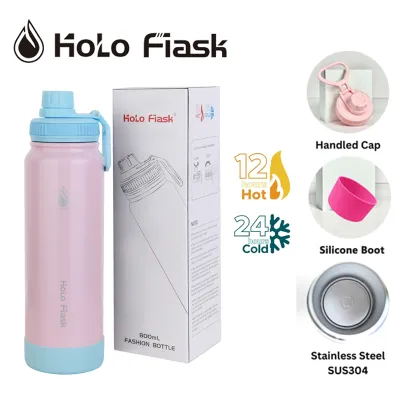
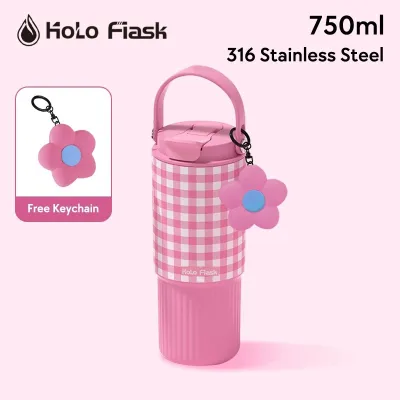
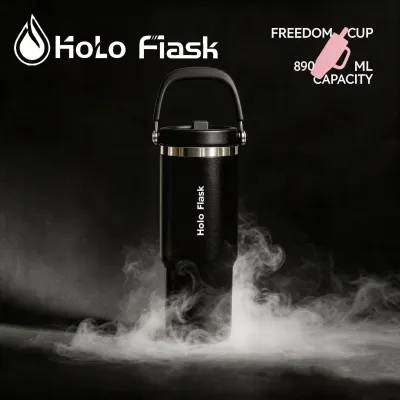
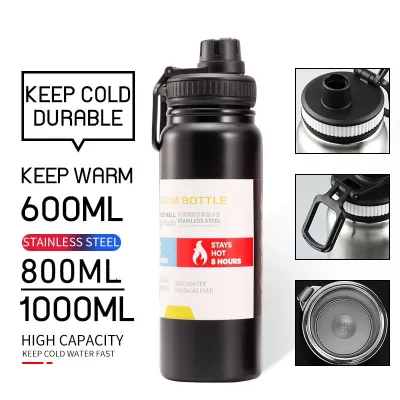
Prices are valid at publication and may change. Please refer to the product page for the latest price.
In the Philippines, the need for high-performance insulated drinkware is particularly pronounced. Commuters, students, fitness enthusiasts, and outdoor adventurers rely on vacuum-insulated bottles to keep water ice-cold throughout long, humid days. When official stock is limited, buyers naturally turn to third-party resellers and online marketplaces to secure these coveted designs, unwittingly exposing themselves to a market saturated with unauthorized replicas.
Counterfeiters exploit this high demand by producing visually similar items at a fraction of the cost. Because they do not invest in food-grade material certifications, vacuum seal testing, or fair labor practices, they can sell their imitation products at highly discounted prices. These low prices, combined with deceptive product listings that use stolen official marketing imagery, make it incredibly easy for unsuspecting shoppers to purchase a fake.
How to Tell a Real Holo Flask Tumbler from a Fake
To protect yourself from counterfeit products, you must perform a systematic physical inspection of the item. While a fake tumbler might look convincing from a distance, it will inevitably reveal its true nature under close scrutiny. Focus your inspection on the packaging, the structural build quality, and the specific characteristics of the holographic exterior.

Inspecting Packaging and Labels
Authentic packaging is designed to protect the product while reflecting the premium nature of the brand. Genuine Holo Flask tumblers arrive in sturdy, high-density cardboard boxes that resist crushing during transit. The printing on the box should be exceptionally crisp, with sharp text, accurate brand logos, and perfectly aligned barcodes. The color reproduction on the packaging will be vibrant and true to life, without any signs of color bleeding or pixelation.
In contrast, counterfeit packaging is often constructed from thin, flimsy cardboard that easily dents or tears. The text on fake boxes frequently exhibits blurry edges, low-contrast printing, or noticeable typographical and spelling errors. You should also pay close attention to the product labels and stickers; counterfeits often feature crookedly applied labels, incorrect font styles, or missing barcode information.
Additionally, check the accessories included inside the box. Genuine packages contain accessories that match the official product description exactly, such as custom-molded lids, durable straws, or specific care instruction booklets. If your tumbler comes with generic, cheaply wrapped plastic straws, poorly sized cleaning brushes, or documentation containing broken English, you are likely dealing with a counterfeit.
Checking Build Quality and Materials
An authentic Holo Flask tumbler is manufactured using premium, food-grade 18/8 stainless steel (also known as 304-grade stainless steel). This material provides excellent resistance to rust, prevents metallic taste transfer, and gives the tumbler a reassuring, solid weight. When you hold an empty, genuine tumbler, it should feel balanced and substantial in your hand.
Counterfeit tumblers often feel surprisingly light because manufacturers use thinner, lower-grade metals or omit the internal copper lining that aids temperature retention. To save on production costs, fake products may also skip the vacuum-insulation process entirely, leaving a simple air gap between the two metal walls. This compromise severely degrades the bottle’s thermal performance, causing it to sweat when filled with ice or transfer heat rapidly when filled with hot liquids.
Examine the lid and sealing mechanisms carefully. Genuine lids are constructed from high-quality, BPA-free plastics and feature thick, food-grade silicone gaskets that establish a completely airtight, leak-proof seal. The threads on the lid and the neck of the bottle should align perfectly, allowing you to screw the lid on smoothly without resistance. Counterfeit lids often use cheap, brittle plastics that emit a strong, chemical odor, and their poorly molded threads frequently result in cross-threading, misalignment, and persistent leaks.
Evaluating the Holographic Finish
The defining feature of a Holo Flask is its signature holographic coating, which requires a specialized, multi-layered application process to achieve. On an authentic tumbler, this finish is exceptionally smooth, uniform, and integrated directly into the outer wall. When exposed to light, the surface should display a clean, seamless color-shifting transition without any visible boundaries between the hues.
Counterfeit versions typically rely on cheap shortcuts to mimic this premium aesthetic. Many fakes use low-quality metallic stickers, poorly applied vinyl wraps, or cheap spray paint that lacks the depth of a true holographic finish. These imitation coatings often feel rough, sticky, or uneven to the touch, and you may observe bubbles, wrinkles, or visible seams along the body of the tumbler.
Furthermore, cheap finishes have incredibly poor adhesion. Under normal daily use, a counterfeit finish will chip, scratch, or peel away in large flakes, especially when exposed to moisture or hand oils. A genuine powder-coated or professionally lacquered holographic finish is highly durable, designed to resist sweat, and will remain intact even after months of regular hand washing.
Practical Verification Steps Before and After Purchase
If you want to verify the authenticity of a tumbler you already own or are planning to buy from a local reseller, there are several practical tests you can perform. These steps will help you look past superficial aesthetics and evaluate the actual engineering of the product.
- Examine the Bottom Stamp: Turn the tumbler upside down and inspect the base. Authentic models feature clean, precise, laser-engraved or stamped information detailing the brand name, liquid capacity, patent numbers, and care instructions. The text should be perfectly centered, using a consistent, high-resolution font. Counterfeits often feature shallow, crooked, or blurry engravings, and some may use generic sticker labels instead of permanent engraving.
- Verify Security Codes: Check the packaging or the product tags for official security features, such as scratch-off verification labels, QR codes, or unique serial numbers. If present, scan the QR code using your smartphone camera. Ensure that the link directs you to the brand's official, secure domain (look for the "https" prefix and double-check the spelling of the URL) rather than a sophisticated copycat website designed to validate fake serial numbers.
- Perform the Temperature Test: Fill the tumbler with ice-cold water and seal the lid. Let it sit in a warm, humid room for twenty to thirty minutes. The exterior wall of a genuine, vacuum-insulated tumbler will remain dry and neutral to the touch. If you observe condensation forming on the outside of the metal body (sweating), or if the exterior feels cold to the touch, the vacuum seal is defective or non-existent, indicating a counterfeit product.
- Perform the Magnet Test: While not entirely definitive, a simple magnet test can provide valuable clues. Food-grade 18/8 stainless steel is generally non-magnetic or only weakly magnetic. If a household magnet sticks firmly to the body of your tumbler, it likely contains high levels of low-grade ferritic steel, which is highly susceptible to rust and chemical corrosion.
Always remember that counterfeiters constantly update their methods. If you notice a combination of minor flaws—such as a slightly misaligned logo, a lid that does not screw on smoothly, and a finish that scratches easily—do not dismiss them as simple manufacturing variances. Cross-reference these observations with the official product specifications listed on the manufacturer’s website.
Safe Channels for Buying Authentic Tumblers
The most effective way to avoid the disappointment and health risks of a counterfeit tumbler is to purchase exclusively through authorized, verified retail channels. While third-party listings on online marketplaces can be tempting due to lower prices, they carry an exceptionally high risk of fraud.
- Official Brand Websites: Whenever possible, place your order directly through the manufacturer's official online store. This guarantees that you are receiving a genuine product backed by the brand's full warranty and customer support services.
- Authorized Physical Retailers: Purchase your hydration gear from reputable department stores, outdoor specialty shops, or authorized brand kiosks located inside major shopping malls. Buying in person allows you to physically inspect the weight, finish, and lid alignment before handing over your money.
- Verified Flagship Stores: If you must shop on major online marketplaces, restrict your purchases to sellers that carry official verification badges, such as "Mall" or "Preferred" store statuses. Ensure the store name matches the official brand distributor in the Philippines, and avoid independent, unverified cross-border sellers.
- Analyze Seller Ratings and Reviews: Before checking out, thoroughly examine the seller's profile. Look for a high overall rating (ideally 4.8 stars or higher) and read through the customer reviews. Pay close attention to reviews that include actual photos and unboxing videos, as these provide a realistic look at what buyers actually receive. Be skeptical of stores that have hundreds of generic, five-star reviews containing identical phrasing, as these are often fabricated.
Be highly suspicious of any deals that seem too good to be true. If a tumbler that normally retails for ₱1,500 is being offered by an unauthorized social media reseller for ₱300, it is almost certainly a counterfeit. Genuine brands maintain strict pricing controls, and extreme discounts are a primary indicator of replica merchandise.
Steps to Take If You Accidentally Buy a Fake
If you discover that you have accidentally purchased a counterfeit Holo Flask tumbler, you must act quickly to protect your financial interests and report the fraudulent seller. Do not attempt to use the product, as unverified materials can pose serious health risks.
First, document the evidence thoroughly. Take clear, high-resolution photographs and videos of the product from multiple angles, highlighting the specific flaws you identified, such as blurry printing, crooked logos, peeling paint, or a leaking lid. Take photos of the packaging, the shipping label, and any included accessories as well.
Second, initiate a formal return and refund request through the e-commerce platform where you made the purchase. Most major online marketplaces feature robust buyer protection programs designed to combat counterfeiting. Select “Item is counterfeit” or “Product not as described” as your official reason for the return, and upload your documented photos and videos to support your case. Avoid communicating with the seller outside of the platform’s official chat system, as this can void your buyer protection rights.
If the seller refuses to cooperate, or if the platform’s automated dispute resolution fails to resolve the issue, escalate your claim. Contact your payment provider—such as your credit card issuer or digital wallet service—to dispute the transaction and request a chargeback based on receiving counterfeit goods. Additionally, you can file a formal consumer complaint with the Department of Trade and Industry (DTI) in the Philippines to report the merchant for selling deceptive and substandard products.
Frequently Asked Questions (FAQ)
Can a fake Holo Flask tumbler be safe to drink from?
No, counterfeit tumblers are generally unsafe to drink from and should not be used for daily hydration. Because counterfeit manufacturers operate outside of regulatory oversight, they often use low-grade industrial metals that are susceptible to rusting, along with cheap plastics and adhesives that contain harmful levels of Bisphenol A (BPA), lead, or other heavy metals. Over time, these toxic substances can leach directly into your beverages, especially when the tumbler is exposed to hot or acidic liquids. If you suspect your tumbler is a counterfeit, discontinue using it immediately to protect your health.
Does a missing authenticity sticker always mean the tumbler is fake?
A missing authenticity sticker is a significant red flag, but it does not automatically guarantee that the tumbler is a counterfeit. Occasionally, genuine products may lose their external paper tags, stickers, or protective plastic wraps during warehouse handling, shipping, or customs inspections. Furthermore, older manufacturing batches or specific regional product lines might not have included the exact same security stickers used on newer releases. Rather than basing your final judgment on a single missing sticker, you should evaluate the overall build quality, weight, engraving precision, and the reputation of the retailer where you bought the item.
Community discussion
Share your experience or ask a question. Comments are reviewed before publication.