
Identifying a genuine molten bg3800 original basketball is crucial for players who want consistent performance on the court. With the high demand for premium composite leather basketballs, counterfeit models have flooded both physical and digital marketplaces. Spotting a fake requires a keen eye for material quality, precise branding, and structural details that counterfeiters fail to replicate. By understanding these key indicators, you can protect your investment and ensure your training or competitive matches are played with a ball that meets official standards.
Why Authenticity Matters for Your Game
The material composition of your basketball directly impacts how it performs, especially under challenging environmental conditions. In the Philippines, where high humidity and dusty courts are common, a ball’s material determines its lifespan and usability. Authentic composite leather is engineered to absorb moisture from sweaty palms, maintaining a reliable grip throughout an intense game. Counterfeit balls, usually made of cheap polyvinyl chloride (PVC) or low-grade polyurethane (PU), become incredibly slick when exposed to sweat or humidity. This lack of grip leads to frequent turnovers, poor shooting release, and general frustration on the court.
Furthermore, bounce predictability is a major differentiator between genuine and fake equipment. A genuine Molten ball features a balanced butyl bladder wrapped in high-tensile nylon thread, ensuring that the ball bounces true every time it hits the hardwood, polished concrete, or asphalt. Fake basketballs often have uneven bladders, resulting in erratic bounces that disrupt your dribbling rhythm. This unpredictability can even lead to minor injuries, such as sprained fingers, when a player misjudges a bounce.
Products mentioned in this guide
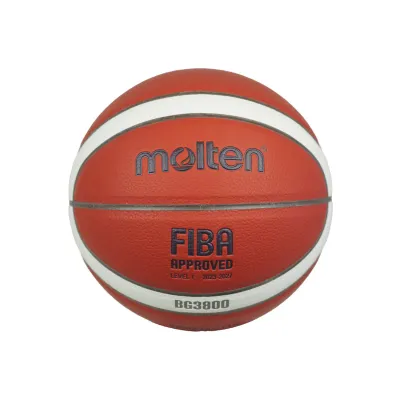
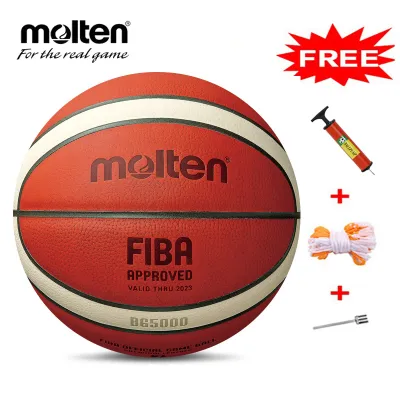
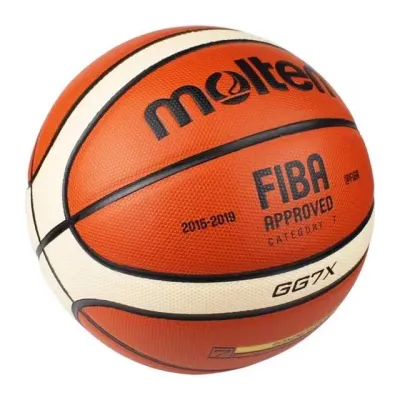
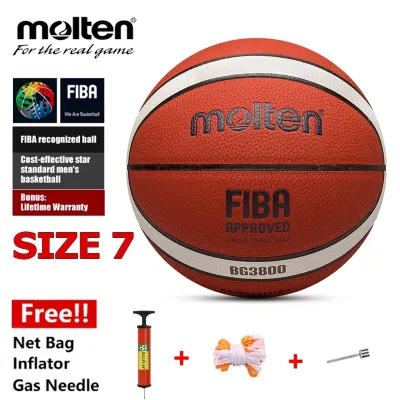
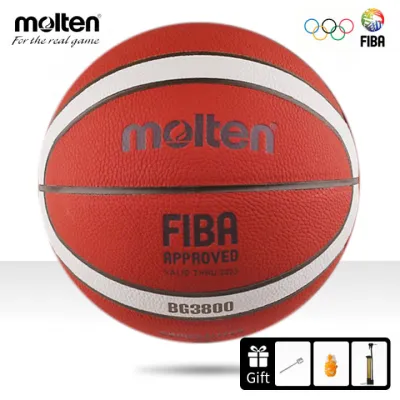
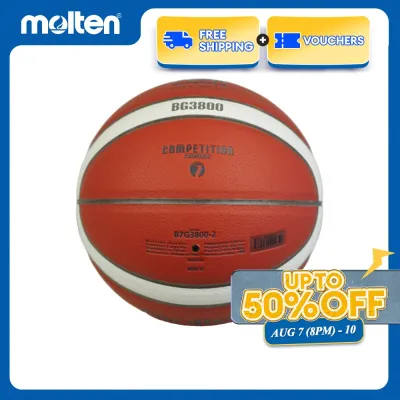
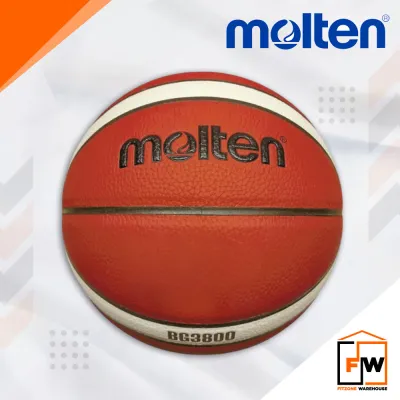
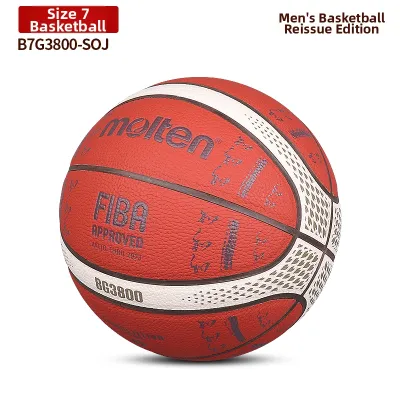
Prices are valid at publication and may change. Please refer to the product page for the latest price.
Lastly, structural integrity is highly compromised in counterfeits. The laminated panels of a fake ball often begin to peel at the seams after just a few sessions on a warm, humid court. An authentic Molten ball is engineered to withstand high-impact play and repeated inflation cycles without losing its spherical shape or panel adhesion.
Visual and Physical Markers of a Molten BG3800 Original
To verify your basketball, you must conduct a thorough physical inspection. Genuine Molten basketballs are manufactured under strict quality control guidelines, meaning any cosmetic imperfection, material flaw, or structural misalignment is a strong indicator of a counterfeit. When inspecting a ball, pay close attention to three primary areas: the surface texture, the alignment of the printed logos, and the construction of the inflation valve.

Surface Texture, Material, and Grip
The Molten BG3800 is renowned for its premium composite leather cover, which offers a soft, tacky feel right out of the box. Authentic composite leather has a distinct texture characterized by consistent pebble depth and spacing across all 12 panels. When you run your fingers over a genuine ball, the surface feels supple and slightly cushioned, providing excellent tactile feedback. This material is specifically engineered to absorb moisture, ensuring that the ball remains grippy even when players’ hands are sweaty.
In contrast, counterfeit versions typically use cheap synthetic materials that feel rigid, plasticky, or artificially sticky. Instead of the natural, deep pebbling of the original, fake balls often feature shallow, uneven pebbles that look stamped or melted onto the surface. Some counterfeits may feel excessively sticky initially due to chemical coatings, but this artificial grip quickly degrades, leaving the ball slick and unusable after a few games. Additionally, the premium composite leather of a genuine BG3800 will break in and improve in grip over time, whereas a fake ball’s outer layer will begin to flake, peel, or crack.
Logos, Typography, and Panel Alignment
Molten’s signature 12-panel Giugiaro design requires highly precise manufacturing. On an authentic BG3800, the channels (the black grooves separating the panels) are uniform in width and depth. The panels themselves are perfectly aligned, with no overlapping edges, gaps, or visible glue residue where the seams meet. If you notice that the channels are crooked, unevenly deep, or that the corners of the panels are lifting, you are likely holding a counterfeit.
The printed logos and typography on a genuine ball are exceptionally crisp and clear. The “molten” brand name, the “BG3800” model number, and the FIBA approval graphics are printed using high-quality, wear-resistant ink. The letters have sharp edges with no bleeding, smudging, or misalignment. Counterfeiters often use cheap printing presses, resulting in blurred text, incorrect font weights, or slightly distorted logos. Pay close attention to the spacing between letters and the exact alignment of the text relative to the panels; fakes often feature crooked printing that is visibly off-center.
Valve and Air Retention
The inflation valve is one of the most overlooked yet reliable indicators of authenticity. On a genuine Molten BG3800, the valve is molded perfectly and sits flush with the surface of the ball. The rubber surrounding the valve hole is clean, smooth, and free of excess material or jagged edges. Inside the valve, you should see a clean, dark opening designed to seal tightly around an inflation needle.
Counterfeit basketballs frequently exhibit poor craftsmanship around the valve area. The valve may protrude slightly from the ball’s surface, or it may be sunken too deeply, making inflation difficult. You will often find messy rubber flashing, uneven cuts, or adhesive residue around the valve opening. Because counterfeits use low-grade rubber or latex bladders instead of high-quality butyl, they suffer from poor air retention. A fake ball may require reinflation every few days, whereas a genuine Molten ball can hold its pressure consistently for weeks under normal storage conditions.
Packaging, Labels, and Verification Methods
The verification process begins before you even touch the basketball. Authentic Molten products are distributed in high-quality packaging designed to protect the ball during transit and display. A genuine BG3800 is typically packaged in a sturdy cardboard box featuring high-resolution printing, accurate product specifications, and the official Molten branding. The box should clearly state the correct model number, size (typically Size 7 for men’s competition), and barcode.
In the Philippines, official distributors often apply specific security labels or holographic stickers to the packaging or the ball itself. These stickers are designed to be tamper-evident and often feature unique serial numbers or reflective patterns that are difficult for counterfeiters to replicate. If you purchase a ball that comes in a plain, unbranded cardboard box, a flimsy plastic bag, or lacks these official distributor markings, you should proceed with extreme caution.
Another reliable verification method is cross-referencing the batch codes or serial numbers printed on the ball. Authentic Molten basketballs feature a unique production code printed near the valve or on one of the panels. You can verify this code by contacting Molten’s official customer service channels or checking their regional distributor’s website. While some markets feature app-based QR code scanning for instant verification, this system is not universally available across all platforms or regions, making manual inspection of physical labels and batch codes highly necessary.
Common Red Flags in Counterfeit Basketballs
When evaluating a basketball, certain warning signs should immediately alert you to a potential counterfeit. One of the most immediate sensory red flags is a strong, unpleasant chemical or toxic rubber odor. Genuine composite leather balls have a mild, neutral scent, whereas fake balls are often manufactured using cheap adhesives, solvents, and low-grade plastics that emit a pungent, industrial smell right out of the box.
Another critical test is checking the ball’s balance and weight distribution. You can perform a simple spin test by spinning the ball on your finger or on a flat surface. An authentic BG3800 is perfectly balanced, resulting in a smooth, stable spin. A counterfeit ball, due to uneven bladder thickness or poor panel alignment, will often wobble or feel lopsided as it spins. This imbalance directly affects the ball’s trajectory when shooting and its bounce consistency during play.
Price is also a major indicator. The Molten BG3800 is a premium competition-grade basketball that typically retails within a specific price band (usually between ₱2,500 and ₱3,500 in the local market, depending on the retailer). If you encounter a seller offering a “brand new” BG3800 for a fraction of this price—such as ₱500 to ₱1,000—it is almost certainly a counterfeit. Phrases like “OEM,” “factory overruns,” “overstock,” or “customs seized” are common euphemisms used by unauthorized sellers to market fake goods.
Where to Buy a Genuine Molten BG3800 in the Philippines
To eliminate the risk of purchasing a counterfeit, you should always source your basketball from authorized retail channels. In the Philippines, major sporting goods chains such as Toby’s Sports, Olympic Village, and Sports Central are authorized dealers that stock authentic Molten products. Purchasing directly from their physical stores allows you to inspect the ball’s texture, weight, and valve before finalizing your purchase.
If you prefer to shop online, look for the official Molten flagship stores on verified e-commerce platforms. These official stores are directly managed by the brand or its authorized local distributor, ensuring that every product shipped is genuine. When browsing online marketplaces, look for seller badges that indicate verification, such as “Mall” or “Official Store” tags, and avoid third-party sellers with unverified ratings or those shipping from overseas locations with no clear return policy.
Be highly skeptical of social media marketplace listings or independent online shops that offer steep discounts. Authentic sporting goods distributors maintain strict pricing controls, and genuine premium basketballs rarely go on extreme discount. Investing a bit more to buy from an authorized retailer guarantees that you receive a high-performance product that will last for seasons to years of play.
What to Do If You Receive a Suspected Fake
If you have already purchased a basketball and suspect it is a counterfeit, acting quickly is essential to secure a refund. Start by documenting the product thoroughly. Take clear, well-lit photographs of any physical defects, such as crooked logos, messy valve molding, misaligned panels, or peeling seams. Compare these flaws directly with reference photos of an authentic BG3800.
Keep all original packaging, tags, and receipts, as these are critical evidence for filing a dispute. If you purchased the ball through a major online marketplace, initiate a return or refund request immediately through the platform’s buyer protection program. Select the option for “counterfeit product” or “item not as described” and upload your documented photo evidence. Avoid inflating claims; stick to the observable physical discrepancies you have identified.
If you purchased the ball from a physical retail store, return to the store with your receipt and speak to the management. While return policies vary by seller and platform, presenting clear evidence of a counterfeit product increases your chances of a successful resolution. Do not use the ball on the court while your dispute is pending, as physical wear can void your eligibility for a return or refund.
Frequently Asked Questions (FAQ)
Is the Molten BG3800 suitable for outdoor courts?
The Molten BG3800 is constructed with premium composite leather, which is primarily engineered for indoor use or high-quality, smooth outdoor courts. While it is durable enough to withstand occasional outdoor play, using it consistently on rough concrete or asphalt will accelerate the wear on the composite leather. This will result in a faster loss of grip and surface pebbling, which is normal wear and tear rather than a sign of a counterfeit ball.
Can a fake Molten basketball have a valid FIBA logo?
Yes, counterfeiters frequently replicate official certification marks, including the FIBA Approved logo, on fake basketballs. The presence of a FIBA logo on the ball does not guarantee authenticity. You must evaluate the ball as a whole, looking at the quality of the printing, the alignment of the panels, the valve construction, and the credibility of the seller.
Does the original BG3800 come pre-inflated in the box?
No, authentic Molten basketballs are typically shipped deflated or only partially inflated from the factory. This practice protects the internal butyl bladder and prevents the laminated panels from stretching or peeling during transit and storage. If you receive a ball that is fully inflated inside a standard retail box, it may indicate that the item was repackaged, improperly stored, or is a counterfeit product.
Community discussion
Share your experience or ask a question. Comments are reviewed before publication.