
To verify if your Yonex badminton racket is original, you must combine physical inspection, digital serial number checks, and purchasing only from authorized dealers in the Philippines. While counterfeiters have become highly skilled at mimicking the visual design of premium rackets, no single visual check guarantees authenticity. True validation requires cross-referencing the laser-engraved serial numbers and security holograms with official brand tools. Buying from recognized local sports retailers remains your strongest defense against counterfeit gear.
The Risks of Playing with Counterfeit Badminton Rackets
Playing with a counterfeit racket does more than hurt your performance on the court; it poses a genuine risk to your physical safety. Genuine rackets undergo rigorous quality control to ensure consistent shaft flex, weight distribution, and structural integrity. Counterfeit manufacturers skip these standards, resulting in unpredictable performance that can ruin your timing, power, and overall gameplay.
In the tropical climate of the Philippines, high humidity and heat can put extra stress on badminton equipment. When subjected to high-tension swings in local sports complexes or barangay courts, a fake racket’s frame or shaft is highly susceptible to snapping. A sudden structural failure mid-swing can send sharp carbon fiber shards or the heavy racket head flying toward you, your partner, or your opponents.
Products mentioned in this guide
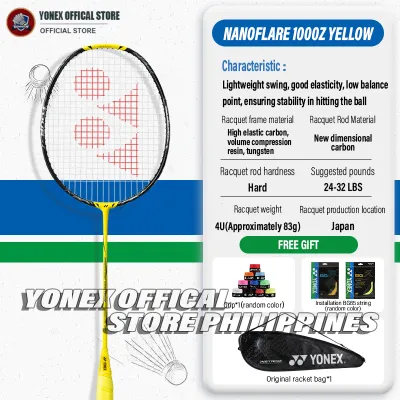
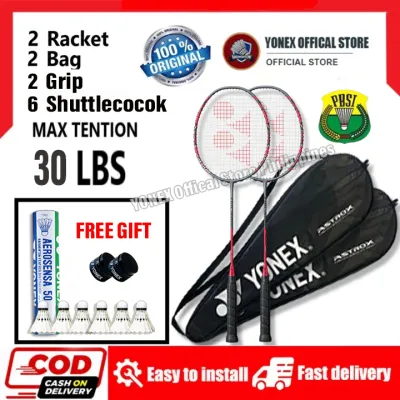
Prices are valid at publication and may change. Please refer to the product page for the latest price.
There is also a significant financial downside to purchasing counterfeit gear. While a fake racket might seem like a bargain initially, the substandard materials used in its construction mean it will likely warp or break under standard stringing tensions. You end up losing the hard-earned ₱ you spent, forcing you to buy a replacement much sooner than if you had invested in a genuine product.
Physical Inspection: What to Check on the Racket and Packaging
A systematic visual and tactile inspection is your first line of defense when evaluating a racket in hand. Counterfeiters often struggle to replicate the precise manufacturing standards of genuine gear, leaving behind subtle clues that you can spot with close attention.

Packaging and Documentation Start by examining the packaging, carrying cover, and any accompanying documentation. Genuine rackets come with high-quality covers featuring crisp, clean stitching, aligned zippers, and perfectly printed logos. Check the font on any included warranty cards or user manuals; counterfeits often feature spelling mistakes, blurry text, or incorrect brand logos that look slightly stretched or off-center.
Paint and Finishing Inspect the paint job across the entire frame and shaft. Genuine rackets feature a flawless, smooth finish with vibrant colors and perfectly aligned decals. Run your fingers along the surface to feel for any rough patches, bubbles, or uneven layers. Counterfeit rackets frequently exhibit bleeding colors, misaligned decals, or paint that easily chips off even before the racket has been used on the court.
Grommets and String Holes The grommets—the small plastic eyelets that protect the strings from the frame—are a telltale sign of quality. On an original racket, the grommets are made of high-grade, uniform plastic, molded cleanly without any excess plastic flashing or sharp edges. They should fit snugly and align perfectly with the string holes. Counterfeit rackets often use cheap, poorly molded grommets of varying sizes that can cut into your strings during play.
Shaft and Cone Details Examine the cone, which is the plastic piece connecting the handle to the shaft. The molding on a genuine cone is sharp, clean, and perfectly flush with both the handle grip and the shaft. The shaft itself should feel completely solid and uniform when you run your hand down its length. Any visible seams, rough textures, or slight bends indicate substandard manufacturing typical of counterfeit products.
Digital and Official Verification Methods
While physical checks are helpful, digital verification provides a much higher level of certainty. Genuine rackets feature specific security markers designed to prevent replication.
Serial Number Check Every genuine racket features a unique, laser-engraved serial number on both the shaft and the cone. On the shaft, this number is typically a seven-digit code, while the cone features a date code indicating when and where the racket was manufactured. These numbers are deeply engraved into the material using a laser, meaning you can feel the physical indentation when you run your fingernail over them. Counterfeit rackets often feature printed or shallowly etched numbers that feel completely smooth.
Security Holograms Look closely at the security hologram sticker attached to the cone. Genuine Yonex holograms are highly sophisticated and exhibit distinct visual shifts when tilted under light. The colors and patterns should change smoothly, revealing hidden layers or text depending on the angle. Many counterfeits use simple, flat metallic stickers that do not change appearance or show any depth when rotated. You can refer to the brand’s official authentication guidelines to see the exact visual patterns expected for the current year.
Official Verification Portals To confirm the authenticity of your serial numbers, use official verification channels. Avoid third-party websites or unofficial apps that claim to verify serial codes. Instead, navigate directly to the official Yonex website or use authorized regional distributor portals to input your serial numbers. If the system flags the serial number as invalid, or if the code has already been registered multiple times in different locations, you are likely holding a counterfeit.
Choosing Reliable Purchasing Channels in the Philippines
The easiest way to avoid counterfeits is to control where you buy your gear. Navigating the local market requires a cautious approach, especially when shopping online.
Authorized Dealers Always prioritize purchasing from official brand stores, recognized national sports retailers, and authorized physical pro shops located within established malls or sports complexes. These retailers source their inventory directly from official distributors, ensuring that every product on their shelves is genuine and covered by an official warranty.
Online Marketplace Red Flags When browsing online marketplaces or e-commerce platforms, be highly skeptical of listings offering premium rackets at prices significantly below standard retail values in ₱. If a deal seems too good to be true, it almost certainly is. Look closely at the seller’s credentials, ratings, and customer reviews. Avoid listings that rely solely on stock photos; instead, look for sellers who provide clear, high-resolution photos of the actual racket, including close-ups of the serial numbers, cone, and grommets.
Second-Hand Purchases Buying a used racket requires extra precautions. Before agreeing to a transaction, request detailed, clear photos of the serial numbers on both the shaft and the cone, as well as the hologram sticker. Ask the seller for proof of purchase, such as the original receipt from an authorized dealer. If the seller is hesitant to provide these details or cannot show clear close-ups of the engraving, it is best to walk away from the deal.
What to Do If You Suspect a Counterfeit Purchase
If you realize you have purchased a counterfeit racket, taking immediate and structured action can help you recover your funds and protect other players in the community.
First, stop using the racket immediately. Playing with a structurally compromised counterfeit poses a safety risk to you and those around you on the court.
Next, gather all evidence related to the transaction. This includes your purchase receipts, online order confirmations, screenshots of the seller’s listing, communication logs, and clear photos highlighting the counterfeit features of the racket.
If you purchased the item through an online marketplace or e-commerce platform, file a formal dispute through their customer resolution center right away. Present your gathered evidence to request a full refund. If you bought the racket from a physical store, return to the shop with your receipt and demand a refund from the management.
Should the retailer or online seller refuse to cooperate, you can escalate the matter by reporting them to local consumer protection authorities, such as the Department of Trade and Industry (DTI) in the Philippines. Reporting these sellers helps curb the spread of counterfeit sports equipment in the local market.
Frequently Asked Questions (FAQ)
Can I trust a Yonex racket just because it has a serial number?
No, you cannot trust a racket solely because it features a serial number. Counterfeiters are fully aware that buyers look for these codes, and they frequently copy valid serial number formats or duplicate a single genuine serial number across thousands of fake rackets. To ensure authenticity, you must verify the serial number through official brand channels and carefully inspect the physical build quality, paint finish, and laser-engraving depth.
Are lighter Yonex rackets more likely to be fake?
Not necessarily, but weight is an important factor to verify. While counterfeiters often use cheaper, heavier materials that make fake rackets feel sluggish, some counterfeits are made incredibly light using hollow, structurally weak carbon composites. Always check the official weight category (such as 3U or 4U) printed on the cone of the racket. Compare the actual weight and balance of the racket to authorized store demos or official specifications to ensure it matches the intended design.
Community discussion
Share your experience or ask a question. Comments are reviewed before publication.