
A shifting taekwondo uniform (dobok) during intensive training can disrupt your focus and restrict your range of motion. When you execute a high roundhouse kick (dollyo chagi) or perform a complex poomsae pattern, a jacket that rides up or twists requires constant manual adjustment. This issue typically stems from a mismatch in sizing, the slippery nature of lightweight synthetic fabrics, or an insecurely tied belt.
Fortunately, you can resolve a shifting uniform using immediate practical adjustments and long-term gear choices. Simple steps like correcting your belt placement, utilizing hidden uniform anchors, and wearing friction-inducing base layers will keep your uniform secure. This guide breaks down the physical causes of uniform shifting and details actionable solutions to keep your dobok perfectly anchored.
Quick Answer: Why Your Dobok Shifts and the Best Quick Fixes
A shifting taekwondo uniform is primarily caused by excess fabric in an oversized cut, slippery polyester materials, or a belt tied too high or too loosely. These factors allow the jacket to slide upward during rapid torso rotations and high kicks.
Products mentioned in this guide
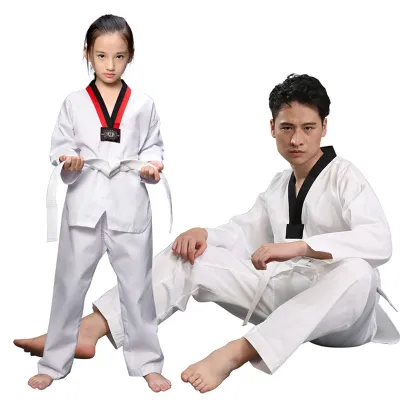
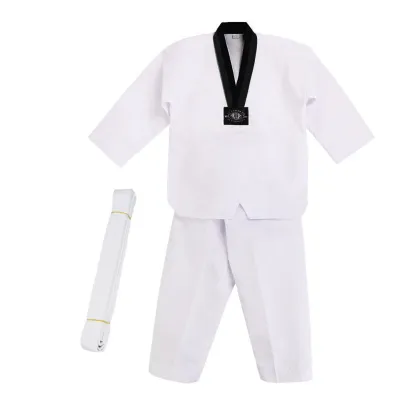
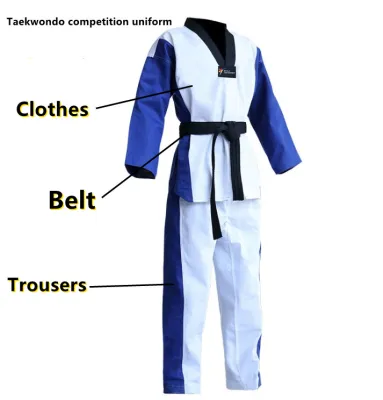
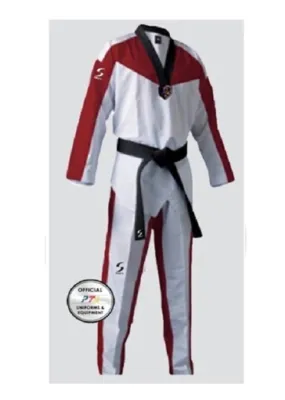
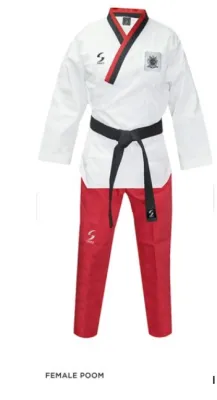
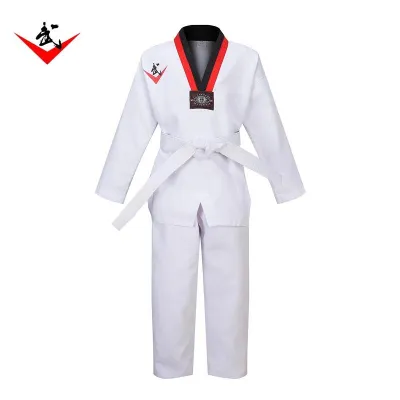
Prices are valid at publication and may change. Please refer to the product page for the latest price.
To fix this issue immediately before your next class, try these three steps:
- Reposition the belt: Anchor your belt firmly at your natural waist, ensuring it sits tightly over the jacket cross-fold.
- Wear a compression rash guard: A fitted, moisture-wicking base layer creates friction against the inside of your dobok, preventing the fabric from sliding easily against bare skin.
- Use internal uniform clips: Attach specialized elastic clips or tie-downs from the inside of your jacket to your pants waistband to keep the hem securely pulled down.
Why Your Taekwondo Uniform Rides Up During Training
Understanding why your uniform moves is the first step toward finding a permanent solution. The dynamics of taekwondo require a balance between freedom of movement and uniform stability.

Fit and Sizing Issues
Off-the-rack uniforms are designed to accommodate a wide range of body types, which often results in a compromise in fit. If your dobok is even one size too large, the excess fabric around the torso and shoulders will naturally bunch up and rise during movement. Conversely, a jacket with a cut that is too short for your torso will easily slip out from under your belt during high reaches. Additionally, uneven shrinkage after washing—especially common with cotton-heavy fabrics—can alter the original proportions of the sleeves and torso, leading to an unbalanced drape that shifts under athletic stress.
Fabric Weight and Texture
The material of your uniform plays a significant role in how it behaves on your body. In the tropical climate of the Philippines, lightweight polyester-blend uniforms are highly popular because they offer excellent breathability and dry quickly in high humidity. However, these smooth, synthetic fibers have very low friction, making them highly prone to sliding upward against your undergarments or skin. Heavier cotton fabrics or textured weaves (such as ribbed or waffle patterns) provide a much better grip, anchoring themselves more effectively against your body, though they can feel warmer during intense training sessions in non-air-conditioned dojangs.
Belt Tying and Placement
Your belt (ti) is not just a symbol of rank; it serves as the primary structural anchor for your uniform jacket. If you tie your belt too high, near your rib cage, or too low, resting on your hips, it will fail to lock the jacket skirt in place. A loose knot or a belt that stretches excessively during movement will also allow the jacket halves to slide past each other. The belt must be wrapped with consistent tension and positioned directly over the natural waistline to compress the fabric folds and prevent vertical movement.
Biomechanics of High Kicks and Forms
Taekwondo is characterized by extreme physical movements that naturally challenge any garment’s fit. When you execute high kicks, your hips undergo deep flexion and rotation, pulling the fabric of your pants upward, which in turn drags the jacket skirt along with it. During the execution of forms (poomsae), rapid torso twists and sudden stops generate centrifugal force that shifts the jacket sideways. Recognizing that some degree of fabric movement is a natural consequence of these biomechanics helps you focus on minimizing the shift rather than expecting absolute, rigid immobility.
Immediate Fixes to Keep Your Dobok in Place
You do not need to purchase a brand-new uniform to see immediate improvements in stability. Several practical, low-cost adjustments can keep your current dobok secure during your next training session.
Proper Belt Tying Technique
The foundation of a stable uniform is a correctly tied belt. Before wrapping your belt, put on your jacket and pull the front panels down firmly so the fabric is smooth across your chest and shoulders. Cross the left side over the right side neatly. Wrap the belt around your waist twice, ensuring the layers overlap cleanly without twisting. Tie a secure square knot (or a specialized lock-knot) at your natural waist, just below your belly button. Pull the knot tight to compress the jacket layers, ensuring the tension is distributed evenly around your midsection to lock the fabric in place.
Uniform Clips and Suspender Straps
If your belt alone cannot hold your jacket down, you can use specialized internal accessories designed specifically for martial arts uniforms. Internal uniform clips or small elastic suspender straps can be attached to the inside hem of your jacket and clipped directly to your pants’ waistband or drawstring. Because these accessories are worn underneath the jacket, they remain completely invisible from the outside. They provide a constant downward tension that prevents the jacket from riding up during high kicks while preserving the clean, traditional look of your dobok.
Base Layers and Rash Guards
Wearing a fitted compression rash guard underneath your dobok is one of the most effective ways to reduce fabric slippage. In the humid Philippine climate, a high-quality, moisture-wicking rash guard serves a dual purpose. First, the textured synthetic surface of the rash guard creates natural friction against the inner lining of your uniform, stopping the dobok from sliding freely. Second, it manages sweat efficiently, preventing the uniform from sticking to your skin in heavy, wet patches, which can cause uncomfortable dragging and pulling during deep stances.
Tucking and Folding Methods
For uniforms with exceptionally long skirts, a traditional tucking or folding method can help manage excess fabric. You can fold the bottom two inches of the jacket skirt upward and inward before tying your belt over the fold, creating a physical lip that resists sliding upward. Alternatively, some practitioners lightly tuck the back hem of the jacket into the rear waistband of their pants. While this method is highly effective at preventing the back of the jacket from riding up, you must test your range of motion in a deep front stance (ap kubi) or horse-riding stance (juchum seogi) to ensure the tuck does not restrict your hips or pull the pants down.
Long-Term Gear Adjustments and Uniform Upgrades
If temporary fixes do not provide the stability you need, it may be time to consider permanent alterations or upgrading to a uniform designed for a better fit.
Choosing the Right Fabric and Weave
When shopping for a new dobok, pay close attention to the fabric composition and weave style. If you train in warm environments, look for a cotton-polyester blend that features a ribbed, waffle, or diamond-textured weave. These textured fabrics offer the breathability of synthetic blends while providing excellent structural grip that resists sliding. Avoid ultra-smooth, satin-finished polyester fabrics, which are highly prone to shifting. A medium-weight fabric (around 8 oz to 10 oz) strikes the ideal balance for most practitioners, offering enough weight to drape naturally without retaining too much heat.
Tailoring and Alterations
An off-the-rack uniform can be customized by a professional tailor to fit your specific body measurements. If your jacket is too wide, a tailor can take in the side seams to reduce excess fabric under the arms and around the waist, which significantly minimizes shifting. You can also have the jacket skirt shortened slightly if it hangs too far below your hips. However, avoid altering the waistband or the deep gusset of the pants; these areas require their original structural integrity and double-stitching to withstand the extreme stretching of high kicks and split stretches.
Custom-Fitted Uniforms
For practitioners with non-standard body proportions—such as a long torso with shorter limbs, or broad shoulders with a narrow waist—a standard size chart may never provide an ideal fit. In these cases, investing in a custom-fitted or premium, tournament-grade dobok is highly beneficial. These uniforms allow you to select independent sizes for the jacket and pants or specify exact sleeve and skirt lengths. Premium uniforms often feature pre-curved cuts and integrated elastic panels that accommodate athletic movements without pulling the entire garment out of alignment. Prices for high-quality, structured uniforms in the local market generally range from ₱2,500 to ₱6,000, making them a worthwhile investment for serious practitioners.
Competition Rules and Safe Modification Limits
Before making any permanent changes or adding accessories to your uniform, you must consider the rules of your governing athletic association. Modifying your gear incorrectly can lead to disqualification at official events.
If you participate in World Taekwondo (WT) or International Taekwon-Do Federation (ITF) sanctioned competitions, strict regulations govern uniform appearance and modifications. External clips, visible safety pins, or non-standard colored undergarments are strictly prohibited on the competition floor. For example, WT poomsae and sparring rules require specific jacket and sleeve lengths relative to your joints, and visible branding on base layers is heavily restricted.
To ensure compliance, always check your specific federation’s official rulebook before altering your uniform or wearing base layers. A safe practice is to maintain at least two uniforms: keep one completely unaltered, high-quality, and strictly compliant dobok reserved exclusively for competition days, and use your modified uniforms, internal clips, and colored rash guards for daily dojang training sessions.
Frequently Asked Questions (FAQ)
Should I wash my taekwondo uniform in hot or cold water to prevent shrinking?
Always wash your taekwondo uniform in cold water and hang it to air dry. Hot water and high-heat machine dryers cause unpredictable shrinkage, especially in cotton-blend fabrics. This shrinkage can warp the collar, shorten the jacket skirt, and tighten the shoulders, making the uniform much more prone to riding up and shifting during training. Air drying also preserves the integrity of any elastic waistbands and modern synthetic fibers.
Can I use safety pins to keep my dobok jacket closed?
You should never use standard metal safety pins to secure your dobok jacket. During active sparring, falling, or rapid partner drills, safety pins can easily bend, open, or break, posing a severe risk of puncture wounds and scratches to both you and your training partners. If you need to keep your jacket closed, use integrated fabric ties, hook-and-loop (Velcro) strips sewn flat inside the jacket, or purpose-built plastic martial arts uniform clips.
How often should I replace my taekwondo uniform?
A taekwondo uniform should typically be replaced every 12 to 18 months of regular, high-intensity training. Over time, frequent washing and heavy sweating degrade the fabric fibers, causing the material to lose its structural stiffness and drape. When your dobok becomes excessively thin, shows fraying seams, or continues to shift and ride up despite proper belt tying and anchoring, it has lost its functional integrity and should be retired.
Community discussion
Share your experience or ask a question. Comments are reviewed before publication.