
In the fast-paced sport of badminton, your racket is an extension of your arm. Whether you are smashing on an indoor court in Manila or playing a casual game in your neighborhood, having a genuine, high-quality racket is essential for both performance and safety. However, the market is flooded with convincing counterfeits that look nearly identical to premium models at first glance. To ensure you are investing in a genuine piece of equipment, learning how to identify a badminton racket original is a vital skill for every player.
Distinguishing between an authentic racket and a counterfeit requires a keen eye and a systematic approach. While counterfeiters have become highly sophisticated, they consistently cut corners on materials, structural engineering, and security features to keep their production costs low. By understanding physical markers, packaging details, and official verification steps, you can confidently protect your investment and avoid the hazards of playing with subpar gear.
The Risks of Using Counterfeit Badminton Rackets
Playing with a counterfeit racket is not just a matter of poor value; it poses significant practical and physical risks on the court. Authentic rackets are engineered using high-grade carbon fiber composites and specialized resins that undergo rigorous stress testing. In contrast, fake rackets are typically constructed from cheap aluminum, low-quality graphite, or even fiberglass disguised with a sleek paint job. This structural deficiency directly leads to poor tension retention, meaning your strings will quickly lose their bounce and leave your shots feeling dead and inconsistent. Furthermore, the balance point of a counterfeit racket is rarely accurate, disrupting your swing timing and forcing you to compensate with unnatural wrist movements.
Products mentioned in this guide
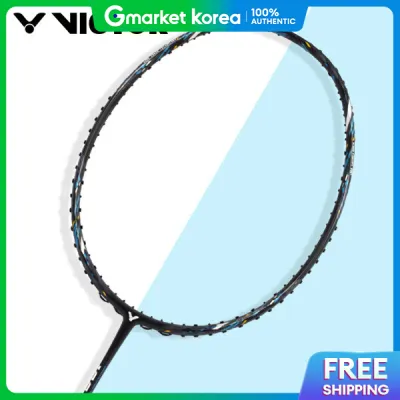
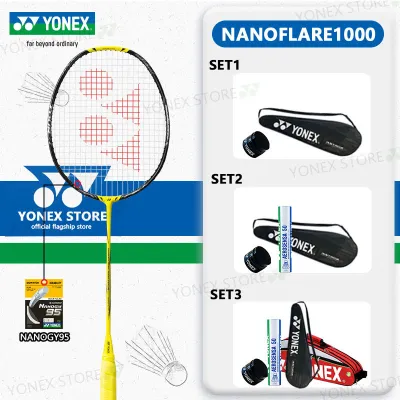
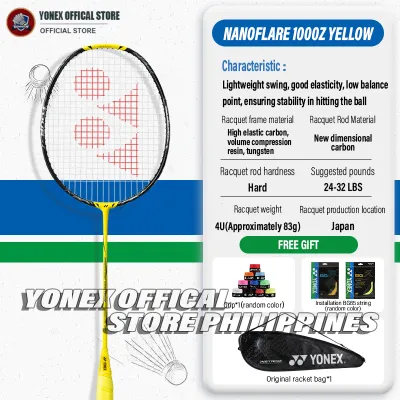
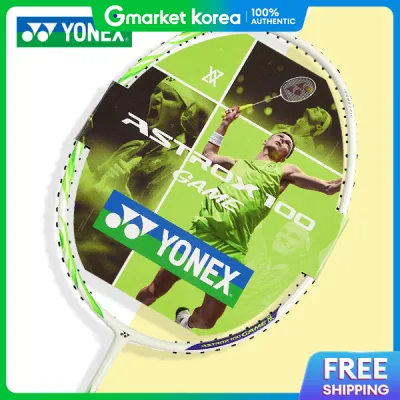
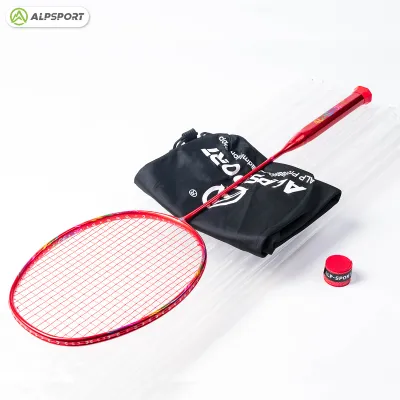
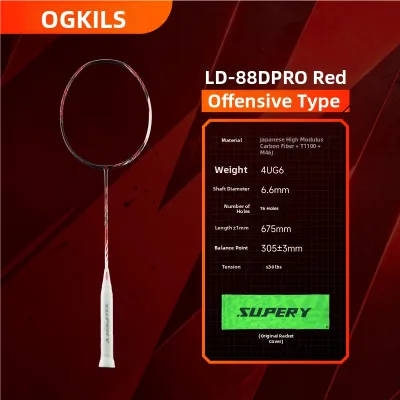
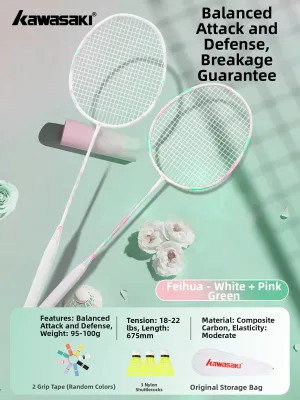
Prices are valid at publication and may change. Please refer to the product page for the latest price.
More importantly, counterfeit rackets present a genuine risk of physical injury. Because these fakes lack the advanced vibration-dampening technologies found in original models, the harsh shock of every impact transfers directly up the shaft and into your wrist, elbow, and shoulder. Over time, this repetitive stress can lead to painful conditions like tendonitis or “badminton elbow.” In extreme cases, a counterfeit frame can suddenly snap or shatter during a high-velocity swing or a hard smash. When a racket breaks under tension, sharp carbon shards can fly off, posing a severe hazard to your eyes, your face, and anyone standing nearby on the court. Verifying the authenticity of your gear is therefore a crucial step for your long-term safety and investment protection.
Inspecting Physical Markers: Original vs. Fake Rackets
The first line of defense against counterfeit sports equipment is a thorough physical inspection. Although high-end “super fakes” can mimic the general shape, color scheme, and weight distribution of premium rackets, they almost always fail when subjected to closer scrutiny. This is because precision engineering and high-grade materials cannot be easily replicated in low-cost factories. Rather than relying on a single visual cue, you should use a combination of physical checks to evaluate the racket’s overall build quality, paint details, and small components before making a decision.

Frame, Shaft, and Build Quality
To begin your physical assessment, pay close attention to the weight and balance point of the racket. Genuine high-end rackets are incredibly light yet structurally rigid, often categorized into specific weight classes like 3U (85–89 grams) or 4U (80–84 grams). Fake rackets often feel noticeably heavier than their official specifications suggest, or they may feel awkwardly head-heavy due to the uneven distribution of inferior materials inside the frame. If you have access to a similar, verified racket, hold one in each hand to compare their balance points and overall feel.
Next, you can safely evaluate the shaft’s flexibility and stiffness. Hold the handle firmly in one hand and gently flex the shaft with your other hand. An original racket shaft will bend smoothly and snap back into place instantly with a clean, responsive springiness. A counterfeit shaft, however, will often feel either overly stiff and brittle—as if it might snap under moderate pressure—or excessively soft and slow to recover. This sluggish recovery significantly dampens your power transfer during fast rallies.
Finally, examine the T-joint area—the critical intersection where the racket head meets the shaft. In modern, high-quality rackets, this joint is seamlessly integrated, often housing an internal T-joint that reinforces the structure against twisting forces. On a fake racket, this area is a common failure point. Look closely for visible seams, uneven paint lines, rough edges, or tiny gaps where the shaft enters the joint. Any signs of excess glue residue or slight misalignment between the head and the shaft are immediate red flags indicating poor manufacturing standards.
Logos, Paint, and Decals
The aesthetic finish of a racket can reveal a great deal about its origin. Premium manufacturers use advanced, automated painting processes and high-resolution decals to ensure that every racket looks flawless. When inspecting the graphics, look for crisp, sharp logos with clean borders. There should be absolutely no paint bleeding, blurred edges, or pixelation on the brand name or model graphics.
Take the time to compare the font styles, sizes, and spacing of the model names and technology decals against official product images on the manufacturer’s website. Counterfeiters often use slightly different fonts, incorrect letter spacing, or misspelled technical terms. Additionally, pay attention to the texture of the paint job. While some high-end fakes manage to copy the color palette reasonably well, the overall paint finish on a counterfeit racket often feels rough, uneven, or excessively glossy. These cheap coatings are highly prone to chipping and scratching compared to the smooth, durable coating of an original racket.
Grip, Base Cap, and Grommets
Counterfeiters frequently neglect the smaller, low-cost components of a racket, assuming buyers will only focus on the frame and shaft. This makes the grip, base cap, and grommets excellent areas to check for authenticity. Start by looking at the base cap at the very bottom of the handle. On a genuine racket, the brand logo on the base cap is precisely aligned with the face of the racket frame, featuring clean 3D molding and sharp edges. On a fake, the logo is often tilted, poorly molded, and the staples may look messy, rusted, or unevenly driven.
The grip itself is another major indicator. Peel back any protective plastic and check the texture and smell of the factory grip. Original grips are made from high-quality, comfortable polyurethane or synthetic leather that has a mild, clean smell. Fake rackets often use cheap, rubbery materials that feel slippery or overly sticky, and they frequently emit a strong, unpleasant chemical odor of industrial glue or low-grade plastics.
Lastly, examine the grommets—the small plastic eyelets inserted into the frame holes to protect the strings from the sharp edges of the carbon fiber. On a genuine racket, the grommets are evenly spaced, perfectly flush with the frame, and made of high-density, smooth plastic that resists cracking. Counterfeit rackets often feature cheaply molded grommets with rough, jagged edges or soft plastic that easily deforms or splits. Under the high tension required for advanced play, these cheap grommets can collapse, causing the string to rub directly against the sharp carbon frame and snap prematurely.
Examining Packaging and Security Codes
Before a racket even reaches your hands, its retail packaging and documentation can provide critical clues about its authenticity. Original rackets from major brands are shipped in high-quality boxes or protective thermal covers that feature sharp, high-resolution printing, accurate color reproduction, and flawless multilingual text. If the retail box or carrying bag looks flimsy, has faded colors, or contains spelling and grammatical errors in the descriptions, you are likely dealing with a counterfeit.
A key step in your inspection is verifying the serial numbers. Authentic rackets feature a unique serial number that is laser-engraved directly into the graphite of the shaft or the cone. This engraving should be clean, perfectly aligned, and deep enough to feel with your fingernail. Compare this engraved number with the barcode and serial number printed on the original retail packaging or the accompanying warranty card. They must match perfectly. If the serial number on the shaft is merely printed or painted on rather than laser-engraved, or if the font looks irregular and unevenly spaced, the racket is almost certainly a fake.
Additionally, premium brands protect their products with advanced anti-counterfeit labels, such as scratch-off security codes or complex holographic stickers. When inspecting a holographic sticker, tilt the racket under a bright light source. A genuine hologram will display sharp, shifting colors, clear multi-layered patterns, and sometimes hidden text that changes depending on the angle of view. Fake holograms are often flat, dull, and fail to show distinct color shifts. If the racket features a scratch-off panel, ensure that the scratch-off coating is completely intact and has not been previously tampered with or scratched away, as this suggests the code may have already been registered or cloned by a counterfeiter.
Verifying a Badminton Racket Original Through Official Channels
Once you have gathered the serial numbers and security codes from your racket, the most reliable way to confirm its status is to use the manufacturer’s official verification channels. Most major badminton brands maintain secure online databases specifically designed to help players verify their gear.
To perform this check, navigate directly to the official brand website using a secure web browser. Look for their dedicated product verification or warranty registration portal. Here, you will be prompted to input the laser-engraved serial number found on your racket’s shaft or cone, along with any scratch-off security codes revealed on the packaging. The system will instantly check the database and confirm whether the serial number is valid, how many times it has been searched, and whether it matches the specific model, weight, and grip size you purchased.
Many modern brands also utilize secure QR codes on their packaging. You can scan these codes using the manufacturer’s official mobile application or their designated web portal. However, a critical safety boundary must be observed: never trust third-party verification applications, independent QR scanner apps, or external websites that are not explicitly hosted and endorsed by the racket manufacturer. Counterfeiters frequently set up fake verification websites with domain names that closely mimic the official brand, complete with fake “authentic” confirmation screens. Always manually type the official brand URL into your browser to ensure you are communicating directly with the genuine manufacturer. If the digital verification system returns an error, indicates that the serial number has been searched multiple times before, or if you remain suspicious of the results, take detailed, high-resolution photos of the racket, the engravings, and the packaging, and contact the brand’s official customer support team directly for manual verification.
Choosing Reliable Sellers and Online Marketplaces
Preventing a counterfeit purchase is always easier than dealing with the aftermath of receiving a fake. Your choice of retail channel plays the most significant role in ensuring you receive a genuine product. In the Philippines, the safest approach is to purchase your gear directly from authorized dealers, official brand physical stores, or highly reputable local sports equipment shops located in major commercial hubs. These physical stores source their inventory directly from official distributors, guaranteeing authenticity and providing valid local warranties.
When shopping on e-commerce platforms or online marketplaces, you must exercise extra caution. Always look for verified seller badges, such as “Official Store,” “Flagship Store,” or “Authorized Reseller” tags, which indicate that the platform has vetted the seller’s credentials. Take the time to read through recent buyer reviews, paying close attention to feedback that specifically mentions product authenticity, packaging quality, and stringing performance. Be skeptical of stores that have high overall ratings but very few reviews, or reviews that look generic and repetitive.
The most common trap for buyers is an unrealistically low price. Premium badminton rackets are high-performance sporting goods made from advanced materials, and their retail prices reflect this engineering. If you encounter an online listing offering a top-tier racket—which typically retails for ₱8,000 to ₱12,000—for an incredibly low price like ₱1,500 or ₱2,000, it is almost certainly a counterfeit. While seasonal sales and promotions do occur, legitimate discounts rarely exceed 20% to 30% off the standard retail price. Remember that “too good to be true” deals are the primary tool used by counterfeiters to lure unsuspecting players.
Steps to Take If You Receive a Fake Racket
If you suspect that the racket you have received is a counterfeit, acting quickly and systematically is essential to secure a refund and hold the seller accountable. Start by documenting all available evidence immediately. Take clear, high-resolution photographs of the racket from multiple angles, focusing on the key areas of concern: the laser engraving on the shaft, the base cap logo, the grommets, the paint finish, and any packaging or security stickers. If you have not yet opened the package, record a continuous, unedited unboxing video showing the shipping label, the opening of the box, and your initial inspection of the racket. This video serves as powerful, undeniable proof in disputes.
Once your evidence is prepared, contact the seller directly through the platform’s official messaging system. State clearly that you believe the item is counterfeit, present your evidence, and formally request a full refund. Keep all communication professional, polite, and strictly within the platform’s official chat channels to ensure there is an official record of the conversation.
If the seller refuses to cooperate, ignores your messages, or offers a partial refund that you find unacceptable, immediately escalate the issue by opening a formal dispute through the e-commerce platform’s buyer protection center or dispute resolution portal. Upload your photos, the unboxing video, and any screenshots of your conversation with the seller. Most reputable platforms have strict anti-counterfeiting policies and will freeze the seller’s funds while they investigate your claim. Additionally, for persistent counterfeit sellers operating within the Philippines, you can file a formal complaint with the Department of Trade and Industry (DTI) or other relevant consumer protection agencies to help protect other players from falling victim to the same scam.
Frequently Asked Questions (FAQ)
Can a fake badminton racket handle high string tension?
No, counterfeit rackets are highly prone to warping, cracking, or completely snapping under high string tension. Authentic rackets are built with high-modulus carbon fiber that can safely withstand tensions up to 30 lbs or more, depending on the model. Fake rackets, however, use cheap, low-grade materials and lack the structural reinforcement necessary to handle these extreme forces. If you attempt to string a suspected fake racket at professional tensions, the frame will likely deform or collapse during the stringing process. If you are unsure of your racket’s authenticity, never string it beyond basic recreational tensions (typically under 20 to 22 lbs) and always have a certified professional stringer assess the frame’s structural integrity before proceeding.
Does a heavier weight always mean the racket is fake?
Not necessarily, but it is a strong indicator when combined with other red flags. While counterfeit rackets often fail to match exact weight specifications and feel noticeably heavier or unbalanced due to cheap manufacturing, genuine rackets also have minor manufacturing tolerances. Most premium brands allow for a very small variance, usually within ±2 grams of the specified weight. To get an accurate reading, use a precise digital scale to weigh the racket when it is completely unstrung and has no overgrip or plastic wrap attached. Compare this measured weight directly against the manufacturer’s official specifications. If the weight differs by more than a few grams, or if the racket feels poorly balanced during a dry swing, you should investigate its authenticity further.
Are second-hand rackets more likely to be counterfeit?
Yes, the second-hand market carries a significantly higher risk of encountering counterfeit gear. When buying a used racket, you often lose access to the original retail packaging, warranty cards, and intact scratch-off security labels, making digital verification much more difficult. Furthermore, it is nearly impossible to verify the original purchase receipt or trace the racket’s history. To protect yourself when buying second-hand, rigorously inspect the physical markers, pay close attention to the laser-engraved serial numbers on the shaft, and ask the seller for detailed, close-up photos of the base cap, T-joint, and grommets before agreeing to the purchase. If possible, meet the seller in person at a local badminton court or sports shop to inspect the racket’s feel and weight before handing over any payment.
Community discussion
Share your experience or ask a question. Comments are reviewed before publication.