
Using a pilates strap for stretching and flexibility training at home is one of the most effective ways to safely increase your range of motion, improve posture, and relieve muscle tightness. By acting as a physical extension of your arms or legs, a pilates strap provides the precise leverage needed to deepen stretches without straining your neck, shoulders, or back. Whether you are recovering from a long day of sitting in an air-conditioned office or looking to complement an active lifestyle, this simple tool helps you maintain proper alignment and control, making advanced flexibility goals highly achievable from the comfort of your living room.
Why a Pilates Strap Is Essential for Home Flexibility Training
Achieving deep, effective stretches at home often feels challenging when your muscles are tight. Without an aid, trying to reach your toes or bind your hands behind your back frequently leads to compensation patterns, such as rounding your spine, shrugging your shoulders, or straining your neck. A pilates strap solves this problem by bridging the physical gap between your hands and feet. It acts as an adjustable extension of your limbs, allowing you to experience the full benefits of a stretch while keeping your body in a neutral, supported position.
Using a strap provides consistent leverage that helps isolate specific muscle groups. For example, during a hamstring stretch, holding a strap instead of desperately grasping for your toes allows you to keep your head, neck, and shoulders relaxed flat on your mat. This stability ensures that your target muscles can actually relax and lengthen, rather than tensing up in response to strain. By maintaining proper spinal alignment throughout your routine, you protect your lower back and joints from unnecessary pressure, making your home flexibility practice both safer and significantly more effective over time.
Products mentioned in this guide
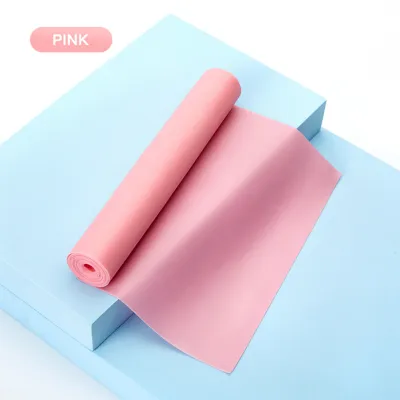
Prices are valid at publication and may change. Please refer to the product page for the latest price.
Mastering the Basics: Grips, Loops, and Tension Control
Before diving into specific exercises, understanding how to handle your pilates strap is vital for safety and comfort. The two primary hand positions are the overhand grip and the underhand grip. An overhand grip—where your palms face down or away from you—is ideal for overhead shoulder openers and upper body mobility work, as it allows for natural shoulder rotation. An underhand grip—with palms facing up or toward you—is excellent for pulling actions, such as when you are lying on your back and pulling your leg closer, as it naturally encourages your shoulders to slide down and away from your ears.

Securing the strap properly prevents slipping and unexpected snaps. When stretching your lower body, loop the strap securely around the arch of your foot rather than the toes to prevent the strap from sliding off. For straps with built-in loops (often called multi-loop or daisy-chain stretching straps), slide your foot or hand directly into a loop that allows you to maintain the desired limb position. If you are using a traditional flat strap without loops, you can adjust tension by wrapping the strap once or twice around your hands or simply shortening your grip along the band. A high-quality pilates strap is a highly accessible investment, typically ranging from ₱300 to ₱800 on local online marketplaces in the Philippines, making it an affordable addition to any home gym setup.
Regardless of the grip you choose, always maintain a relaxed hold and soft, slightly bent wrists. Clenching the strap too tightly is a common mistake that quickly leads to forearm fatigue and hand cramping, which distracts from the stretch. Your hands and arms should act as anchors, while the larger muscles of your back and core provide the steady, gentle pulling force.
Step-by-Step Pilates Strap Stretches for Full-Body Mobility
A structured full-body routine helps release tension from head to toe, particularly after long periods of sitting or physical exertion. Move through these exercises slowly, focusing on smooth transitions and steady breathing to allow your nervous system to relax into each position.
Hamstrings and Lower Body Release
Tight hamstrings are a primary contributor to lower back discomfort, especially if you spend hours commuting or working at a desk.
- Supine Hamstring Stretch: Begin by lying flat on your back on a comfortable exercise mat. Bend your left knee and place your left foot flat on the floor to support your lower back. Loop the pilates strap securely around the arch of your right foot. Holding one side of the strap in each hand, slowly extend your right leg toward the ceiling. Keep your right foot flexed, pointing your toes toward your shin to engage the calf muscle. Ensure your right knee remains soft and not locked. As you exhale, use the strap to gently guide your leg closer to your chest, stopping when you feel a deep, comfortable stretch along the back of your thigh. Hold this position for 30 to 45 seconds, breathing deeply, then repeat on the opposite side.
- Seated Forward Fold: Sit up tall with both legs extended straight in front of you. Loop the strap around the balls of both feet, holding the ends of the strap in each hand. Inhale to lengthen your spine, drawing your head toward the ceiling. As you exhale, hinge forward from your hips, using the strap to pull your chest toward your toes. Keep your collarbones wide and your back completely straight; do not round your upper back or tuck your chin to force your head down. Use the tension of the strap to maintain an active, long spine while feeling the stretch across your entire posterior chain.
Hip Openers for Prolonged Sitting
Sitting for long periods causes the hip flexors and glutes to adaptively shorten, leading to pelvic misalignment and stiffness.
- Supine Figure-Four Stretch: Lie on your back with both knees bent and feet flat on the floor. Cross your right ankle over your left knee, creating a "figure four" shape. Thread your pilates strap through the space between your legs and around the back of your left thigh. Hold both ends of the strap with your hands. Keeping your head and shoulders relaxed on the mat, gently pull the strap toward your chest, lifting your left foot off the floor. This action will draw your right leg closer to your torso, creating a deep stretch in your outer right hip and glute. Keep your right foot flexed to protect your knee joint. Hold for 30 seconds, then switch sides.
- Reclining Hip Flexor Stretch: Lie on your back near the edge of a bed or a raised, sturdy platform, or flat on your mat if you have sufficient mobility. Loop the strap around your right ankle. Hug your left knee tightly into your chest to anchor your pelvis and keep your lower back flat against the floor. Slowly lower your right leg toward the floor, using the strap to control the descent and gently pull your right heel back toward your glute. You should feel a deep stretch along the front of your right hip and thigh. Ensure your lower back does not arch off the floor during this movement; your core must remain lightly engaged to stabilize your pelvis.
Shoulder, Chest, and Back Mobility
Modern daily life often pulls our shoulders forward, leading to a tight chest and a weakened upper back. These exercises help restore natural shoulder mechanics.
- Shoulder Pass-Throughs: Stand tall with your feet hip-width apart and your core engaged. Hold the pilates strap in front of your thighs with a very wide overhand grip. Keeping your arms straight but not locked, inhale as you slowly raise the strap overhead. As you exhale, continue the circular motion, bringing the strap down behind your back toward your glutes. Keep your ribs pulled down and your abdominal muscles engaged; do not arch your lower back or thrust your chest forward to force the movement. If your elbows bend or you feel a pinch, widen your grip on the strap. Perform 8 to 10 slow, controlled repetitions to open up the chest and shoulders.
- Overhead Triceps and Lat Stretch: Stand or sit comfortably with an upright posture. Hold one end of the strap in your right hand and raise your right arm straight up toward the ceiling. Bend your right elbow, letting the strap drape down along your spine behind your back. Reach your left arm behind your lower back and grab the lower end of the strap. Gently pull down with your left hand to stretch your right triceps and latissimus dorsi muscle. Ensure your head remains upright and your neck is free from strain; do not let your upper arm push your head forward. Hold for 30 seconds, then switch sides.
Crucial Safety Rules and Common Stretching Mistakes
While a pilates strap is an excellent tool for improving flexibility, improper use can lead to muscle strains or joint irritation. The most common mistake is pulling too aggressively. The strap is designed to assist your muscles, not to force them into positions they are not yet ready to hold. Avoid ballistic stretching, which involves bouncing or jerking movements at the end of your range of motion. Bouncing triggers the stretch reflex—a protective mechanism that causes the muscle to contract rather than relax—increasing the risk of a tear.
To ensure your practice remains safe and sustainable, always pay close attention to your body’s feedback and adhere to these strict stop conditions:
- Sharp, Shooting, or Pinching Pain: If you feel a sharp sensation in your joints, tendons, or muscles, stop the stretch immediately. Healthy stretching should feel like a dull, warm tension, never sharp pain.
- Numbness or Tingling: A pins-and-needles sensation indicates that a nerve is being compressed or stretched excessively. Release the tension of the strap right away.
- Joint Instability or Hypermobility: Avoid pulling to the point where you feel pressure inside the joint socket itself rather than in the belly of the muscle.
Before starting any new stretching routine, check the manufacturer’s instructions for your specific pilates strap to ensure it is in good condition, free of tears, and rated for stretching exercises. If you have pre-existing joint issues, spinal conditions, or are recovering from an injury, consult a qualified physical therapist or fitness professional before using a strap.
How to Build a Sustainable Home Stretching Routine
Consistency is the most important factor when it comes to improving flexibility. A short, daily session is far more effective than a single, long stretching session once a week. Aim for 10 to 15 minutes of targeted stretching every day, or a slightly longer 20-to-30-minute routine three to four times a week.
Always prepare your muscles before using the pilates strap. Stretching cold muscles can lead to injury. In a tropical climate like the Philippines, you might feel naturally warm, but your muscles still require a brief, active warm-up to increase joint lubrication and blood flow. Spend 3 to 5 minutes doing light movements such as bodyweight squats, gentle torso twists, or walking in place before you begin stretching.
To track your progress over time, pay attention to how much slack you need in the strap for various poses. For example, you might notice that during your seated forward fold, you can grip the strap closer to your feet than you could a month ago. You may also observe physical improvements in your daily life, such as sitting more comfortably at your desk or experiencing less lower back stiffness after a long commute. Celebrate these small milestones, as they indicate lasting improvements in your mobility and overall physical well-being.
Community discussion
Share your experience or ask a question. Comments are reviewed before publication.