
Paracord serves as a highly versatile utility accessory in a mountaineer’s kit, offering a lightweight solution for organizing gear, securing shelters, and executing temporary field repairs. In the humid, unpredictable climates of tropical peaks, where sudden downpours and dense vegetation can strain your equipment, having a reliable utility cord can make the difference between a comfortable trek and a compromised expedition. However, its utility is strictly limited to non-life-safety tasks. Understanding how to deploy this tool effectively requires a clear grasp of its physical limitations, proper knot selection, and the specific environmental challenges of mountain environments.
Critical Safety Boundaries Before You Tie a Knot
Before packing a single length of paracord for a climb, you must establish an absolute boundary between utility tasks and life-safety systems. Paracord is a utility cord, not a climbing rope. It must never be used for belaying, rappelling, fall protection, or any scenario where it supports human weight. Certified climbing ropes undergo rigorous testing to absorb dynamic fall forces through elongation and specialized core construction. Paracord lacks the diameter, energy absorption capacity, and certification required to survive the extreme forces generated during a fall.
To use paracord safely, you must understand the difference between its nominal breaking strength and its actual Working Load Limit (WLL). While common utility cords like Type III paracord are often rated with a static breaking strength of 550 pounds (approximately 249 kilograms) under ideal laboratory conditions, this figure does not represent safe everyday capacity. The working load limit is typically only a small fraction of the breaking strength—often 10% to 15%—to account for knots, dynamic movement, age, and environmental wear. Always check the manufacturer’s specification tag on your specific cord rather than relying on generic type names or marketing claims.
Products mentioned in this guide
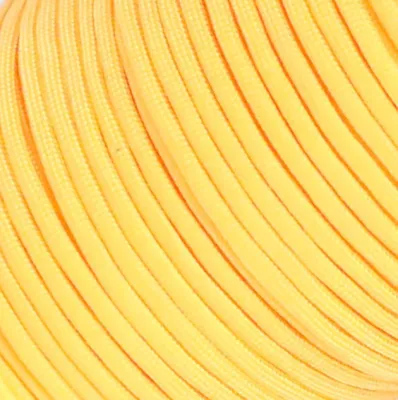
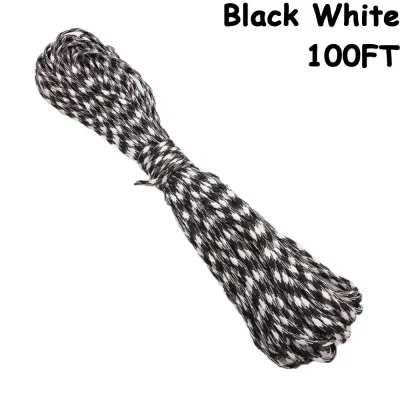
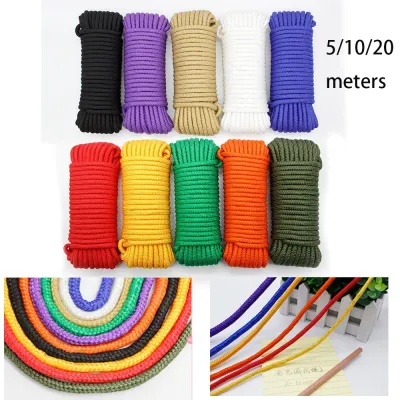
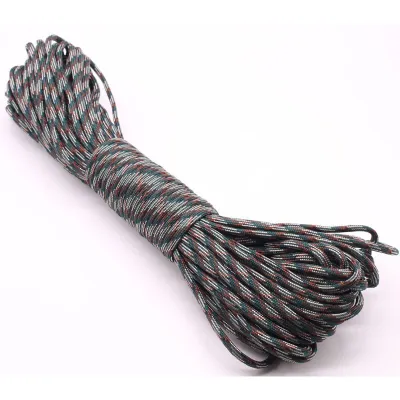
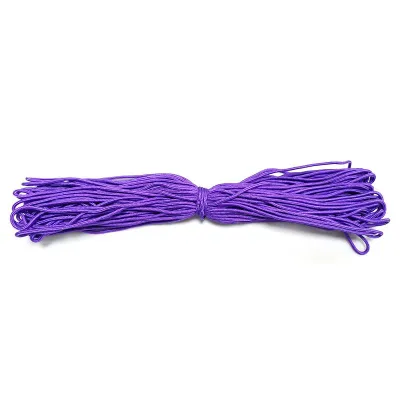
Prices are valid at publication and may change. Please refer to the product page for the latest price.
Environmental exposure rapidly degrades the structural integrity of nylon utility cords. High-altitude ultraviolet (UV) radiation, constant moisture from tropical humidity, and contact with acidic soils or camp chemicals can weaken the fibers without visible warning. Establish strict stop conditions for your cord: immediately retire and discard any paracord that shows signs of fraying, discoloration, stiffness, or exposure to fuel and insect repellents. If a cord has been subjected to a sudden high-tension shock load, even if it appears intact, it should be retired from service immediately.
Gear Organization and Pack Management
Efficient pack organization is vital when navigating steep, technical trails where balance and quick access to gear are paramount. Paracord can be customized to streamline your carrying system. By cutting short lengths of cord, you can create custom gear loops on the exterior of your backpack or fashion extended zipper pulls. These extended pulls are especially valuable when climbing in cold high-altitude zones, such as the summit ridges of Mount Pulag, where wearing thick mountaineering gloves makes operating standard metal zippers difficult.

When your backpack’s internal volume is fully occupied, paracord allows you to lash bulky, lightweight items to the exterior frame. Items such as closed-cell foam sleeping pads, empty tent pole bags, or wet rain gear can be secured using a diamond hitch or simple cross-lashing. When lashing gear, always position the heaviest items close to your center of gravity and ensure the load is balanced symmetrically. Loose or shifting external gear can alter your center of mass, increasing the risk of slips on narrow, muddy ridges.
The dual-utility design of paracord lies in its removable inner strands. Standard utility paracord consists of a protective outer woven sheath enclosing several independent nylon inner yarns. In a micro-task scenario, you can melt the cut end of the cord, pull out a single inner strand, and use it as heavy-duty thread. This fine, high-strength thread is ideal for stitching a torn backpack seam, repairing a ripped gaiter, or binding small items like a loose flashlight clip.
Emergency Field Repairs and Improvisation
In remote mountain areas, equipment failures can quickly escalate from minor inconveniences to safety hazards. Paracord provides a temporary means to keep your gear functional until you return to base. If a backpack shoulder strap or hip belt buckle fails under load, you can use a series of tight square lashings or a continuous wrap to secure the strap directly to the pack frame. Similarly, if a boot sole begins to delaminate due to the intense humidity and mud of tropical trails, wrapping paracord tightly around the toe box and instep can hold the sole in place for the descent.
In emergency first-aid scenarios, paracord can assist in stabilizing injuries when standard medical splints are unavailable. If you must fashion an improvised splint using branches or trekking poles, use paracord to lash the supports firmly around the injured limb. However, because paracord has a very thin diameter, it can easily cut into tissue and restrict blood circulation. You must apply thick padding—such as spare clothing, socks, or a sleeping pad—between the patient’s limb and the cord, and constantly monitor distal pulses to ensure the wrap is not too tight.
Windy alpine conditions or sudden tropical storms can snap standard tent guy lines or pull stakes from loose soil. Paracord serves as an excellent replacement guy line when paired with adjustable tension knots. However, nylon stretches when wet, meaning your lines may sag during heavy downpours. You must regularly inspect and retension the lines to prevent the tent canopy from collapsing under the weight of water or wind.
Camp Setup and Improvised Rigging
Establishing a secure camp in wet or forested mountain terrain requires adaptable rigging techniques. When setting up a tarp shelter or rain fly, paracord is ideal for securing perimeter tie-outs to nearby trees or ground anchors. However, avoid using paracord as a primary structural ridge line if you anticipate heavy snow accumulation or torrential tropical downpours. Under heavy, wet loads, the elasticity of nylon can cause the ridge line to sag excessively, pooling water and potentially collapsing the shelter.
In areas populated by wildlife, keeping your food supply secure is both a safety measure and a conservation requirement. You can use paracord to rig a food cache hanging system. To do this safely, tie a small, weighted object (like a smooth stone) to the end of the cord and use an underhand toss to throw it over a sturdy branch at least 4 meters above the ground and 2 meters away from the tree trunk. Once the line is cleared, attach your food bag using a secure loop and hoist it out of reach, securing the anchor end to a separate tree trunk.
Drying wet clothing is a constant challenge during multi-day treks in humid climates. Rigging a simple gear-drying line between two trees requires a cord that resists slipping on wet bark. By wrapping the paracord around the tree trunk several times before tying your anchor knot, you increase the friction of the system, preventing the line from sliding down the trunk under the weight of heavy, saturated garments.
Essential Knots for Paracord Applications
Because paracord features a smooth, slippery nylon sheath, many standard knots can slip or jam under tension. Mastering a few specific knots that perform reliably with this material is essential for field utility. The Taut-line hitch is indispensable for tent guy lines, as it allows you to adjust the tension of the cord easily without untying the knot. For creating a secure, non-slip loop at the end of a line, the Bowline remains a reliable choice due to its stability and ease of untying after bearing a load. The Clove hitch is highly effective for quickly securing a line to a post, branch, or trekking pole.
To counteract the low friction coefficient of nylon paracord, you must modify your knot-tying habits. Always leave extended tails—at least 5 to 8 centimeters—on all knots to prevent them from unraveling if the cord slips slightly under load. Adding a simple overhand stopper knot at the very end of the tail provides an extra layer of security, preventing the tail from slipping through the main knot structure.
When a knot is subjected to high tension, the thin profile of paracord can cause it to jam tightly, making it extremely difficult to untie with cold or wet fingers. Before using force or metal tools that could damage the cord’s fibers, try rolling the knot firmly between your palms to loosen the inner structure. If a knot becomes permanently jammed and cannot be undone without damaging the cord, stop forcing it. Use a sharp knife to cut the cord clean next to the knot, preserving as much usable length as possible for future tasks.
Frequently Asked Questions (FAQ)
What type of paracord is suitable for mountain climbing utility tasks?
For general mountain utility tasks, Type III paracord (commonly referred to as 550 cord) is highly suitable due to its balance of strength, weight, and flexibility. When selecting cord, look for mil-spec (military specification) variants rather than cheap commercial imitations. True mil-spec cord typically features an outer sheath braided from 32 strands and contains 7 to 9 inner nylon yarns, each made of three smaller twisted strands. Always verify the manufacturer’s specifications for UV resistance and abrasion tolerance, as high-quality sheaths are tightly woven to prevent dirt and grit from penetrating and damaging the inner core.
Can I use paracord to build a makeshift climbing harness?
No, you must never use paracord to construct a makeshift climbing harness or any part of a fall-arrest system. Paracord lacks the surface area and width required to distribute forces safely across the human body; under the load of a fall, the thin cord can cause severe friction burns, deep tissue cuts, or restrict blood flow to vital organs. Furthermore, paracord does not possess the dynamic energy absorption capacity needed to cushion a fall, meaning the sudden impact force could cause structural failure of the cord or severe internal injuries to the climber. Only certified climbing harnesses and dynamic ropes designed specifically for fall protection should be used.
How do I prevent paracord ends from fraying during a long trek?
The most effective way to prevent paracord from fraying is to heat-seal the cut ends. Using a lighter or match, gently apply heat to the freshly cut end until the nylon sheath and inner strands melt together into a solid, rounded plastic dome. Perform this process in a well-ventilated area, and never touch the molten nylon with your bare fingers, as it will stick to your skin and cause severe burns. If you are in an area where open flames are restricted or unsafe, you can use physical whipping as a non-heat alternative. Wrap a strong, thin thread or dental floss tightly around the end of the paracord several times and secure it with a series of half-hitches to bind the fibers together.
Community discussion
Share your experience or ask a question. Comments are reviewed before publication.